Core Exercises: 3 Yoga Poses for Beginners to Strengthen Your Core at Home
A strong core is the foundation of a healthy and functional body. While many people focus on visible abs, the true role of the core goes far beyond appearance. Your core muscles support your spine, stabilize your body, and help you move efficiently throughout the day.
From lifting groceries to maintaining balance during workouts, your core is constantly working behind the scenes. Strong core muscles also reduce the risk of injuries, prevent lower back pain, and improve posture.
As fitness expert Joseph Pilates once said, “A strong core creates a strong body.”
Although crunches are often the most popular core exercises, they are not the only option. In fact, many people find them repetitive or uncomfortable on the neck and back. If you’re looking for a more gentle yet effective approach, yoga offers a powerful alternative.
Practicing yoga poses for beginners is a wonderful way to strengthen your core while also improving flexibility, balance, and body awareness. The best part? You can perform these movements as part of an at home workout, with little to no equipment.
Below are three beginner-friendly yoga poses that activate your core and help you build strength safely and effectively.
Why Core Strength Matters
Before jumping into the exercises, it’s important to understand why core strength plays such a vital role in overall health.
Your core includes several muscle groups, such as:
- Abdominal muscles
- Obliques
- Lower back muscles
- Pelvic floor
- Hip stabilizers
When these muscles work together, they support your spine and improve your body’s stability.
Benefits of strong core muscles include:
- Better posture and spinal alignment
- Reduced lower back pain
- Improved balance and coordination
- Enhanced performance in sports and workouts
- Lower risk of injuries during everyday activities
Many traditional core exercises isolate only a few muscles, but yoga movements activate multiple muscle groups at once. This makes them highly effective and functional for real-life movement.
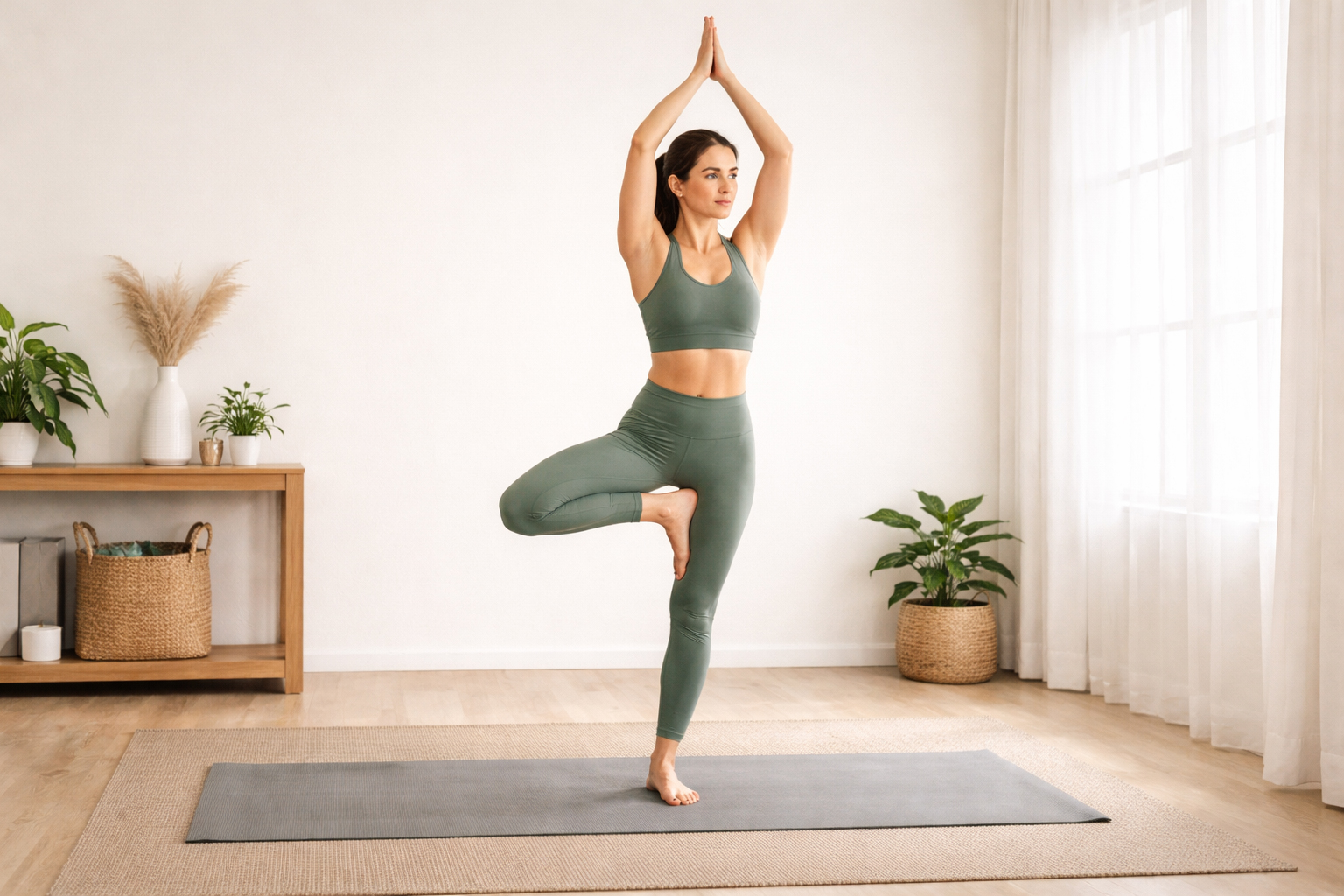
Tree Pose (Vrksasana)
One of the most recognizable yoga poses for beginners, Tree Pose looks simple but requires deep core engagement and balance. This pose strengthens the core, improves concentration, and enhances stability.
Because you balance on one leg, your abdominal and back muscles automatically activate to keep your body steady.
How to Perform Tree Pose
Begin by standing tall with your feet together and your arms relaxed by your sides.
Shift your weight gradually onto your right foot. Spread your toes slightly to create a stable base and engage your core.
Lift your left foot and bend your knee. Place the sole of your left foot against the inside of your right leg. Beginners may place the foot on the calf instead of the thigh.
Open your hips slightly by guiding the left knee outward.
Bring your hands together in front of your chest in a prayer position. Once balanced, slowly raise your arms overhead.
Keep your spine long, shoulders relaxed, and gaze fixed on a steady point in front of you.
Hold the pose for 5 to 10 slow breaths, then gently release and repeat on the other side.
Why This Pose Strengthens the Core
Balancing requires continuous engagement of the abdominal muscles and stabilizers. Even small adjustments activate the deeper core muscles responsible for posture and control.
Hovering Cat Pose
Hovering Cat Pose is a powerful core-strengthening movement that challenges stability and endurance. This pose targets the abdominal muscles, shoulders, and lower back simultaneously.
It is a fantastic addition to any at home workout routine because it requires no equipment and activates multiple muscle groups at once.
How to Perform Hovering Cat Pose
Start on all fours with your wrists directly under your shoulders and your knees aligned beneath your hips.
Spread your fingers and press firmly into the mat to protect your wrists.
Engage your core by gently pulling your belly button toward your spine.
Tuck your toes under and slowly lift your knees about one inch off the floor.
Keep your back flat and your neck neutral while maintaining steady breathing.
Hold the position for 10 to 20 seconds, then lower your knees and rest.
Repeat this pose several times for maximum core activation.
Why This Pose Strengthens the Core
Hovering Cat Pose forces your abdominal muscles to stabilize your spine while your shoulders and hips support your body weight. This builds both endurance and strength in the core.
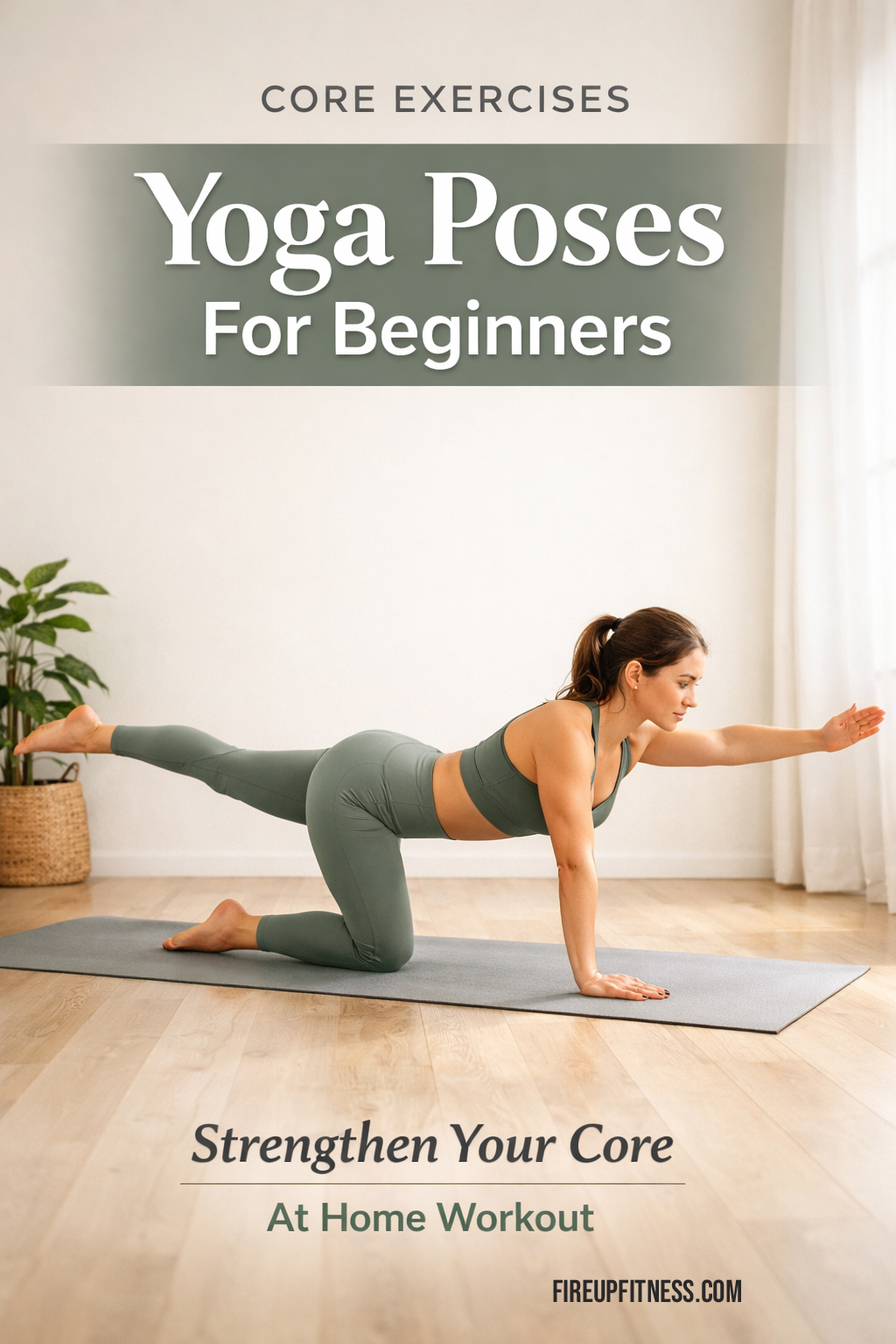
Alternate Arm and Leg Pose (Bird Dog)
The Alternate Arm and Leg Pose—often called Bird Dog—is one of the most effective core exercises for stability and coordination.
This gentle movement strengthens the core while also improving balance and spinal alignment.
How to Perform the Alternate Arm/Leg Pose
Begin in a tabletop position with your hands under your shoulders and knees under your hips.
Engage your core and keep your back flat.
Inhale and slowly extend your right arm forward alongside your ear.
At the same time, extend your left leg straight behind you, lifting it to hip height.
Keep your hips square and avoid arching your lower back.
Hold for a few seconds while maintaining steady breathing.
Exhale and return to the starting position.
Repeat with the opposite arm and leg.
Continue alternating sides for 5 to 10 repetitions per side.
Why This Pose Strengthens the Core
This movement challenges the core to stabilize the body while opposing limbs extend. It strengthens the deep abdominal muscles and supports spinal health.
Tips for Practicing Yoga Core Exercises at Home
If you are new to yoga, a few simple tips can help you get the most out of your at home workout routine.
Focus on Alignment
Proper posture ensures that the right muscles are activated and prevents unnecessary strain.
Engage Your Core
Always gently draw your abdominal muscles inward during the poses. This protects the spine and improves effectiveness.
Move Slowly and With Control
Yoga is not about speed. Slow and mindful movements create stronger muscle engagement.
Stay Consistent
Practicing these yoga poses for beginners just 3–4 times per week can gradually build noticeable core strength.
Common Mistakes to Avoid
Even beginner-friendly poses can become ineffective if performed incorrectly. Watch out for these common mistakes:
- Holding your breath during poses
- Letting your lower back arch excessively
- Rushing through movements
- Ignoring balance and alignment
Maintaining proper form ensures that your core exercises deliver the best results while protecting your body.
Final Thoughts
Building core strength doesn’t require endless crunches or intense gym sessions. With the right approach, simple yoga poses for beginners can activate deep core muscles while improving balance, posture, and flexibility.
Incorporating these movements into your at home workout routine can help you develop a stronger, healthier body over time.
Consistency is the key. Even just a few minutes of focused practice each day can strengthen your core and support your overall fitness journey.
As the yoga saying goes, “The body benefits from movement, and the mind benefits from stillness.”
By practicing these core-strengthening yoga poses regularly, you can enjoy both.