7 Breast Lift Exercises for a Stronger, Firmer Chest
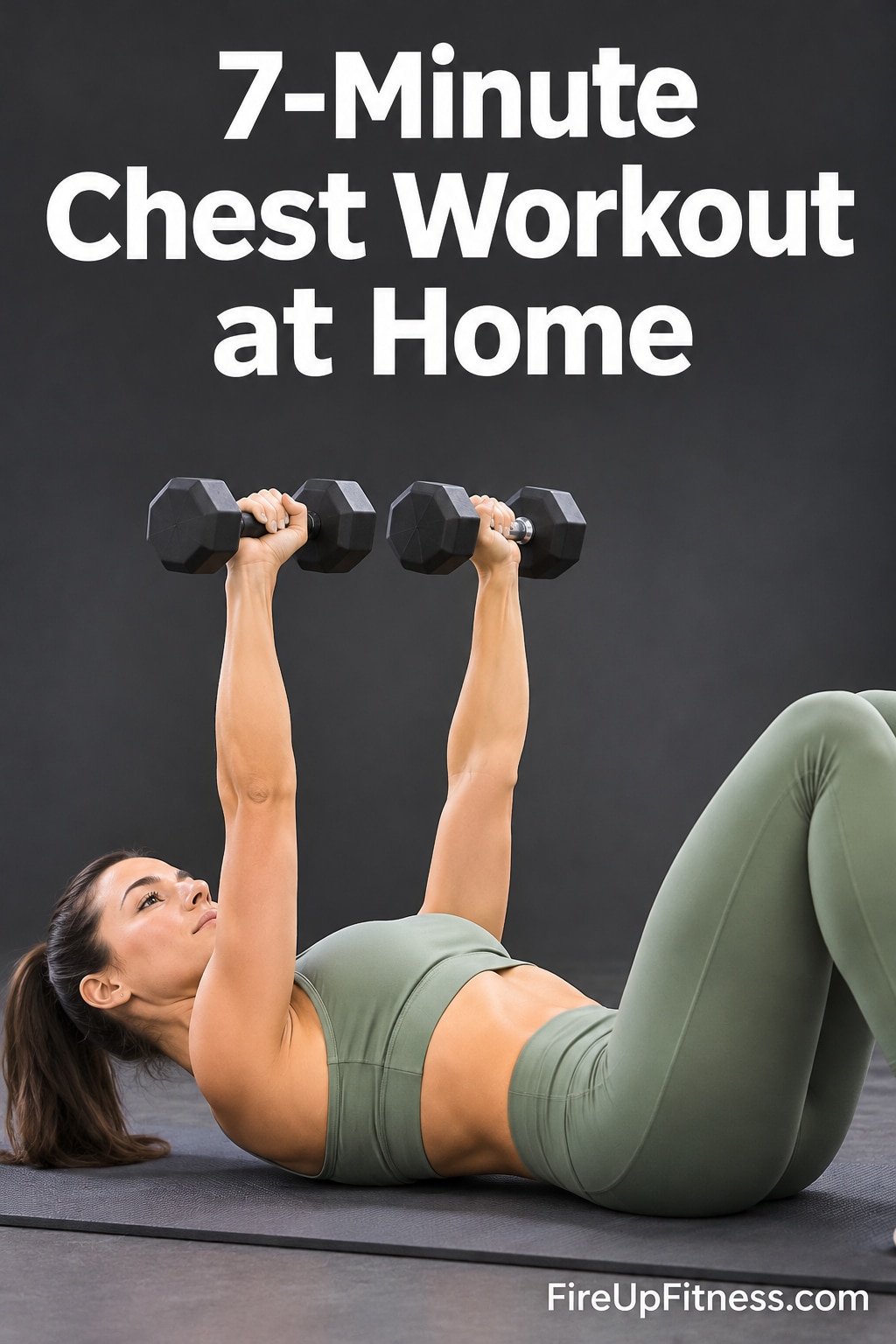
A stronger, more defined chest can make a noticeable difference in how you carry yourself. Better posture, improved upper-body strength, and stronger chest muscles can all help you feel more comfortable and confident in your body.
But can exercise actually lift your breasts?
The answer is a little more complicated than you might think.
Breasts are made primarily of fatty and glandular tissue, not muscle. That means exercise cannot directly tighten breast tissue or reverse sagging. However, strengthening the pectoral muscles underneath your breasts can improve chest definition and support better posture, which may create the appearance of a more lifted chest.
The good news? You don’t need an expensive gym membership or a complicated workout routine to strengthen these muscles.
This 7-minute breast lift exercise routine includes seven movements that work your chest, shoulders, arms, and core. Some require light dumbbells or an exercise ball, while others use just your body weight.
Whether your goal is to build upper-body strength, improve your posture, or give your chest a more defined appearance, these exercises are a practical place to start.
Can Breast Lift Exercises Really Make a Difference?
You may have seen workouts promising perkier breasts in just a few days. While those claims sound appealing, it’s important to understand what these exercises can realistically accomplish.
Your pectoral muscles sit underneath your breast tissue and help control movements such as pushing, lifting, and bringing your arms together.
Strengthening these muscles can offer several benefits:
- Better chest definition: Stronger pectoral muscles can create a more developed appearance across your upper chest.
- Improved upper-body strength: Everyday activities such as lifting groceries and pushing heavy doors may become easier.
- Better posture: Chest exercises, combined with upper-back strengthening, can support a more balanced posture.
- Greater shoulder stability: Controlled upper-body exercises can help strengthen the muscles involved in shoulder movement.
- Increased confidence: Feeling stronger and noticing improvements in your physical abilities can be rewarding.
However, chest exercises cannot directly change breast tissue, tighten stretched skin, or guarantee a visible breast lift.
The most worthwhile goal is to develop a stronger chest and healthier movement patterns while appreciating your body’s natural shape.
7 Breast Lift Exercises to Strengthen Your Chest
This routine combines beginner-friendly movements with a few more challenging exercises.
For a quick workout, perform each exercise for approximately 45 seconds, followed by 15 seconds of rest. Complete all seven exercises for a total of seven minutes.
Beginners can start with fewer repetitions or shorter working intervals.
1. Elbow Squeeze
The elbow squeeze is a simple way to begin your chest workout without any equipment.
This movement encourages you to engage your chest muscles while keeping your upper body controlled. It’s particularly useful as a warm-up before moving into exercises with weights.
How to do it:
- Stand or sit upright with your shoulders relaxed.
- Bend your elbows and raise your forearms in front of your chest.
- Bring your forearms and elbows toward each other without forcing the movement.
- Gently squeeze your chest muscles for three seconds.
- Slowly open your arms and return to the starting position.
- Continue for 45 seconds.
Beginner tip: Keep your shoulders down rather than lifting them toward your ears. Use a comfortable range of motion.
2. Dumbbell Chest Fly
Dumbbell chest flys are an effective exercise for strengthening the pectoral muscles.
Unlike pressing movements, which involve more elbow extension, chest flys emphasize bringing your arms together across your body.
How to do it:
- Lie on your back on an exercise mat with your knees bent and feet flat on the floor.
- Hold a light dumbbell in each hand, extending your arms above your chest with your palms facing each other.
- Maintain a slight bend in your elbows.
- Slowly open your arms toward the floor in a wide arc.
- Stop when your upper arms gently reach the floor or your comfortable range of motion.
- Bring the dumbbells back together above your chest.
Beginner tip: Start with light weights and avoid lowering your arms too far. The movement should feel controlled, not like a deep stretch in your shoulders.
3. Tricep Dips
Tricep dips primarily strengthen the muscles along the backs of your upper arms. They also recruit the shoulders and chest to help stabilize your body.
Although they aren’t a primary chest-building exercise, they can complement your upper-body routine.
How to do it:
- Sit on the edge of a sturdy, stable bench or low platform.
- Place your hands beside your hips with your fingers pointing forward.
- Move your hips slightly forward while keeping your feet planted.
- Bend your elbows slowly to lower your body a short distance.
- Press through your hands to return to the starting position.
- Repeat with steady, controlled movements.
Beginner tip: Keep your knees bent and avoid lowering your shoulders deeply. Bench dips can place considerable stress on the shoulders, so skip this exercise if it causes discomfort. Close-grip wall push-ups are a gentler alternative.
4. Medicine Ball Push-Ups
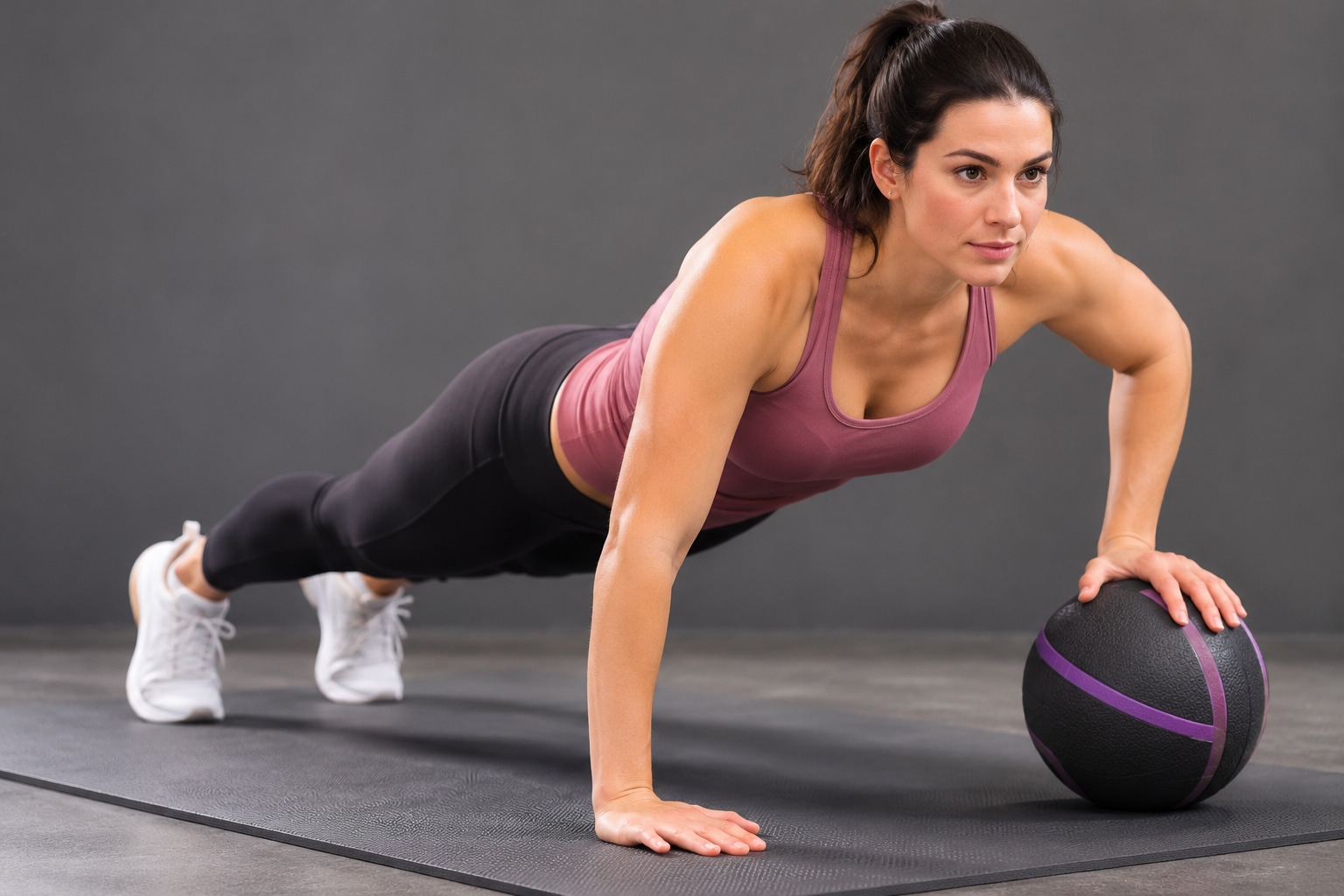
Ready for a little more challenge?
Medicine ball push-ups combine chest strengthening with balance and stability. Because one hand rests on an elevated surface, your upper body must work to maintain control throughout the movement.
How to do it:
- Place a medicine ball on a nonslip surface.
- Position one hand on the ball and the other on the floor.
- Extend your legs behind you into a plank position, keeping your body aligned.
- Slowly bend your elbows and lower your chest.
- Push back up without allowing your hips to twist.
- Switch hand positions halfway through the interval.
Beginner tip: This is an advanced variation because the ball can move unexpectedly. Start with wall push-ups or incline push-ups against a stable countertop before attempting it.
5. Stability Ball Chest Press
The stability ball chest press strengthens your pectoral muscles while challenging your core and balance.
It works similarly to a traditional dumbbell chest press, but the unstable surface requires additional control.
How to do it:
- Sit on a stability ball with a dumbbell in each hand.
- Carefully walk your feet forward until your upper back and shoulders are supported by the ball.
- Keep your knees bent, feet firmly planted, and hips lifted.
- Position the dumbbells beside your chest with your elbows bent.
- Press both weights upward until your arms are nearly straight.
- Lower the weights slowly to complete one repetition.
Beginner tip: Try a floor chest press first. It provides a stable surface and allows you to focus on proper technique before introducing the stability ball.
6. Plank to Push-Up
The plank to push-up is a challenging body-weight exercise that strengthens your chest, shoulders, triceps, and core.
It also develops upper-body endurance, making it a useful addition to a short home workout.
How to do it:
- Begin in a forearm plank with your elbows underneath your shoulders.
- Keep your abdominal muscles engaged and your body aligned.
- Place one palm on the floor, followed by the other, pushing yourself into a high plank.
- Lower one forearm back to the floor, followed by the other.
- Continue alternating between the two positions.
- Switch your leading arm regularly.
Beginner tip: Perform the movement with your knees on the mat. Move slowly and try to prevent your hips from rocking from side to side.
7. Glute Bridge with Chest Squeeze
Finish your workout with a movement that engages several muscle groups at once.
The glute bridge strengthens your hips and glutes, while an added palm press creates gentle isometric tension through your chest muscles.
How to do it:
- Lie on your back with your knees bent and feet hip-width apart.
- Bring your palms together in front of your chest.
- Press your palms firmly against each other to engage your pectoral muscles.
- Push through your heels and slowly lift your hips.
- Hold the bridge briefly while maintaining gentle pressure between your palms.
- Lower your hips and release the pressure slightly before repeating.
Beginner tip: Avoid arching your lower back. Lift only as high as you can while keeping your hips and torso comfortably aligned.
Your 7-Minute Breast Lift Workout Plan
You can combine all seven exercises into one short session.
| Exercise | Work | Rest |
|---|---|---|
| Elbow squeeze | 45 seconds | 15 seconds |
| Dumbbell chest fly | 45 seconds | 15 seconds |
| Tricep dips | 45 seconds | 15 seconds |
| Medicine ball push-ups | 45 seconds | 15 seconds |
| Stability ball chest press | 45 seconds | 15 seconds |
| Plank to push-up | 45 seconds | 15 seconds |
| Glute bridge with chest squeeze | 45 seconds | 15 seconds |
Total workout time: 7 minutes
You don’t have to complete every exercise at the same intensity. Replace advanced movements with easier variations whenever needed.
For example, you can substitute regular wall push-ups for medicine ball push-ups and perform chest presses on the floor instead of using a stability ball.
The goal is to challenge your muscles while maintaining proper form.
How Often Should You Do Breast Lift Exercises?
Building stronger chest muscles takes time, and doing more isn’t always better.
For most beginners, performing this routine two to three times per week on nonconsecutive days is a reasonable starting point.
Your muscles need time to recover after challenging strength exercises, especially when you’re introducing new movements.
As your strength improves, you can gradually increase the number of repetitions, use slightly heavier dumbbells, or add another round of the routine.
You can also support your progress by:
- Training your upper back: Rows and other pulling exercises help balance chest-focused workouts and support posture.
- Prioritizing good technique: Controlled repetitions are more valuable than rushing through the exercises.
- Eating balanced meals: Adequate protein and overall nutrition support muscle recovery.
- Getting enough sleep: Rest helps your body recover between workouts.
- Staying consistent: Regular strength training is more useful than occasional intense sessions.
You may notice improvements in strength and exercise control within several weeks. Visible muscle development generally takes longer and varies from person to person.
Common Mistakes to Avoid During Chest Workouts
Even a short workout deserves attention to technique.
Using weights that are too heavy
Heavy dumbbells can make it difficult to control chest flys and presses. Choose weights that allow you to complete each repetition comfortably without sacrificing form.
Rushing through repetitions
Fast movements often rely on momentum rather than deliberate muscle engagement. Slow down and focus on how your chest and arms move.
Ignoring shoulder discomfort
Your shoulders play an important role in most chest exercises. Sharp pain, pinching, or unusual discomfort is a reason to stop and modify the movement.
Expecting immediate changes in breast shape
Chest training develops muscle, but it cannot directly reshape breast tissue. Focus on strength, posture, and gradual progress rather than promises of dramatic lifting results.
Frequently Asked Questions About Breast Lift Exercises
Can exercise lift sagging breasts naturally?
Exercise cannot directly lift sagging breast tissue because breasts do not contain muscles that can be strengthened. However, developing the pectoral muscles and improving posture may make the chest area appear more defined.
Can I do breast lift exercises without dumbbells?
Yes. Wall push-ups, palm presses, and modified plank exercises can strengthen your upper body without weights. You can begin with body-weight movements and introduce dumbbells later.
How long does it take to see results?
Strength improvements may become noticeable after several weeks of consistent training. Changes in muscle definition can take longer, depending on your starting fitness level, training routine, and individual physiology.
Will chest exercises make my breasts smaller?
Chest exercises do not directly reduce breast tissue. Breast size may change with overall body-fat changes, hormones, age, and other factors, but exercising your pectoral muscles alone does not specifically shrink your breasts.
Are breast lift exercises suitable for beginners?
Many are beginner-friendly when modified appropriately. Start with elbow squeezes, wall push-ups, and floor chest presses before progressing to more demanding exercises such as medicine ball push-ups.
Final Thoughts
You don’t need to spend hours working out to begin building a stronger chest.
These seven breast lift exercises offer a practical way to strengthen your pectoral muscles, improve upper-body endurance, and develop better control over everyday movements.
While exercise cannot promise perkier breasts or reverse natural changes in breast tissue, it can help you build muscle, support your posture, and feel stronger in your body.
Start with the movements that feel comfortable, give yourself time to progress, and focus on what your body can do rather than expecting overnight changes.