What to Eat After Doing a Dry Fast
Finishing a fast can leave you thinking about one thing: food.
Whether you’ve been following intermittent fasting, completed a longer fasting window, or gone through a period without both food and water, it’s tempting to celebrate by eating a large meal as soon as the fast ends.
But what you do after fasting matters too.
A huge, heavy meal may leave you feeling overly full or uncomfortable, especially after a longer period without food. And when fasting is being used as part of a fat-loss routine, falling into a pattern of restricting for hours and then overeating can make the entire approach much harder to sustain.
The good news is that breaking a fast doesn’t have to be complicated.
For most people practicing common forms of intermittent fasting, such as 14:10 or 16:8, you generally don’t need a special multi-day recovery diet. You can usually break your fast with a normal, balanced meal containing protein, fiber-rich carbohydrates, vegetables or fruit, and healthy fats.
Dry fasting is different because fluids are restricted as well. In that situation, rehydration becomes the first priority before worrying about special foods or preserving changes on the scale.
So instead of thinking of this as a strict “post-fast diet,” think of it as a simple transition back to normal eating.
In this guide, we’ll cover what to eat after fasting, what to drink, how to break an intermittent fast, foods that can make your first meal more satisfying, and mistakes that may leave you feeling worse afterward.
Dry Fasting vs. Intermittent Fasting: What’s the Difference?
Before deciding how to break your fast, it’s important to know what kind of fasting you’ve been doing.
With intermittent fasting, you alternate between periods of eating and fasting. Popular schedules include 12:12, 14:10 and 16:8. Water is normally allowed during the fasting period, and depending on the approach, unsweetened coffee or tea may also be consumed.
Because you’re still drinking fluids, finishing a typical intermittent fast isn’t the same as recovering from dehydration.
Dry fasting, on the other hand, involves avoiding both food and fluids. That introduces dehydration concerns that aren’t normally present with standard intermittent fasting.
For that reason, the two shouldn’t be treated exactly the same.
After a typical intermittent fast, your main goal can be building a nutritious first meal.
After a dry fast, restoring adequate hydration deserves priority.
1. Start With Hydration
Even when you’re practicing intermittent fasting rather than dry fasting, staying adequately hydrated throughout the day is important.
After a dry fast, however, hydration becomes particularly important because you haven’t been drinking during the fasting period.
Start with water. If drinking a large amount at once makes you uncomfortable, try smaller amounts and gradually continue according to thirst.
There’s no need for complicated detox waters.
Plain water works perfectly well.
You can add lemon, cucumber, mint, berries or other fruit for flavor if that makes drinking water more enjoyable.
2. Break an Intermittent Fast With a Balanced Meal
One of the most common questions about intermittent fasting is:
“What should I eat first?”
For an ordinary daily fasting schedule, the answer doesn’t need to be exotic.
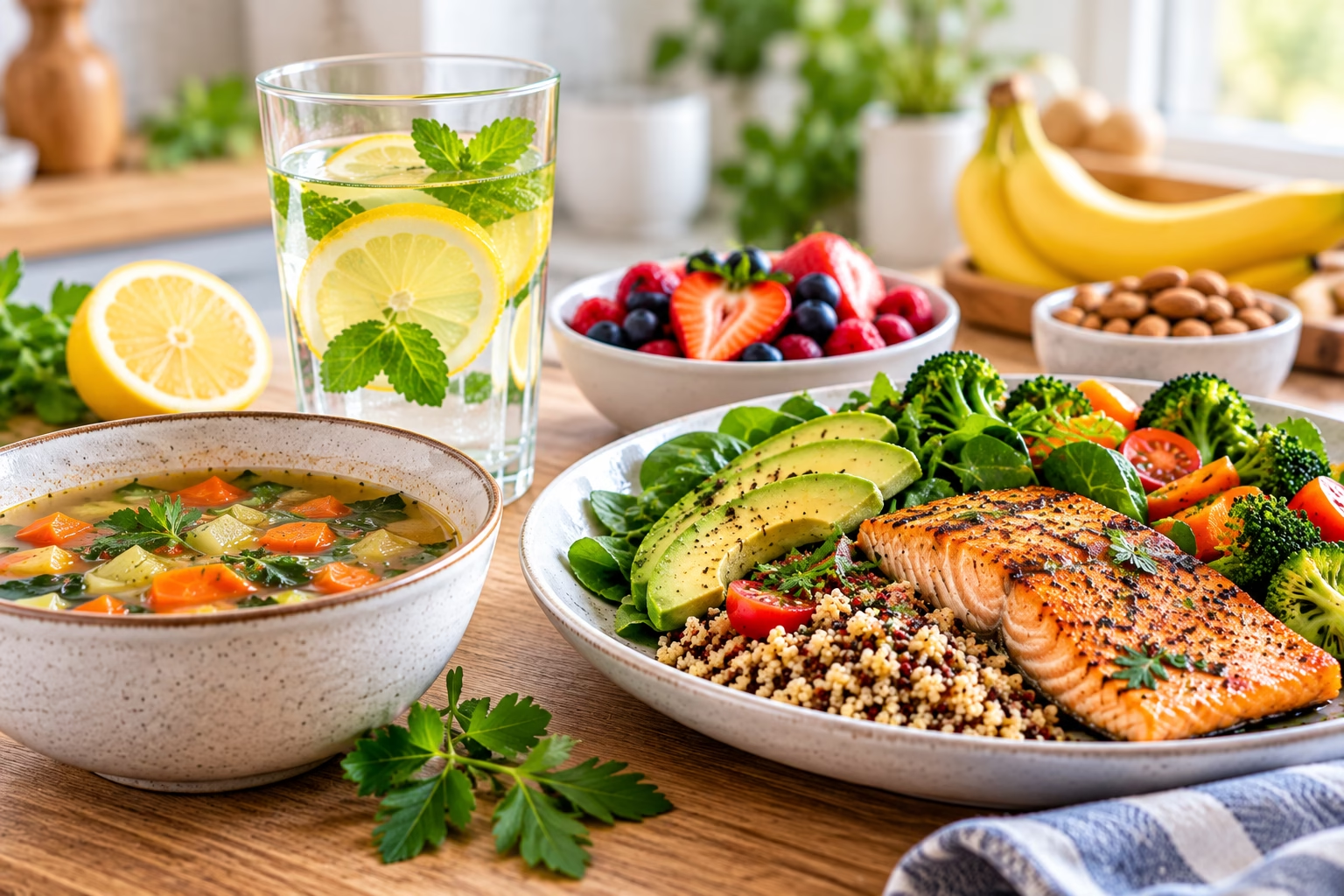
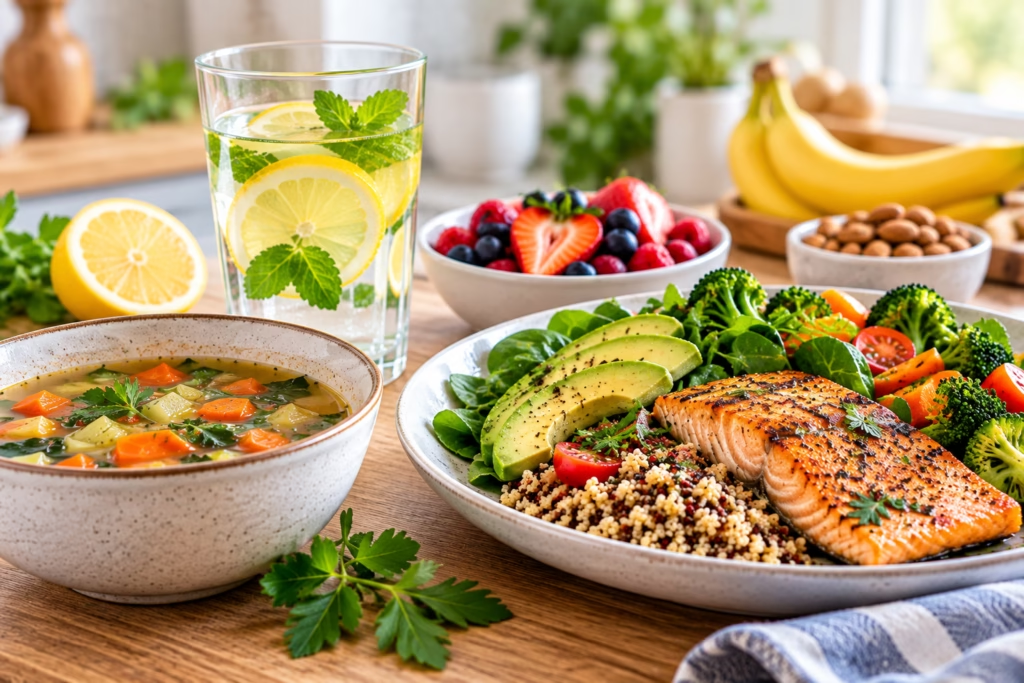
Try building your first meal around protein + fiber-rich carbohydrates + produce + healthy fats.
For example:
- Eggs, whole-grain toast and berries
- Greek yogurt, oats, fruit and nuts
- Chicken, rice and roasted vegetables
- Salmon, potatoes and salad
- Lentils, vegetables and brown rice
- Tofu, quinoa and mixed vegetables
These combinations provide more than calories. They provide protein, fiber and other nutrients while creating a satisfying meal that can make it easier to return to your normal eating routine.
3. Don’t Break Your Fast With a Huge Meal
Fasting can make food incredibly tempting.
You’ve been waiting hours to eat, your eating window finally opens, and suddenly everything in the kitchen looks good.
This is where many people struggle with intermittent fasting.
A fasting schedule isn’t particularly helpful for fat loss when the eating window turns into an opportunity to consume far more food than you normally would.
Try slowing down instead.
Prepare a normal portion, sit down to eat, chew your food comfortably and give yourself an opportunity to notice when you’re satisfied.
You don’t have to “make up” for the hours you weren’t eating.
4. Include Protein in Your First Meal
Protein is an excellent foundation for your first meal because it supports muscle maintenance and can help make meals more satisfying.
Good choices include:
- Eggs
- Greek yogurt
- Chicken
- Turkey
- Fish
- Cottage cheese
- Tofu
- Tempeh
- Beans
- Lentils
This becomes especially useful when intermittent fasting is combined with strength training or a fat-loss plan.
But don’t turn this into another extreme rule.
You don’t need to eat protein exclusively after fasting.
Your body still benefits from carbohydrates, healthy fats, fiber and micronutrients.
5. Don’t Automatically Avoid Carbohydrates
Carbohydrates are sometimes treated as something that must be avoided immediately after fasting.
That’s unnecessary for most people.
Fruit, oats, potatoes, beans, lentils, rice and whole grains can all be part of a nutritious first meal.
Rather than asking:
“How can I avoid carbs after my fast?”
A more useful question is:
“How can I build a balanced meal that keeps me satisfied?”
Pairing carbohydrates with protein, vegetables and healthy fats can create a much more complete meal than eliminating an entire food group.
6. Choose Gentler Foods After a Longer Fast
There’s a significant difference between skipping breakfast for a 16:8 intermittent fasting schedule and going without food for a prolonged period.
After a routine daily fast, most people can simply eat a normal meal.
After a longer fast, you may prefer smaller portions and foods you already know your digestive system tolerates well.
Options might include soup, oatmeal, yogurt, eggs, rice, bananas, cooked vegetables or another familiar meal.
Prolonged fasting can carry additional health risks and isn’t something to treat as an extension of ordinary intermittent fasting. Very long fasts may require medical supervision, particularly for people with underlying health conditions.
7. Watch the Restrict-and-Overeat Trap
This may be one of the most important intermittent fasting tips.
A fasting routine can become counterproductive when it looks like this:
Fast → become extremely hungry → overeat → feel guilty → fast even longer → repeat.
Instead, your eating window should still contain enough nourishing food to support your body.
Intermittent fasting is simply a meal-timing approach. It doesn’t eliminate the importance of overall diet quality, adequate nutrition or sustainable portions.
If your fasting schedule consistently leaves you ravenous and overeating later, adjusting the fasting window may be more practical than trying to become increasingly restrictive.
8. What Should You Drink After Fasting?
For most people, water should remain the primary drink.
Other choices can include milk or unsweetened beverages depending on your preferences and nutritional needs.
Be cautious about using sugary drinks as your main source of hydration. Liquid calories can add up quickly without providing the same fullness as a balanced meal.
Alcohol is also a poor choice when you’re dehydrated and shouldn’t be used to rehydrate after fasting.
9. Don’t Panic When the Scale Goes Up
This is particularly important after longer or dry fasts.
You may notice the scale increase after you start eating and drinking again.
That doesn’t automatically mean you’ve regained body fat.
Food entering your digestive system has physical weight. Drinking fluids restores body water. Carbohydrate intake can also influence stored glycogen and associated water.
Normal fluctuations are expected.
Trying to keep the scale artificially low by restricting water or avoiding food isn’t a sustainable fat-loss strategy.
What Is the Best Meal to Break an Intermittent Fast?
There isn’t one perfect fasting meal.
A simple formula can make planning easier:
Protein + vegetables or fruit + fiber-rich carbohydrates + healthy fat
For example:
Breakfast-style meal: Eggs + whole-grain toast + avocado + berries
Lunch: Grilled chicken + brown rice + roasted vegetables + olive oil
Vegetarian meal: Lentils + quinoa + vegetables + avocado
Quick option: Greek yogurt + oats + berries + walnuts
The best choice is one that provides useful nutrition, agrees with your digestive system and fits your overall eating pattern.
What Should You Avoid After Fasting?
You don’t need a long list of forbidden foods.
Instead, be especially mindful of immediately consuming an enormous meal simply because you’ve been fasting.
Very greasy or extremely rich meals may also feel uncomfortable for some people after longer fasting periods.
And don’t fall into the trap of believing you have to follow fasting with a “detox,” juice cleanse, carbohydrate-free diet or several days of protein-only eating.
The goal is to return to normal, balanced nutrition.
How to Break a Fast: The Simple Approach
For a typical intermittent fasting schedule, keep it simple:
Stay hydrated → break your fast with a balanced meal → eat slowly → continue eating normally during your eating window.
After a dry fast:
Prioritize rehydration → eat when you’re ready → start with a reasonable portion → gradually return to balanced eating.
Long or medically significant fasts are a different situation and may require professional guidance.
When Fasting May Not Be Appropriate
Fasting isn’t suitable for everyone.
People who are pregnant or breastfeeding, have a history of eating disorders, take certain medications, or have conditions such as diabetes, kidney disease or other medical issues should discuss fasting with a qualified healthcare professional.
Seek medical attention for concerning symptoms following a fast, including fainting, confusion, severe weakness, persistent vomiting, inability to keep fluids down, very little or no urination, rapid heartbeat or severe dizziness.
Final Thoughts: Your First Meal Doesn’t Need to Be Perfect
You don’t need a complicated ritual to break most intermittent fasts.
You don’t need a special detox drink.
And you don’t need to eliminate carbohydrates.
For a typical intermittent fasting schedule, focus on hydration and a satisfying, balanced first meal containing protein, fiber-rich foods, vegetables or fruit, carbohydrates and healthy fats.
If you’ve completed a dry fast, hydration deserves additional attention because you’ve also gone without fluids.
Most importantly, don’t let fasting become a cycle of extreme restriction followed by overeating.
Whether your goal is fat loss, better eating habits or simply following a preferred meal schedule, the approach you can comfortably maintain will usually be more useful than the most restrictive one.
Break your fast by nourishing your body—not punishing it for being hungry.