6 Simple Exercises to Improve Posture at Home
Good posture isn’t just about standing tall or keeping your shoulders straight. It’s about helping your body move comfortably, maintaining healthy spinal alignment, and building the strength needed to support everyday activities.
Long hours at a desk, looking down at your phone, or sitting without regular movement can leave your shoulders feeling tight and your back tired. Over time, these habits may affect how you sit, stand, and move.
The good news? You can improve your posture with simple exercises and small changes to your daily routine. You don’t need expensive equipment or complicated workouts. A few minutes of intentional movement each day can help strengthen your back, engage your core, and improve body awareness.
Here are six practical ways to support better posture, including exercises you can do at home and everyday habits worth adopting.
1. Warrior Row to Strengthen Your Upper Back
The warrior row combines a stable lower-body position with an upper-back strengthening movement. It targets the muscles around your shoulder blades while challenging your core stability.
Strong upper-back muscles help support your shoulders and make it easier to maintain a comfortable, upright position throughout the day.
How to Do a Warrior Row
- Stand with your right foot forward and your left foot extended behind you in a staggered stance.
- Bend your right knee slightly and lean forward from your hips while keeping your back neutral.
- Rest your right forearm lightly on your right thigh for support.
- Hold a light dumbbell, approximately 3–5 pounds, in your left hand.
- Allow your left arm to extend naturally toward the floor.
- Pull the dumbbell toward your rib cage, keeping your elbow close to your body.
- Slowly lower the weight and repeat.
Repetitions: Complete 10–12 repetitions on each side.
Posture tip: Keep your shoulders level and avoid twisting your torso as you lift the dumbbell. Focus on controlled movement rather than lifting a heavier weight.
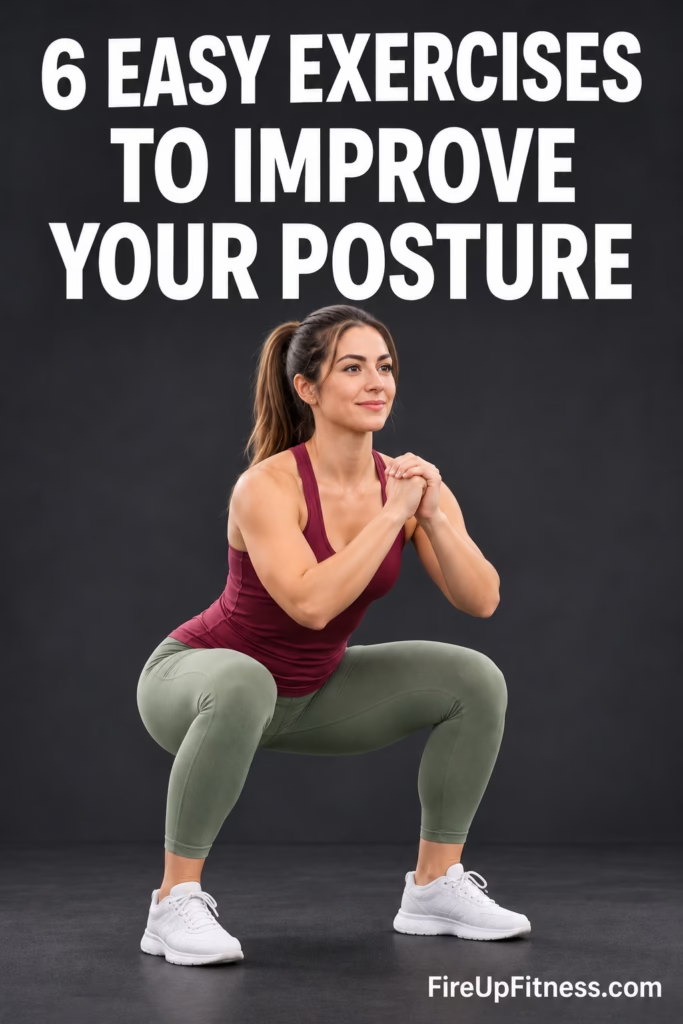
2. Squats to Build Lower-Body Strength
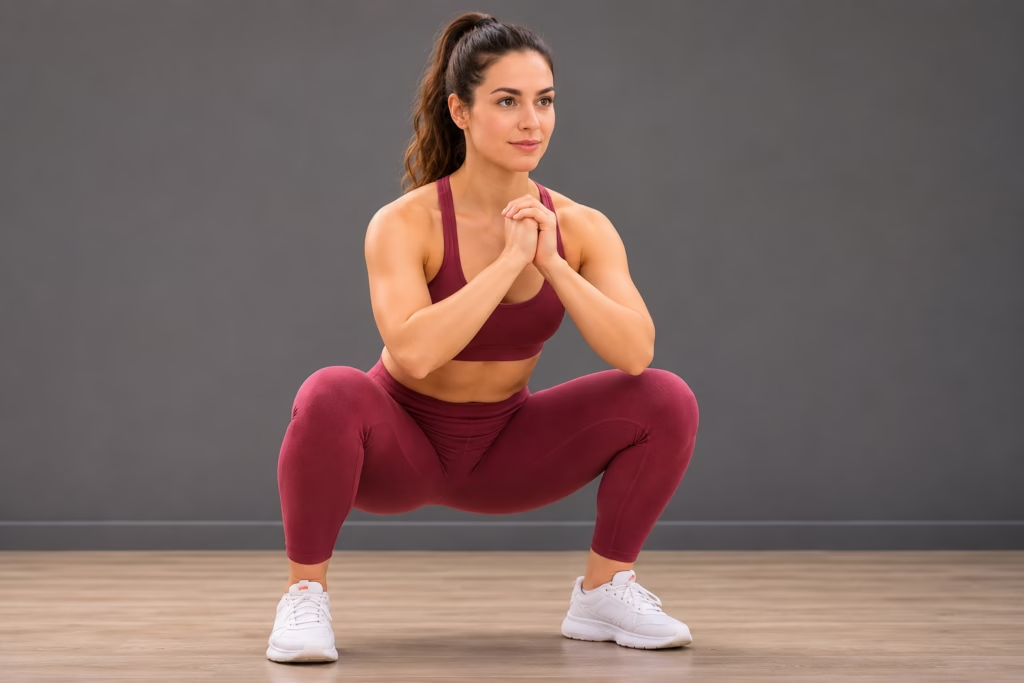
Squats are often associated with leg workouts, but they also challenge the muscles that help stabilize your pelvis and torso.
Your glutes, quadriceps, hamstrings, and core work together during a squat. Strengthening these muscles can support balance, stability, and better movement mechanics.
How to Do a Bodyweight Squat
- Stand with your feet approximately shoulder-width apart.
- Keep your chest comfortably lifted and your shoulders relaxed.
- Engage your abdominal muscles gently.
- Bend your knees and push your hips backward as though sitting into a chair.
- Lower yourself as far as you can while maintaining control.
- Press through your feet to return to standing.
Repetitions: Start with 10–15 squats for 2 sets.
Posture tip: Avoid rounding your back or forcing your chest excessively upward. Keep your spine in a comfortable, neutral position throughout the movement.
Beginners can practice sitting down and standing up from a sturdy chair before progressing to regular squats.
3. Pilates-Inspired Balance Exercise for Core Stability
Pilates focuses on controlled movements, breathing, coordination, and core engagement. These qualities make it a useful addition to a posture-focused exercise routine.
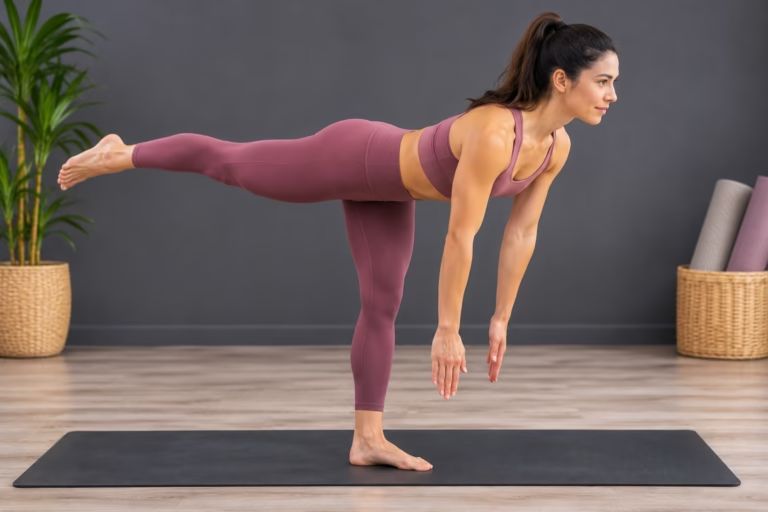
One simple Pilates-inspired movement involves balancing on one leg while extending the opposite leg backward. This challenges your abdominal muscles, glutes, and the smaller stabilizing muscles that help maintain balance.
How to Do the Standing Pilates Balance Exercise
- Stand upright with your feet hip-width apart.
- Hold a small exercise ball with both hands in front of your chest.
- Extend your arms forward without lifting your shoulders.
- Shift your weight onto your right foot.
- Slowly extend your left leg backward, keeping your toes close to the floor.
- Maintain a neutral spine and keep your hips facing forward.
- Hold the position for 5–10 seconds before returning to standing.
- Repeat on the opposite side.
Repetitions: Perform 5–8 controlled repetitions per leg.
Posture tip: Avoid arching your lower back when lifting your leg. The goal is steady balance and controlled movement, not lifting your leg as high as possible.
You can perform this exercise without a ball or stand beside a chair for additional support.
4. Practice Yoga to Improve Flexibility and Body Awareness
Yoga combines gentle stretching, strengthening, and mindful breathing. Regular practice may help reduce muscle stiffness, improve mobility, and increase awareness of how your body moves.
Certain yoga poses are particularly helpful for strengthening the muscles around your spine and opening areas that often become tight after prolonged sitting.
Three Yoga Poses Worth Trying
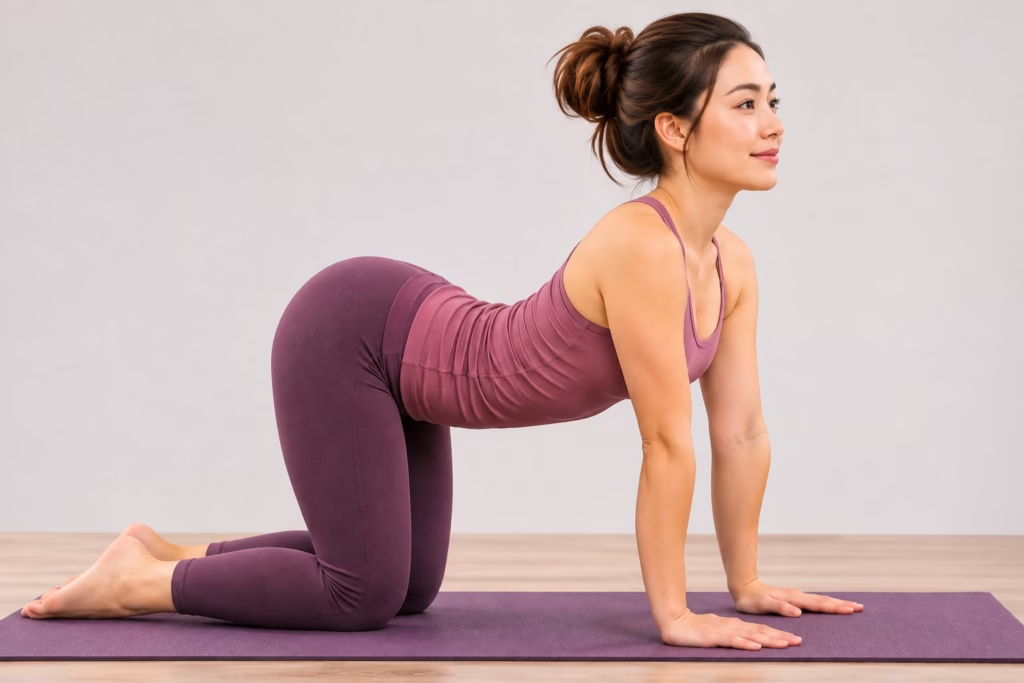
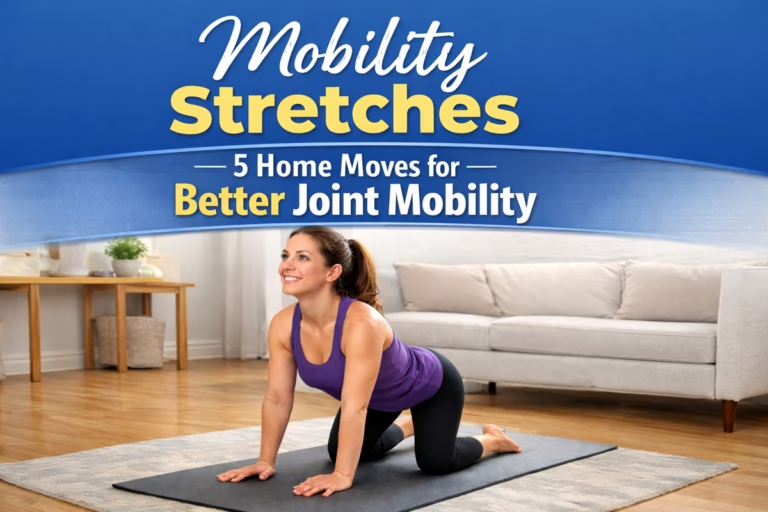
Cat-Cow Pose
Begin on your hands and knees. Slowly alternate between gently rounding your spine and extending it into a comfortable arch.
This movement encourages spinal mobility and can help relieve feelings of stiffness after sitting.
Mountain Pose
Stand tall with your feet comfortably positioned, arms relaxed, and weight evenly distributed. Gently lengthen through the crown of your head while keeping your shoulders relaxed.
Mountain Pose encourages awareness of your standing alignment without forcing your body into a rigid position.
Child’s Pose
Kneel on a mat, lower your hips toward your heels, and extend your arms forward as you comfortably lower your torso.
This relaxing position can provide a gentle stretch through your back and shoulders.
Suggested routine: Spend 3–5 minutes practicing these poses, moving slowly and breathing naturally.
Posture tip: Yoga should feel comfortable and controlled. Avoid forcing yourself into deep stretches, especially when your back or shoulders feel sensitive.
5. Support Your Spine With Better Sleeping Habits
Your sleeping position can influence how your neck and back feel when you wake up.
Although there isn’t one perfect sleeping position for everyone, maintaining comfortable spinal alignment can help reduce unnecessary pressure on your joints and muscles.
Simple Sleeping Adjustments
- Side sleeping: Place a pillow between your knees to help keep your hips and pelvis comfortably aligned.
- Back sleeping: Try a small pillow beneath your knees if it helps reduce lower-back discomfort.
- Pillow height: Choose a pillow that supports your neck without pushing your head too far forward or allowing it to tilt excessively.
- Mattress support: Select a mattress that feels comfortable and provides adequate support for your body. A very firm mattress isn’t necessarily better for everyone.
If you regularly wake up with neck stiffness or back discomfort, consider whether your pillow, mattress, or sleeping position needs adjustment.
Posture tip: Focus on comfortable support rather than trying to keep your spine perfectly straight throughout the night. Your spine has natural curves that should be respected.
6. Improve Your Sitting Posture Throughout the Day
Sitting for extended periods can contribute to stiffness in your hips, shoulders, and back, particularly when you remain in the same position for hours.
A supportive chair and an appropriately arranged workstation can make sitting more comfortable, but movement breaks are just as important.
How to Sit More Comfortably
- Sit with your feet supported on the floor or a footrest.
- Keep your knees at approximately hip level.
- Position your back comfortably against your chair’s backrest.
- Relax your shoulders rather than pulling them forcefully backward.
- Keep your computer screen near eye level.
- Position your keyboard and mouse so your elbows remain comfortably close to your body.
Try standing, walking, or changing positions every 30–60 minutes.
Even a short break to stretch your arms, roll your shoulders, or walk around the room can help interrupt prolonged sitting.
Posture tip: The best sitting position isn’t one you hold perfectly all day. Changing positions regularly is often more beneficial than trying to maintain one rigid posture.
A Simple 10-Minute Daily Posture Routine
You don’t need a lengthy workout to begin strengthening the muscles that support your posture. Try combining the exercises above into a short routine.
| Exercise | Suggested amount |
|---|---|
| Warrior rows | 10 repetitions per side |
| Bodyweight squats | 12 repetitions |
| Standing Pilates balance | 5 repetitions per leg |
| Cat-Cow Pose | 1 minute |
| Mountain Pose | 1 minute |
| Child’s Pose | 1 minute |
Move at your own pace and take short breaks when needed. Depending on your speed and rest periods, the routine should take approximately 10 minutes.
Start with three or four sessions per week and gradually build consistency. On other days, focus on walking, gentle stretching, and taking regular movement breaks.
How Long Does It Take to Improve Your Posture?
You may notice improved body awareness or less stiffness after a few sessions, but lasting changes in strength, mobility, and movement habits generally take several weeks or longer.
Your progress will depend on factors such as your current strength, flexibility, daily activities, and how consistently you practice.
Rather than trying to hold a perfectly straight posture, pay attention to practical improvements. Perhaps sitting feels more comfortable, your shoulders feel less tense, or you can complete exercises with better control.
These are meaningful signs that your routine is helping.
Persistent pain, numbness, weakness, or noticeable changes in spinal alignment should be evaluated by a healthcare professional rather than managed through exercises alone.
Final Thoughts
Improving your posture doesn’t require constantly reminding yourself to sit up straight. It starts with building stronger supporting muscles, moving more frequently, and creating everyday habits that help your body feel comfortable.
Warrior rows strengthen your upper back, squats support lower-body stability, Pilates challenges your balance, and yoga encourages mobility. Comfortable sleeping positions and regular breaks from sitting can complement these exercises.
Start with a few minutes each day, focus on controlled movements, and give your body time to adapt. Better posture is less about achieving a perfect position and more about developing the strength, flexibility, and awareness to move with confidence.