5 Easy Core Exercises at Home for Stronger Abs
Want stronger abs without spending hours doing crunches? You don’t need an expensive gym membership, fancy equipment, or a complicated fitness routine to build a stronger core. Sometimes, the simplest exercises are the ones worth sticking with.
A good core workout at home can do more than strengthen your abdominal muscles. It can help improve posture, support your lower back, build balance, and make everyday movements feel easier.
And the best part? You don’t need to be an experienced fitness enthusiast to get started.
These five core exercises at home are simple, effective, and easy to adjust to your fitness level. Whether you’re a beginner, getting back into exercise, or looking for a quick workout after 40, this routine can help you build strength and confidence.
All you need is a comfortable space, an exercise mat, and about 15 minutes.
Why Core Strength Is Important
Your core is involved in almost everything you do, from getting out of bed in the morning to carrying groceries, walking, and bending down to pick something up.
It’s not just about having toned abs. Your core includes several muscles that work together to stabilize your spine and support movement.
These include:
- Rectus abdominis: The front abdominal muscle that helps you bend your torso forward.
- Transverse abdominis: A deep abdominal muscle that helps stabilize your trunk.
- Obliques: Muscles along the sides of your abdomen that assist with twisting and side bending.
- Back and pelvic muscles: Muscles that work with your abs to maintain stability and support movement.
When these muscles are strong and work together, everyday activities can feel more comfortable and controlled.
Regular core strengthening exercises can help improve balance, posture, muscular endurance, and overall movement quality.
That’s why adding a short ab workout at home to your weekly fitness routine is a practical habit worth developing.
1. Forearm Plank
The forearm plank might look simple, but holding your body steady requires more muscle engagement than you might expect.
It’s one of the most useful exercises for building core endurance because it challenges your abdominal muscles to stabilize your spine without repeated bending or twisting.
How to do it:
- Start on your hands and knees on an exercise mat.
- Lower your forearms to the floor, keeping your elbows directly beneath your shoulders.
- Extend your legs behind you and balance on your toes.
- Tighten your abdominal muscles while keeping your body in a straight line from head to heels.
- Look toward the floor and breathe naturally.
- Hold for 20–30 seconds before lowering your knees.
Beginner tip: Keep your knees on the mat to make the exercise easier. Start with 10–15 seconds and gradually increase your holding time.
Recommended: 2 sets of 20–30 seconds.
Why it works: Forearm planks strengthen your abdominal muscles while also engaging your shoulders, back, and glutes. They help improve core stability and muscular endurance.
2. Mountain Climbers
Mountain climbers are a great choice when you want to combine abdominal strengthening with a little cardio.
This exercise challenges your core while moving your legs, making it useful for improving coordination and whole-body control.
You can perform it slowly for a beginner-friendly workout or increase the pace once you’re comfortable with the movement.
How to do it:
- Begin in a high plank position with your hands directly beneath your shoulders.
- Extend both legs behind you and keep your abdominal muscles engaged.
- Bring your right knee toward your chest.
- Return your right foot to the starting position.
- Bring your left knee toward your chest.
- Continue alternating legs while keeping your hips as steady as possible.
Beginner tip: Move slowly rather than running your knees forward. You can also place your hands on a sturdy countertop for an easier variation.
Recommended: 20–30 seconds.
Why it works: Mountain climbers strengthen your core by challenging your body to remain stable while your legs move. They also engage your shoulders, hips, and legs.
This makes them a practical addition to a short full-body workout at home.
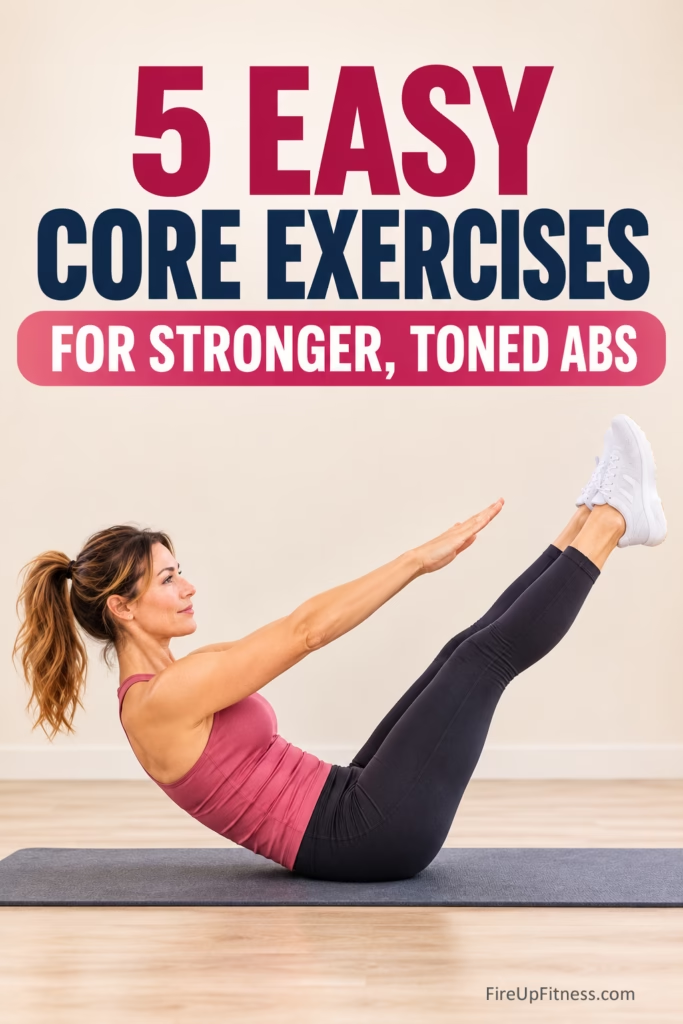
3. V Crunch
Looking for an exercise that challenges your abdominal strength and coordination at the same time? Try the V crunch.
This movement involves lifting your upper body and legs toward each other, creating a V shape.
It can be challenging at first, so don’t worry if you need to start with a smaller movement.
How to do it:
- Lie on your back with your legs extended and your arms reaching overhead.
- Gently tighten your abdominal muscles.
- Slowly lift your shoulders and legs off the floor.
- Reach your hands toward your feet while bringing your torso and legs closer together.
- Pause briefly at the top.
- Lower your body with control and repeat.
Beginner tip: Keep your knees bent and perform a smaller crunch. You can also lift one leg at a time until your abdominal strength improves.
Recommended: 8–12 repetitions.
Why it works: V crunches challenge your rectus abdominis while engaging your hip flexors. They also help develop coordination and controlled movement.
Avoid pulling your neck forward or forcing your lower back into an uncomfortable position. Quality matters more than how high you can lift.
4. Straight-Arm Plank With Arm Raise
Once you’re comfortable with a regular plank, this variation is a great way to challenge your balance and stability.
By lifting one arm off the floor, you make your abdominal muscles work harder to prevent your body from twisting.
It’s a simple change that can make a familiar exercise feel completely different.
How to do it:
- Start in a high plank position with your arms straight.
- Position your feet slightly wider than hip-width for stability.
- Tighten your abdominal muscles and keep your hips facing the floor.
- Slowly lift your right arm forward.
- Hold for one or two seconds.
- Lower your hand and repeat with your left arm.
- Continue alternating sides.
Beginner tip: Keep your knees on the floor or lift your hand just a few inches instead of extending your arm fully.
Recommended: 8–10 repetitions per side.
Why it works: This plank variation challenges your deep core muscles and obliques as they resist rotation. It also helps strengthen your shoulders and improve balance.
Focus on keeping your hips steady rather than lifting your arm as high as possible.
5. Scissor Kicks
Scissor kicks are another useful exercise for strengthening your abdominal muscles and improving pelvic control.
Although they’re often described as a lower-ab exercise, they challenge your core to stabilize your pelvis while your hip flexors move your legs.
Slow, controlled repetitions are especially important for this movement.
How to do it:
- Lie on your back with your arms resting beside your body.
- Lift both legs toward the ceiling.
- Gently brace your abdominal muscles.
- Slowly lower your right leg toward the floor while keeping your left leg raised.
- Bring your right leg back up as you lower your left leg.
- Continue alternating legs in a controlled motion.
Beginner tip: Keep your knees slightly bent and lower each leg only as far as you can without arching your lower back. You can also keep one foot resting on the floor while moving the opposite leg.
Recommended: 10–12 repetitions per side.
Why it works: Scissor kicks challenge your abdominal muscles to maintain stability while your legs move. They also help develop coordination and control.
Keep your head relaxed on the mat, and avoid lowering your legs too far if your lower back begins to arch.
Your 15-Minute Core Workout Routine
Now that you’ve learned the five exercises, it’s time to put them together.
This simple 15-minute core workout at home is designed for beginners and anyone looking for a quick, equipment-free exercise routine.
| Exercise | Reps or Duration |
|---|---|
| Forearm Plank | 30 seconds |
| Mountain Climbers | 30 seconds |
| V Crunch | 10 repetitions |
| Straight-Arm Plank With Arm Raise | 8 per side |
| Scissor Kicks | 10 per side |
How to follow this workout:
Start with two minutes of gentle movement, such as marching in place, shoulder rolls, and easy torso rotations.
Perform each exercise in the order listed, resting for 15–30 seconds between movements.
After completing all five exercises, rest for 45–60 seconds.
Repeat the circuit twice. Depending on your pace and rest periods, the routine should take approximately 12–15 minutes, including your warm-up and a short cool-down.
If you’re new to core training, begin with one round. As you become stronger, gradually work toward two or three rounds.
Aim for two or three sessions per week, allowing your muscles time to recover between challenging workouts.
Common Core Workout Mistakes to Avoid
Even the best abdominal exercises can become less effective when performed with poor technique.
Here are a few common mistakes to watch for.
1. Moving too quickly
Rushing through repetitions makes it harder to control your movements. Slow down and focus on keeping your core engaged.
2. Holding your breath
Breathing is an important part of exercise. Try to maintain steady breathing throughout each movement rather than holding your breath.
3. Ignoring your lower back
Your lower back should feel supported during core exercises. If you notice discomfort, reduce your range of motion or try an easier variation.
4. Doing the same exercises every day
Your abdominal muscles need recovery, just like other muscles. Give yourself time between demanding core workouts.
5. Forgetting about full-body strength
A strong core works best alongside strong legs, glutes, back, and shoulders. Combine your ab exercises with other strength-training movements for a balanced routine.
How to Get More From Your Core Workouts
You don’t need to exercise harder every week to make progress. Small improvements in consistency, technique, and strength can add up over time.
Make Consistency Your Priority
Choose two or three days each week for your core workout and treat those sessions as part of your regular routine.
Even a short workout can be worthwhile when performed consistently.
Challenge Yourself Gradually
As your strength improves, try holding your plank for an additional five seconds or adding two repetitions to your V crunches.
These small changes help your muscles continue adapting without making the workout unnecessarily difficult.
Combine Core Training With Walking
Walking is an easy way to stay active and support overall fitness.
Pairing regular walks with your core strengthening exercises can help you build a balanced, sustainable movement routine.
Eat Balanced, Nourishing Meals
Your muscles need adequate nutrition to recover and function properly.
Include protein-rich foods, whole grains, vegetables, fruits, and healthy fats in your meals. Drink enough water throughout the day, particularly when exercising.
Pay Attention to Your Progress
Progress isn’t always something you can see in the mirror.
Maybe you can hold a plank longer, complete more controlled repetitions, or move through your day with better posture.
These are meaningful improvements worth recognizing.
Core Exercises at Home for Women Over 40
Building and maintaining core strength becomes increasingly valuable as we age.
For women over 40, a consistent core workout can help support balance, posture, and the strength needed for everyday activities.
The good news is that you don’t need high-impact exercises or long workout sessions to challenge your abdominal muscles.
Start with simple modifications, such as knee planks, slow mountain climbers, and bent-knee crunches.
As your confidence and strength improve, gradually increase the difficulty.
The goal is to develop a routine that feels comfortable, manageable, and sustainable.
Remember, it’s never too late to begin strengthening your core.
Frequently Asked Questions
Can I strengthen my abs with home workouts?
Yes. Exercises such as planks, V crunches, and scissor kicks can help strengthen your abdominal muscles without gym equipment. Consistency, proper technique, and gradual progression are important.
How often should I do core exercises?
Two or three focused sessions per week can be a good starting point. Allow adequate recovery between challenging workouts, especially when you’re beginning.
Is a 15-minute ab workout enough?
A focused 15-minute session can provide a useful core-strengthening workout, particularly for beginners. Over time, you can gradually increase the repetitions, duration, or difficulty as your fitness improves.
What is the easiest core exercise for beginners?
A modified forearm plank with your knees on the floor is a good place to start. It allows you to practice engaging your abdominal muscles while building stability.
Can women over 40 do these exercises?
Yes. Most of these movements can be modified for different fitness levels. Begin with comfortable variations and progress gradually. Anyone with an existing injury or medical concern should seek appropriate professional guidance before starting.
Final Thoughts
Building a stronger core doesn’t have to be complicated.
These five easy core exercises at home offer a practical way to strengthen your abs, improve stability, and support better posture without expensive equipment or lengthy workout sessions.
Start with the exercises that feel comfortable, focus on good form, and gradually challenge yourself as your strength improves.
Some days you’ll complete the full routine. Other days, you might only have time for a few exercises. What matters is building a habit you can maintain.
A stronger core starts with small, consistent efforts—not perfect workouts.
Save this 15-minute core workout for your next exercise session and enjoy building strength one movement at a time.