3 Yoga Poses for Spinal Flexibility and Back Strength
A stiff back can make even simple daily activities feel uncomfortable. Whether you spend hours sitting at a desk, standing in the kitchen, or looking down at your phone, your spine may not get the movement it needs to stay mobile and comfortable.
The good news? You don’t need complicated exercises or an hour-long yoga session to start improving your spinal flexibility.
A few gentle yoga poses can help your spine move through its natural range of motion, strengthen the muscles supporting your back, and encourage better posture.
These spinal flexibility stretches are especially helpful for beginners and women over 40 who want to maintain mobility, move more comfortably, and support a healthy, active lifestyle.
In this guide, we’ll explore three simple yoga poses for spinal flexibility that you can practice at home in about 10–12 minutes.
Why Is Spinal Flexibility Important?
Your spine does much more than help you stand upright. It supports your body, protects your spinal cord, and allows you to bend, twist, reach, and move throughout the day.
When the muscles and joints around your spine become stiff, everyday movements may feel more restricted.
Practicing gentle spine flexibility stretches can help you maintain comfortable movement while improving your awareness of how your back moves.
Here are some benefits of keeping your spine strong and mobile:
- Supports better posture: Strong back and core muscles help maintain comfortable spinal alignment.
- Improves everyday mobility: A mobile spine makes reaching, bending, and turning easier.
- Reduces feelings of stiffness: Gentle movement can ease muscle tension associated with prolonged sitting.
- Builds core stability: Certain yoga poses strengthen the muscles that support your spine.
- Encourages relaxation: Slow, controlled movements combined with deep breathing can help release physical tension.
- Supports healthy aging: Maintaining strength and mobility can help you stay active and independent as you age.
Remember, having a flexible spine doesn’t mean forcing your body into extreme bends. The goal is to develop comfortable, controlled movement while keeping your back strong and supported.
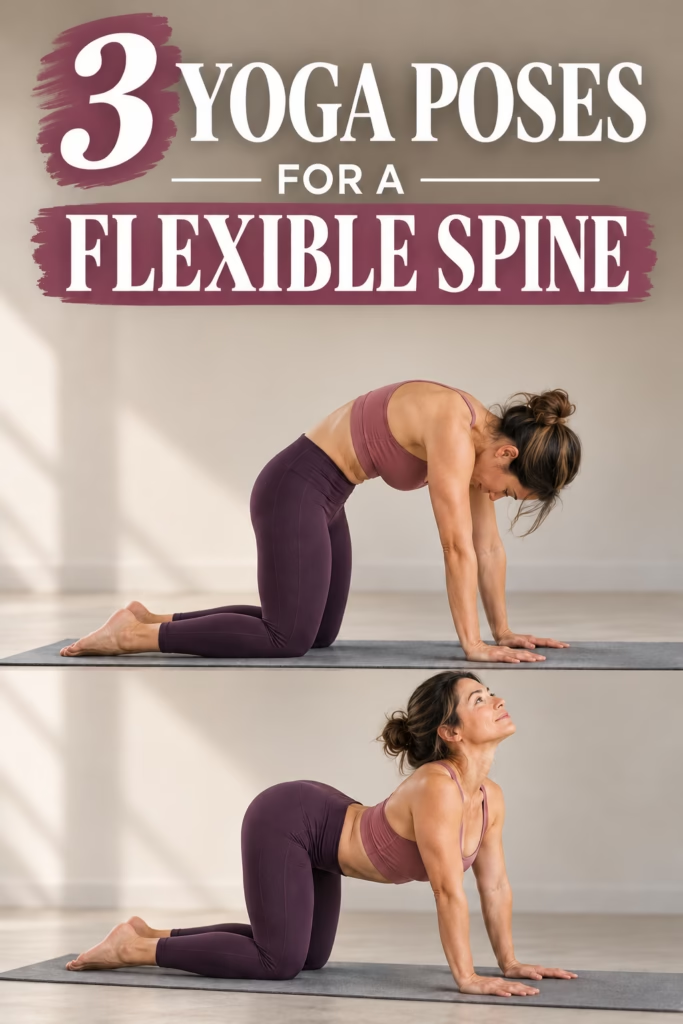
1. Cat-Cow Pose for Gentle Spinal Flexibility
Cat-Cow Pose is one of the easiest and most effective yoga movements for warming up your spine.
This beginner-friendly exercise combines two gentle movements: rounding your back into Cat Pose and extending your spine into Cow Pose.
Moving between these positions encourages mobility through different parts of your back while helping you become more aware of your posture.
How to Do Cat-Cow Pose
- Begin on your hands and knees on a comfortable yoga mat.
- Position your wrists directly beneath your shoulders and your knees beneath your hips.
- Start with your spine in a neutral position and take a slow, deep breath.
- Inhale into Cow Pose: Gently lower your belly toward the mat, lift your chest, and allow your tailbone to tilt upward.
- Keep your shoulders relaxed and look slightly forward without compressing your neck.
- Exhale into Cat Pose: Slowly round your spine toward the ceiling while drawing your belly inward.
- Allow your head and neck to relax as your chin moves gently toward your chest.
- Continue alternating between these two positions for 8–10 slow repetitions.
Why Cat-Cow Is Good for Your Spine
Cat-Cow gently moves your spine between flexion and extension, helping you explore a comfortable range of motion.
It’s particularly useful after long periods of sitting or when your back feels stiff in the morning.
Beginner tip: Move slowly and avoid forcing your back into a deep arch. Place a folded towel beneath your knees for extra comfort.
Try practicing Cat-Cow for two to three minutes as part of your morning stretching routine.
2. Plank Pose to Strengthen Your Spine’s Support System
While Plank Pose isn’t a traditional spinal stretching exercise, it plays an important role in building a strong, stable back.
Your spine depends on surrounding muscles, including your abdominals, back muscles, and glutes, to provide support during movement.
Plank Pose helps strengthen these muscles while encouraging you to maintain a neutral spinal position.
Combining strength and flexibility exercises can create a more balanced yoga routine.
How to Do Plank Pose
- Begin on your hands and knees.
- Place your hands directly beneath your shoulders, spreading your fingers comfortably.
- Extend one leg behind you, followed by the other, until your body forms a straight line from your head to your heels.
- Gently engage your abdominal muscles and glutes.
- Keep your neck neutral by looking slightly ahead of your hands.
- Breathe naturally while holding the position for 15–30 seconds.
- Slowly lower your knees to the mat and rest.
Repeat two or three times, depending on your comfort and strength.
Why Plank Pose Helps Your Back
Plank Pose strengthens the muscles responsible for stabilizing your spine.
These muscles help support your body during everyday movements such as lifting groceries, walking, and maintaining an upright posture.
A stronger core can also help you maintain better control during other yoga spine flexibility exercises.
Beginner modification: Keep your knees on the floor while maintaining a straight line from your head to your knees.
You can also practice a standing plank with your hands against a sturdy wall.
The goal isn’t to hold the pose as long as possible. Focus on proper alignment and steady breathing.
3. Cobra Pose for Gentle Spinal Extension
Cobra Pose is a classic yoga posture that encourages gentle backward bending of the spine.
It’s commonly used in yoga routines designed to improve spinal mobility, open the chest, and stretch the front of the body.
This pose also engages the muscles along your back, making it a useful addition to a balanced flexibility routine.
How to Do Cobra Pose
- Lie face down on your yoga mat with your legs extended behind you.
- Place your palms beneath or slightly ahead of your shoulders.
- Keep your elbows close to your body.
- Gently press the tops of your feet and your pelvis into the mat.
- As you inhale, slowly lift your head and chest using your back muscles, with light support from your hands.
- Keep your elbows slightly bent and your shoulders relaxed.
- Lift only as high as feels comfortable, without forcing your lower back.
- Hold the position for two or three comfortable breaths.
- Exhale and slowly lower your chest back to the mat.
Repeat three to five times.
Benefits of Cobra Pose for Spinal Flexibility
Cobra Pose encourages spinal extension, which is the gentle backward-bending movement of your back.
It may help improve your ability to move comfortably into extension while strengthening the muscles that support your spine.
Additional benefits include:
- Encouraging movement through the upper and middle back.
- Stretching the chest and front of the torso.
- Activating the muscles along your spine.
- Improving awareness of shoulder and upper-body positioning.
- Supporting a more balanced yoga practice.
Beginner tip: Start with Baby Cobra, lifting your chest only a few inches from the floor.
Avoid pushing yourself into a deep backbend. A small, controlled movement is often more useful than trying to lift as high as possible.
If Cobra Pose causes discomfort in your lower back, stop and choose a gentler alternative.
A Simple 12-Minute Yoga Routine for Spinal Flexibility
You don’t need to spend hours stretching to build a consistent yoga habit.
This short routine combines gentle spinal movement, core stability, and controlled extension.
| Exercise | Duration |
|---|---|
| Cat-Cow Pose | 3 minutes |
| Plank Pose with rests | 2 minutes |
| Cobra Pose | 2 minutes |
| Gentle Cat-Cow | 2 minutes |
| Child’s Pose or comfortable rest | 3 minutes |
Move slowly, breathe naturally, and take additional breaks whenever needed.
Child’s Pose can be a relaxing way to finish your session, but it isn’t essential. Choose any comfortable resting position that allows your back to relax.
Practicing regularly may help you gradually become more comfortable with spinal movement.
How to Increase Spinal Flexibility Safely
Improving flexibility takes patience. Your spine doesn’t need to bend dramatically to be healthy or mobile.
Instead of focusing on how far you can stretch, pay attention to how smoothly and comfortably you can move.
Here are a few habits that can support your progress.
1. Start with gentle movements. Begin with Cat-Cow or another comfortable warm-up before attempting deeper stretches.
2. Focus on breathing. Slow breathing can help you relax and avoid unnecessary tension while stretching.
3. Strengthen your core. Exercises such as Plank Pose help build stability around your spine.
4. Avoid forcing a stretch. Mild stretching sensations can be normal, but sharp pain, tingling, or radiating discomfort are signs to stop.
5. Practice consistently. A short routine several times a week is often more manageable than occasional long sessions.
6. Change positions throughout the day. Standing, walking, and moving regularly can help reduce stiffness associated with staying in one position for too long.
7. Respect your body’s limitations. Everyone has a different natural range of motion, and flexibility can vary from day to day.
If you have a spinal injury, osteoporosis, significant back pain, or another condition affecting your spine, consult a healthcare professional before beginning these exercises. Not every yoga pose is suitable for every back condition.
Can You Improve Spinal Flexibility After 40?
Yes. Many adults can maintain or improve aspects of spinal mobility with appropriate, consistent movement.
As we age, changes in activity levels, muscle strength, and joint mobility can affect how easily we move.
However, age doesn’t mean you have to accept increasing stiffness without taking action.
Gentle yoga, walking, strength training, and regular movement can all support healthy physical function.
For women over 40, combining spine flexibility stretches with core-strengthening exercises is a practical way to maintain mobility and stability.
You don’t need to master advanced yoga poses or achieve extreme flexibility.
Being able to bend comfortably, reach overhead, turn your torso, and move confidently throughout your day is a much more meaningful goal.
Final Thoughts: Build a Stronger, More Flexible Spine
A healthy spine benefits from both movement and strength.
Cat-Cow encourages gentle spinal mobility, Plank builds stability through your core, and Cobra introduces controlled spinal extension.
Together, these three yoga poses offer a simple starting point for anyone interested in improving spinal flexibility at home.
Start with movements that feel comfortable, practice regularly, and allow your flexibility to develop naturally.
Your goal isn’t a perfectly flexible spine. It’s a strong, mobile back that helps you feel comfortable and confident in everyday life.
Save this beginner-friendly yoga routine and make a few minutes of gentle spinal movement part of your weekly wellness habits.