10-Day Pilates Challenge: Day 1 Full Body Workout
Starting a Pilates challenge is a wonderful way to build strength, improve body awareness, and develop a more consistent exercise routine. And the best part? You don’t need complicated equipment or hours at the gym to get started.
Welcome to Day 1 of our 10-Day Pilates Workout Challenge! Today, we’re beginning with an intermediate full body Pilates workout that combines controlled movements, core engagement, and targeted exercises for your arms, legs, glutes, and abdominal muscles.
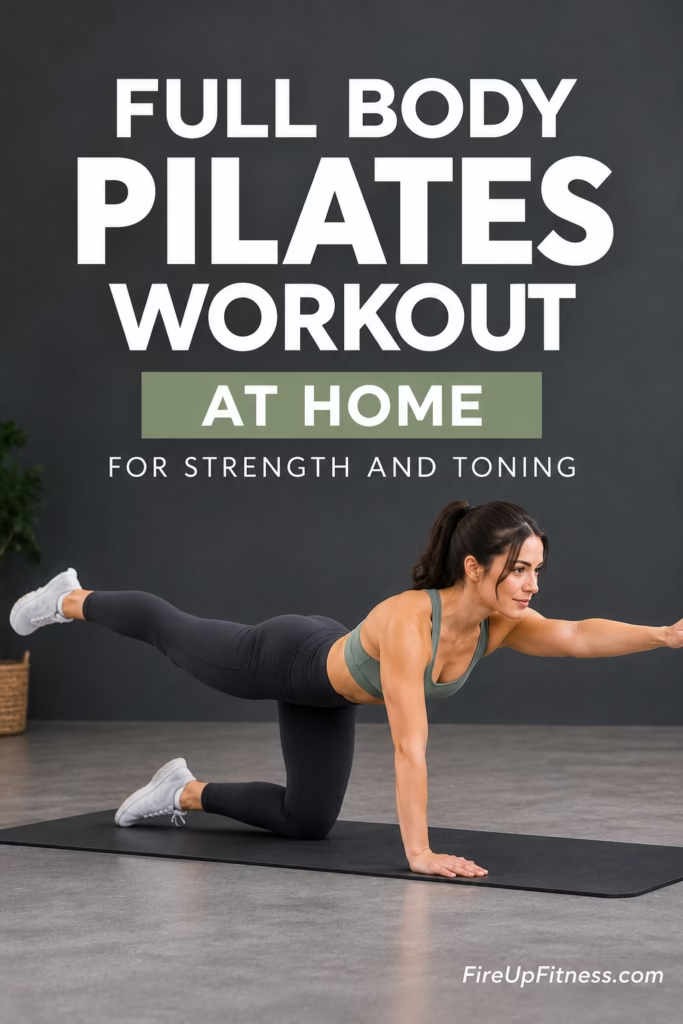
This first workout sets the foundation for the nine sessions ahead. You’ll practice movements that encourage better stability, coordination, and muscular endurance while becoming more comfortable with Pilates breathing and technique.
Throughout this 10-day series, we’ll explore different Pilates workouts, gradually introducing more challenging exercises as your strength and control improve.
All you need for today’s workout is a comfortable exercise mat, a little floor space, and a willingness to move.
What Is the 10-Day Pilates Workout Challenge?
The 10-Day Pilates Workout Challenge is a progressive mat Pilates series designed to help you strengthen different muscle groups while improving your overall movement quality.
Each day features a different workout, giving you an opportunity to explore new exercises and develop greater confidence in your Pilates practice.
The challenge is divided into two stages:
- Days 1–5: Intermediate Pilates workouts. These sessions introduce controlled movements that build foundational strength, stability, and coordination.
- Days 6–10: Advanced Pilates workouts. The second half introduces more demanding exercises that challenge your balance, endurance, and body control.
You don’t have to rush through the progression. When an advanced workout feels too challenging, repeat an intermediate session until you feel comfortable with the movements.
Remember, Pilates isn’t about how quickly you can complete an exercise. It’s about moving with intention, maintaining proper alignment, and developing strength through control.
Day 1: Intermediate Full Body Pilates Workout
Workout overview
Workout level
Intermediate
Equipment
Exercise mat
Workout type
Full body mat Pilates
Main focus
Core, glutes, shoulders
Today’s workout combines several Pilates exercise sequences that work together to challenge the entire body.
You’ll begin with gentle movements on your hands and knees before progressing into planks, side-lying leg exercises, abdominal work, and side plank variations.
The session finishes with relaxing stretches to help release tension after your workout.
Watch the Day 1 Full Body Pilates Workout
Follow along with the complete Day 1 workout in the YouTube video below. The instructor demonstrates each movement and provides helpful reminders about breathing, alignment, and muscle engagement.
You can follow the video from beginning to end or use the exercise breakdown below to become familiar with the movements before starting.
Part 1: Warm Up Your Core, Glutes, and Shoulders
The first section begins in a four-point kneeling position. These movements prepare your spine, shoulders, glutes, and abdominal muscles for the more demanding exercises ahead.
1. Bird Dog Crunches
Bird dog crunches are a controlled Pilates movement that challenges your core stability while strengthening the glutes and shoulders.
How to do it:
- Begin on your hands and knees, positioning your wrists beneath your shoulders and knees beneath your hips.
- Extend your right leg straight behind you and reach your left arm forward.
- Exhale as you bring your left elbow and right knee toward each other underneath your torso.
- Inhale as you extend your arm and leg again, creating a long line through your body.
- Continue the movement slowly, keeping your hips as stable as possible.
- Repeat with your left leg and right arm.
Focus on engaging your abdominal muscles rather than rounding your back excessively. Keep your neck relaxed and avoid lifting your leg so high that your lower back arches.
Pilates tip: Imagine balancing a glass of water on your lower back. Try to keep your torso steady as your arm and leg move.
2. Bird Dog Arm and Leg Lifts
This variation continues from the bird dog position but removes the crunching movement.
Instead, you’ll concentrate on lifting and lowering your extended arm and leg while maintaining a neutral spine.
How to do it:
- Extend your right leg backward and left arm forward.
- Keep both limbs straight throughout the exercise.
- Inhale as you lower your fingertips and toes toward the mat.
- Exhale as you lift your arm and leg back to a comfortable height.
- Engage your abdominal muscles to prevent your torso from rocking.
- Complete the sequence before switching sides.
The goal is to create a smooth, controlled movement without shifting your weight excessively.
This exercise helps activate the muscles along your back while encouraging better coordination between your upper and lower body.
Part 2: Strengthen Your Core With Pilates Plank Exercises
After warming up, the workout progresses into two plank variations.
These exercises require your abdominal muscles to work alongside your shoulders, arms, and legs to maintain stability.
3. Bear Hover Knee Lifts
The bear hover is a challenging core exercise that involves lifting your knees slightly above the floor.
How to do it:
- Start on your hands and knees with your wrists directly underneath your shoulders.
- Tuck your toes under and engage your abdominal muscles.
- Exhale as you lift both knees a few inches off the mat.
- Keep your back neutral and hips steady.
- Inhale as you gently lower your knees to the floor.
- Repeat with slow, controlled movements.
Avoid holding your breath or pushing your shoulders toward your ears.
The small hovering movement activates the deep abdominal muscles, including the transverse abdominis, which helps support the spine.
4. Modified Plank to Full Plank
Next, you’ll progress from a kneeling plank into a full plank.
How to do it:
- Begin in a modified plank with your hands beneath your shoulders and knees positioned behind your hips.
- Engage your core and maintain a long line through your torso.
- Exhale as you lift your knees and straighten your legs into a full plank.
- Tighten your thigh muscles and keep your hips aligned.
- Inhale as you lower your knees briefly to the mat.
- Continue alternating between the two positions.
Keep your abdominal muscles engaged so your lower back doesn’t sag.
When this sequence becomes too demanding, hold the modified plank instead of lifting into the full position.
After completing the plank exercises, sit your hips back toward your heels for a brief recovery stretch.
Part 3: Pilates Glute and Outer Thigh Exercises
The next section shifts into side-lying Pilates exercises that focus on your glutes, hips, and outer thighs.
Although the movements appear simple, maintaining proper alignment makes them surprisingly challenging.
5. Side-Lying Leg Lifts
Side-lying leg lifts strengthen the muscles responsible for hip stability, particularly the gluteus medius.
How to do it:
- Lie on your left side with your left elbow supporting your upper body.
- Bend your bottom knee for stability and extend your right leg straight.
- Keep your hips stacked and lift through your waist rather than collapsing toward the mat.
- Exhale as you raise your right leg.
- Inhale as you lower it with control.
- Complete the exercise before repeating on your other side.
Keep your toes pointed and your thigh muscles engaged throughout the movement.
Avoid rolling your hips backward or swinging your leg to create momentum.
6. Side-Lying Leg Pulses
After the leg lifts, you’ll continue working the same muscles with smaller movements.
How to do it:
- Stay in the side-lying position with your top leg extended.
- Lift the leg to a comfortable height.
- Perform small upward and downward pulses.
- Keep the movement controlled rather than bouncing.
- After approximately 30 seconds, rotate your leg inward so your toes angle toward the floor and your heel turns upward.
- Continue pulsing for another 30 seconds.
Repeat the complete sequence on the opposite side.
The video uses approximately 60 seconds of pulses per side, divided between a parallel leg position and an inwardly rotated position.
You may notice a strong muscular effort through your outer hips. Reduce the range of motion or pause briefly when needed.
Form reminder: Keep your supporting shoulder relaxed and your spine long. Your upper body should remain stable while your leg moves.
Part 4: Pilates Ab Exercises for Core Strength
Now it’s time to move onto your back for a series of abdominal exercises.
This section focuses on controlled leg movements, spinal flexion, and abdominal endurance.
The key is to maintain a comfortable pelvic position while keeping your shoulders and neck relaxed.
7. Single Leg Toe Taps
Single leg toe taps are an effective way to practice abdominal control while moving your legs independently.
How to do it:
- Lie on your back with your hands supporting your head and elbows open.
- Bring both legs into tabletop position, with your knees above your hips and shins parallel to the floor.
- Gently draw your ribs down and engage your abdominal muscles.
- Exhale as you lower one foot toward the floor, keeping your knee bent.
- Inhale as you return to tabletop.
- Alternate legs while keeping your pelvis steady.
Avoid arching your lower back as your foot approaches the floor.
When maintaining control becomes difficult, reduce how far you lower your leg.
8. Single Leg Stretch
This exercise builds on the previous movement by extending one leg away from your body.
How to do it:
- Remain on your back with both knees in tabletop position.
- Keep your elbows wide and shoulders relaxed.
- Exhale as you extend one leg forward at approximately a 45-degree angle.
- Point your toes and lengthen through the leg.
- Inhale as you bend the knee and return to tabletop.
- Alternate sides without shifting your pelvis.
For a greater challenge, you can gradually lower the extended leg closer to the floor, provided your lower back remains comfortable and stable.
9. Pilates Oblique Twists
The next movement introduces spinal rotation to engage your oblique muscles.
How to do it:
- Begin with your knees in tabletop position and hands behind your head.
- Lift your head and upper shoulders into a comfortable abdominal curl.
- Extend your left leg as you rotate your torso, bringing your left elbow toward your right knee.
- Return through the center and repeat on the opposite side.
- Keep your elbows open and rotate through your upper torso instead of pulling your head forward.
Move slowly enough to feel your abdominal muscles controlling the rotation.
The goal isn’t to force your elbow to touch your knee. Focus on maintaining a smooth twisting motion while keeping your neck comfortable.
10. Small Pilates Crunches
This short sequence concentrates on abdominal flexion with small, controlled movements.
How to do it:
- Keep your knees bent in tabletop position.
- Support your head with your hands and open your elbows.
- Exhale as you gently lift your upper shoulders, drawing your ribs toward your hips.
- Lower slightly without completely releasing your abdominal engagement.
- Continue performing small crunches for approximately 30 seconds.
Allow your hands to support the weight of your head rather than pulling on your neck.
After completing the sequence, hug your knees toward your chest for a brief recovery.
11. Pilates Hundreds
The Pilates Hundred is a classic mat exercise that combines rhythmic arm movements with coordinated breathing.
How to do it:
- Lie on your back and bring your legs into tabletop position.
- Gently lift your head and upper shoulders into an abdominal curl.
- Extend your arms alongside your body, hovering above the mat.
- Pump your arms up and down using small, energetic movements.
- Inhale for five arm pumps and exhale for five pumps.
- Continue following the instructor’s rhythm.
As the exercise progresses, the instructor offers the option of extending both legs to increase the challenge.
Keep your torso stable and avoid straining your neck.
For a more comfortable variation, rest your head on the mat and keep your knees bent.
Part 5: Finish With a Pilates Side Plank Series
The final strengthening section focuses on your obliques, shoulders, and lateral core stability.
You’ll perform three movements on each side using a modified side plank position.
12. Modified Side Plank Hip Lifts
How to do it:
- Lie on your right side with your right elbow directly beneath your shoulder.
- Bend both knees and stack your legs.
- Reach your left arm toward the ceiling.
- Exhale as you lift your hips away from the mat.
- Create a long line from your shoulders through your hips.
- Inhale as you lower your hips with control.
Keep your chest open and avoid collapsing into your supporting shoulder.
The video performs this movement for approximately 45 seconds on each side.
13. Side Plank Rotations
From the modified side plank, you’ll introduce a twisting movement.
How to do it:
- Lift your hips into the modified side plank.
- Extend your top arm toward the ceiling.
- Exhale as you rotate your upper torso and reach your arm underneath your body.
- Keep your hips lifted and relatively still.
- Inhale as you open your chest and return your arm toward the ceiling.
- Continue with controlled rotations.
This exercise challenges your obliques while encouraging mobility through your upper spine.
Rotate only as far as you can comfortably maintain your balance and shoulder alignment.
14. Side Plank Hip Pulses
The final strengthening exercise uses small hip movements to challenge your lateral core muscles.
How to do it:
- Remain in your modified side plank.
- Keep your supporting elbow aligned beneath your shoulder.
- Lower your hips approximately an inch.
- Lift them back up using your side abdominal muscles.
- Continue the small pulses without swinging your torso.
Complete the sequence on both sides.
These final pulses may feel demanding after the earlier abdominal exercises, so concentrate on maintaining control rather than increasing speed.
Part 6: Cool Down With Gentle Pilates Stretches
After completing the strengthening exercises, take a few moments to stretch and relax.
The video finishes with two stretching sequences.
15. Lying Quadriceps and Hip Flexor Stretch
Lie on your stomach and bend your right knee, bringing your heel toward your hip.
Gently hold your foot with your right hand, keeping your pelvis grounded and lightly engaging your abdominal muscles.
You should feel a comfortable stretch through the front of your thigh.
Release and repeat on your left side.
Avoid pulling your heel forcefully toward your body. A gentle stretch is enough.
16. Seated Side Stretch With Rotation
Finish in a comfortable cross-legged seated position.
Place your right hand on the floor beside you and reach your left arm overhead, creating a gentle stretch along your left side.
Exhale as you rotate your torso toward the floor, reaching your left arm forward.
Inhale as you open your chest and rotate upward.
Repeat a few times before switching sides.
Allow your breathing to slow naturally as you finish the workout.
Benefits of This Full Body Pilates Workout
Today’s routine combines movements that challenge several important aspects of physical fitness.
Builds Core Strength and Stability
Exercises such as bear hovers, toe taps, and side planks require your abdominal muscles to stabilize your spine while other parts of your body move.
With consistent practice, this type of training can help improve core endurance and body control.
Strengthens the Glutes and Hips
The side-lying leg series activates the gluteal muscles, which play an important role in supporting hip and pelvic stability.
Stronger hip muscles can contribute to better control during everyday movements, including walking and climbing stairs.
Improves Coordination and Balance
Bird dog variations challenge you to move opposite limbs while maintaining a stable torso.
This encourages coordination and awareness of how different muscle groups work together.
Develops Muscular Endurance
The controlled repetitions, sustained positions, and small pulses used throughout the workout challenge your muscles to remain active over time.
As your endurance improves, you may find it easier to maintain good form during longer Pilates sessions.
Encourages Better Posture and Body Awareness
Pilates emphasizes spinal alignment, shoulder positioning, breathing, and pelvic control.
Practicing these skills regularly can help you become more aware of your posture and movement habits throughout the day.
Tips for Getting the Most Out of Your 10-Day Pilates Challenge
Consistency matters, but so does giving your body the attention it needs.
Here are a few simple ways to make your Pilates practice more comfortable and productive:
- Prioritize proper form. Smaller, controlled movements are often more effective than larger movements performed with poor alignment.
- Coordinate your breathing. Exhale during the more demanding phase of each exercise and avoid holding your breath.
- Use modifications when necessary. Keeping your knees bent or reducing your range of motion can make challenging exercises more manageable.
- Listen to your body. Muscular effort is normal, but sharp pain, dizziness, or joint discomfort is a reason to stop and reassess.
- Track your progress. Notice improvements in balance, stability, coordination, and confidence rather than focusing only on appearance.
Although this is a 10-day series, there’s no requirement to complete every workout on consecutive days. Take recovery days when needed, particularly if you’re experiencing significant soreness or fatigue.
Frequently Asked Questions
Is this Pilates workout suitable for beginners?
Day 1 is designed as an intermediate workout. Beginners may still be able to participate by modifying the movements, reducing repetitions, and taking additional breaks.
Those who are completely new to Pilates may benefit from learning basic breathing, alignment, and core engagement techniques before attempting the full routine.
Do I need any Pilates equipment?
No special Pilates equipment is required. A comfortable exercise mat and enough space to extend your arms and legs are all you need.
Can I repeat Day 1 before moving to Day 2?
Absolutely. Repeating the workout can help you become more familiar with the exercises and improve your movement control.
You can also return to this full body Pilates routine whenever you want a balanced mat workout.
Will Pilates help improve my flexibility?
Pilates includes controlled movements that take your joints through different ranges of motion. With regular practice, it can support mobility and flexibility alongside strength and stability.
What happens during Days 6–10?
The second half of the challenge introduces more advanced Pilates exercises.
These sessions build on the foundational movements practiced during the first five days. You can repeat the intermediate workouts whenever you need more time to develop strength and confidence.
Your 10-Day Pilates Journey Starts Here
Completing Day 1 is the beginning of your Pilates journey.
Today’s workout introduced full body strengthening movements, core stability exercises, glute activation, and controlled stretching. More importantly, it gave you an opportunity to focus on how your body moves and responds to different challenges.
As you continue through the series, remember that progress doesn’t always mean performing more repetitions or attempting harder variations. Sometimes, progress is simply feeling more balanced, maintaining better alignment, or completing an exercise with greater control.
Coming up next: Day 2 of the 10-Day Pilates Workout Challenge.
We’ll continue building on today’s foundation with another Pilates session designed to challenge a different area of the body.
Save this workout to your Pinterest Pilates board so you can easily return to Day 1, and follow along with the complete 10-day series as each new workout becomes available.
Your goal for today is simple: move with intention, enjoy the process, and give yourself credit for showing up.