Core Strength Workout for Women: 8 Easy Exercises
A strong core helps you move with better control, maintain good posture, and support your lower back during everyday activities. And building that strength doesn’t require complicated equipment or endless crunches.
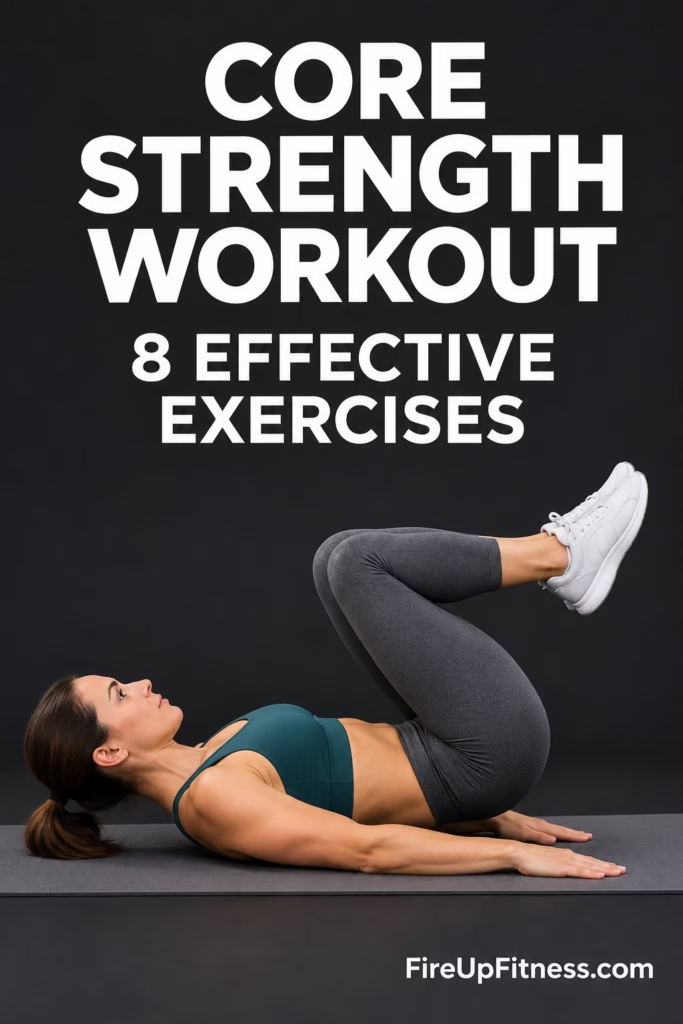
This core strength workout for women includes eight effective exercises divided into two simple routines. The first focuses on stability and balance, while the second uses dynamic movements to challenge your abdominal muscles and improve endurance.
You can do the entire workout at home with just an exercise mat. Each movement includes instructions and beginner-friendly modifications, making it easy to adjust the routine to your fitness level.
Why Core Strength Is Important
Your core includes more than your abdominal muscles. It also involves muscles surrounding your spine and pelvis that work together to stabilize your body.
Regular core training can help:
- Improve posture and spinal support
- Develop better balance and coordination
- Strengthen your abdominal and back muscles
- Make everyday movements feel more controlled
- Support performance in Pilates, yoga, and strength training
The most effective approach combines exercises that challenge your core in different ways, including resisting movement, maintaining balance, and controlling rotation.
How to Follow This At-Home Core Workout
Start with 3–5 minutes of gentle movement, such as marching in place, standing torso rotations, or Cat-Cow stretches.
The workout has two sections:
Workout 1: Core Stability — Four exercises that develop balance, alignment, and deep abdominal strength.
Workout 2: Dynamic Core Training — Four movements that build abdominal endurance through controlled motion.
Complete one round of each routine, resting for 20–40 seconds between exercises as needed. Beginners can start with just one section.
Aim for two or three sessions per week, allowing time for recovery between challenging workouts.
Workout 1: Core Stability and Balance
These four exercises strengthen the muscles responsible for keeping your torso steady during movement.
1. Bird Dog – 4–6 Reps Per Side
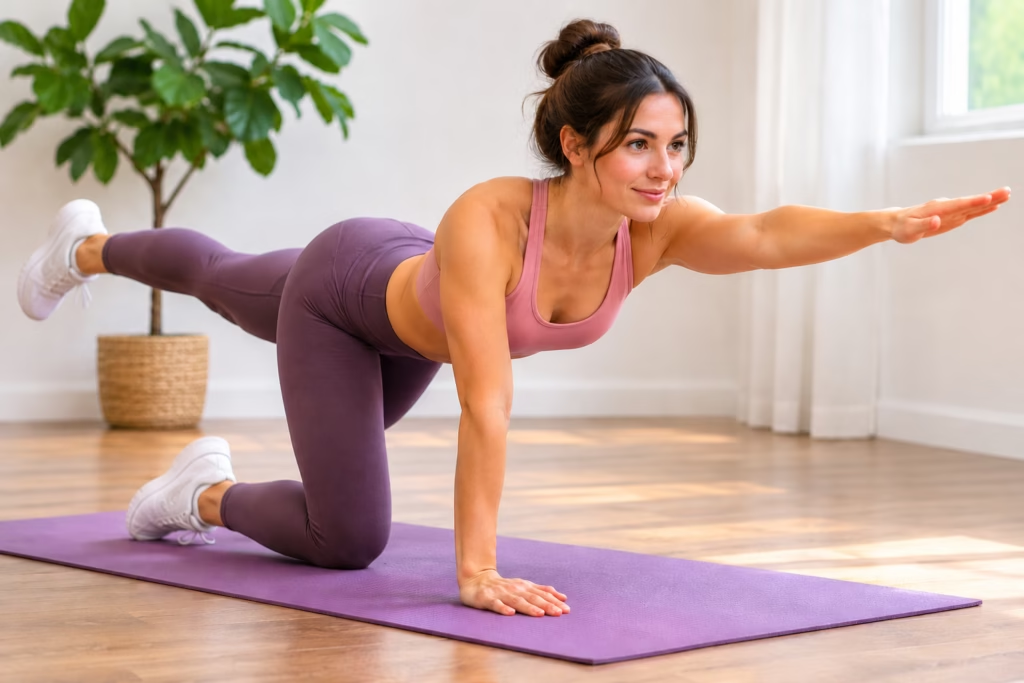
Bird Dog improves coordination while strengthening your core and back muscles.
How to do it:
- Begin on all fours with your hands beneath your shoulders and knees beneath your hips.
- Extend your right arm forward and left leg backward.
- Keep your hips level and avoid arching your lower back.
- Pause briefly, then return to the starting position.
- Repeat on the opposite side.
Beginner modification: Extend only one arm or leg at a time until you develop better balance.
2. Dead Bug – 8–10 Reps Per Side
Dead Bug challenges your deep abdominal muscles while teaching your body to maintain stability as your arms and legs move.
How to do it:
- Lie on your back with your arms pointing toward the ceiling.
- Raise your legs with your hips and knees bent at 90 degrees.
- Slowly lower your right arm overhead while extending your left leg.
- Keep your lower back comfortably supported against the mat.
- Return to the starting position and alternate sides.
Beginner modification: Keep your knees bent and lower one heel toward the floor instead of extending your leg completely.
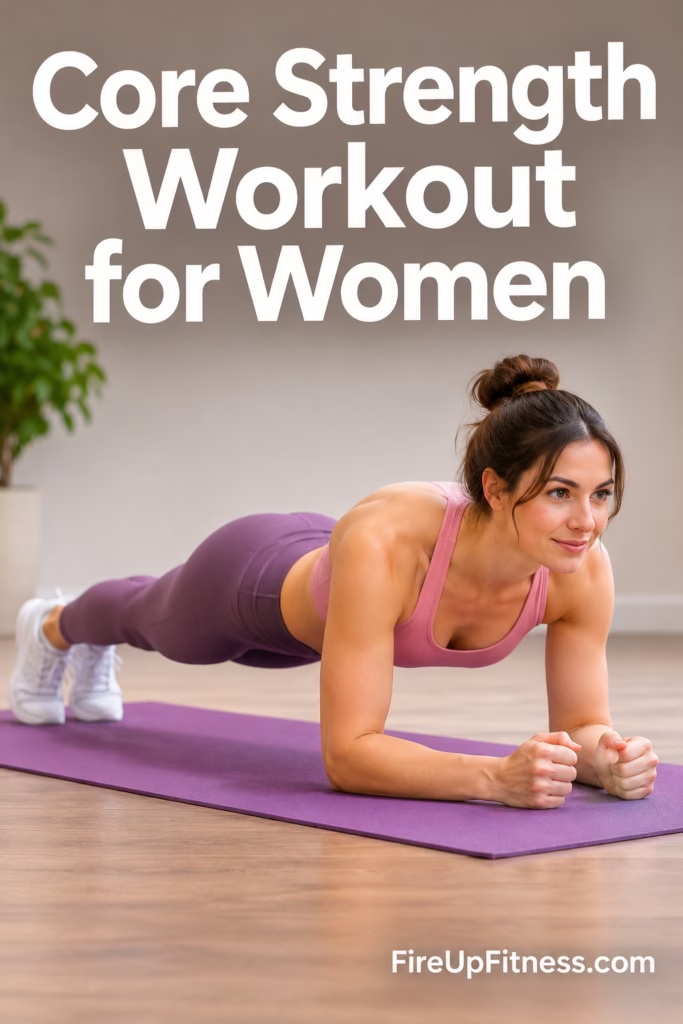
3. Forearm Plank – Hold 20–40 Seconds
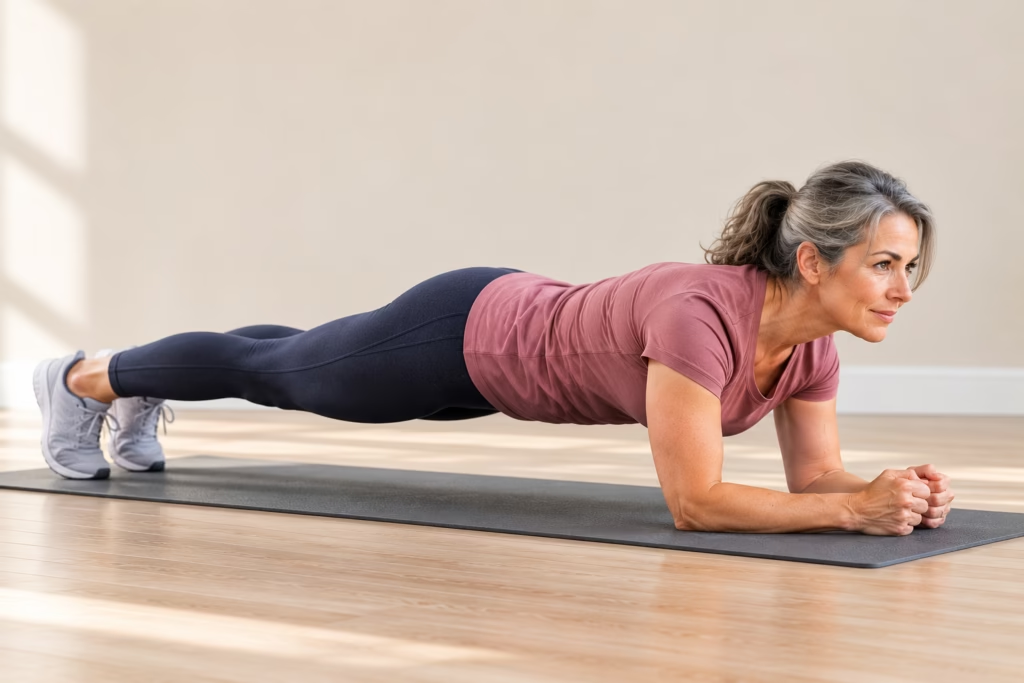
The forearm plank strengthens your abdominal muscles while challenging your shoulders and glutes.
How to do it:
- Place your forearms on the mat with your elbows beneath your shoulders.
- Extend your legs behind you and balance on your toes.
- Engage your abdominal muscles and maintain a straight line from head to heels.
- Breathe steadily throughout the hold.
Beginner modification: Keep your knees on the mat and begin with a 10–15-second hold.
4. Side Plank – Hold 20–30 Seconds Per Side
Side Planks emphasize your obliques, the muscles along the sides of your abdomen, while improving lateral stability.
How to do it:
- Lie on your right side with your elbow beneath your shoulder.
- Stack your feet or stagger them for balance.
- Lift your hips until your body forms a straight line.
- Maintain the position without allowing your hips to drop.
- Lower slowly and repeat on the other side.
Beginner modification: Bend your knees and keep them on the floor for additional support.
Workout 2: Dynamic Abs and Core Strength
This routine introduces controlled movement to challenge your abdominal muscles through different ranges of motion.
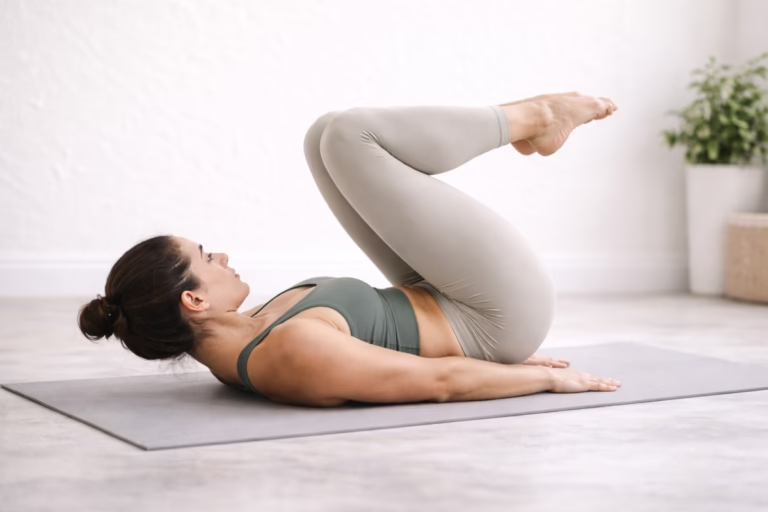
5. Reverse Crunch – 10–15 Reps
Reverse Crunches strengthen your abdominal muscles through a gentle curling movement of the pelvis.
How to do it:
- Lie on your back with your knees bent and feet lifted.
- Rest your arms beside your body.
- Engage your abs and slowly curl your pelvis upward, bringing your knees slightly toward your chest.
- Lower your hips with control.
- Repeat without swinging your legs.
Beginner modification: Keep the movement small and focus on lifting your pelvis rather than pulling your knees forcefully toward your chest.
6. Bicycle Crunch – 12–16 Reps Per Side
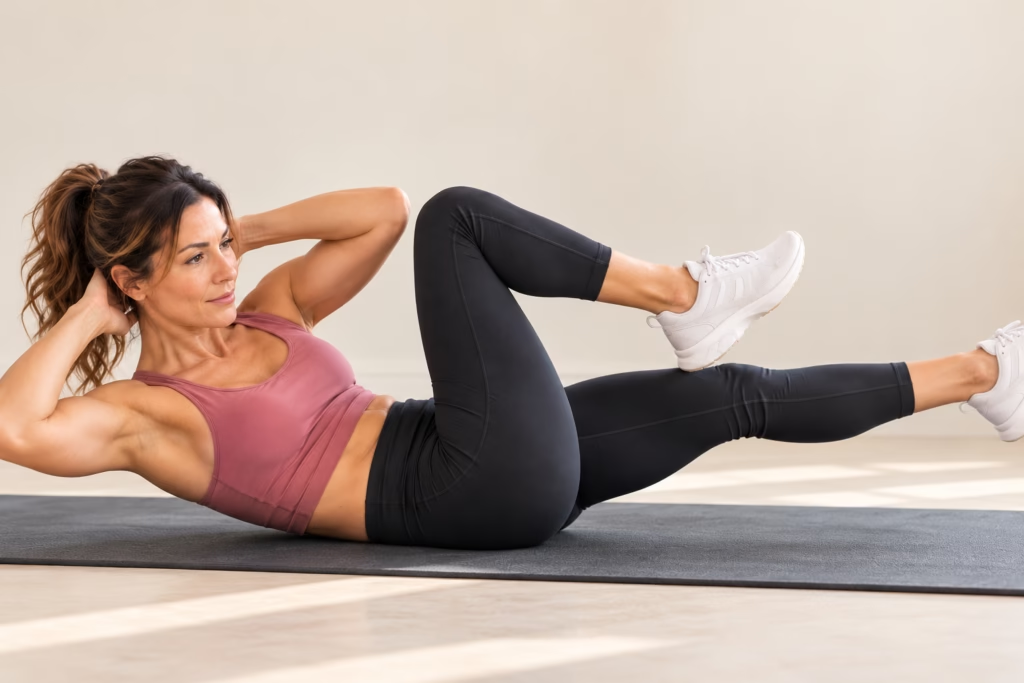
Bicycle Crunches combine abdominal flexion and rotation to challenge your rectus abdominis and obliques.
How to do it:
- Lie on your back with your hands lightly supporting your head.
- Raise your knees into a tabletop position.
- Lift your shoulders slightly and rotate your right shoulder toward your left knee while extending your right leg.
- Return through the center and switch sides.
- Continue alternating at a controlled pace.
Beginner modification: Keep your feet closer to the floor and reduce the amount of rotation. Avoid pulling on your neck.
7. Flutter Kicks – 20–30 Seconds
Flutter Kicks challenge your abdominal endurance as your legs move independently.
How to do it:
- Lie on your back with your legs extended.
- Place your arms alongside your body.
- Lift both legs to a comfortable height.
- Alternate raising and lowering your legs in small movements.
- Keep your pelvis steady and avoid excessive arching in your lower back.
Beginner modification: Bend your knees slightly or raise your legs higher to make the exercise more manageable.
8. Mountain Climbers – 30–45 Seconds

Mountain Climbers combine core stabilization with alternating knee movements, engaging your shoulders, hip flexors, and abdominal muscles.
How to do it:
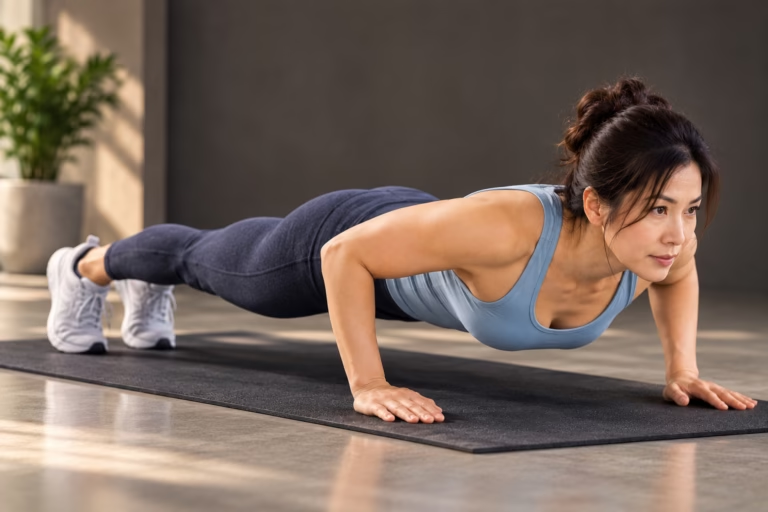
- Begin in a high plank with your hands beneath your shoulders.
- Bring your right knee toward your chest.
- Return your foot to the starting position.
- Repeat with your left knee.
- Continue alternating while keeping your hips relatively steady.
Beginner modification: Place your hands on a sturdy countertop and slowly step your knees forward one at a time.
Quick Core Workout Routine to Save
Use this simple reference when you’re ready to exercise.
| Exercise | Reps or Duration |
|---|---|
| Bird Dog | 4–6 per side |
| Dead Bug | 8–10 per side |
| Forearm Plank | 20–40 seconds |
| Side Plank | 20–30 seconds per side |
| Reverse Crunch | 10–15 reps |
| Bicycle Crunch | 12–16 per side |
| Flutter Kicks | 20–30 seconds |
| Mountain Climbers | 30–45 seconds |
Workout tip: Begin with one round. As the exercises become easier, gradually increase your repetitions, hold times, or number of rounds without sacrificing proper form.
Save this routine to your Pinterest Abs Workout Routines or At-Home Workouts for Women board for easy reference.
Cool-Down Stretches After Your Core Workout
Finish with a few gentle stretches to release tension and transition out of your workout.
Cat-Cow Stretch: On your hands and knees, slowly alternate between rounding and gently arching your spine for 5–8 repetitions.
Child’s Pose: Sit your hips toward your heels, reach your arms forward, and breathe comfortably for 20–30 seconds.
Kneeling Hip Flexor Stretch: Step one foot forward into a half-kneeling position. Gently shift your hips forward and hold for 20–30 seconds per side.
Move within a comfortable range and avoid forcing any stretch.
Common Core Workout Mistakes to Avoid
Rushing Through Repetitions
Moving too quickly can reduce muscle control and make it harder to maintain alignment. Choose a pace that allows you to perform each repetition correctly.
Holding Your Breath
Steady breathing helps you maintain control during abdominal exercises. Exhale during the challenging part of a movement and inhale as you return.
Arching Your Lower Back
During exercises such as Dead Bugs and Flutter Kicks, reduce your range of motion if you cannot keep your pelvis stable or your lower back becomes uncomfortable.
Progressing Too Quickly
Increasing workout difficulty before mastering the basics can lead to poor technique. Build confidence with easier variations before adding repetitions or longer holds.
How to Build Core Strength Over Time
Once you’ve learned the exercises, focus on making gradual progress.
You might begin with shorter plank holds, then extend them by five seconds as your endurance improves. For dynamic movements, add a few repetitions when you can complete your current set with good form.
Include other activities you enjoy, such as walking, Pilates, swimming, or full-body strength training. These complement your abdominal workouts by challenging your muscles in different ways.
Adequate rest, hydration, and balanced meals also support muscle recovery and consistent training.
Pay attention to improvements in balance, exercise control, and how comfortably you perform daily movements. These are meaningful signs of progress.
Frequently Asked Questions
Is this core workout suitable for beginners?
Yes. Each exercise includes a modification. Beginners may find it helpful to start with Bird Dogs, Dead Bugs, and knee-supported planks before trying the complete routine.
Can I do these exercises without equipment?
Absolutely. The entire workout uses body weight. An exercise mat is optional but can make floor exercises more comfortable.
How long does it take to improve core strength?
Progress varies depending on your starting fitness level and training consistency. You may notice better exercise control within a few weeks, while larger strength improvements generally take longer.
Can I combine this workout with Pilates?
Yes. Pilates emphasizes controlled movement, breathing, and stability, making it a useful complement to these exercises.
Final Thoughts
Building a stronger core doesn’t have to be complicated. These eight exercises provide a balanced combination of stability, coordination, and abdominal strengthening that you can practice in the comfort of your home.
Start with the movements that suit your ability, focus on proper technique, and gradually challenge yourself as your strength improves.
Save this core strength workout for women to Pinterest so you’ll have an easy, equipment-free routine ready for your next workout.