10-Minute Booty Band Workout for Stronger, Firmer Glutes
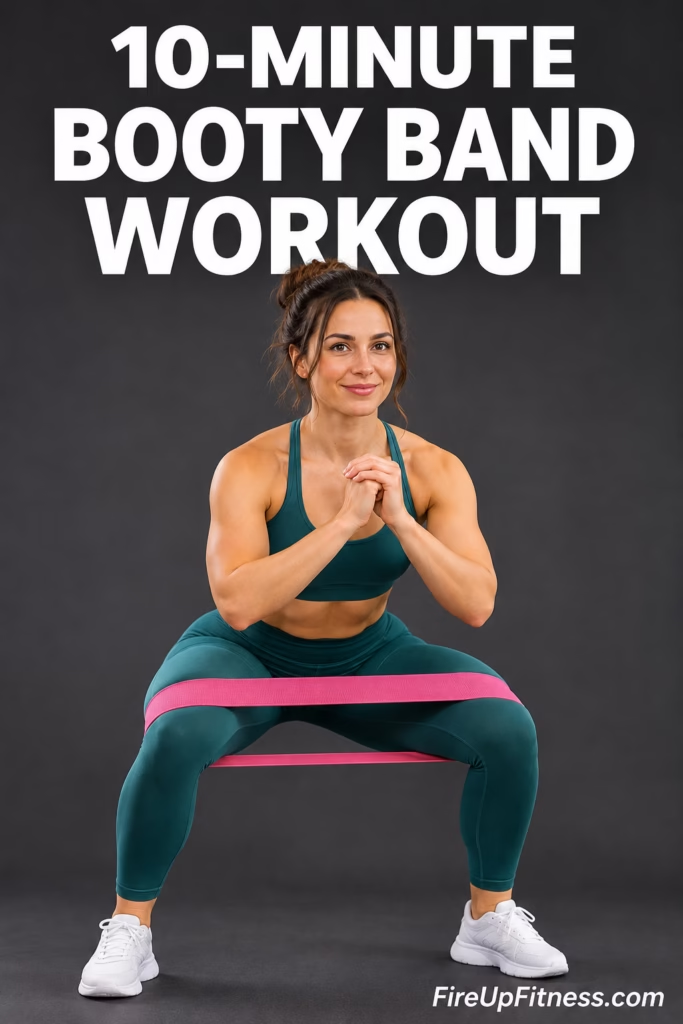
Want stronger glutes without spending an hour at the gym? This 10-minute booty band workout is a simple way to challenge your glute muscles, build lower-body strength, and improve hip stability—all from the comfort of home.
Using just a small resistance band, you’ll move through 10 exercises that target your gluteus maximus, gluteus medius, and the smaller muscles that help support your hips. The routine combines standing exercises, floor movements, and glute bridges to give your lower body a well-rounded workout.
The best part? You don’t need heavy weights, complicated equipment, or much space. Just grab your resistance band, roll out your exercise mat, and get ready to feel your glutes working.
Why Try a Booty Band Workout?
Resistance bands might look simple, but they can make familiar exercises surprisingly challenging. By adding tension as you move, a booty band encourages your glute muscles to work against resistance.
Here are a few reasons to include resistance band exercises in your fitness routine:
- Strengthens your glutes: Targets the muscles responsible for hip extension, rotation, and stability.
- Improves hip stability: Helps strengthen the muscles that support balance and controlled movement.
- Activates smaller muscles: Side leg lifts and fire hydrants challenge the often-overlooked gluteus medius.
- Supports everyday movement: Strong glutes contribute to walking, climbing stairs, squatting, and maintaining good posture.
- Works well at home: A resistance band is lightweight, affordable, and easy to store.
Regular resistance training can also help develop firmer, stronger glute muscles over time. However, visible changes in muscle shape depend on consistency, progressive resistance, and individual factors.
What You’ll Need for This 10-Minute Glute Workout
This workout requires very little equipment:
- A circular resistance band, also called a booty band
- An exercise mat for floor movements
- Enough space to move comfortably
Workout structure:
| Workout detail | Time |
|---|---|
| Total workout | 10 minutes |
| Exercises | 10 |
| Work interval | 45 seconds |
| Rest interval | 15 seconds |
| Equipment | Booty band and mat |
| Fitness level | Beginner to intermediate, with modifications |
Place your resistance band just above your knees. Choose a resistance level that challenges your muscles without forcing your knees inward or compromising your form.
The workout begins with two standing movements before transitioning to the mat.
10-Minute Booty Band Workout: 10 Effective Exercises
1. Squat Step-Out With Glute Extension
45 SECONDS
Start standing with your feet approximately hip-width apart and the resistance band positioned above your knees.
How to do it:
- Lower into a squat while keeping your chest lifted and core engaged.
- Step one foot out to the side, widening your squat.
- Bring that foot back toward the center.
- Stand tall and extend the same leg slightly behind you, squeezing your glutes.
- Repeat on the opposite side, alternating throughout the interval.
Keep your weight balanced and push your hips back as you squat. Avoid rushing the steps, especially when working against the band.
Muscles worked: Gluteus maximus, gluteus medius, quadriceps, and hip stabilizers.
2. Squat With Side Leg Lift
45 SECONDS
This exercise combines a traditional squat with a standing hip abduction movement to challenge both the larger glute muscles and the muscles along the sides of your hips.
How to do it:
- Stand with your feet hip-width apart.
- Bend your knees and lower into a controlled squat.
- As you stand, lift your right leg out to the side.
- Lower your leg and return to the squat.
- Repeat with your left leg, continuing to alternate.
Keep your torso upright during the leg lift rather than leaning to the opposite side. Lift only as high as you can while maintaining control.
Form tip: Exhale as you stand and lift your leg. Focus on using your side glutes rather than swinging your leg.
3. Right-Leg Glute Pulses With Knee Tuck
45 SECONDS
Move onto your hands and knees in a tabletop position. Keep your hands beneath your shoulders and knees beneath your hips.
How to do it:
- Extend your right leg straight behind you.
- Lift the leg slightly and perform two small upward pulses.
- Bend your right knee and draw it inward toward your supporting leg.
- Extend the leg behind you again.
- Continue the pulse-pulse-tuck-extend pattern.
Keep your hips level and your abdominal muscles engaged.
The goal is to move your leg using your glutes without excessively arching your lower back.
Form tip: Think about lengthening your leg behind you instead of lifting it as high as possible.
4. Right-Leg Fire Hydrant
45 SECONDS
Fire hydrants are a useful resistance band exercise for strengthening the outer glutes and improving hip control.
How to do it:
- Remain in your tabletop position.
- Keep your right knee bent at approximately 90 degrees.
- Lift your right knee outward to the side against the band’s resistance.
- Pause briefly at the top.
- Slowly lower your knee without shifting your hips.
For an additional challenge, lift your knee outward, straighten your leg to the side, bend it again, and lower.
The advanced variation increases the challenge, but the regular fire hydrant is effective when performed with good control.
Muscles worked: Gluteus medius, gluteus minimus, and other hip stabilizers.
5. Left-Leg Glute Pulses With Knee Tuck
45 SECONDS
Now repeat the third exercise on your left side.
Extend your left leg behind you, perform two small upward pulses, tuck your knee inward, and extend again.
Keep your shoulders steady and avoid twisting your torso.
Try to maintain the same range of motion and control you used on your right side. It’s normal for one side to feel slightly stronger or more coordinated than the other.
6. Left-Leg Fire Hydrant
45 SECONDS
Continue working your left glutes with controlled fire hydrants.
Lift your bent left knee out to the side, then slowly return it toward the mat.
You can alternate between regular fire hydrants and the more challenging leg-extension variation.
Form tip: Press evenly through both hands and avoid shifting your body weight excessively onto your supporting hip.
Quality matters more than how high you lift your knee.
7. Prone Leg Lift With Band Opening
45 SECONDS
Lie face down on your exercise mat with your legs extended behind you.
Stack your hands and rest your forehead comfortably on them.
How to do it:
- Keep your legs long and engage your glutes.
- Lift both legs slightly off the floor.
- Open your legs apart against the resistance band.
- Bring your legs back together.
- Lower them gently to the mat and repeat.
For a harder variation, keep your legs slightly elevated while opening and closing them.
Avoid lifting so high that your lower back becomes uncomfortable. Keep your neck relaxed and your gaze toward the floor.
This movement challenges your glutes and outer hips while requiring control through your trunk.
8. Reverse Tabletop Glute Bridge With Knee Opening
45 SECONDS
Sit on your mat with your knees bent, feet planted, and hands behind you.
Press through your hands and feet to lift your hips into a reverse tabletop position.
How to do it:
- Lift your hips while keeping your knees bent.
- Open your knees outward against the resistance band.
- Bring your knees back toward hip-width apart.
- Lower your hips toward the mat.
- Press through your feet to lift again.
Keep your shoulders comfortable and avoid allowing your knees to collapse inward.
Wrist-friendly modification: Lie on your back with your knees bent and feet planted. Perform the same knee-opening and hip-lifting movements from a traditional glute bridge position.
9. Lying Knee Openers
45 SECONDS
Lie on your back and draw both knees toward your chest.
Keep your resistance band above your knees.
How to do it:
- Bring your knees into a comfortable bent position toward your chest.
- Slowly open your knees apart against the band.
- Hold the open position briefly.
- Bring your knees back together with control.
- Repeat while keeping your upper body relaxed.
Focus on a smooth opening movement rather than pulling your knees as far apart as possible.
This exercise emphasizes the muscles along the outer hips, particularly the gluteus medius and minimus.
10. Diamond Glute Bridge
45 SECONDS
Finish the workout with a glute bridge variation that uses a diamond-shaped leg position.
How to do it:
- Lie on your back and bring the soles of your feet together.
- Allow your knees to open outward, forming a diamond shape.
- Engage your abdominal muscles and gently lift your hips.
- Squeeze your glutes briefly at the top.
- Slowly lower your hips and repeat.
Keep your ribs from flaring upward and avoid forcing your knees toward the floor.
If the diamond position feels uncomfortable on your hips or feet, place your feet flat on the mat and perform a traditional glute bridge instead.
Finish with slow, controlled repetitions and a brief squeeze at the top.
Follow Along With the 10-Minute Booty Band Workout Video
The accompanying workout video guides you through all 10 exercises, including the 45-second intervals, 15-second recovery periods, and movement modifications.
Follow the instructor’s demonstrations, take additional breaks when needed, and choose a band resistance that allows you to maintain proper technique.
How to Get Better Results From Your Resistance Band Workout
A short workout can be a useful part of your strength-training routine, especially when you focus on consistent practice and gradually increase the challenge.
Choose the Right Resistance Band
Start with a light or medium band that allows you to move comfortably. The resistance should be noticeable, but it shouldn’t cause your knees to collapse inward or force you to compensate with your back.
As you become stronger, consider using a firmer band or adding more challenging glute exercises to your routine.
Focus on Slow, Controlled Movements
Avoid rushing through the repetitions just to complete more exercises.
Slowing down the lowering phase, maintaining tension in the band, and briefly pausing during certain movements can help you stay focused on the muscles you’re training.
Keep Your Core Engaged
Your abdominal muscles help stabilize your body during squats, tabletop exercises, and glute bridges.
Maintaining a comfortable, controlled spinal position allows you to concentrate on the intended glute movement without unnecessary strain.
Train Your Glutes Consistently
Try incorporating this workout two to three times per week, allowing recovery between challenging glute sessions.
You can also pair it with other lower-body strength exercises, such as lunges, step-ups, and weighted hip thrusts, to develop a more complete routine.
Make Progress Gradually
When the exercises begin to feel easier, you can increase band resistance, add a set, or incorporate additional strength-training movements.
Remember that muscle strength and development improve gradually. Consistent training and sufficient recovery matter more than chasing an intense burning sensation during every workout.
Is This 10-Minute Booty Band Workout Good for Beginners?
Yes. Most of the exercises are beginner-friendly, particularly when performed with a lighter resistance band.
Beginners can modify the workout by using a smaller range of motion, skipping the advanced fire hydrant extensions, or resting longer between exercises.
You can also perform the first few sessions without a band while learning the movement patterns.
If you experience sharp pain, joint discomfort, or unusual strain, stop the exercise and adjust your position or choose a more comfortable alternative.
Frequently Asked Questions
Can a 10-minute booty band workout build glute muscles?
Yes, resistance band exercises can contribute to glute strength and muscle development when the resistance is sufficiently challenging. For continued muscle growth, gradually increasing the training challenge and incorporating other strength exercises may be helpful.
How often should I do this booty band workout?
Two to three sessions per week is a reasonable starting point for many people. Allow your muscles time to recover, particularly when combining this routine with other lower-body workouts.
Can I do this workout without a resistance band?
Absolutely. The squats, leg lifts, fire hydrants, and bridges can all be performed using body weight alone. The band simply adds resistance.
Will booty band exercises help lift my glutes?
Strengthening and developing the glute muscles can contribute to a firmer, more defined appearance over time. However, exercise cannot directly tighten loose skin or guarantee a particular glute shape.
Should I feel my glutes burning during the workout?
You may notice muscle fatigue or a burning sensation as your glutes work against the resistance. However, feeling a burn isn’t necessary for an effective workout. Controlled movement, suitable resistance, and gradual progression are more important.
Final Thoughts
You don’t need a complicated workout routine to give your glutes some attention. With just 10 minutes, a resistance band, and a little floor space, you can work on glute strength, hip stability, and lower-body control.
This booty band workout offers a convenient combination of standing and mat exercises that you can easily fit into your weekly fitness schedule.
Start with a resistance level that feels manageable, concentrate on proper form, and gradually challenge yourself as your strength improves.
Ten minutes of purposeful movement is a great place to start.