30-Minute Wall Pilates Workout for Full Body Strength
Wall Pilates is a simple yet effective way to strengthen your core, improve flexibility, and build better body awareness without complicated equipment. Using a wall for support, you can turn familiar Pilates movements into a controlled, full-body workout that challenges your muscles while helping you maintain proper alignment.
This 30-minute Wall Pilates workout combines gentle stretching, core activation, glute bridges, leg exercises, and posture-focused movements. It is especially helpful for women who want to develop strength, improve stability, and enjoy a low-impact workout at home.
Unlike traditional Pilates exercises performed entirely on a mat, Wall Pilates uses the resistance and stability of a wall to help you control each movement. This makes it easier to focus on your breathing, engage the right muscles, and move with intention.
Whether you’re new to Pilates or looking for a refreshing addition to your exercise routine, this workout offers a practical way to move your entire body.
Why Try a Wall Pilates Workout?
One of the best things about Wall Pilates is how accessible it is. You don’t need a reformer, weights, or expensive fitness equipment. A yoga mat and a clear wall are enough to get started.
Regular practice may help you:
- Strengthen your core: Controlled movements engage your abdominal muscles and support trunk stability.
- Build stronger glutes and legs: Wall-supported bridges and leg lifts challenge the lower body.
- Improve posture: Spinal mobility and shoulder exercises encourage better body alignment.
- Increase flexibility: Gentle stretching helps improve mobility in the hamstrings, hips, and spine.
- Develop balance and coordination: Slow, deliberate movements improve body awareness.
- Release everyday tension: Focused breathing and controlled movement can help you feel more relaxed.
The goal isn’t to rush through repetitions. Pilates works best when you pay attention to how your body moves and maintain control throughout each exercise.
What You Need for This 30-Minute Wall Pilates Workout
Before starting, find a comfortable space with enough room to lie on your back and extend your legs against a wall.
You’ll need a yoga or exercise mat, a sturdy wall without obstacles, and comfortable clothing that allows you to move freely.
This routine includes floor exercises, side-lying movements, seated stretches, and kneeling positions. Use additional cushioning under your knees if needed.
Beginners can take extra breaks or perform fewer repetitions. If you have an injury, experience pain, or have difficulty getting down to the floor, check with a qualified healthcare professional before trying the routine.
1. Seated Breathing and Shoulder Warm-Up
Focus: Breathing, posture, and shoulder mobility
Begin your Wall Pilates workout with a gentle warm-up to prepare your muscles and establish a steady breathing rhythm.
How to do it:
- Sit cross-legged on your mat with your spine comfortably upright.
- Inhale deeply as you sweep your arms out to the sides and overhead.
- Bring your palms together, reaching gently toward the ceiling.
- Exhale as you lower your hands to your knees.
- Repeat three times, then perform slow shoulder circles, lifting your shoulders toward your ears before rolling them back and down.
- Place your hands along the sides of your rib cage and breathe deeply, feeling your ribs expand outward.
Keep your shoulders relaxed and avoid forcing your breath.
Pilates tip: Focus on breathing into the sides of your rib cage. This lateral breathing technique helps you stay connected to your core while moving.
2. Wall Pilates Glute Bridge
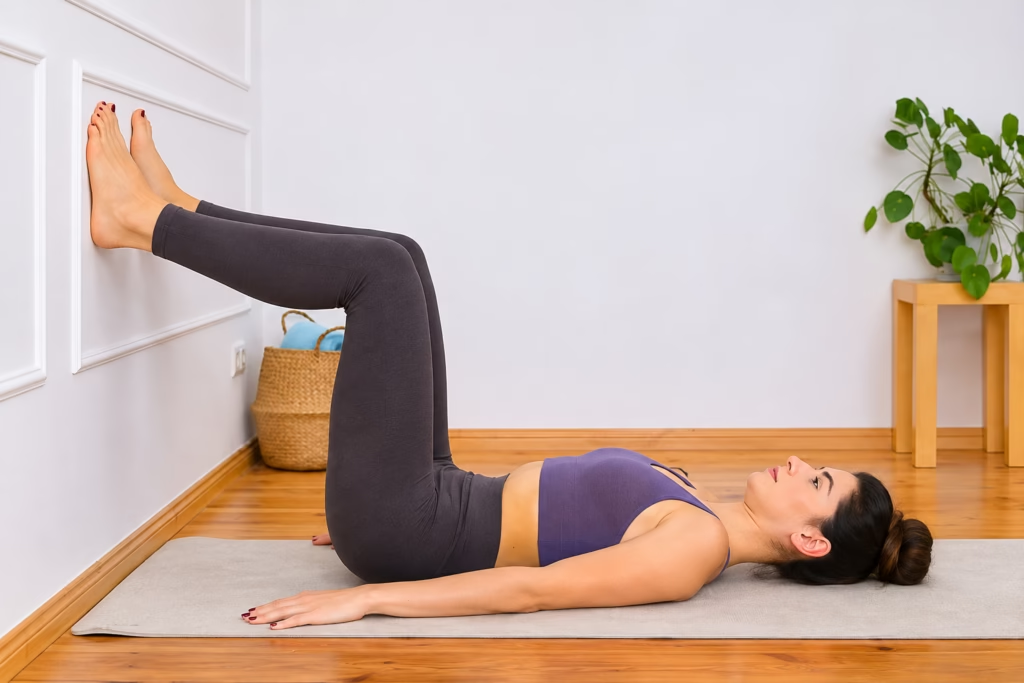
Focus: Glutes, hamstrings, and core stability
The wall-supported glute bridge is one of the main exercises in this routine. It strengthens the muscles along the back of your body while encouraging controlled spinal movement.
How to do it:
- Lie on your back with your knees bent approximately 90 degrees and your feet flat against the wall.
- Position your feet parallel, about 4–6 inches apart.
- Rest your arms beside your body with your palms facing down.
- Inhale, then exhale as you gently engage your abdominal muscles and tilt your pelvis.
- Slowly lift your hips, rolling through your spine until your weight rests comfortably across your upper shoulders.
- Inhale at the top, then exhale as you lower your spine back to the mat with control.
Begin with a small range of motion and gradually lift higher if comfortable.
Pilates tip: Press evenly through your feet and keep your knees aligned. Avoid arching your lower back or pushing your hips beyond a comfortable position.
3. Wall Bridge With Alternating Heel Lifts
Focus: Glutes, hamstrings, and pelvic stability
Once you feel comfortable with the basic bridge, add alternating heel lifts to challenge your stability.
How to do it:
- Lift into your wall-supported bridge position.
- Keep your hips elevated and your shoulders relaxed.
- Slowly lift your right heel away from the wall while maintaining contact through your toes.
- Lower the heel and repeat with your left foot.
- Continue alternating, keeping your pelvis as steady as possible.
- Finish with four controlled alternating lifts before lowering your hips.
The challenge comes from maintaining a stable bridge as you shift pressure between your feet.
Pilates tip: Imagine balancing a glass of water across your hips. Try not to let one side drop as you move.
4. Wall Bridge With Arm Circles
Focus: Shoulder mobility, glutes, and coordination
This variation combines lower-body engagement with gentle upper-body movement.
How to do it:
- Return to your wall bridge position with both feet pressing against the wall.
- Extend your arms toward the ceiling.
- Slowly reach your arms overhead toward the floor behind you.
- Sweep your arms outward in a wide circle, sliding your elbows along the floor where comfortable.
- Bring your arms forward again while keeping your hips stable.
- Complete several slow circles before rolling your spine down to the mat.
Move only as far as your shoulders comfortably allow.
5. Wall Bridge With Knee Tucks
Focus: Glutes, core control, and hip stability
This exercise increases the challenge by briefly removing one foot from the wall.
How to do it:
- Lift your hips into a comfortable bridge.
- Keep your left foot firmly against the wall.
- Lift your right foot and draw your right knee toward your body.
- Extend the leg back toward the wall, lightly tapping your toes against it.
- Repeat five times before changing legs.
- Keep your hips level throughout the movement.
Press firmly through the supporting foot to help maintain your position.
Pilates tip: Avoid twisting your pelvis as your knee moves. Smaller movements with good control are more effective than large, unstable repetitions.
6. Wall-Supported Hamstring Stretch
Focus: Hamstring flexibility and leg mobility
After the bridge exercises, give your hamstrings a gentle stretch.
How to do it:
- Lower your hips and keep your left foot against the wall.
- Extend your right leg toward the ceiling.
- Hold gently behind your right thigh.
- Flex your foot and draw the leg slightly closer to your body.
- Perform five small, comfortable pulses without forcing the stretch.
- Switch legs and repeat.
Keep your pelvis grounded and avoid pulling directly on your knee.
Pilates tip: A slight bend in your raised knee is perfectly fine. The stretch should feel gentle rather than painful.
7. Single-Leg Wall Pilates Bridge
Focus: Glute strength, core engagement, and balance
The single-leg wall bridge is a more challenging variation that requires your supporting leg and core to work together.
How to do it:
- Lie on your back with both feet on the wall.
- Engage your core and lift your hips into a bridge.
- Extend your right leg upward, keeping the knee straight or slightly bent.
- Slowly lower your hips a short distance.
- Press through your left foot to lift your hips again.
- Complete several controlled repetitions, then switch legs.
Keep the raised leg steady and your pelvis level.
Beginner modification: Keep both feet against the wall and perform regular glute bridges until you feel ready to progress.
8. Wall Pilates Chest Lift
Focus: Abdominal strength and upper-body control
This Pilates chest lift challenges your abdominal muscles while the wall helps you maintain a consistent lower-body position.
How to do it:
- Lie on your back with your knees bent and feet pressing against the wall.
- Place your hands gently behind your head and open your elbows.
- Inhale to prepare.
- Exhale as you lift your head and shoulder blades slightly away from the mat.
- Keep your chin comfortably separated from your chest.
- Lower with control and repeat for several repetitions.
Use your abdominal muscles to initiate the lift rather than pulling on your neck.
Pilates tip: Keep your movement small and controlled. Your lower back and pelvis should remain stable as your upper body curls forward.
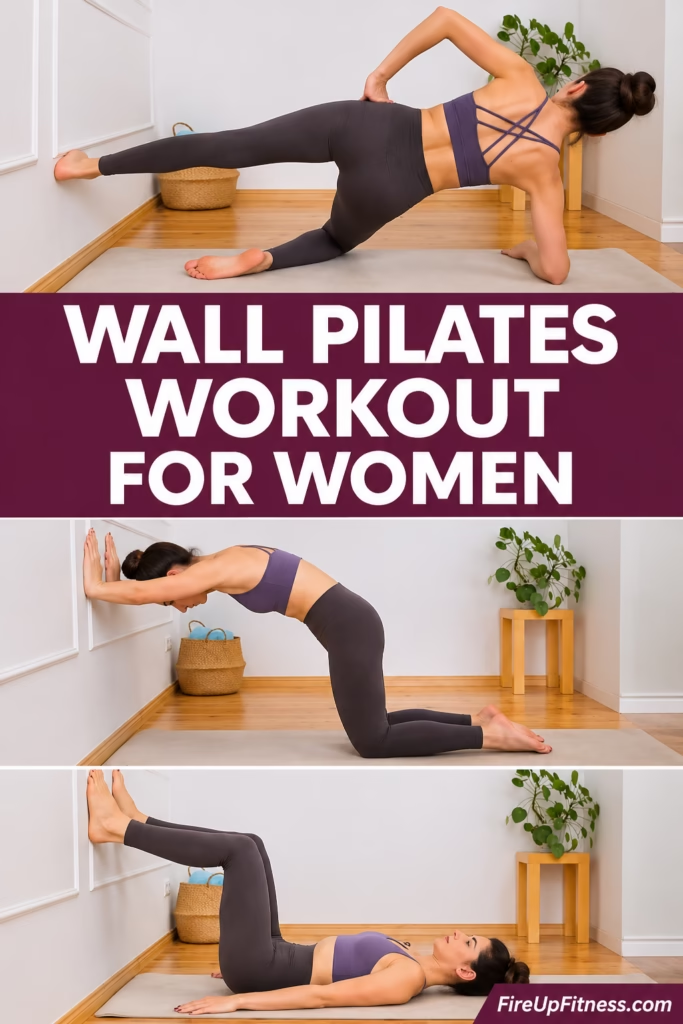
9. Side-Lying Wall Hip Lifts
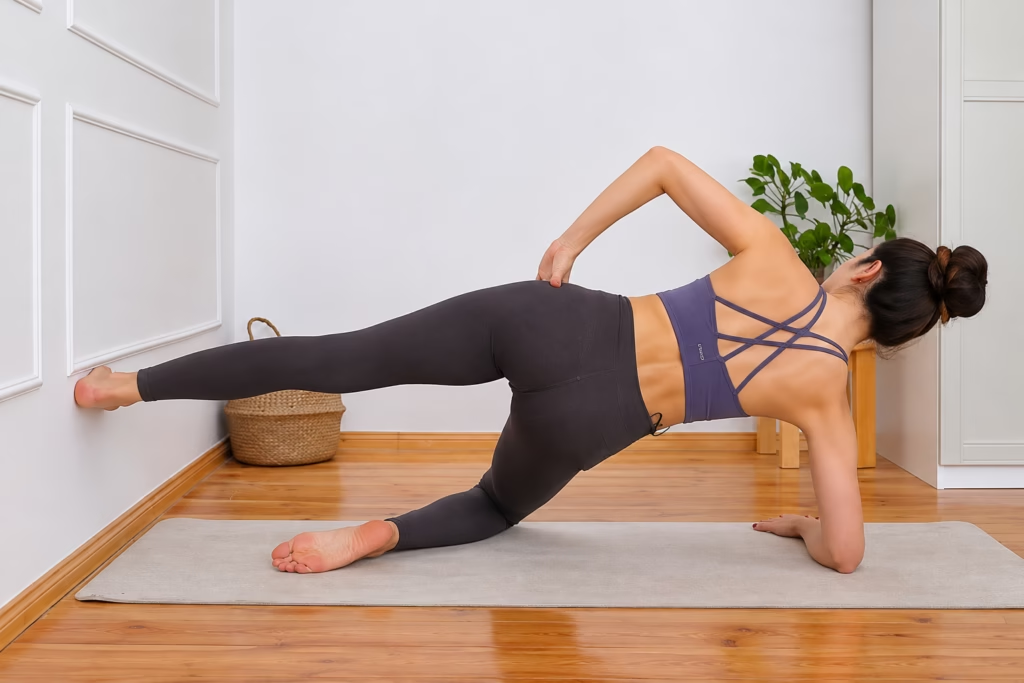
Focus: Outer hips, glutes, and lateral core stability
Side-lying hip lifts help strengthen the muscles that support your pelvis and hips.
How to do it:
- Lie on your right side, supported on your right forearm, with your elbow directly beneath your shoulder.
- Bend your lower knee for support.
- Extend your upper leg and place its foot against the wall.
- Rest your free hand on your hip.
- Press through your supporting forearm, lower leg, and upper foot as you lift your hips away from the mat.
- Lower slowly, then repeat before changing sides.
Keep your hips stacked rather than rolling forward.
Pilates tip: Maintain space between your supporting shoulder and ear. If you feel discomfort in your shoulder, reduce the height of your lift.
10. Seated Wall Pilates Forward Stretch
Focus: Spinal flexibility, posture, and core control
This seated exercise encourages gentle spinal articulation while keeping your lower body grounded.
How to do it:
- Sit with your back lightly touching the wall.
- Extend your legs forward, slightly wider than hip-width apart.
- Sit tall through your spine and reach both arms forward.
- Exhale as you gently round your upper body forward.
- Keep your pelvis grounded and avoid collapsing over your legs.
- Inhale as you return to an upright position.
- Repeat several times at a slow, comfortable pace.
The wall serves as an alignment reference rather than something to lean against heavily.
11. Seated Wall Arm Openers and Shoulder Slides
Focus: Upper-back posture, chest mobility, and shoulders
Wall Pilates isn’t just about your abs and glutes. These seated arm exercises encourage better upper-body awareness and shoulder mobility.
How to do it:
- Remain seated upright with your back lightly against the wall.
- Bring your palms together in front of your chest.
- Open your arms outward, then bring them back together.
- Next, bend your elbows at shoulder height with your forearms in front of you.
- Open your elbows toward the wall, then close them again.
- Finish by keeping your elbows open and sliding them gently upward and downward along the wall.
Maintain a long spine and relaxed neck throughout.
Pilates tip: Avoid flaring your ribs or arching your lower back to move your arms higher. Stay within your natural shoulder range of motion.
12. Kneeling Wall Pilates Spine Waves
Focus: Spinal mobility, shoulders, and back flexibility
This gentle spinal movement combines a supported stretch with controlled rounding of the back.
How to do it:
- Kneel on your mat facing the wall.
- Place your forearms against the wall, with your elbows approximately shoulder-width apart.
- Allow your chest to lower gently as your tailbone lifts slightly.
- Inhale while lengthening your spine.
- Exhale as you tuck your tailbone and slowly round your back.
- Press gently through your forearms as you move.
- Repeat several times, flowing between the two positions.
Move gradually and avoid compressing your neck or lower back.
13. Kneeling Wall Chest Opener
Focus: Chest flexibility, shoulder mobility, and posture
This final strengthening movement combines gentle upper-body rotation with core stability.
How to do it:
- Stay kneeling while facing the wall.
- Place both palms against the wall at a comfortable height.
- Engage your glutes and gently extend through the front of your hips.
- Keep your right hand pressing against the wall as you open your left arm outward.
- Rotate through your upper body and look toward your moving hand if comfortable.
- Return to the starting position and repeat several times.
- Switch sides.
Keep your hips facing forward and let the rotation come primarily from your upper back.
Pilates tip: Keep your supporting shoulder stable and avoid twisting your lower back to achieve a bigger movement.
14. Final Toe Stretch and Relaxation
Focus: Foot flexibility and relaxation
Finish your workout with a gentle stretch for the soles of your feet.
How to do it:
- Kneel on your mat with your toes tucked underneath.
- Spread your toes comfortably and slowly sit back toward your heels.
- Keep your weight supported by your hands if the stretch feels intense.
- Take three slow, deep breaths.
- Release the position gently.
This final stretch helps you transition from active movement into relaxation.
How Often Should You Do Wall Pilates?
For beginners, practicing Wall Pilates two to three times per week is a reasonable starting point. You can begin with a shorter portion of the routine and gradually work toward completing the full 30 minutes.
As your strength and coordination improve, you may feel more comfortable increasing your repetitions or practicing more frequently.
Remember that Pilates is about movement quality, not the number of exercises you complete. Allow yourself recovery time, especially after challenging glute and core exercises.
Tips to Get Better Results From Wall Pilates
A few simple habits can make your Wall Pilates sessions more comfortable and effective.
- Move slowly: Controlled repetitions help you focus on muscle engagement rather than momentum.
- Breathe consistently: Exhale during the more demanding part of each movement and avoid holding your breath.
- Maintain alignment: Keep your shoulders relaxed, your hips stable, and your spine comfortably supported.
- Adjust your range of motion: Smaller movements are often better when you’re developing strength and coordination.
- Stay consistent: Regular practice is more valuable than pushing through an overly demanding session.
You may notice improved body awareness and movement confidence before seeing obvious changes in strength or flexibility. Progress is individual, so focus on how your body feels and performs.
Is This Wall Pilates Workout Good for Beginners?
Yes. This routine introduces fundamental Pilates principles through wall-supported movements, making it a useful starting point for many beginners.
However, some exercises, particularly single-leg bridges and side-lying hip lifts, require more strength and coordination. You can modify these movements or skip them until you’re ready.
The workout also involves lying down, kneeling, and transitioning between positions, so it may not suit everyone without adjustments.
The most important thing is to work at a level that feels challenging but manageable.
Final Thoughts: Build Strength With 30 Minutes of Wall Pilates
You don’t need a complicated workout routine to improve your strength, flexibility, and movement control. Sometimes, a simple wall and a little floor space are all you need.
This 30-minute Wall Pilates workout brings together core exercises, glute strengthening, spinal mobility, and gentle stretching in one balanced session. Each movement encourages you to slow down, breathe deeply, and pay attention to your body.
Try adding this routine to your weekly fitness schedule and notice how your balance, posture, and confidence develop over time.
Ready to give it a try? Follow along with the Wall Pilates video included in this post, move at your own pace, and save this workout for the next time you want a low-impact, full-body Pilates session at home.