15-Minute Upper Body Workout at Home (No Equipment)
A stronger upper body doesn’t always require dumbbells, resistance bands, or a gym membership. Sometimes, all you need is 15 minutes, a little floor space, and a workout that challenges your muscles using your own body weight.
This 15-minute upper body workout at home combines arm exercises, push-up variations, and plank movements to strengthen your shoulders, chest, triceps, and upper back. It’s a convenient option for busy days when you want an effective workout without setting up equipment.
The best part? You can adjust several exercises to your fitness level, making this routine suitable for beginners who are comfortable with basic floor exercises as well as women looking for a quick upper body challenge.
Why Try This 15-Minute Upper Body Workout?
Upper body strength matters for more than appearance. Strong arms, shoulders, chest, and back muscles help you lift, carry, push, pull, and maintain better control during everyday movements.
This no-equipment upper body workout offers several benefits:
- Builds upper body strength: Push-ups and plank variations challenge several muscle groups at once.
- Strengthens your arms: Triceps-focused exercises help develop strength in the backs of your arms.
- Improves shoulder stability: Controlled plank movements encourage better shoulder and core coordination.
- Engages your upper back: Arm sweeps and rowing motions help activate muscles that support shoulder movement.
- Fits into a busy schedule: You can complete the routine in approximately 15 minutes without traveling to the gym.
Although bodyweight exercises can improve strength and muscular endurance, noticeable muscle development depends on consistent training and gradually increasing the challenge.
How This No-Equipment Upper Body Workout Works
This workout uses two mini circuits. Each circuit includes a combination of standing arm movements and floor exercises.
Follow the video for the exact transitions and timing. Most movements last 30 seconds, each mini circuit is repeated twice, and the workout includes brief 15-second breaks.
Keep an exercise mat nearby because several movements are performed on your hands, knees, or forearms. Before starting, spend a minute or two gently rolling your shoulders, circling your arms, and warming up your wrists.
Circuit 1: Strengthen Your Arms, Chest, and Shoulders
The first circuit begins with simple standing movements before progressing to push-ups and plank exercises. These exercises challenge your upper body while also engaging your core.
1. Standing arm pulses
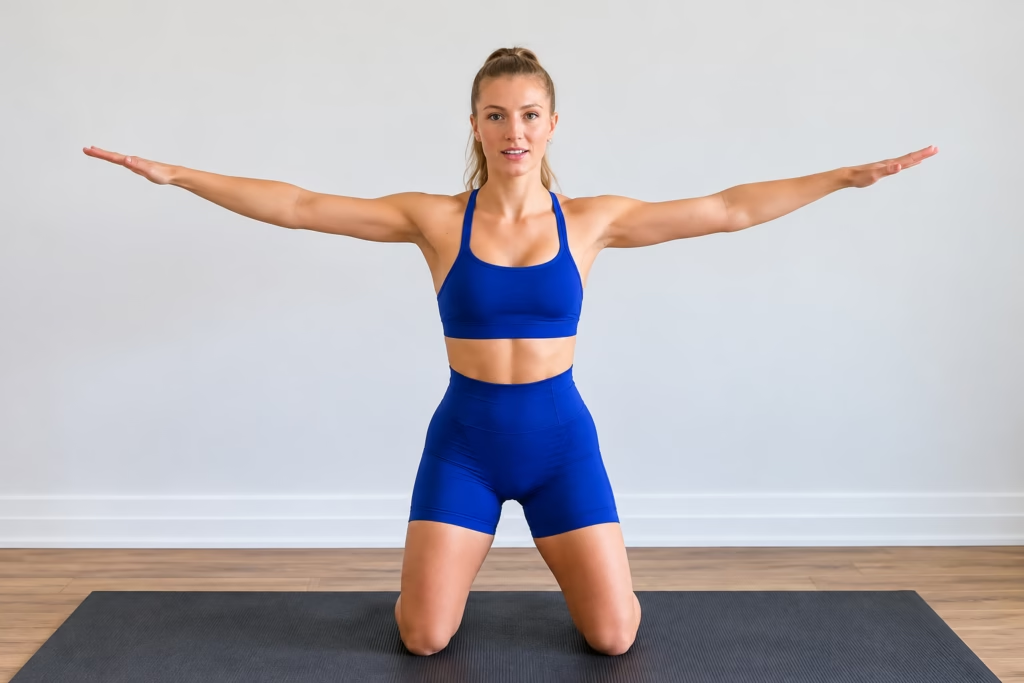
Start standing tall with your feet hip-width apart.
- Extend both arms straight out to your sides at shoulder height.
- Keep a slight bend in your elbows.
- Make small, controlled up-and-down pulses.
- Keep your shoulders relaxed and avoid swinging your arms.
Duration: 30 seconds
This movement helps warm up your shoulders and builds muscular endurance as you keep your arms lifted.
2. Prayer press pulses
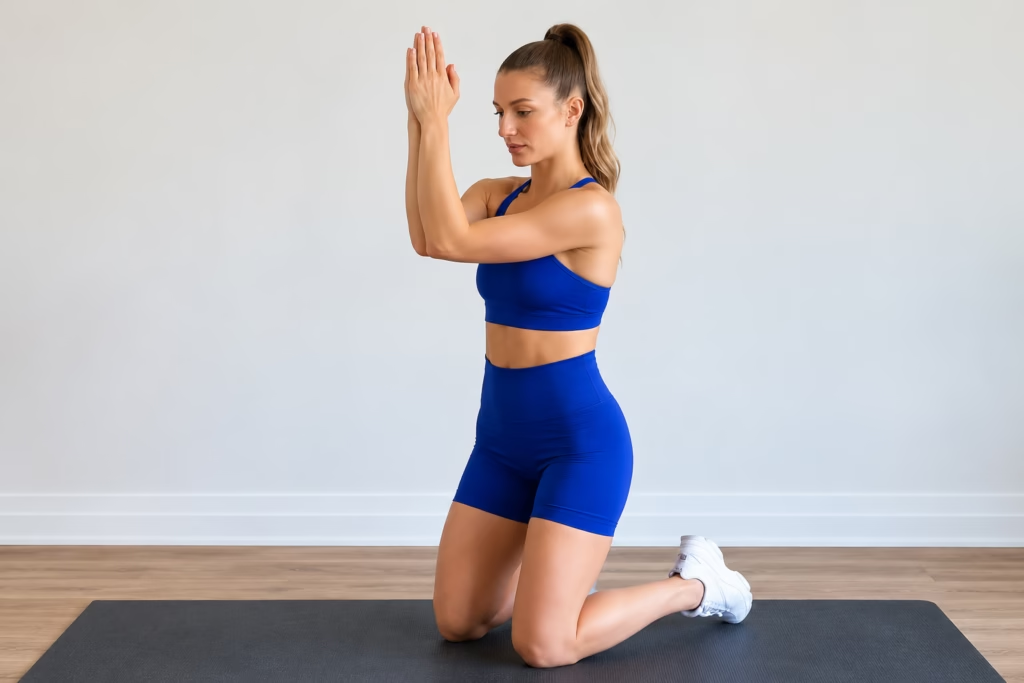
Bring your palms and forearms together in front of your chest.
- Press your palms and forearms firmly together.
- Maintain that pressure as you move your arms slightly upward.
- Lower them slowly without releasing the tension.
- Continue with small, controlled movements.
Duration: 30 seconds
You’ll feel your chest and shoulder muscles working as you maintain pressure between your arms.
3. Forearm plank swimming arms
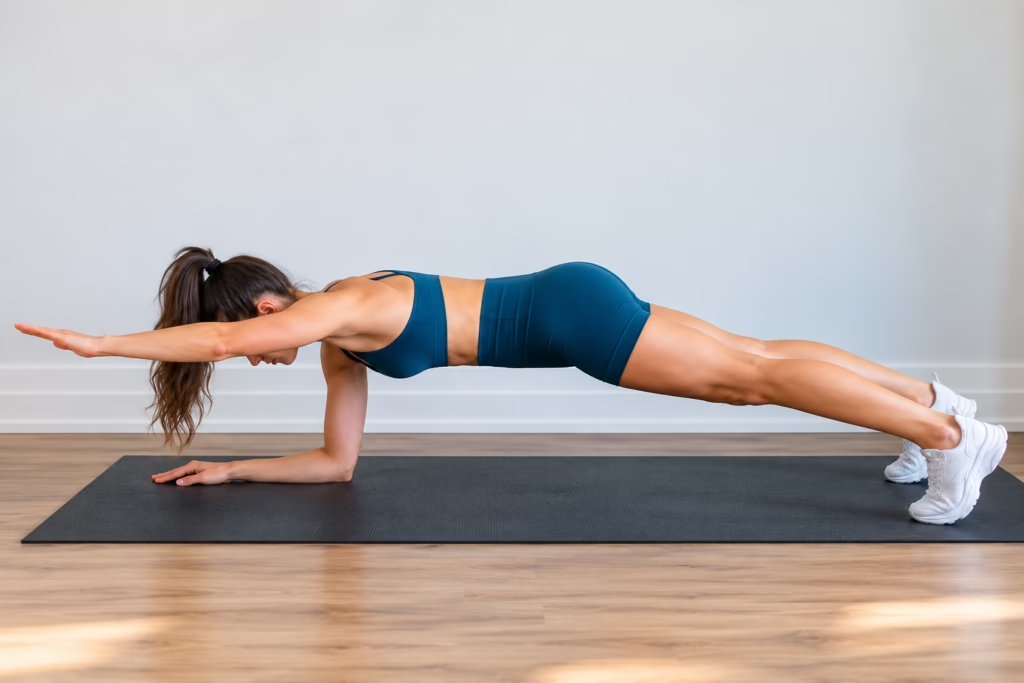
This exercise adds an upper back challenge to a traditional plank.
- Begin in a forearm plank with your elbows beneath your shoulders.
- Tighten your core and keep your hips as steady as possible.
- Lift one arm and sweep it forward, then backward in a swimming motion.
- Return your forearm to the mat and alternate sides.
Duration: 30 seconds
Focus on slow movements rather than speed. The goal is to activate your back and shoulder muscles without twisting your torso.
For an easier variation, keep your knees on the mat.
4. Side-lying one-arm push-ups
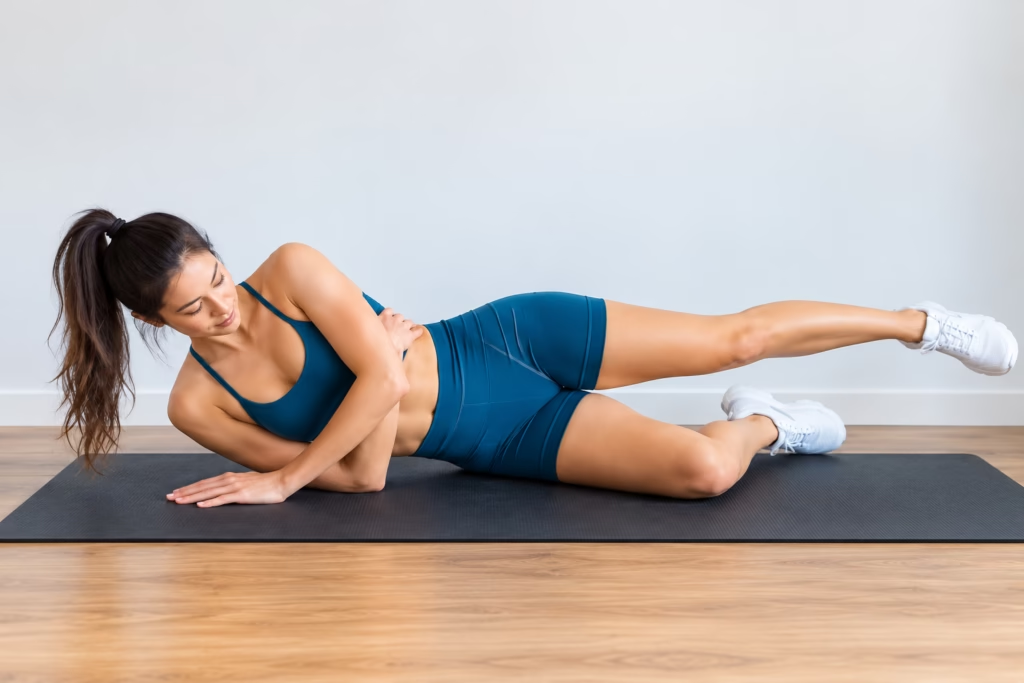
This push-up variation places extra emphasis on your triceps.
- Lie on your side with your knees comfortably bent.
- Wrap your lower arm around your torso.
- Place your upper hand on the floor in front of your chest.
- Press through your palm to lift your upper body slightly.
- Slowly lower yourself with control.
Duration: 30 seconds per side
Avoid pushing through shoulder discomfort. Keep the movement within a comfortable range.
5. Regular push-ups
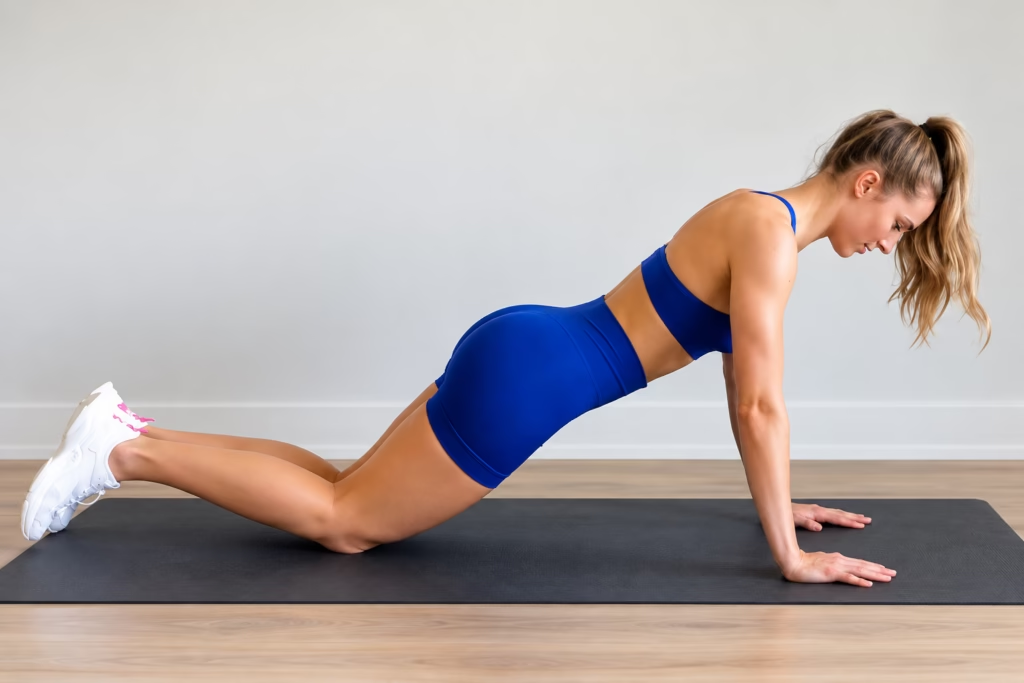
Push-ups are one of the most effective bodyweight exercises for strengthening your chest, shoulders, and triceps.
- Place your hands slightly wider than shoulder-width apart.
- Extend your legs behind you or lower your knees to the mat.
- Brace your core and bend your elbows to lower your chest.
- Press through your palms to return to the starting position.
Duration: 30 seconds
Beginner tip: Try knee push-ups or wall push-ups if full push-ups feel too challenging. A smaller controlled range of motion is better than losing your form.
6. Plank shoulder taps
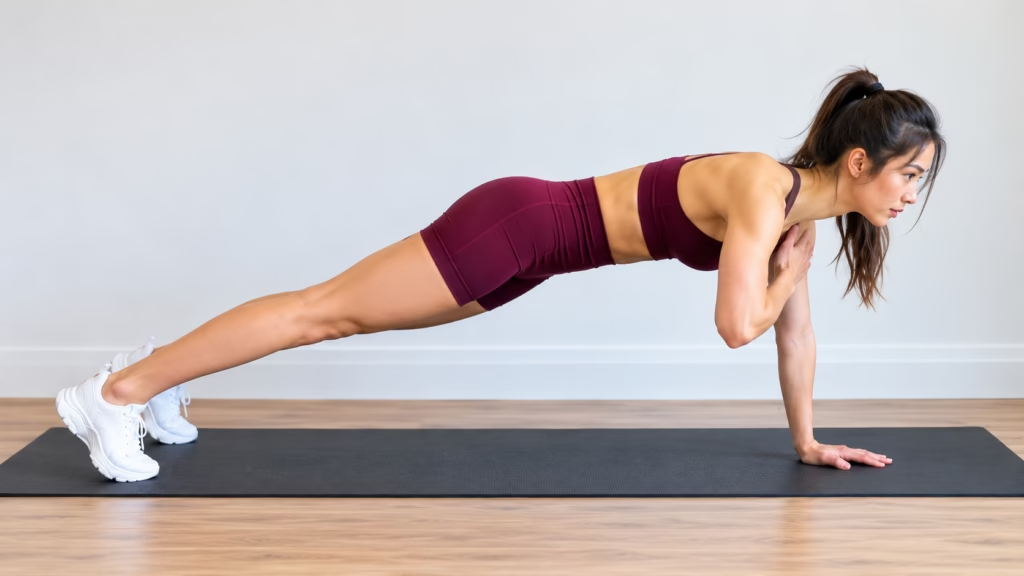
This final movement in the first circuit strengthens your shoulders while challenging your core stability.
- Begin in a high plank with your hands beneath your shoulders.
- Keep your feet slightly wider apart for balance.
- Lift one hand and tap the opposite shoulder.
- Return your hand to the mat.
- Alternate sides while minimizing hip movement.
Duration: 30 seconds
Keep your hips level and avoid rocking from side to side.
Once you’ve completed these exercises, take a 15-second break and repeat Circuit 1 one more time.
Circuit 2: Upper Back, Triceps, and Shoulder Strength
The second circuit introduces different arm movements and more challenging plank variations. You’ll continue working your upper body while building control and muscular endurance.
7. Standing backward arm presses
Stand tall with your arms extended beside your body.
- Open your chest and keep your shoulders down.
- Extend your arms slightly behind your torso.
- Make small backward pressing movements.
- Keep your core engaged and avoid arching your lower back.
Duration: 30 seconds
Focus on squeezing your shoulder blades gently together as you press backward.
8. Palms-up triceps pulses
This standing movement keeps tension in the backs of your arms.
- Extend your arms slightly behind your hips.
- Rotate your palms to face upward.
- Make small upward pulses while keeping your arms controlled.
- Maintain an upright posture throughout.
Duration: 30 seconds
You may feel this movement in your triceps, shoulders, and upper back.
9. Half push-up with forward arm extension
This exercise combines a controlled push-up descent with a forward arm reach.
- Start in a push-up position on your toes or knees.
- Slowly lower your body toward the mat.
- Rest your torso on the mat and extend both arms forward.
- Bring your hands back beneath your shoulders.
- Press yourself back into the starting position.
Duration: 30 seconds
Keep the lowering phase slow and controlled. You can perform the pressing portion from your knees to make it more manageable.
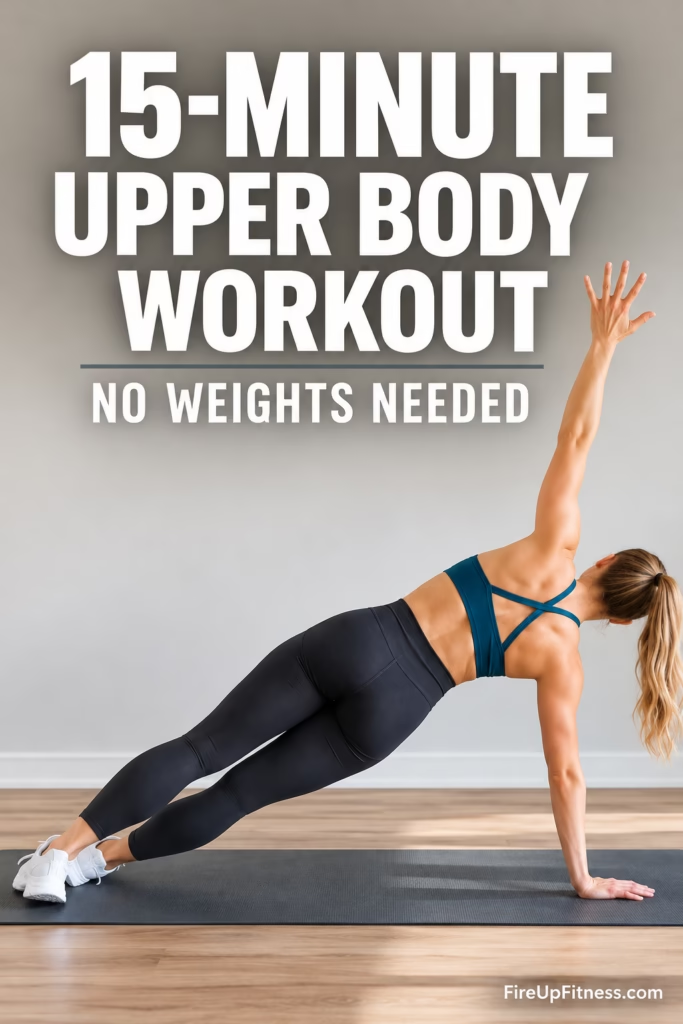
10. One-arm plank rotations
Plank rotations work your shoulders, core, and the muscles that stabilize your torso.
- Begin in a high plank or forearm plank.
- Rotate your body to one side.
- Lift your upper arm toward the ceiling.
- Keep your supporting shoulder stable.
- Return to the starting position with control.
Duration: 30 seconds per side
For an easier version, lower your bottom knee to the mat for support.
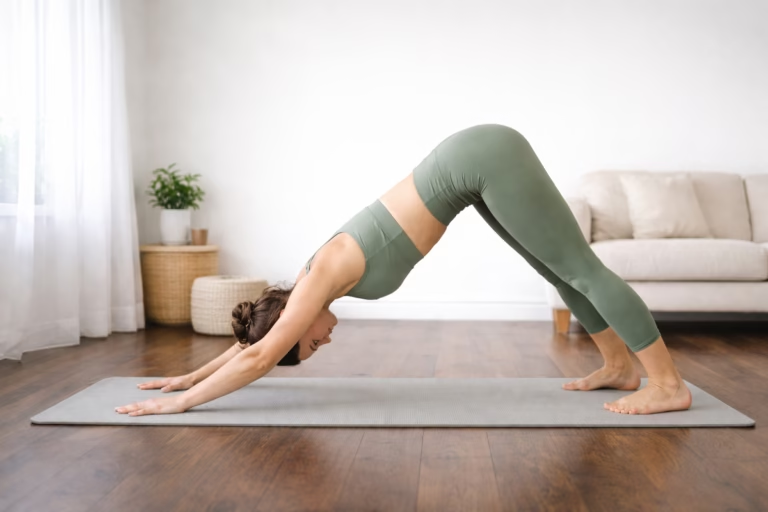
11. Forearm plank triangle presses
This exercise combines a forearm plank with a movement similar to a dolphin pose.
- Begin in a forearm plank with your elbows under your shoulders.
- Press firmly through your forearms.
- Lift your hips upward and backward, forming an inverted V shape.
- Slowly lower your hips back into a straight plank position.
- Repeat without rushing.
Duration: 30 seconds
This movement challenges your shoulders, upper back, and core. Keep your neck relaxed and avoid collapsing into your shoulders.
12. Plank back rows with forward reach
The final exercise combines a rowing motion with a forward reach.
- Begin in a high plank with your feet wider apart for stability.
- Lift one hand and draw your elbow backward beside your ribs.
- Extend that arm forward in front of your shoulder.
- Return your hand to the mat.
- Repeat on the opposite side.
Duration: 30 seconds
Keep your hips steady and your abdominal muscles engaged. If necessary, perform the movement from your knees.
After completing the sequence, take a short 15-second break and repeat Circuit 2 once more.
Follow Along With the 15-Minute Upper Body Workout Video
Reading exercise instructions helps you understand the movements, but following the video makes it easier to maintain the pace and transition between exercises.
The guided workout demonstrates each movement, provides timing, and helps you stay consistent throughout both circuits.
YouTube workout video placement
Embed the original 15-minute workout video here, immediately after the exercise breakdown and before the form tips. Readers can review the movements first, then follow the complete routine.
You can pause the video whenever you need extra recovery time or want to check your form.
Tips to Get More From Your Upper Body Workout at Home
A short workout can still be challenging when you focus on movement quality.
Keep your movements controlled
Avoid rushing through the exercises just to complete more repetitions. Slower, deliberate movements help you maintain proper technique and keep tension on the muscles you’re training.
Modify push-ups when needed
You don’t have to perform every exercise on your toes. Knee push-ups, wall push-ups, and supported planks are useful alternatives, especially when you’re building upper body strength.
Pay attention to your shoulders
During planks and push-ups, avoid letting your shoulders collapse toward your ears. Keep your shoulder muscles active and distribute your weight comfortably through your hands or forearms.
Remember to breathe
Exhale during the more demanding portion of each movement, such as pressing upward during a push-up. Inhale during the lowering phase. Avoid holding your breath.
Give your muscles time to recover
You can include this workout in your weekly fitness routine two or three times, allowing recovery between challenging sessions that target the same muscles. Beginners may benefit from starting with fewer rounds.
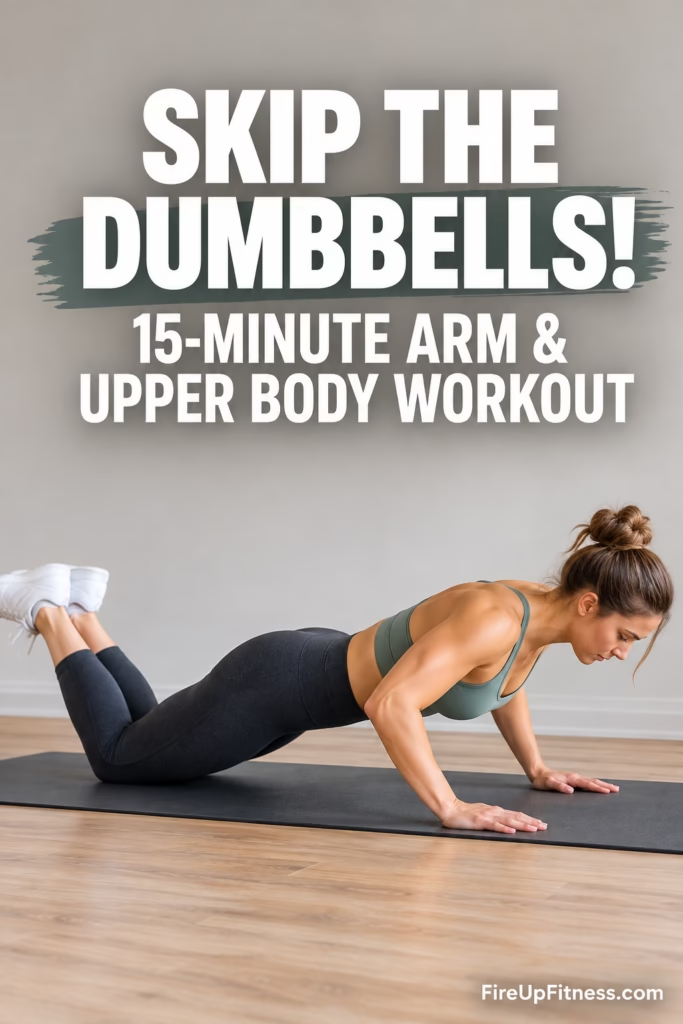
Can You Build Upper Body Strength Without Weights?
Yes. Bodyweight exercises use your own body as resistance, making them a practical way to develop strength and muscular endurance.
Push-ups, for example, require your chest, shoulders, and triceps to work together. Plank variations also challenge your shoulders and core while improving your ability to stabilize your body.
However, standing arm pulses without external resistance are generally better suited to muscular endurance than significant muscle growth.
As the exercises become easier, you can gradually increase the challenge by improving your range of motion, adding repetitions, using more demanding variations, or incorporating resistance bands or dumbbells.
For balanced upper body development, it’s also helpful to include pulling exercises in your overall routine, since no-equipment workouts offer fewer options for progressively strengthening the upper back.
Frequently Asked Questions
Is a 15-minute upper body workout enough?
A 15-minute workout can be useful for improving muscular endurance, practicing technique, and building consistency. The results depend on your current fitness level, exercise intensity, and overall training routine.
Can beginners do this workout?
Beginners can try it with modifications, although some of the plank and push-up variations may be demanding. Start with supported versions, take longer breaks, and complete one round of each circuit if needed.
Does this workout help strengthen the arms?
Yes. Push-ups, side-lying triceps push-ups, and other pressing movements challenge the muscles in your upper arms. Consistent training can improve strength and muscular endurance.
Do I need dumbbells for an effective arm workout?
Not necessarily. Bodyweight exercises can be effective, particularly for beginners. As you become stronger, adding resistance can provide more opportunities for continued muscle development.
How often should I do this workout?
Two or three sessions per week can be a reasonable starting point, provided you allow enough recovery time. Adjust the frequency based on your experience, soreness, and other workouts.
Final Thoughts
You don’t need an elaborate exercise routine to make time for upper body training. This 15-minute upper body workout at home offers a convenient combination of arm exercises, push-up variations, and plank movements that challenge several major muscle groups.
Start with the modifications that feel manageable, focus on proper form, and build strength at your own pace. Over time, movements that once felt difficult may become easier as your strength and control improve.
Save this workout for your next at-home fitness session, and use the follow-along video whenever you want a guided upper body routine without equipment.