6 Best Thigh Exercises for Strong, Toned Legs
Strong, toned legs aren’t just about how they look in your favourite jeans. They’re about feeling confident, moving comfortably, and having the strength to handle everyday activities with ease.
Whether you’re climbing stairs, enjoying long walks, or getting back into a regular fitness routine, your thigh muscles play an important role in keeping you active and balanced.
The good news? You don’t need an overly complicated workout to strengthen your lower body. A few effective thigh exercises, performed consistently, can help improve muscle definition, stability, and endurance.
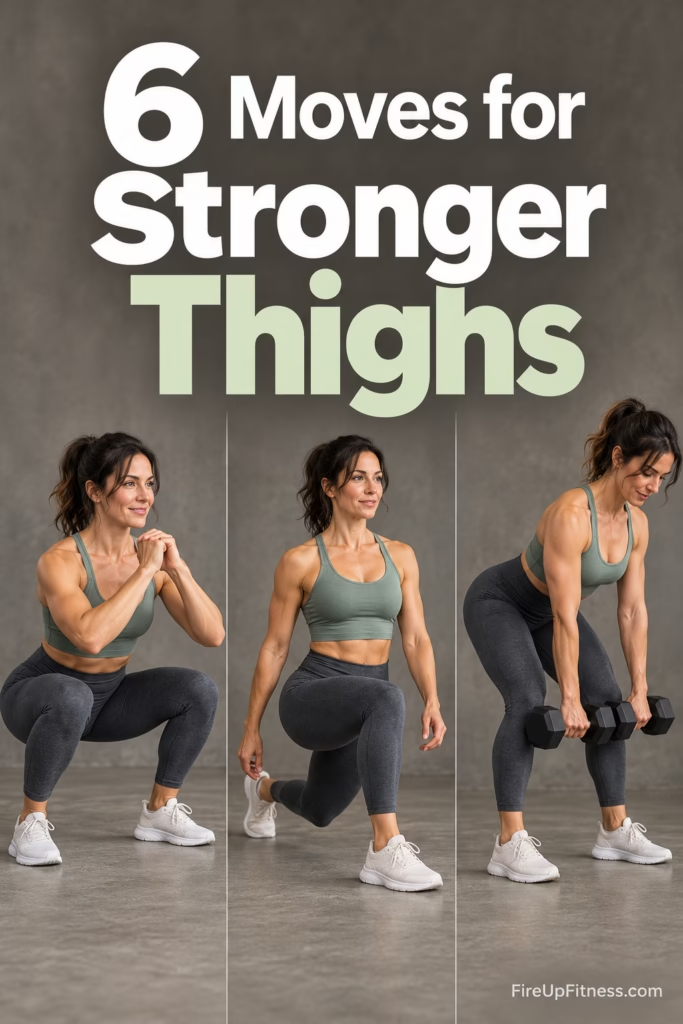
This toned legs workout combines six exercises that target your quads and hamstrings while also engaging your glutes and supporting muscles. Some require gym equipment, while others can easily be done at home.
Why Strong Thigh Muscles Matter
Your thighs contain some of the largest and most powerful muscles in your body. Strengthening them can make a noticeable difference in how you move and feel.
Two major muscle groups deserve attention:
- Quadriceps: Located at the front of your thighs, these muscles help straighten your knees and support movements like squatting, walking, and climbing stairs.
- Hamstrings: Found at the back of your thighs, these muscles help bend your knees, extend your hips, and support lower-body stability.
Your inner thigh muscles, known as the adductors, also contribute to hip stability and controlled leg movements.
A balanced workout that strengthens these muscles can help improve posture, support healthy joints, and make everyday activities easier.
And when you combine strength training with stretching exercises for flexibility, you’re giving your legs the attention they need for both strength and mobility.
1. Leg Extensions for Stronger Quads
Leg extensions are one of the most effective thigh exercises for directly targeting the quadriceps.
This movement focuses on the front of your thighs, making it a useful addition to a lower-body strength routine.
How to do it:
- Sit comfortably on a leg extension machine with your back supported.
- Adjust the padded bar so it rests just above your ankles.
- Keep your thighs against the seat and hold the side handles.
- Slowly straighten your knees, lifting the padded bar.
- Pause briefly before lowering your legs with control.
Repetitions: 12–15 reps for 2–3 sets.
Beginner tip: Start with a light resistance and focus on smooth movements. Avoid swinging your legs or forcing your knees to straighten.
Why it works: Leg extensions isolate the quadriceps, helping improve strength and muscular endurance in the front of your thighs.
2. Hamstring Curls for Balanced Leg Strength
It’s easy to focus on the front of your thighs and forget about the muscles behind them.
Hamstring curls help strengthen the back of your legs, supporting knee stability and balanced lower-body development.
How to do it:
- Lie face down on a hamstring curl machine.
- Position the padded bar just above your heels.
- Keep your hips pressed gently against the bench.
- Bend your knees and bring your heels toward your glutes.
- Slowly lower your legs back to the starting position.
Repetitions: 12–15 reps for 2–3 sets.
At-home alternative: Try standing hamstring curls without weights. Hold a chair for balance, bend one knee, and slowly lift your heel toward your glutes.
Why it works: Strong hamstrings support walking, running, bending, and other everyday movements. Training them alongside your quadriceps helps maintain balanced leg strength.
3. Bodyweight Squats for Strong, Toned Legs
Squats deserve a regular place in almost every effective workout plan.
They work several major muscle groups at once, including your quadriceps, glutes, and core, while also engaging your hamstrings.
Best of all, you can perform squats at home without any equipment.
How to do it:
- Stand with your feet approximately shoulder-width apart.
- Keep your chest lifted and your core gently engaged.
- Push your hips backward as you bend your knees.
- Lower into a comfortable squat, keeping your heels grounded.
- Press through your feet to return to standing.
Repetitions: 10–15 reps for 2–3 sets.
Beginner tip: Place a sturdy chair behind you and practice lowering your hips toward the seat before standing again.
Why it works: Squats strengthen the muscles used for sitting, standing, lifting, and climbing stairs. They’re especially useful for women who want to maintain functional strength as they age.
4. Romanian Deadlifts for Quads and Hamstrings Balance
Romanian deadlifts are excellent for strengthening the posterior chain, particularly your hamstrings and glutes.
They also teach proper hip-hinge movement, an important skill for lifting objects safely during everyday activities.
How to do it:
- Stand with your feet hip-width apart, holding a dumbbell in each hand.
- Keep your knees slightly bent and your shoulders relaxed.
- Push your hips backward while lowering the dumbbells close to your legs.
- Keep your spine neutral and stop when you feel a comfortable stretch in your hamstrings.
- Press through your feet and bring your hips forward to stand tall.
Repetitions: 10–12 reps for 2–3 sets.
Beginner tip: Practice the movement without weights until you feel comfortable hinging at your hips without rounding your back.
Why it works: Romanian deadlifts build hamstring and glute strength while improving control during bending and lifting movements.
5. Forward Lunges for Thigh Strength and Balance
Lunges are a great addition to a toned legs workout because they challenge one leg at a time.
They strengthen your quadriceps and glutes while engaging your hamstrings and inner thigh muscles for stability.
Lunges also help improve coordination, balance, and lower-body control.
How to do it:
- Stand tall with your feet hip-width apart.
- Step forward with your right foot.
- Bend both knees, lowering your body toward the floor.
- Keep your front knee aligned with your foot and your upper body upright.
- Push through your front foot to return to standing.
- Repeat on the opposite side.
Repetitions: 8–10 reps per leg for 2–3 sets.
Beginner tip: Try reverse lunges or stationary split squats while holding a chair for support. These variations may feel more manageable when you’re building balance and strength.
Why it works: Lunges strengthen your thighs while helping each leg develop stability and coordination independently.
6. Leg Press for Building Lower-Body Strength
The leg press is a useful gym exercise for strengthening your quadriceps and glutes while also involving your hamstrings.
Because the machine supports your back, it allows you to focus on controlled leg movements.
How to do it:
- Sit on the leg press machine with your back firmly against the seat.
- Position your feet approximately shoulder-width apart on the platform.
- Release the safety handles according to the machine’s instructions.
- Push through your feet until your legs are nearly straight without locking your knees.
- Slowly bend your knees to lower the platform within a comfortable range.
- Repeat using steady, controlled movements.
Repetitions: 10–12 reps for 2–3 sets.
Beginner tip: Choose a manageable resistance and avoid lowering the platform so far that your lower back lifts away from the seat.
Why it works: The leg press helps build strength in your thighs and glutes, making it a useful exercise for gradually increasing lower-body resistance.
Simple Toned Legs Workout Plan
Wondering how to put these thigh exercises together? Here’s a practical workout routine you can follow at the gym.
| Exercise | Repetitions | Sets |
|---|---|---|
| Leg extensions | 12–15 | 2–3 |
| Hamstring curls | 12–15 | 2–3 |
| Squats | 10–15 | 2–3 |
| Romanian deadlifts | 10–12 | 2–3 |
| Forward lunges | 8–10 per leg | 2 |
| Leg press | 10–12 | 2 |
For beginners, start with one or two sets of each exercise and gradually increase as your strength improves.
Aim for two lower-body strength sessions per week, allowing at least 48 hours between challenging sessions for recovery.
Add Stretching Exercises for Flexibility
Strength training is important, but your legs also benefit from regular mobility and stretching exercises.
A short daily stretching routine can help maintain flexibility in your quads, hamstrings, hips, and inner thighs.
Try these gentle stretches after your workout or when your muscles are warm:
- Standing quad stretch: Hold your ankle behind you and gently bring your heel toward your glutes.
- Seated hamstring stretch: Extend one leg forward and hinge gently from your hips.
- Butterfly stretch: Sit with the soles of your feet together and allow your knees to relax outward.
- Standing calf stretch: Step one foot backward and gently press your heel toward the floor.
Hold each stretch for approximately 20–30 seconds without bouncing. Stretch only to a comfortable tension, never pain.
These simple movements complement your thigh exercises and support comfortable movement throughout the day.
How to Get Better Results From Your Thigh Workouts
Building stronger legs doesn’t require exercising every day. What matters most is consistency, proper technique, and allowing your muscles enough time to recover.
Start with manageable resistance and gradually increase the challenge as exercises become easier. Pay attention to both your quads and hamstrings, rather than focusing on just one area.
Include exercises for your inner thighs and glutes to support balanced lower-body strength. Side lunges, for example, can be a useful addition when you’re ready for more variety.
And don’t underestimate the benefits of walking, stretching, and staying active between strength-training sessions.
Small improvements add up over time.
Final Thoughts: Strong Legs Start With Simple Habits
Strong, toned thighs are built through regular movement, patience, and a workout routine that fits your lifestyle.
These six thigh exercises offer a practical way to strengthen your quadriceps, hamstrings, and glutes while improving balance, mobility, and everyday confidence.
You don’t need to master every exercise immediately. Start with the movements that feel comfortable, focus on good form, and gradually challenge yourself as you grow stronger.
Remember, progress isn’t about doing more every single day. It’s about showing up consistently and giving your body the strength and care it deserves.