19 Best Glute Exercises for a Booty Makeover at Home
Strong glutes can make everyday movements feel easier, from climbing stairs and walking uphill to lifting groceries and maintaining balance. And building that strength doesn’t require expensive gym equipment or complicated workout routines.
A few simple exercises, a little floor space, and a consistent schedule can make a meaningful difference.
Whether you’re starting your first beginner glute workout or looking for new ways to challenge your lower body, these 19 exercises offer plenty of options. Some use only your body weight, while others can be made more challenging with resistance bands or dumbbells.
You don’t need to do all 19 exercises in one session. The goal is to learn the movements, build strength gradually, and create a routine you can maintain.
Why Glute Exercises Matter for Strength and Mobility
Your glutes are among the largest and most powerful muscle groups in your body. They help support your hips, stabilize your pelvis, and generate strength during everyday activities.
The glute muscles include three main parts:
- Gluteus maximus: The largest glute muscle, responsible for powerful hip extension during movements such as standing up, climbing stairs, and squatting.
- Gluteus medius: Located along the outer hip, this muscle helps stabilize your pelvis when walking or standing on one leg.
- Gluteus minimus: Works with the gluteus medius to support hip stability and movement.
A balanced workout plan for glutes at home should include exercises that strengthen these muscles through different movement patterns.
Squats, bridges, lunges, and side-lying exercises all play different roles in developing lower-body strength.
19 Glute Exercises at Home for Beginners
These exercises range from easy floor movements to more challenging standing exercises. Start with the movements that match your current strength and balance, then progress as you become more comfortable.
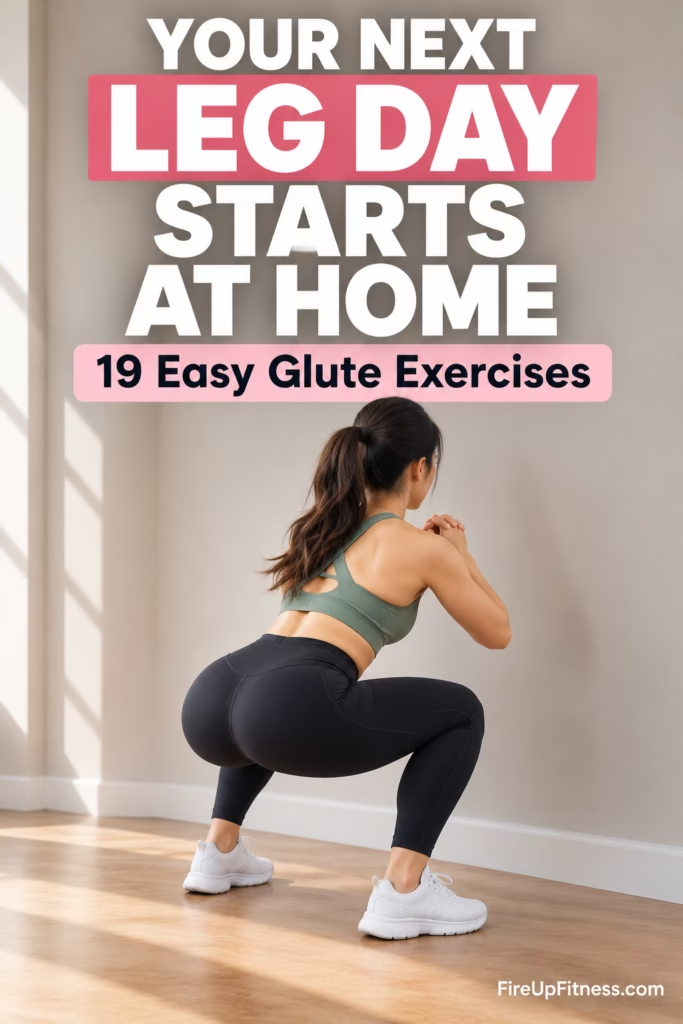
1. Bodyweight Squats
Squats are a practical starting point for anyone learning how to workout glutes. They strengthen the glutes, quadriceps, and other lower-body muscles while improving your ability to sit down and stand up.
How to do it:
- Stand with your feet approximately shoulder-width apart.
- Keep your chest lifted and gently engage your core.
- Bend your knees and push your hips backward as though sitting in a chair.
- Lower as far as you comfortably can while keeping your feet grounded.
- Press through your feet to return to standing.
Beginner target: 2 sets of 10–12 repetitions.
Start with chair squats if you need extra confidence with balance or depth.
2. Forward Lunges
Forward lunges strengthen your glutes and thighs while challenging coordination and balance.
How to do it:
- Stand upright with your feet hip-width apart.
- Step forward with your right foot.
- Bend both knees to lower your body.
- Keep your front knee aligned with your foot.
- Push through your front foot to return to standing.
- Repeat on the opposite side.
Beginner target: 8–10 repetitions per leg.
Use a wall or sturdy chair for support if needed.
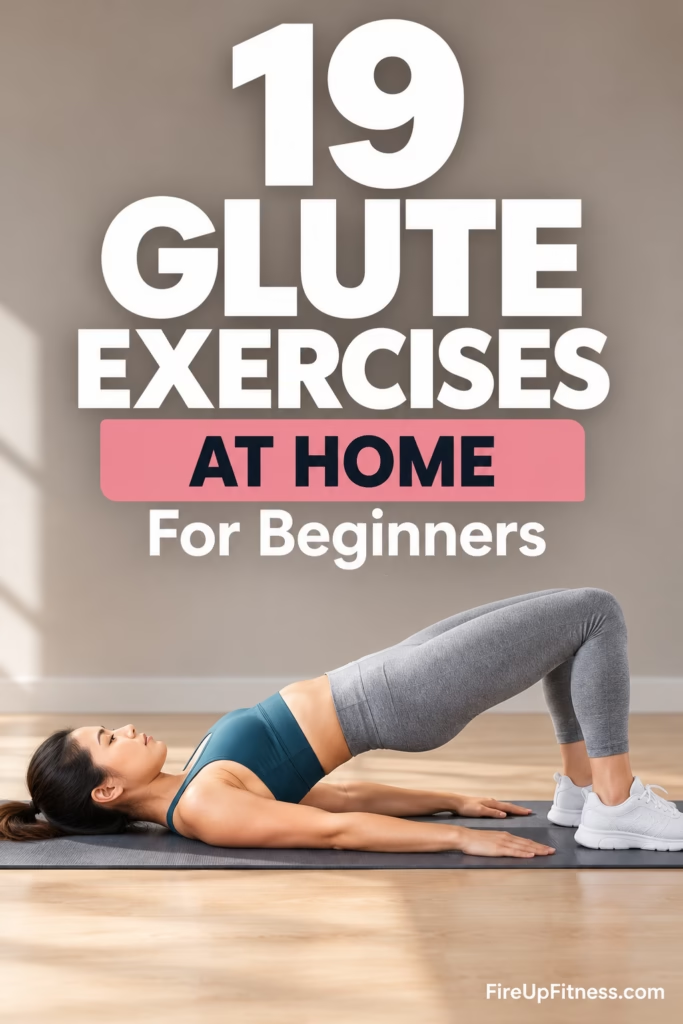
3. Glute Bridges
Glute bridges are one of the easiest glute workouts to practice at home because they require no equipment and place relatively little demand on balance.
How to do it:
- Lie on your back with your knees bent and feet flat on the floor.
- Place your arms beside your body.
- Gently brace your abdominal muscles.
- Press through your feet and lift your hips.
- Squeeze your glutes at the top without arching your lower back.
- Lower your hips slowly.
Beginner target: 12–15 repetitions.
Pause briefly at the top to focus on controlled muscle engagement.
4. Donkey Kicks
Donkey kicks focus on hip extension, making them useful for strengthening the gluteus maximus without standing or lifting weights.
How to do it:
- Begin on your hands and knees.
- Position your hands beneath your shoulders and knees beneath your hips.
- Keep your right knee bent and lift that leg behind you.
- Stop before your lower back begins to arch.
- Lower with control and repeat.
- Switch legs.
Beginner target: 10–12 repetitions per side.
Avoid swinging your leg. A smaller, controlled movement is more effective than lifting it excessively high.
5. Fire Hydrants
Fire hydrants strengthen the muscles around the outer hips, particularly the gluteus medius, which helps support pelvic stability.
How to do it:
- Start on all fours.
- Keep your back neutral and core engaged.
- Lift your bent right knee out to the side.
- Keep your hips relatively level.
- Lower slowly without shifting your weight excessively.
- Repeat on the other side.
Beginner target: 10–12 repetitions per leg.
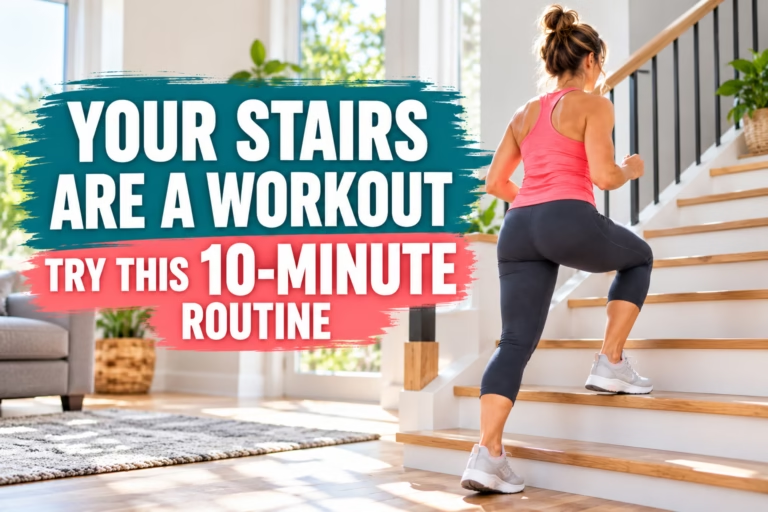
6. Step-Ups
Step-ups strengthen the glutes and thighs while practicing a movement you use when climbing stairs.
How to do it:
- Stand in front of a low, stable step.
- Place your right foot firmly on the platform.
- Push through that foot to lift your body.
- Bring your left foot onto the step.
- Step down carefully.
- Repeat before switching legs.
Beginner target: 8–10 repetitions per leg.
Choose a low step initially and avoid using unstable furniture.
7. Bulgarian Split Squats
Bulgarian split squats are a more advanced variation of the traditional split squat. They challenge the glutes, quadriceps, and balance.
How to do it:
- Stand a short distance in front of a stable bench or low platform.
- Place the top of one foot behind you on the platform.
- Bend your front knee and lower your hips.
- Keep your front foot firmly planted.
- Push through your front foot to rise.
- Complete the repetitions before switching sides.
Beginner target: 6–8 repetitions per leg.
Beginners can start with regular split squats, keeping both feet on the floor, before trying the elevated version.
8. Sumo Squats
Sumo squats use a wider stance than traditional squats, challenging the glutes, quadriceps, and inner thighs.
How to do it:
- Stand with your feet wider than shoulder-width apart.
- Turn your toes slightly outward.
- Bend your knees in the direction of your toes.
- Lower your hips comfortably.
- Press through your feet to stand.
Beginner target: 10–12 repetitions.
Keep your knees aligned with your toes throughout the movement.
9. Single-Leg Romanian Deadlifts
This exercise strengthens the glutes and hamstrings while developing balance and hip control.
How to do it:
- Stand on your right leg with a slight bend in your knee.
- Hinge forward from your hips.
- Extend your left leg behind you as your torso moves forward.
- Keep your back neutral and hips facing the floor.
- Return slowly to standing.
- Repeat on the other side.
Beginner target: 6–8 repetitions per leg.
Hold onto a chair or wall until you feel comfortable balancing.
10. Clamshells
Clamshells are an accessible beginner glute exercise that targets the hip abductors and external rotators.
How to do it:
- Lie on your side with your knees bent.
- Stack your hips and keep your feet together.
- Lift your top knee without rolling your pelvis backward.
- Pause briefly.
- Lower slowly and repeat.
Beginner target: 12–15 repetitions per side.
For additional resistance, place a light loop band above your knees.
11. Side-Lying Leg Raises
Side-lying leg raises strengthen the outer hip muscles and can help improve control during single-leg activities.
How to do it:
- Lie on your side with your legs extended.
- Rest your head comfortably on your lower arm.
- Keep your top leg straight.
- Raise it slowly without rotating your hips.
- Lower with control.
Beginner target: 12 repetitions per side.
Focus on keeping your hips stacked rather than lifting your leg as high as possible.
12. Box Jumps
Box jumps introduce explosive lower-body training and challenge the glutes, thighs, and calves.
They are best treated as an optional progression rather than an essential beginner exercise.
How to do it:
- Stand facing a low, stable exercise platform.
- Bend your hips and knees slightly.
- Jump onto the platform using both feet.
- Land softly with your knees bent.
- Stand upright, then step down carefully.
Target for experienced exercisers: 5–6 controlled repetitions.
Beginners should use step-ups instead until they have developed sufficient strength, balance, and landing control.
13. Curtsy Lunges
Curtsy lunges challenge the glutes and thighs through a diagonal stepping pattern.
How to do it:
- Stand with your feet hip-width apart.
- Step your right foot diagonally behind your left leg.
- Bend both knees slightly.
- Keep your hips facing forward as much as comfortably possible.
- Push through your front foot to stand.
- Switch sides.
Beginner target: 8 repetitions per leg.
Keep the crossing step small. Skip this variation if it causes knee or hip discomfort.
14. Plié Squats
Plié squats are another wide-stance squat variation inspired by ballet positioning.
They work the glutes, thighs, and hip muscles while encouraging controlled lower-body movement.
How to do it:
- Stand with your feet wide and toes turned outward comfortably.
- Keep your torso upright.
- Bend your knees and lower your body.
- Maintain even pressure through your feet.
- Straighten your legs to return to standing.
Beginner target: 10–12 repetitions.
15. Resistance Band Kickbacks
Resistance band kickbacks are useful when you’re ready to make your glute exercises at home more challenging.
How to do it:
- Secure a resistance band around your ankles, or use an appropriate anchored band.
- Stand tall and hold a sturdy surface for balance.
- Move one leg backward against the band’s resistance.
- Keep your torso steady and avoid arching your back.
- Return slowly.
- Repeat on the opposite leg.
Beginner target: 10–12 repetitions per leg.
Use a light band initially so you can maintain proper control.
16. Rainbow Leg Lifts
Rainbow leg lifts challenge hip movement and control while working the glutes through a curved movement pattern.
How to do it:
- Begin on your hands and knees.
- Extend your right leg behind you.
- Lift it slightly and move it in a small arc toward one side.
- Return through the center and move toward the opposite side.
- Keep your pelvis steady throughout the movement.
Beginner target: 8–10 controlled arcs per leg.
Avoid twisting your lower back to increase the movement.
17. Pulse Squats
Pulse squats add a short range of repeated movement to a regular squat, increasing the time your leg muscles spend working.
How to do it:
- Lower into a comfortable squat.
- Hold your torso steady.
- Rise slightly, then lower again.
- Perform several small, controlled pulses.
- Stand fully to finish.
Beginner target: 8–10 pulses per set.
Keep the movement comfortable and avoid bouncing at the bottom.
18. Hip Thrusts
Hip thrusts are a popular glute-strengthening exercise that can be performed using body weight or added resistance.
How to do it:
- Sit on the floor with your upper back supported against a sturdy, non-slip bench or couch.
- Bend your knees and plant your feet firmly.
- Lift your hips by pressing through your feet.
- Stop when your torso and thighs form a roughly straight line.
- Keep your ribs controlled and avoid overextending your lower back.
- Lower slowly.
Beginner target: 10–12 repetitions.
Start with floor glute bridges if the elevated position feels uncomfortable.
19. Crossover Lunges
Crossover lunges introduce another diagonal movement pattern that challenges lower-body coordination and hip stability.
How to do it:
- Stand upright with your feet hip-width apart.
- Step one foot diagonally across and behind the other.
- Bend your knees slightly while maintaining balance.
- Push through your supporting foot to return to standing.
- Alternate sides.
Beginner target: 8 repetitions per leg.
This movement is similar to a curtsy lunge, so you don’t need both variations in the same workout. Choose the one that feels more comfortable for your knees and hips.
Beginner Workout Plan for Glutes at Home
A simple routine makes it easier to build strength without feeling overwhelmed. This beginner glute workout combines five effective exercises that target your glutes, hips, and thighs.
You can complete this workout at home without gym equipment.
| Exercise | Repetitions | Sets |
|---|---|---|
| Bodyweight squats | 10–12 | 2 |
| Glute bridges | 12–15 | 2 |
| Donkey kicks | 10 per leg | 2 |
| Fire hydrants | 10 per leg | 2 |
| Step-ups | 8 per leg | 2 |
How to follow this routine:
- Warm up for 3–5 minutes with gentle marching or walking.
- Perform each exercise slowly with proper technique.
- Rest for 45–90 seconds between sets, or longer if needed.
- Complete two sets of each exercise.
- Finish with gentle lower-body stretches.
Aim to complete this routine two or three times per week, allowing recovery between challenging sessions.
As your strength improves, gradually increase repetitions, add a third set, or introduce light resistance bands.
Weekly Leg Day Glute Exercises Schedule
For beginners who want to build legs and glutes, two or three nonconsecutive training sessions per week can be a practical starting point.
| Day | Workout focus |
|---|---|
| Monday | Beginner glute strength routine |
| Tuesday | Walking or gentle mobility |
| Wednesday | Rest or light activity |
| Thursday | Glute and leg strength routine |
| Friday | Walking or stretching |
| Saturday | Optional light glute session |
| Sunday | Recovery |
The optional Saturday workout can be added as your recovery and strength improve. Allow roughly 48 hours between challenging glute sessions when possible.
How to Make Your Glute Workouts More Effective
A successful glute routine depends on more than the number of repetitions you complete.
Focus on controlled movements
Slow, deliberate repetitions help you maintain proper technique and keep tension on the muscles you’re training.
Rather than rushing through squats or bridges, pay attention to how your hips and legs move.
Gradually increase the challenge
Your muscles need a progressively greater challenge to continue building strength.
You can progress by adding repetitions, performing another set, using a stronger resistance band, or introducing dumbbells when you’re ready.
You don’t need to increase everything at once.
Include different movement patterns
Squats and lunges strengthen your glutes and legs through standing movements. Bridges and hip thrusts emphasize hip extension, while clamshells and fire hydrants challenge the outer hip muscles.
Combining these movements helps create a more balanced routine.
Give your muscles time to recover
Recovery is an important part of strength training. Muscles adapt between workouts, not only while you’re exercising.
Adequate sleep, balanced meals containing protein, and rest days all support the process.
Common Beginner Glute Workout Mistakes
Even easy workouts for glutes can become less effective when technique or recovery is overlooked.
1. Letting your knees collapse inward
During squats and lunges, aim to keep your knees moving in line with your feet.
2. Arching your lower back during bridges
Lift through your hips while keeping your abdominal muscles gently engaged. You don’t need to push your hips excessively high.
3. Using resistance bands that are too strong
A heavy band can make it difficult to complete the movement correctly. Begin with lighter resistance and progress gradually.
4. Doing too many exercises at once
Completing all 19 exercises in one workout is unnecessary. Four to six well-chosen movements are enough for a productive session.
5. Ignoring recovery
Training hard every day doesn’t necessarily produce faster progress. Your muscles need time to recover and adapt.
How Long Does It Take to Build Stronger Glutes?
Progress depends on your starting fitness level, workout consistency, exercise difficulty, nutrition, and recovery.
During the first few weeks, you may notice improved coordination, better exercise control, or the ability to complete more repetitions.
As you continue training, exercises that once felt difficult may become easier. You might be able to use a stronger resistance band, perform deeper squats comfortably, or complete more challenging single-leg movements.
Visible changes in muscle size or shape usually take longer and vary considerably from person to person. There is no guaranteed timeline for a lifted or more defined appearance.
Instead of focusing only on appearance, track improvements in strength, balance, endurance, and everyday movement.
Frequently Asked Questions About Glute Exercises at Home
Can beginners build glutes without weights?
Yes. Bodyweight squats, lunges, bridges, and step-ups can help beginners develop strength. Over time, adding resistance may be necessary for continued muscle growth.
How many glute exercises should beginners do?
Four to six exercises per session are generally enough. Start with one or two sets per exercise and gradually build toward two or three sets as your strength improves.
Is a 20-minute glute workout enough?
A focused 20-minute session can be effective for beginners, particularly when exercises are performed with good technique and sufficient effort. As your fitness improves, you can adjust the workout’s resistance or volume.
Should I train glutes every day?
Daily challenging glute workouts are generally unnecessary. Two or three sessions per week with recovery between them can provide a useful foundation.
What are the easiest glute exercises at home for beginners?
Glute bridges, clamshells, donkey kicks, fire hydrants, and chair squats are approachable options. They require minimal equipment and can be adjusted to different fitness levels.
Can glute exercises also strengthen my legs?
Yes. Squats, lunges, step-ups, and split squats work several lower-body muscle groups, including the glutes, quadriceps, and hamstrings. This makes them useful for building both leg and glute strength.
Final Thoughts: Start Simple and Build Strength Over Time
Building stronger glutes doesn’t require an exhausting leg day or a complicated exercise program. What matters most is choosing movements you can perform comfortably and practicing them consistently.
Start with a few beginner-friendly exercises, learn the correct technique, and increase the challenge as your strength improves.
Some days, your workout might include squats and lunges. Other days, a few sets of bridges, donkey kicks, and fire hydrants may be enough.
The goal isn’t to finish every exercise on this list. It’s to develop a routine that helps you feel stronger, move more confidently, and enjoy staying active.