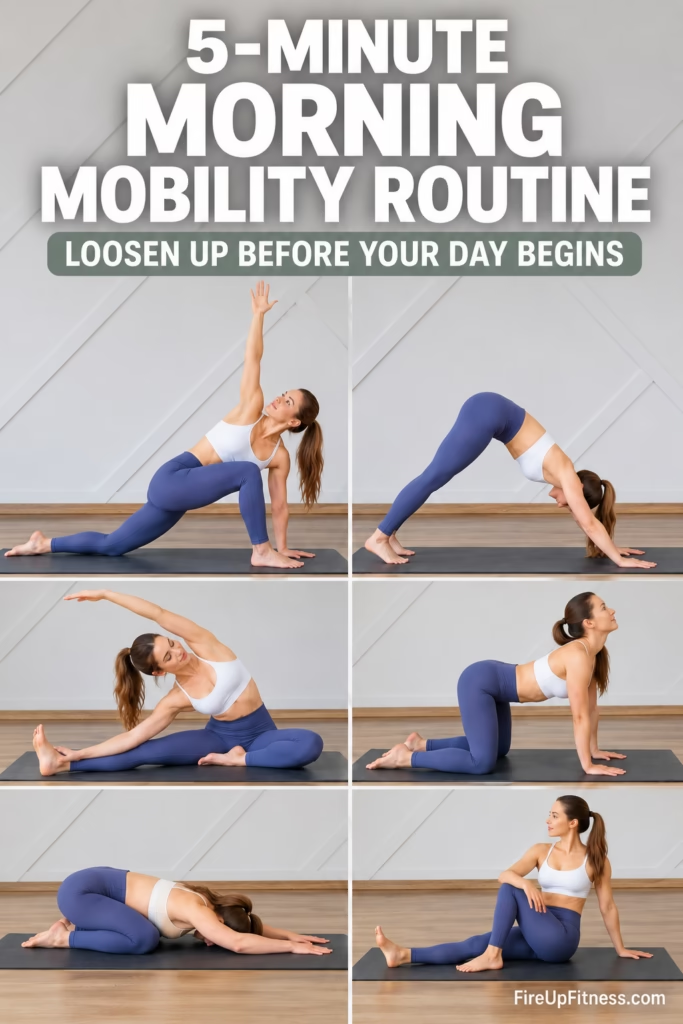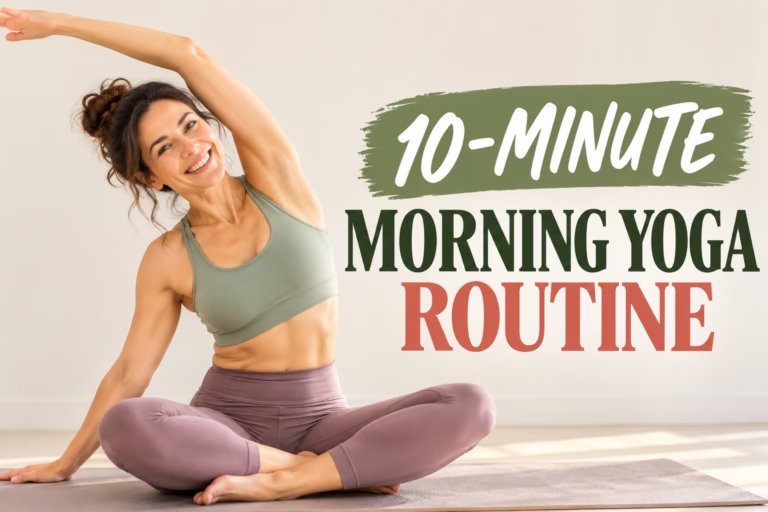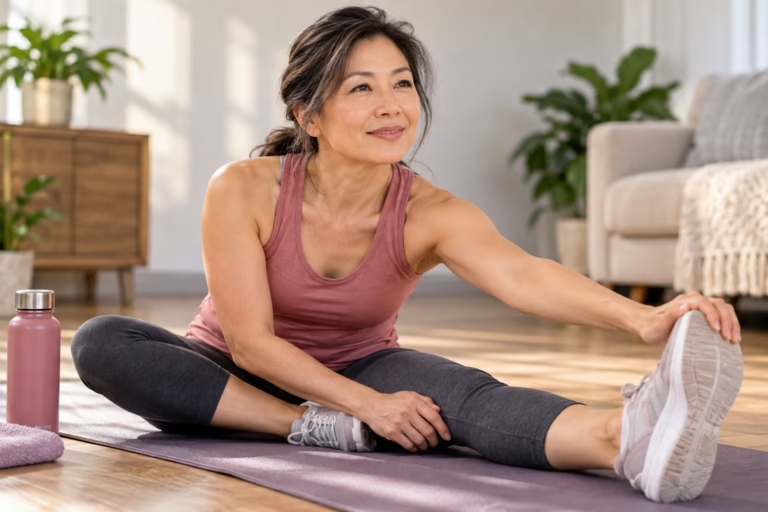
5-Minute Morning Stretches for Full-Body Mobility
Some mornings, your body feels stiff before the day even begins. Your hips feel tight, your shoulders need movement, and your back could use a gentle stretch. Instead of rushing straight into your daily routine, spending just five minutes moving your body can help you feel more comfortable and ready for the day.
These morning stretches offer a simple way to loosen tight muscles, improve mobility, and ease into movement without an intense workout.
This 5-minute morning mobility routine combines gentle spinal movements, hip opening stretches, seated stretches, and relaxing neck movements. It’s an easy routine for beginners and anyone who wants to build a consistent stretching habit.
The best part? You don’t need weights, special equipment, or much space. Just grab a comfortable exercise mat and follow along.
Why Morning Stretches Are Worth Adding to Your Routine
After several hours of sleep, you may notice stiffness in your back, hips, or shoulders. Gentle movement can help your joints move through a comfortable range of motion and prepare your muscles for everyday activities.
Adding easy morning stretches to your routine may help:
- Improve flexibility: Regular stretching helps maintain and gradually improve your range of motion.
- Reduce morning stiffness: Gentle movements can make your body feel less restricted after waking up.
- Support better posture: Moving your spine, shoulders, and hips can improve body awareness and make upright posture feel more comfortable.
- Improve hip mobility: Hip opening stretches help address tightness that may develop from prolonged sitting.
- Create a calming morning habit: Slow breathing and controlled movement provide a peaceful transition into the day.
You don’t need a long stretching session to get started. A short routine performed consistently can be a practical foundation for better mobility.
5-Minute Morning Stretches Routine for Beginners
This daily stretching routine follows a gentle sequence that moves from breathing exercises to spinal mobility, hip stretches, hamstring stretches, and neck relaxation.
Move slowly, breathe naturally, and avoid forcing your body into any position. The goal is comfortable movement rather than stretching as deeply as possible.
1. Full-Body Reach and Gentle Forward Fold
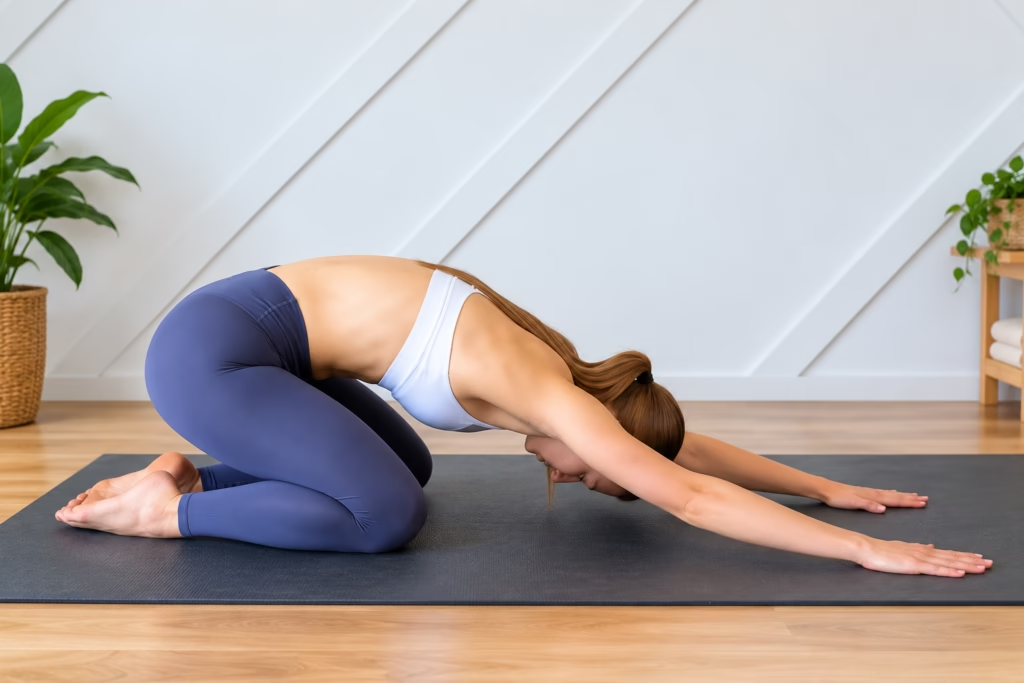
Focus: Breathing, shoulders, and spinal mobility
Begin by sitting comfortably on your heels or in another position that feels natural.
How to do it:
- Inhale deeply while raising both arms overhead toward the ceiling.
- Exhale and bring your hands toward your chest.
- Gently round your back and fold forward, lowering your forehead toward the mat if comfortable.
- Extend your arms behind you as you fold.
- Slowly lift your torso and reach your arms overhead again.
Repeat this flowing movement with slow, steady breaths.
This gentle combination of reaching and folding encourages movement through the upper body and spine while helping you settle into your morning routine.
2. Tabletop Hip Circles
Focus: Hip mobility, pelvis, and lower back
Hip circles are a useful addition to a morning mobility routine, particularly when your hips feel stiff after sleeping or sitting for long periods.
How to do it:
- Move into a tabletop position with your hands beneath your shoulders and knees beneath your hips.
- Keep your arms comfortably straight.
- Slowly move your hips toward the right.
- Continue moving your pelvis in a large, controlled circle.
- Complete a few circles before reversing direction.
Keep the movement smooth rather than rushing through each rotation.
Beginner tip: Start with smaller circles and gradually increase the range of motion as your hips loosen up.
3. Cobra to Child’s Pose Flow
Focus: Spinal mobility, chest, shoulders, and back
This flowing movement combines a gentle back extension with a relaxing backward stretch.
It can be especially useful for anyone looking for good stretches to include in a daily mobility practice.
How to do it:
- Begin in a tabletop position.
- Round your spine upward, gently drawing your belly toward your spine.
- Slowly shift forward and lower your hips toward the mat.
- Lift your chest into a comfortable cobra-like position, keeping your shoulders away from your ears.
- Move back through your hands and knees, sending your hips toward your heels into child’s pose.
- Repeat the flowing sequence at a slow pace.
Avoid pushing into a deep backbend. Keep your lower back comfortable and use a smaller range of motion when needed.
Posture note: Gentle spinal mobility can help you become more aware of your posture, but stretching alone won’t necessarily correct an excessive arched back posture. Core strength, hip strength, and individual movement habits also matter.
4. High Lunge With Upper-Body Twist
Focus: Hip mobility, upper back, and shoulders
This movement combines a lunge with a gentle spinal rotation, helping you move several areas of your body at once.
How to do it:
- Start in a high plank position.
- Step your right foot forward beside your right hand.
- Keep your left leg extended behind you.
- Place your left hand on the mat for support.
- Slowly lift your right arm toward the ceiling, rotating your chest to the right.
- Take a comfortable breath before returning your hand to the mat.
- Step back into plank and repeat on the left side.
Keep your movements controlled and allow your upper body to rotate naturally.
Beginner modification: Start from your hands and knees instead of a high plank, and step one foot forward into the lunge.
5. Low Lunge Hip Flexor Stretch With Twist
Focus: Hip flexors, hips, and upper-body rotation
Tight hip flexors can make certain everyday movements feel restricted, particularly after extended periods of sitting.
This variation adds a gentle rotation to a low lunge.
How to do it:
- Begin in a lunge with your right foot forward.
- Lower your left knee onto the mat.
- Move your right hand to the inside of your right foot.
- Gently shift your hips forward until you feel a stretch at the front of your left hip.
- Lift your left arm toward the ceiling, rotating your chest slightly.
- Return your hand to the floor and repeat on the opposite side.
Keep your front knee comfortably aligned with your foot, and avoid arching your lower back to deepen the stretch.
This is one of the hip opening stretches in the routine that can be particularly helpful for people who spend much of their day sitting.
6. Seated Side Reach and Hamstring Stretch
Focus: Hamstrings, side body, and lower-body flexibility
Now it’s time to slow things down with a seated stretch that targets the back of your legs and the sides of your torso.
How to do it:
- Sit on your mat and extend your right leg out to the side.
- Bend your left knee into a comfortable position.
- Inhale and reach your arms upward.
- Gently lean toward your extended right leg, reaching in the direction of your foot.
- Return upright and turn your torso to face your right leg.
- Fold forward slightly from your hips to stretch your hamstring.
- Repeat the sequence with your left leg extended.
Keep a slight bend in your extended knee if your hamstrings feel tight.
You don’t need to touch your toes. Focus on maintaining a comfortable stretch without rounding your back excessively.
7. Seated Neck Stretch and Final Deep Breath
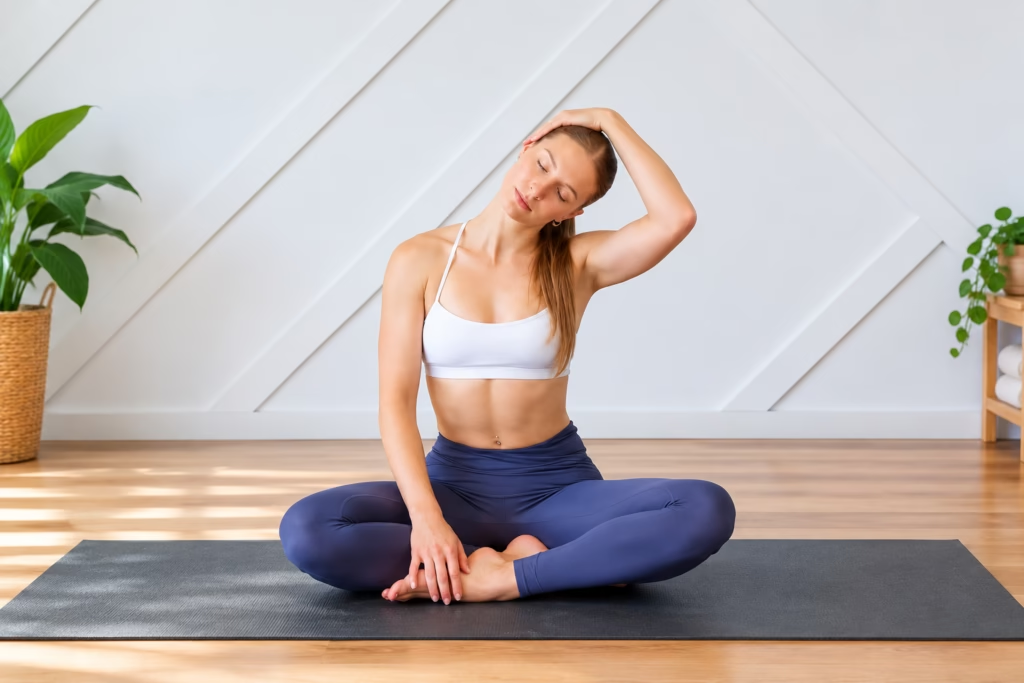
Focus: Neck, upper shoulders, and relaxation
Finish your morning stretches routine with a gentle neck stretch and a few calming breaths.
How to do it:
- Sit comfortably with your legs crossed.
- Relax your shoulders away from your ears.
- Slowly tilt your head toward your right shoulder.
- Hold briefly while breathing naturally.
- Return your head to center and repeat on the left side.
- Release the stretch and raise both arms overhead as you inhale.
- Lower your arms slowly as you exhale.
You can rest your hand lightly on the side of your head, but avoid pulling or applying strong pressure.
This final movement provides a relaxing finish to your five-minute session.
Follow Along With the 5-Minute Morning Stretching Video
Prefer following a guided routine instead of counting repetitions?
The video below takes you through the complete 5-minute full-body morning stretch, making it easier to follow the transitions between movements.
Watch the 5-Minute Morning Stretch Routine
Follow the instructor’s movements, pause whenever necessary, and adjust each stretch to suit your flexibility.
How to Make Morning Stretching a Daily Habit
The most effective daily stretching routine is one you can realistically maintain.
You don’t need to stretch for 30 minutes every morning to develop a consistent habit. Start with five minutes and focus on making the movements part of your regular schedule.
A few simple ideas can help:
- Keep your exercise mat nearby. Having a comfortable space ready makes it easier to begin.
- Stretch after waking up. Pair your routine with an existing habit, such as getting out of bed or drinking a glass of water.
- Move at your own pace. Some mornings your body may feel more flexible than others.
- Focus on consistency. Regular, comfortable movement is more valuable than forcing yourself into deep stretches.
- Adjust when necessary. Use cushions, blocks, or other support when a position feels uncomfortable.
You can also use these quick morning stretches as a gentle warm-up before walking, yoga, or another light activity. For more vigorous exercise, add movements that gradually raise your heart rate.
Tips for Getting the Most Out of Easy Morning Stretches
Stretching should feel comfortable and controlled, not painful.
Pay attention to your breathing throughout the routine. Exhale naturally as you move into a stretch, and avoid holding your breath.
Remember that flexibility develops gradually. Your range of motion may vary from day to day depending on your activity level, sleep, and how your body feels.
For beginners, it’s perfectly fine to modify challenging positions. You can lower your knees during plank transitions, place a cushion beneath your knees in lunges, or bend your legs during seated stretches.
If a movement causes sharp pain, numbness, dizziness, or unusual discomfort, stop and adjust. People with existing injuries or significant back or neck conditions may need guidance from a qualified healthcare professional.
Frequently Asked Questions About Morning Stretches
Is five minutes of stretching enough in the morning?
Five minutes can be a useful starting point for improving movement awareness, easing temporary stiffness, and building a consistent routine. Longer sessions may be helpful when working toward specific flexibility goals.
Can beginners do this morning mobility routine?
Yes. Most movements can be modified for beginners. Start with smaller ranges of motion and use extra support when necessary, especially during lunges and spinal movements.
Should you stretch before or after breakfast?
Either can work. Gentle stretching before breakfast is generally comfortable for many people, while others prefer to move after having something light to eat. Choose whichever feels best for your body.
Can morning stretches improve posture?
Stretching may help improve mobility and awareness of how you hold your body. However, lasting posture improvements often require a combination of strengthening exercises, movement variety, and changes to daily habits.
Can I repeat these stretches throughout the day?
Absolutely. You can use individual movements during a work break or repeat the full routine later in the day. Gentle hip circles, seated stretches, and shoulder movements can be particularly convenient after prolonged sitting.
Final Thoughts: Start Your Day With Five Minutes of Movement
A good morning routine doesn’t have to be complicated. Sometimes, five minutes of gentle movement is enough to help you feel more awake, less stiff, and ready to begin your day.
These easy morning stretches bring together spinal mobility, hip opening movements, hamstring stretches, and calming breaths in one simple sequence.
Try the routine tomorrow morning, follow along with the video, and notice how your body feels afterwards.
Over time, those few minutes can become a comfortable part of your morning—one that helps you move with greater ease throughout the day.