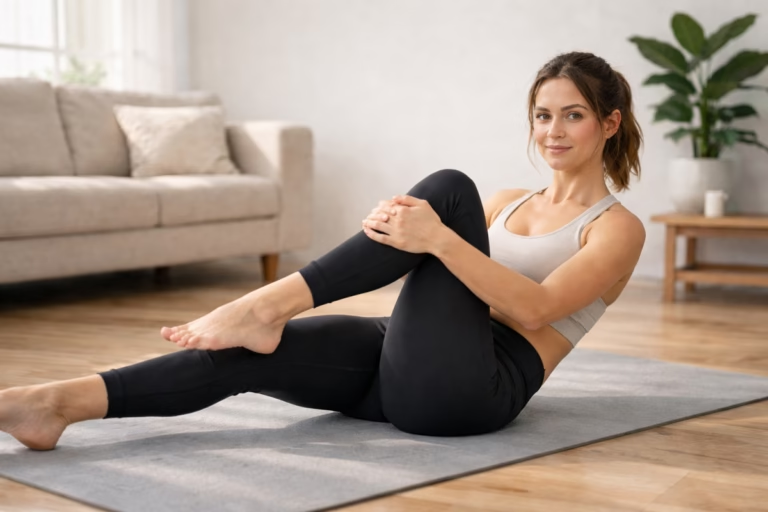
15-Minute Full Body Pilates Workout at Home
A full-body workout doesn’t have to take an hour to make a difference. With just 15 minutes, an exercise mat, and a pair of light dumbbells, you can challenge your core, strengthen your glutes, work your arms and legs, and improve your balance.
This 15-minute full body Pilates workout combines standing exercises, controlled core movements, and mat-based strength training. It’s a convenient way to build muscular endurance and develop better body control without needing a gym membership.
Designed for women who enjoy exercising at home, this routine blends traditional Pilates principles with light resistance training. You’ll move through plié squats, bird dog variations, abdominal exercises, glute movements, and standing balance challenges.
Whether you’re exploring a beginner workout at home or looking for a fresh Pilates workout routine, this session offers a practical way to strengthen your entire body.
Why This Full Body Pilates Workout Is Worth Trying
Pilates-inspired workouts focus on controlled movements, breathing, alignment, and core stability. When combined with light dumbbells, these exercises can also challenge muscular endurance.
Here are some benefits of incorporating this routine into your weekly schedule:
- Core strength: Abdominal exercises and stability movements help strengthen the muscles supporting your spine.
- Glute activation: Squats, donkey kicks, and reverse bridges work the hips and lower body.
- Better balance: Single-leg exercises challenge coordination and stability.
- Upper-body strength: Light resistance engages the shoulders, chest, arms, and upper back.
- Improved body awareness: Slow, intentional movements encourage better control and posture.
- Convenience: You can complete the workout at home with minimal equipment.
This routine is particularly useful when you want to combine a mat Pilates workout with standing strength exercises.
What You’ll Need for This Pilates Workout Routine
Before starting, prepare a comfortable exercise space.
You’ll need an exercise mat, two light dumbbells (approximately 2 pounds each), and enough room to extend your arms and legs.
Don’t have dumbbells? Small water bottles can work as substitutes. You can also complete the entire workout using only your body weight.
Wear comfortable clothing that allows unrestricted movement, and keep water nearby.
Watch the 15-Minute Full Body Pilates Workout Video
Follow along with the instructor as she guides you through the complete workout, including standing exercises, mat-based movements, short recovery breaks, and balance challenges.
15-Minute Full Body Pilates Workout
WordPress: Add a YouTube block below this heading and paste the video’s URL. WordPress will display the embedded video.
Keep the video accessible while exercising so you can follow the instructor’s demonstrations and timing.
15-Minute Full Body Pilates Workout: 12 Exercises
This body Pilates workout begins with standing movements before transitioning to the mat for glute and core exercises. It finishes with balance and upper-body training.
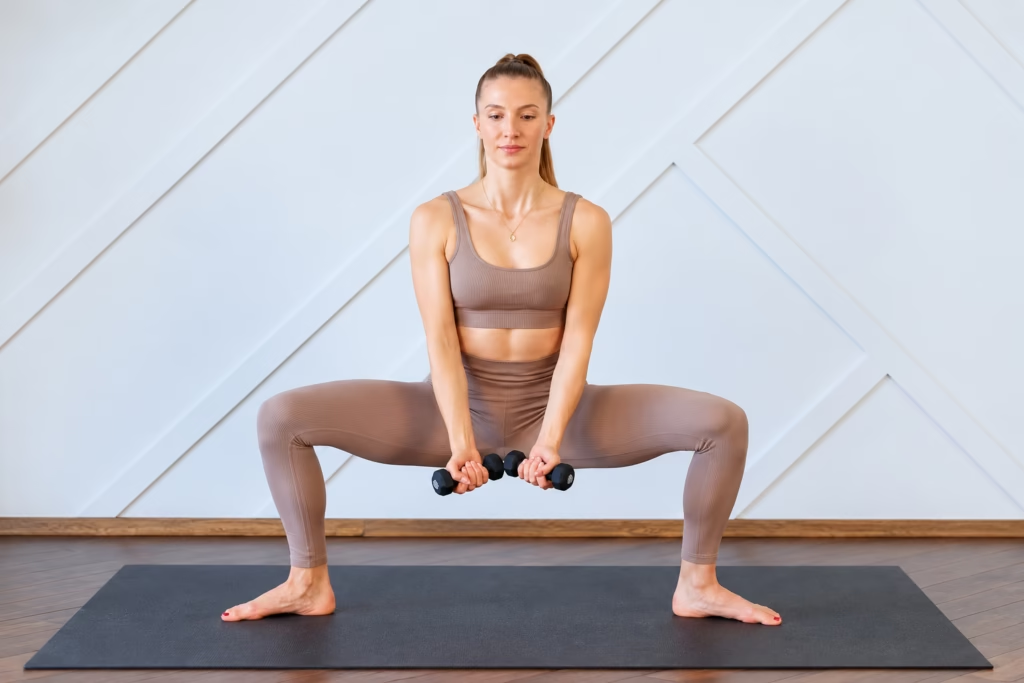
1. Plié Squat With Overhead Press
Targets: Glutes, inner thighs, shoulders, and core.
Start with your feet wider than hip-width apart and toes turned slightly outward. Hold a dumbbell in each hand.
Bend your knees and lower your hips into a plié squat while keeping your chest upright. As you stand, press the dumbbells overhead.
Keep your abdominal muscles engaged and your knees aligned with your toes.
Beginner modification: Skip the dumbbells and perform a shallower squat.
2. Plié Squat With Oblique Crunch
Targets: Obliques, thighs, glutes, and core stability.
Remain in your wide stance with your arms raised. Lower into a squat, then straighten your legs while bringing one elbow toward the same-side knee.
Return to the center and alternate sides.
Focus on controlled side bending rather than rushing through the movement.
3. Plié Squat With Calf Raise
Targets: Glutes, inner thighs, calves, and balance.
Lower into a plié squat, then straighten your legs and lift your heels off the floor.
Balance briefly on the balls of your feet before lowering your heels.
Keep your torso upright and avoid leaning forward.
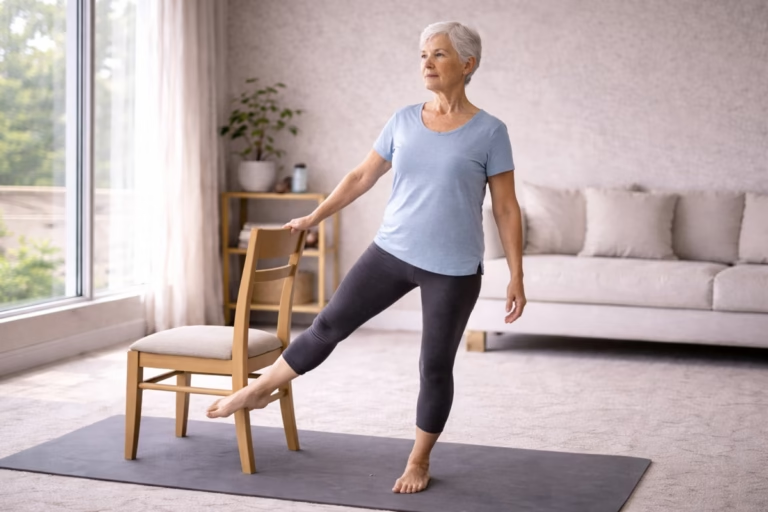
Beginner modification: Hold a sturdy chair for support during the calf raise.
After completing these three exercises, take the video’s 30-second break and repeat the standing sequence.
Mat Pilates Workout for Glutes and Core
The next movements shift to the floor, where your core helps stabilize your body as your arms and legs move.
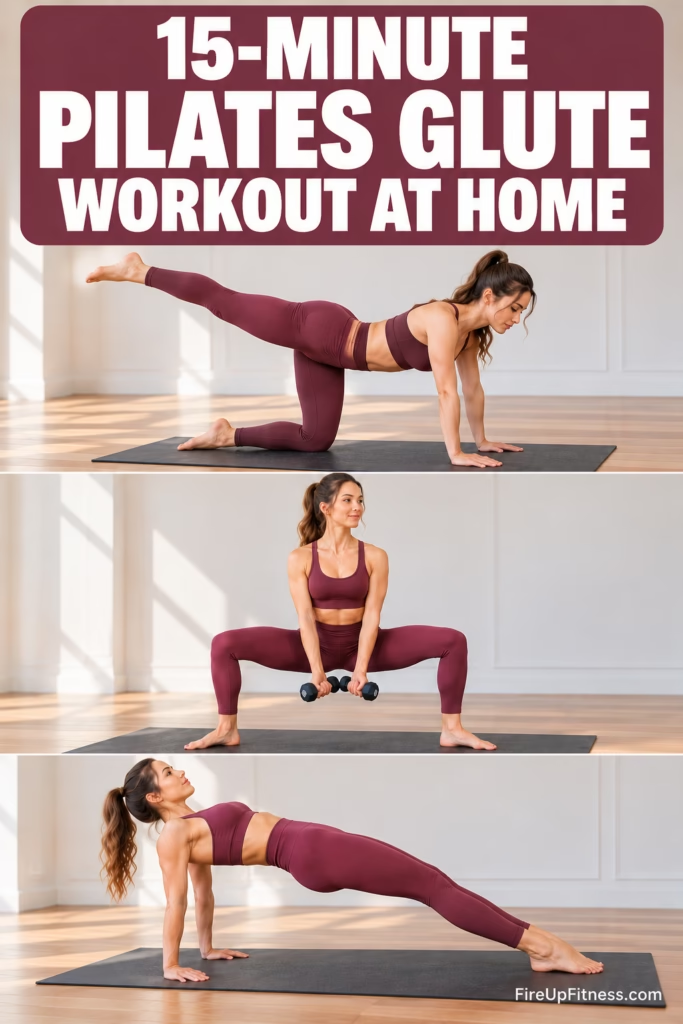
4. Weighted Bird Dog Crunch
Targets: Abdominals, back, shoulders, and glutes.
Begin on your hands and knees. Hold one light dumbbell in your right hand while extending your left leg behind you.
Reach your right arm forward, keeping your hips level. Bring your right elbow and left knee toward each other beneath your torso, then extend again.
Keep your lower back neutral throughout the exercise.
Beginner modification: Perform the movement without a dumbbell.
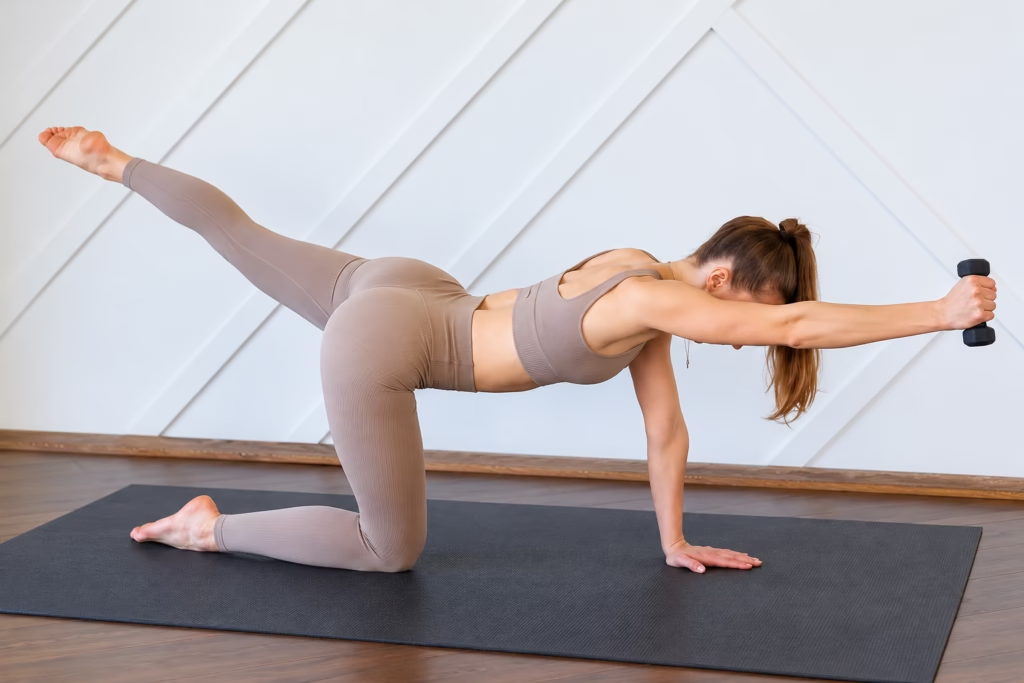
5. Bird Dog Pulses
Targets: Glutes, back, and core stability.
Maintain the extended bird dog position with one arm reaching forward and the opposite leg reaching backward.
Perform small, controlled upward pulses without arching your lower back.
Keep your pelvis facing the floor and avoid lifting your leg excessively high.
6. Donkey Kicks
Targets: Glutes and hip stabilizers.
Return both hands to the mat. Bend one knee to approximately 90 degrees and lift that leg toward the ceiling.
Pause briefly before lowering your knee.
Keep your hips level and avoid using your lower back to create the movement.
Complete the three exercises on one side, rest for 15 seconds, and switch sides.
These movements make an effective addition to a glute workout routine, particularly when you want to strengthen your hips using minimal equipment.
Pilates Ab Exercises for Core Strength
The abdominal section includes seated movements and floor exercises that challenge core endurance.
7. Seated Elbow-to-Knee Crunch
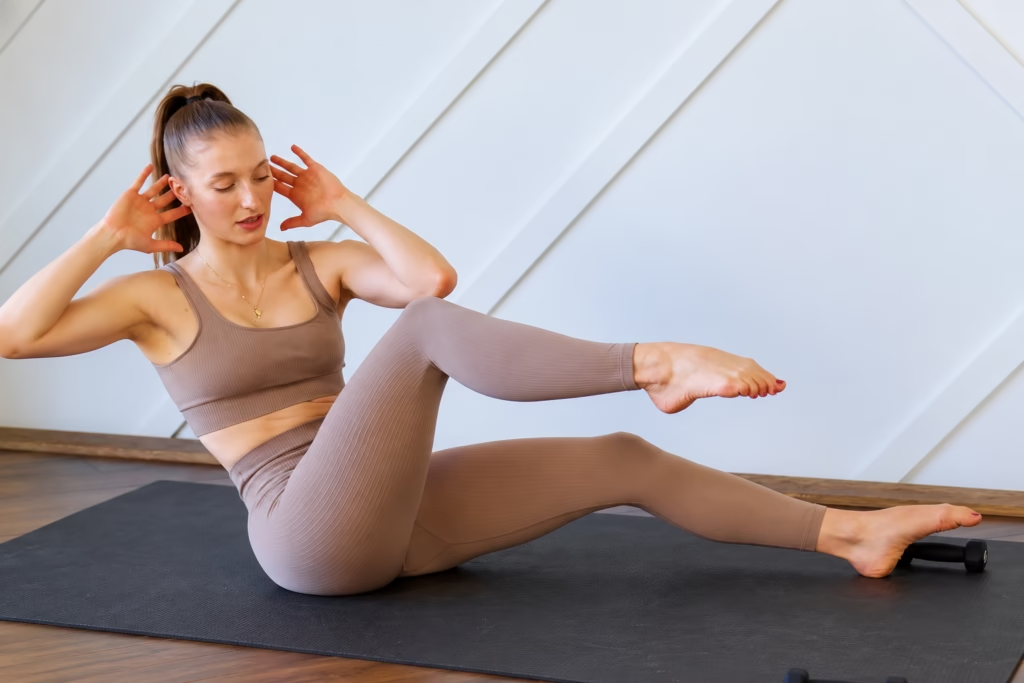
Targets: Abdominals and obliques.
Sit on your mat with your knees bent and lean backward slightly.
Place your fingertips beside your ears. Rotate your torso, bringing one elbow toward the opposite knee.
Return to the center and alternate sides while keeping your chest lifted.
Beginner modification: Keep your heels on the floor for additional stability.
8. Seated Abdominal Pulses
Targets: Abdominal endurance and core control.
Stay seated with your knees bent and torso leaning slightly backward.
Extend your arms forward with your palms facing upward. Make small, controlled pulses while maintaining tension through your abdominal muscles.
Avoid collapsing your chest or holding your breath.
Repeat the seated crunch and pulse combination after a short rest.
9. Reverse Bridge
Targets: Glutes, hamstrings, shoulders, and upper back.
Sit with your legs extended and hands positioned behind your hips.
Press through your palms and heels to lift your hips away from the floor.
Squeeze your glutes gently at the top, then lower with control.
Beginner modification: Bend your knees and perform a reverse tabletop bridge.
10. Bicycle Crunches
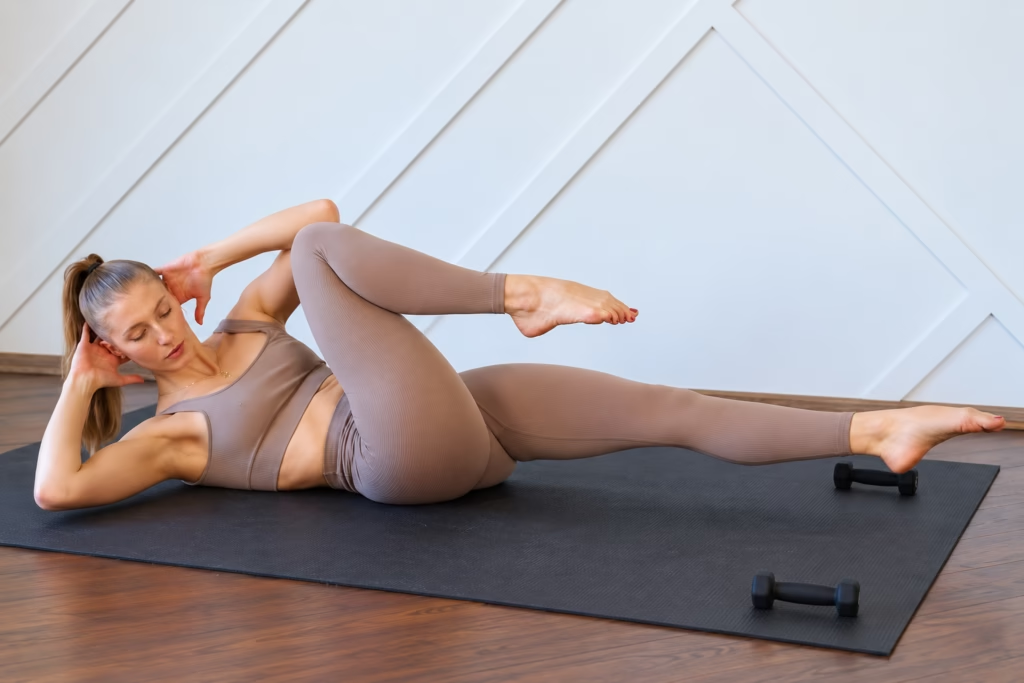
Targets: Abdominals and obliques.
Lie on your back with your hands lightly supporting your head.
Lift your shoulder blades slightly off the mat. Bring one knee toward your chest while rotating your opposite shoulder toward it.
Extend the other leg and alternate sides in a smooth, cycling motion.
Avoid pulling your neck forward.
Repeat the reverse bridge and bicycle crunch combination after the video’s 15-second rest.
Standing Pilates Exercises for Balance and Upper-Body Strength
The final section returns to standing, combining single-leg stability with light upper-body resistance.
11. Warrior III Balance With Dumbbells
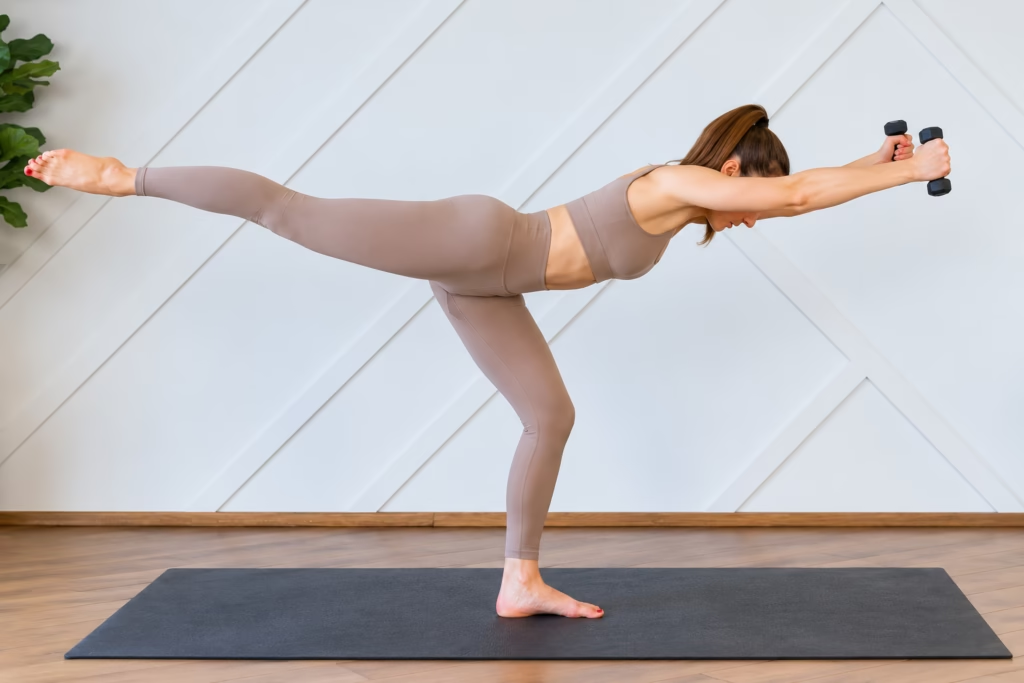
Targets: Glutes, hamstrings, core, and balance.
Stand tall with a light dumbbell in each hand.
Shift your weight onto one leg and hinge forward from your hips while extending the opposite leg behind you.
Reach your arms forward to create a long line from your fingertips through your extended foot.
Pause briefly, then return to standing.
Keep your supporting knee slightly bent and focus your eyes on a fixed point on the floor.
Beginner modification: Practice without weights or use a wall for balance.
12. Goalpost Arm Squeezes
Targets: Shoulders, chest, and upper back.
Stand upright with your arms raised to shoulder height and elbows bent at approximately 90 degrees.
Bring your forearms inward in front of your chest, then open your arms outward while gently drawing your shoulder blades together.
Maintain a controlled pace and avoid shrugging your shoulders.
Complete the Warrior III balance on the opposite leg, followed by the final goalpost arm squeezes.
How to Follow This 15-Minute Pilates Workout Plan
The original workout uses a combination of exercise intervals, repeated sequences, and short rest breaks.
| Workout section | Exercises |
|---|---|
| Standing lower body | Plié squat press, oblique crunch, calf raise |
| Mat glute exercises | Bird dog crunch, bird dog pulses, donkey kicks |
| Seated abdominal work | Elbow-to-knee crunch, abdominal pulses |
| Floor strength | Reverse bridge, bicycle crunch |
| Standing balance | Warrior III, goalpost arm squeezes |
Follow the video for the exact exercise timing and rest periods.
Beginners can slow down, take additional breaks, or reduce the resistance while learning each movement.
Add Stretching Pilates at Home to Improve Flexibility
Although this workout emphasizes strength and stability, gentle stretching afterward can help you maintain comfortable movement through your joints.
Adding a short flexibility routine is an easy way to complement your Pilates workout plan.
Try these exercises for flexibility after completing the session:
| Stretch | Duration |
|---|---|
| Standing quadriceps stretch | 20–30 seconds per side |
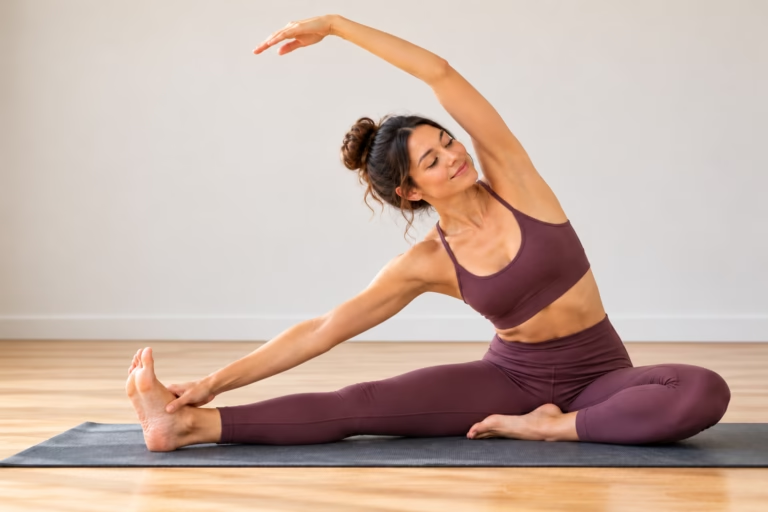
| Seated hamstring stretch | 20–30 seconds per side |
| Figure-four glute stretch | 20–30 seconds per side |
| Child’s pose | 30 seconds |
| Chest-opening stretch | 20–30 seconds |
Move into each stretch gently and avoid bouncing.
Combining stretching Pilates at home with regular strength training can support flexibility, mobility, and overall movement quality.
How Often Should You Do This Full Body Pilates Workout?
For beginners, completing this routine two or three times per week can be a manageable starting point.
Allow adequate recovery between challenging sessions, especially when your muscles are adjusting to new movements.
You can also alternate Pilates with walking, cycling, swimming, or other activities you enjoy.
As your strength and balance improve, consider gradually increasing resistance or incorporating additional Pilates exercises into your weekly schedule.
Tips for Getting Better Results From Your Pilates Workout Routine
Making progress with Pilates is less about moving quickly and more about maintaining proper technique.
Focus on breathing naturally, engaging your core without excessive bracing, and keeping your movements smooth.
Choose dumbbells that allow you to maintain good form throughout each exercise. When balance becomes difficult, reduce the resistance or use additional support.
Pay attention to how your body responds, and avoid pushing through sharp or persistent pain.
Over time, consistent practice can improve muscular endurance, coordination, and confidence with more challenging movements.
Final Thoughts
This 15-minute full body Pilates workout at home offers a convenient way to strengthen your core, glutes, legs, arms, and back in one session.
With a combination of standing movements, mat Pilates exercises, and balance challenges, it provides variety without requiring complicated equipment.
Start with comfortable modifications, focus on proper alignment, and gradually build your strength as the exercises become more familiar.
Even a short workout can become a valuable part of your weekly fitness routine when practiced consistently.
What do you enjoy most about Pilates: the core exercises, glute movements, or the balance challenges?