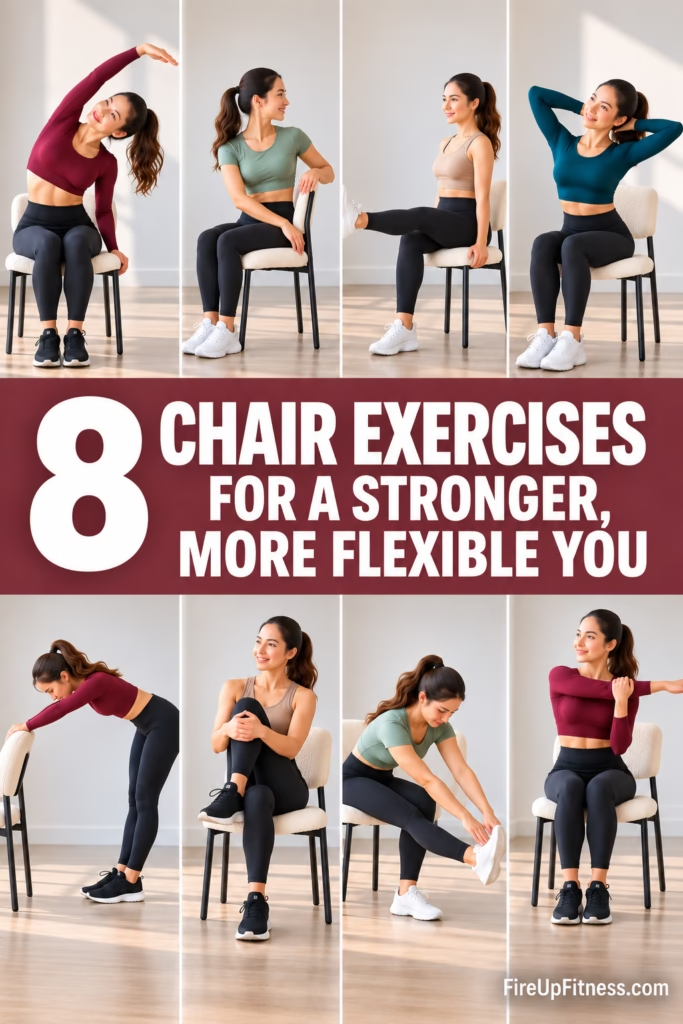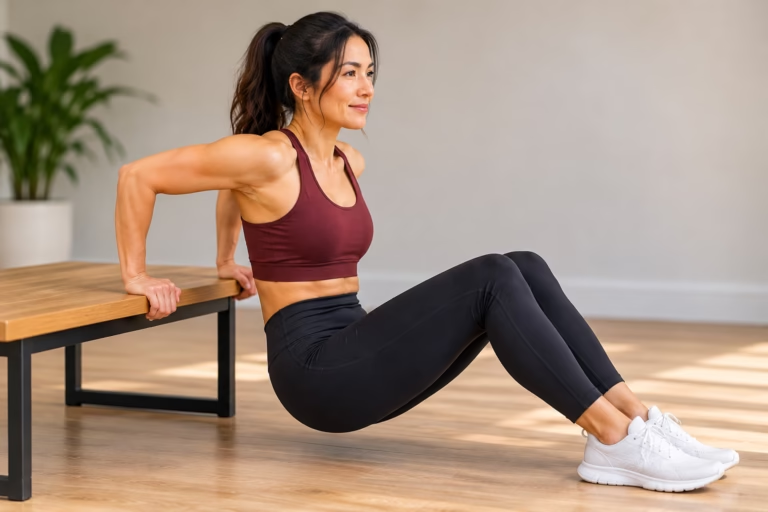
8 Office Exercises to Relieve Stiffness While Sitting
Hours spent working at a desk can leave your neck tight, shoulders tense, and hips feeling stiff. Even with a comfortable chair and a well-organized workspace, staying in one position for too long can make your body uncomfortable.
A short movement break can make a difference.
These eight office exercises combine gentle stretching and mobility movements to help you feel more comfortable during your workday. You only need a sturdy chair and a few minutes of free time.
Inspired by a guided midday movement video, this simple routine includes desk exercises at work, seated stretches, and standing movements that are equally suitable for your home office.
Why Office Exercises Are Worth Adding to Your Work Routine
Sitting for extended periods limits how frequently your muscles and joints move. Looking at a computer screen can also contribute to neck and shoulder discomfort, especially when you remain in the same position for hours.
Regular movement breaks can help:
- Reduce feelings of muscle stiffness.
- Maintain flexibility and joint mobility.
- Encourage comfortable spinal movement.
- Improve awareness of your sitting posture.
- Break up long periods of inactivity.
These movements are not intended to replace regular physical activity. Instead, they provide a convenient way to introduce more movement into your day.
Follow This Quick Office Stretch Routine
This gentle office yoga and mobility session focuses on the neck, shoulders, spine, hips, and legs.
You’ll need a sturdy, stable chair, comfortable clothing, and enough room to extend your arms.
Move through each stretch slowly, breathing naturally. Never force a position or continue through pain.
Watch the Guided Office Workout Video
Follow along with the instructor for a complete midday stretching session. The written instructions below make it easy to revisit individual movements whenever you need them.
1. Seated Neck Stretches
Neck stiffness is common when your attention stays fixed on a computer screen.
How to do it:
- Sit upright with both feet on the floor and your shoulders relaxed.
- Slowly turn your head toward your right shoulder, then your left.
- Lower your chin toward your chest.
- Gently trace a half-circle with your chin from one shoulder toward the other.
- Return to the center and tilt your right ear toward your right shoulder.
- Repeat the tilt on your left side.
Duration: 45–60 seconds.
Keep the movement comfortable and avoid pulling on your head.
2. Shoulder Rolls and Chest Opener
This combination helps mobilize your shoulders while stretching the front of your chest.
How to do it:
- Roll your shoulders backward in large, controlled circles.
- Interlace your fingers behind your head without pulling on your neck.
- Open your elbows outward and gently lift your chest.
- Bring your elbows forward while rounding your upper back.
- Return to the open-chest position.
Repetitions: 3–5 shoulder rolls followed by 2–3 chest-opening movements.
Allow your shoulders to stay relaxed rather than lifting them toward your ears.
3. Seated Side Bends
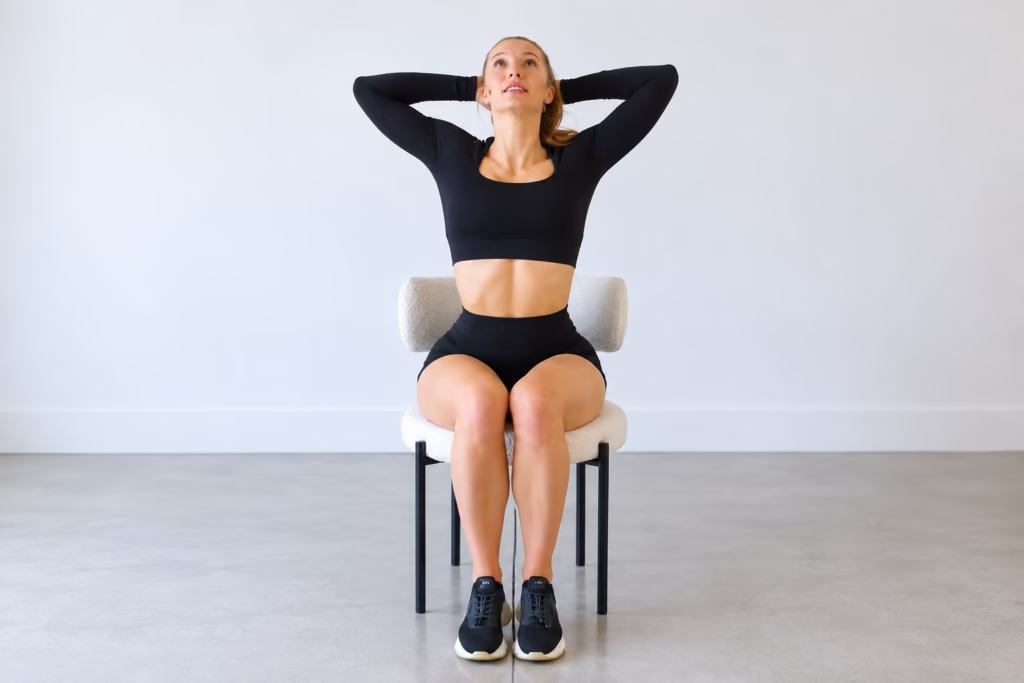
Side bends stretch the muscles along your torso and encourage movement through your spine and rib cage.
How to do it:
- Sit tall with your hips evenly supported.
- Raise your right arm overhead.
- Reach gently toward your left side without twisting your torso.
- Return upright and repeat with your left arm.
- Finish by raising both arms overhead and reaching upward.
Repetitions: 2 stretches per side.
Keep both hips on the chair and avoid leaning forward.
4. Standing Chair Back and Hamstring Stretch
This supported forward stretch targets your back, shoulders, and the muscles along the backs of your thighs.
How to do it:
- Stand behind a stable chair and hold the backrest.
- Step backward until your arms extend comfortably.
- Hinge forward from your hips, allowing your chest to lower.
- Keep your knees slightly bent if necessary.
- Gently bend and straighten your knees several times.
- Return to standing slowly.
Duration: 45–60 seconds.
Use a chair without wheels or another secure support that cannot slide.
5. Standing Hip Flexor Stretch With Side Reach
The hip flexors are located at the front of your hips and can feel tight after prolonged sitting.
How to do it:
- Stand in a staggered stance beside a stable desk or chair.
- Place your right foot forward and your left foot behind.
- Gently bend your front knee and shift your hips forward.
- Keep your torso upright without excessively arching your lower back.
- Raise your left arm and reach slightly toward your right.
- Release and repeat on the opposite side.
Duration: 30 seconds per side.
The video demonstrates a chair-elevated variation. The floor-based version described here offers a more stable alternative for everyday office use.
6. Supported Upper-Back Rotation
This movement encourages rotation through your upper spine while opening your chest.
How to do it:
- Stand facing a stable chair or desk.
- Hinge forward slightly and rest your forearms on the support.
- Lift your right arm toward the ceiling while gently rotating your upper body.
- Follow your hand with your eyes if comfortable.
- Lower your arm and repeat on the other side.
Repetitions: 2–3 per side.
Keep your hips relatively steady and avoid forcing the twist.
7. Seated Rounded-Back Stretch
This gentle movement stretches the muscles around your upper and middle back.
How to do it:
- Sit securely with your feet apart.
- Lean forward between your thighs.
- Reach your arms underneath your legs if comfortable.
- Round your upper back toward the ceiling.
- Allow your head and neck to relax.
- Slowly return upright.
Repetitions: 2 gentle stretches, holding each for a few breaths.
Avoid this position if forward bending aggravates an existing back problem.
8. Seated Hamstring Stretch
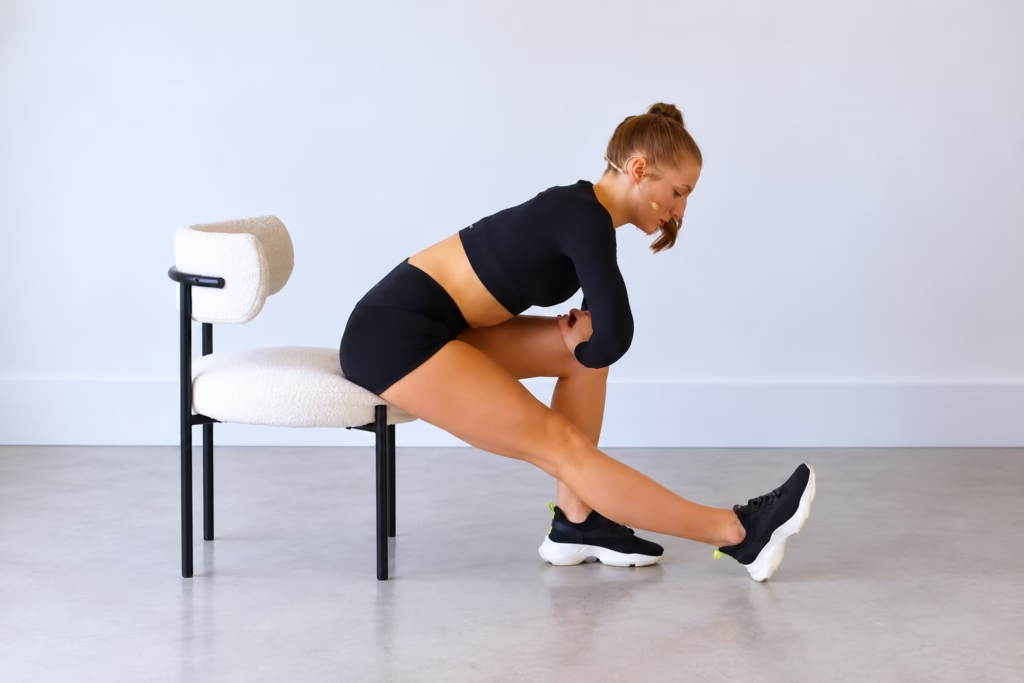
Finish the routine by stretching the backs of your thighs without leaving your chair.
How to do it:
- Sit near the front edge of your seat.
- Extend your right leg with your heel resting on the floor.
- Point your toes upward.
- Keep your back straight and hinge forward slightly from your hips.
- Hold the position while breathing normally.
- Switch legs.
Duration: 20–30 seconds per side.
You should feel a gentle stretch behind your thigh, not discomfort behind your knee.
How to Fit Office Stretches Into a Busy Workday
You don’t need to complete the entire routine every time you take a break.
Choose movements based on how your body feels and the time available.
| When | Suggested movement |
|---|---|
| Before starting work | Shoulder rolls and chest opener |
| Midmorning | Neck stretches and seated side bends |
| Lunch break | Complete guided office workout |
| Midafternoon | Hip flexor stretch and upper-back rotation |
| End of workday | Seated hamstring stretch |
You can also stand up, walk around, or change positions between tasks.
The important thing is to avoid spending your entire day sitting without movement.
Add Functional Exercises for More Daily Movement
While stretching supports flexibility, functional fitness also involves building strength, balance, and coordination for everyday activities.
To complement your office stretches, try a few simple movements:
- Chair sit-to-stands: Strengthen your legs by standing up and sitting down with control.
- Standing calf raises: Lift your heels and lower them slowly to work your calves.
- Wall push-ups: Strengthen your chest, shoulders, and arms using a wall for support.
- Standing marches: Alternate lifting your knees to practice balance and coordination.
These functional exercises require minimal space and can also be included in a training at home routine.
Frequently Asked Questions
Can I do office exercises while sitting at my desk?
Yes. Neck stretches, shoulder rolls, seated side bends, and hamstring stretches can all be performed while sitting in a stable chair.
How often should I take movement breaks at work?
Aim to change positions and move regularly throughout the day. The ideal frequency depends on your comfort, workload, and individual needs.
Is office yoga suitable for beginners?
Most gentle office yoga movements are beginner-friendly when performed within a comfortable range of motion. Modify or skip exercises that cause discomfort.
Can a short office workout improve flexibility?
Regular stretching can help maintain or gradually improve flexibility. Consistency and comfortable technique are more important than stretching intensely.
Final Thoughts
Your workday doesn’t have to leave your body feeling stiff and uncomfortable.
These simple office stretches offer an accessible way to move your neck, shoulders, back, and hips without complicated equipment or a trip to the gym.
Start with the guided video during your next lunch break, then use your favorite movements whenever you need a short break from sitting.
A few minutes of movement can be a valuable addition to your daily routine.