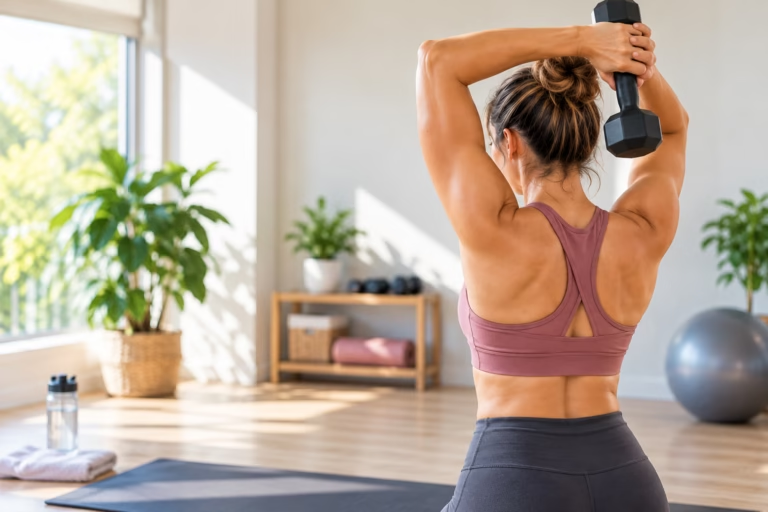
7 Easy Yoga Poses for Beginners to Strengthen Your Core
Want to feel stronger, move more comfortably, and build a consistent fitness routine without complicated exercises? Easy yoga for beginners is a wonderful place to start.
You don’t need to be flexible, have perfect balance, or spend hours exercising to enjoy the benefits of yoga. Just a few simple poses can help strengthen your core, improve posture, release muscle tension, and support your overall well-being.
One of the best things about yoga is that it combines gentle movement with mindful breathing. Some poses stretch tight muscles, while others challenge your abs, legs, arms, and back. Together, they create a balanced full-body workout that feels both energizing and relaxing.
Whether you’re exploring easy yoga for the first time or looking for a simple yoga routine to practice at home, these seven beginner-friendly poses can help you build strength and flexibility at your own pace.
Why Easy Yoga Is Great for Beginners
Yoga isn’t just about stretching. It’s also an effective way to develop functional strength, improve body awareness, and support everyday movement.
Here are some benefits of practicing yoga regularly:
- Builds core strength: Poses such as Plank and Boat engage your abdominal muscles and improve stability.
- Improves flexibility: Gentle stretches help increase mobility in your hips, shoulders, and legs.
- Supports better posture: Strengthening your core and back muscles can make it easier to maintain comfortable alignment.
- Improves balance: Standing yoga poses challenge coordination and body control.
- Encourages relaxation: Slow breathing and mindful movement can help manage everyday stress.
- Strengthens the whole body: Many yoga poses activate several muscle groups at once.
For women over 40, a gentle yoga routine can also be a practical way to maintain mobility, build strength, and stay active without high-impact movements.
7 Easy Yoga Poses for Beginners to Try at Home
These yoga poses for beginners combine stretching, strengthening, and relaxation. All you need is a comfortable yoga mat and a little space to move.
1. Mountain Pose (Tadasana)
Mountain Pose may look like ordinary standing, but it’s a foundational yoga exercise that encourages better posture, balance, and body awareness.
This simple movement teaches you to stand tall while gently activating your core and leg muscles.
How to do it:
- Stand with your feet together or hip-width apart.
- Distribute your weight evenly across both feet.
- Keep your knees relaxed and your spine tall.
- Gently engage your abdominal muscles without holding your breath.
- Relax your shoulders and let your arms rest beside your body.
- Take slow, deep breaths while maintaining your posture.
- Hold for 30–60 seconds.
Beginner tip: Stand near a wall or sturdy chair for additional balance support.
Benefits: Improves posture, body awareness, and standing stability.
2. Downward Facing Dog (Adho Mukha Svanasana)
Downward Facing Dog is one of the most recognizable poses in an easy yoga routine.
It stretches your shoulders, back, hamstrings, and calves while encouraging upper-body strength and core engagement.
How to do it:
- Begin on your hands and knees with your wrists under your shoulders.
- Spread your fingers and press your palms into the mat.
- Tuck your toes underneath.
- Slowly lift your hips upward and backward.
- Keep your knees slightly bent as you lengthen your spine.
- Relax your neck and look toward your legs.
- Hold for 20–30 seconds while breathing comfortably.
Beginner tip: Don’t worry about touching your heels to the floor. Keeping your knees bent is perfectly fine.
Benefits: Improves flexibility, stretches the back of the body, and strengthens the shoulders and arms.
3. Plank Pose for Core Strength
Looking for yoga movements that complement your favorite abs workout routines? Plank Pose is an excellent choice.
This exercise strengthens your abdominal muscles while challenging your shoulders, arms, and glutes. It also helps develop the stability needed for everyday activities.
How to do it:
- Start on your hands and knees.
- Position your hands directly beneath your shoulders.
- Step your feet backward until your body forms a straight line from head to heels.
- Gently tighten your abdominal muscles.
- Keep your hips aligned with your shoulders rather than allowing your lower back to sag.
- Breathe steadily throughout the hold.
- Maintain the position for 15–30 seconds.
Beginner tip: Lower your knees to the mat to reduce the intensity. Start with shorter holds and gradually build endurance.
Benefits: Strengthens the abs, shoulders, chest, and stabilizing muscles.
4. Warrior II (Virabhadrasana II)
Warrior II is a powerful standing yoga pose that strengthens your legs, improves balance, and encourages hip mobility.
It’s particularly useful for beginners who want to combine lower-body strengthening with mindful movement.
How to do it:
- Stand tall and step your feet wide apart.
- Turn your right foot outward approximately 90 degrees.
- Angle your left foot slightly inward.
- Bend your right knee toward a comfortable 90-degree angle, keeping it aligned with your toes.
- Extend both arms out to the sides at shoulder height.
- Keep your torso upright and gaze over your right fingertips.
- Hold for 20–30 seconds, then switch sides.
Beginner tip: Shorten your stance or bend your front knee less deeply if you feel uncomfortable.
Benefits: Strengthens the thighs and glutes while improving balance, endurance, and hip mobility.
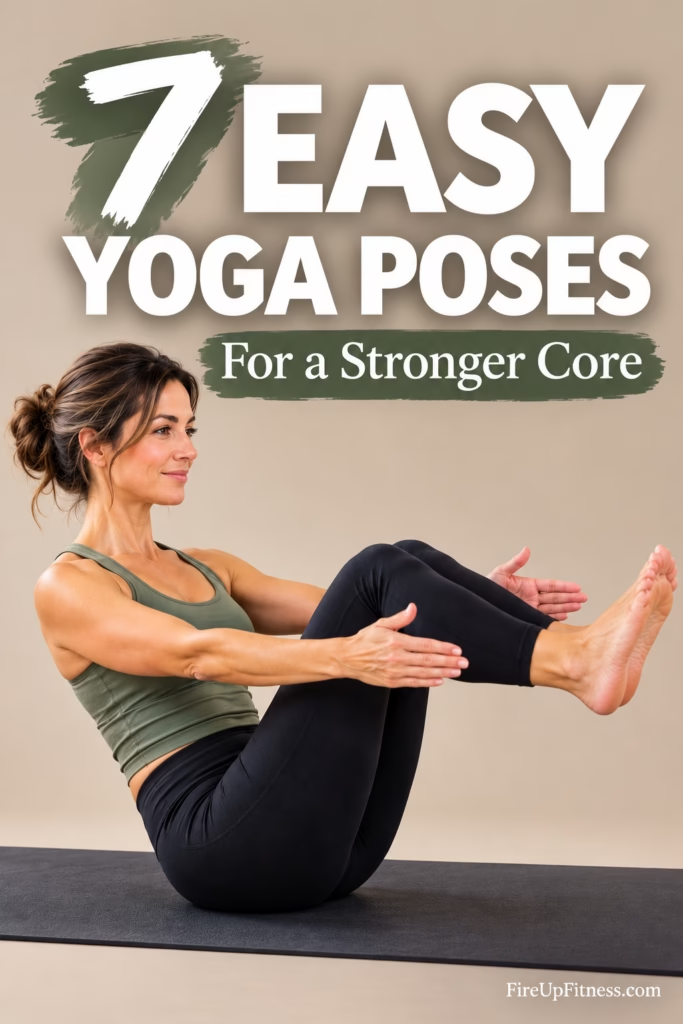
5. Boat Pose (Navasana)
Boat Pose is one of the most effective yoga poses in this routine for challenging your abdominal muscles.
It works your core and hip flexors while encouraging balance and controlled breathing.
This pose can be a useful addition to beginner-friendly abs workout routines because it develops core endurance without requiring equipment.
How to do it:
- Sit on your mat with your knees bent and feet flat on the floor.
- Place your hands behind your thighs for support.
- Lean backward slightly while keeping your chest lifted.
- Gently engage your abdominal muscles.
- Lift one foot, then the other, off the mat.
- Keep your knees bent and shins roughly parallel to the floor.
- Hold for 10–20 seconds while breathing normally.
Beginner tip: Keep your toes touching the floor or hold the backs of your thighs. There’s no need to straighten your legs until you’ve developed more strength.
Benefits: Strengthens the core and hip flexors while improving balance and body control.
6. Bridge Pose (Setu Bandhasana)
Bridge Pose is a gentle strengthening exercise that targets your glutes, thighs, and muscles supporting your lower back.
It also encourages hip extension, making it a useful movement after long periods of sitting.
How to do it:
- Lie on your back with your knees bent.
- Place your feet flat on the floor, hip-width apart.
- Rest your arms beside your body with palms facing downward.
- Press evenly through your feet.
- Gently tighten your glutes and lift your hips off the mat.
- Keep your knees pointing forward and avoid pushing into your neck.
- Hold for 15–30 seconds, then slowly lower your hips.
Beginner tip: Lift your hips only as high as feels comfortable. A smaller movement can still effectively activate your glutes.
Benefits: Strengthens the glutes and posterior chain while improving hip mobility and body stability.
7. Child’s Pose (Balasana)
Finish your easy yoga routine with Child’s Pose, a relaxing stretch that encourages slow breathing and gentle movement through your back and hips.
It’s also a useful resting position between more challenging yoga exercises.
How to do it:
- Kneel on your yoga mat.
- Bring your big toes together and separate your knees comfortably.
- Slowly move your hips toward your heels.
- Extend your arms forward along the mat.
- Lower your torso between or over your thighs.
- Rest your forehead on the mat or a folded towel.
- Hold for 30–60 seconds while breathing slowly.
Beginner tip: Place a folded blanket behind your knees or under your hips for additional comfort. If kneeling is uncomfortable, try a seated forward reach instead.
Benefits: Encourages relaxation and gently stretches the back, shoulders, and hips.
Simple 10-Minute Yoga Routine for Beginners
Want to turn these movements into a practical daily yoga workout? Follow this simple sequence.
| Yoga pose | Duration |
|---|---|
| Mountain Pose | 1 minute |
| Downward Facing Dog | 1 minute |
| Plank Pose | 30 seconds |
| Warrior II | 1 minute each side |
| Boat Pose | 30 seconds |
| Bridge Pose | 1 minute |
| Child’s Pose | 2 minutes |
The poses total approximately 8 minutes. Allow another 2 minutes for comfortable transitions and short breaks.
This beginner-friendly sequence combines gentle stretching with core exercises and lower-body strengthening, making it a convenient full-body workout for busy mornings or relaxing evenings.
Tips to Make Your Daily Yoga Routine More Effective
Building a consistent yoga habit doesn’t require complicated schedules or advanced movements. A few simple habits can make your practice more enjoyable.
Start with shorter sessions. Even 5–10 minutes of yoga can be a manageable starting point. Increase your practice time gradually as your strength and confidence improve.
Focus on breathing. Avoid holding your breath during challenging poses. Slow, steady breathing can help you maintain control and reduce unnecessary tension.
Use modifications. Bent knees, shorter holds, and supportive props make yoga more accessible. The goal is comfortable, controlled movement rather than achieving a perfect-looking pose.
Combine yoga with other activities. Walking, swimming, and resistance training can complement your yoga practice and support cardiovascular fitness and muscular strength.
Stay consistent. Practicing a few times each week can help you gradually improve flexibility, balance, and strength.
Remember that yoga should never cause sharp pain, dizziness, or unusual discomfort. Stop or modify any movement that doesn’t feel right.
Can Easy Yoga Help Strengthen Your Abs?
Absolutely. Although yoga may feel gentler than traditional abdominal exercises, several poses challenge the muscles responsible for stabilizing your torso.
Plank Pose develops core endurance, Boat Pose challenges abdominal control, and Warrior II encourages stability through your midsection.
Unlike some conventional abs workout routines, yoga also trains your core to work together with your shoulders, hips, and legs.
This makes yoga a practical option for developing functional core strength, which supports posture, balance, and everyday movement.
However, no single yoga pose can selectively change body composition in one specific area. The greatest benefits come from a balanced routine that includes strength training, regular movement, and sufficient recovery.
Final Thoughts: Build Strength With Easy Yoga
You don’t need advanced flexibility or years of experience to enjoy yoga. These seven easy yoga poses for beginners offer a simple way to strengthen your core, stretch tight muscles, improve balance, and support a healthier, more active lifestyle.
Start with the poses that feel comfortable, take breaks when needed, and gradually challenge yourself as your strength improves.
The beauty of yoga is that progress isn’t measured by how far you can stretch or how long you can hold a pose. It’s about feeling stronger, moving with greater confidence, and making time to care for your body.eight management. It’s essential to complement these exercises with a balanced diet and other forms of cardiovascular exercise for comprehensive fitness.