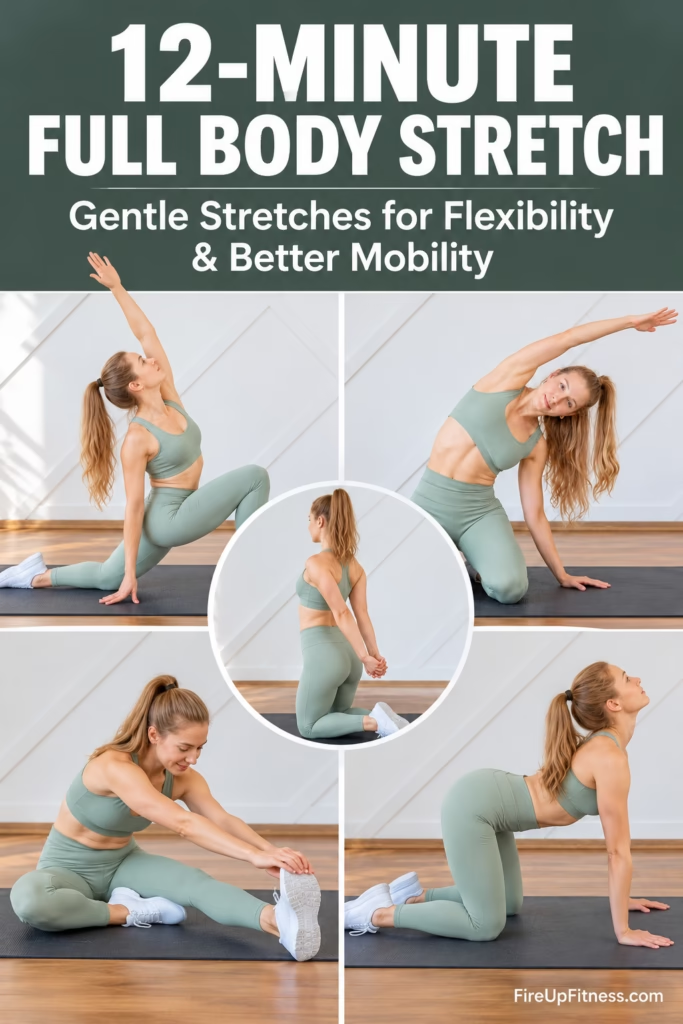
12-Minute Full Body Stretch Routine for Flexibility
Some days, your body feels stiff before you even realize how long you’ve been sitting. Your shoulders feel tight, your lower back needs a little movement, and your legs feel less flexible than usual.
A simple full body stretch routine can help you release everyday tension, improve flexibility, and feel more comfortable moving throughout the day.
The best part? You don’t need an hour-long yoga session or special equipment. This gentle 12-minute stretching routine combines standing and floor stretches to target your neck, shoulders, back, hips, hamstrings, and glutes.
It’s a practical option for a morning stretch, a relaxing evening routine, or a movement break after hours at your desk.
Why a Daily Full Body Stretch Routine Is Worth Trying
Long periods of sitting can leave certain muscles feeling tight, especially around the hips, hamstrings, and upper back. Regular stretching helps maintain joint mobility and makes everyday movements feel more comfortable.
A short daily stretching routine may help you:
- Improve flexibility: Gradually increase your comfortable range of motion.
- Ease muscle stiffness: Gently move areas that feel tight after sitting or inactivity.
- Support better posture: Encourage mobility through your chest, shoulders, hips, and spine.
- Relax after a busy day: Slow movements and steady breathing can help you unwind.
- Prepare for movement: Gentle stretches can help your body transition into daily activities.
Consistency matters more than how deeply you stretch. Even a few minutes of comfortable movement can be a useful addition to your daily routine.
12-Minute Full Body Stretch Routine You Can Do at Home
This beginner-friendly stretching sequence moves from your neck and shoulders down through your spine, hips, and legs.
You’ll need a little floor space and an optional exercise mat for comfort.
Follow the stretches in order, move slowly, and breathe naturally. The timing is approximate, so you can also follow the accompanying YouTube video for the complete guided routine.
1. Neck Rolls and Gentle Neck Stretches
Approx. 1 minute | Neck and upper shoulders
Start by releasing tension around your neck, especially after spending time looking at a computer or phone.
How to do it:
- Sit or stand comfortably with your shoulders relaxed.
- Slowly tilt your head toward one shoulder, then bring your chin gently toward your chest and across to the other side.
- Repeat three slow, controlled semicircles.
- Turn your head from side to side, looking over each shoulder.
- Finish by gently looking upward and downward without forcing your neck.
Keep your movements small and comfortable. Avoid dropping your head backward into large neck circles.
Stretching tip: Keep your shoulders down and avoid pulling on your head. Stop if you feel dizziness, tingling, or sharp discomfort.
2. Seated Side Body Stretch
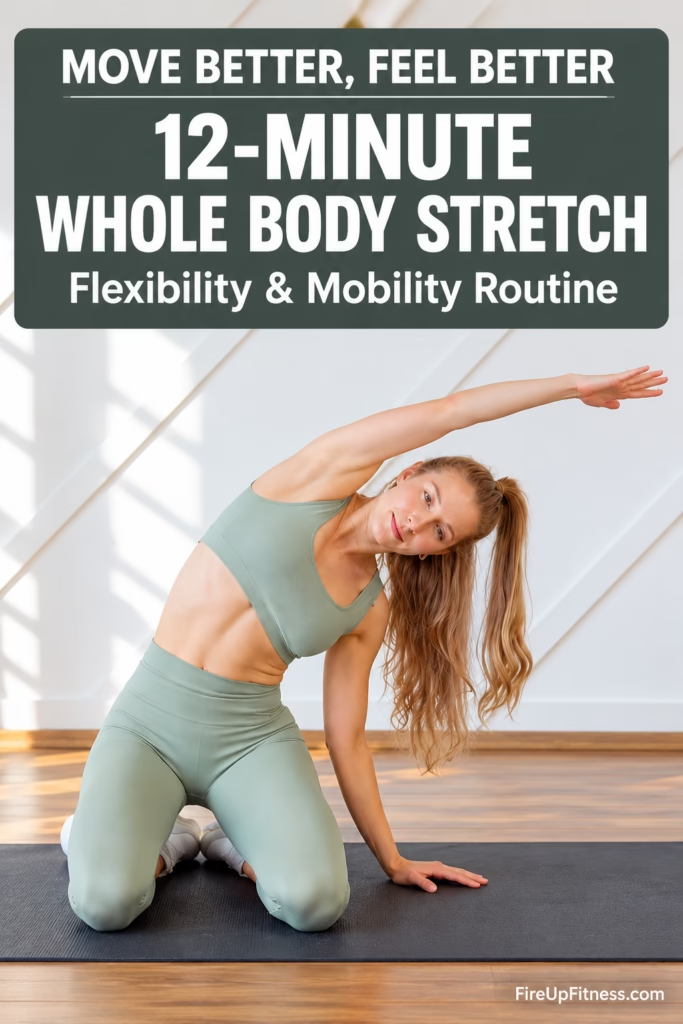
Approx. 1 minute | Waist, ribs, and upper back
This simple side stretch helps lengthen the muscles along your torso and encourages comfortable movement through your spine.
How to do it:
- Sit cross-legged or in another comfortable seated position.
- Place your right hand on the floor beside you.
- Reach your left arm overhead and gently lean to the right.
- Keep both sitting bones grounded as much as possible.
- Return to the center and switch sides.
- Alternate several times, pausing briefly on each side.
Think about reaching your fingertips outward rather than collapsing toward the floor.
Stretching tip: Breathe into the side of your rib cage as you reach overhead.
3. Standing Hamstring Stretch With Hip Hinge
Approx. 1 minute | Back of thighs and hips
Tight hamstrings can make bending forward feel uncomfortable. This standing stretch encourages flexibility while teaching you to move through your hips.
How to do it:
- Stand with your feet about hip-width apart.
- Keep a slight bend in your knees.
- Push your hips backward while hinging forward.
- Extend your arms in front of you and keep your back comfortably long.
- Hold briefly, then gently lower your hands toward the floor as far as comfortable.
- Return to the hip-hinge position and repeat slowly.
You should feel a gentle pulling sensation along the backs of your thighs.
Stretching tip: Focus on sending your hips backward rather than forcing your hands toward your toes. Avoid bouncing into the stretch.
4. Child’s Pose With Side Reaches
Approx. 1 minute | Back, shoulders, and sides
Child’s pose is a relaxing floor stretch that can help release tension through the back and shoulders.
How to do it:
- Kneel on your mat with your knees comfortably apart.
- Sit your hips back toward your heels.
- Extend both arms forward and lower your chest toward the floor.
- Walk your hands to the right and pause.
- Return to the center, then walk your hands to the left.
- Bring your hands back to the middle.
Keep your breathing slow as you move from side to side.
Stretching tip: Place a folded towel under your knees or between your hips and heels if needed.
5. Child’s Pose to Cobra Stretch
Approx. 1 minute | Spine, chest, and abdomen
This flowing movement alternates between gently rounding and extending your spine.
How to do it:
- Begin in child’s pose with your arms extended.
- Slowly shift your body forward, moving through your hands and knees.
- Lower your hips and torso toward the mat.
- Gently lift your chest into a comfortable cobra stretch, keeping your elbows slightly bent.
- Keep your shoulders relaxed and away from your ears.
- Return to child’s pose and repeat slowly.
Only lift your chest as high as feels comfortable for your lower back.
Stretching tip: Avoid forcing your spine into a deep backbend. A small, controlled cobra is enough to encourage mobility.
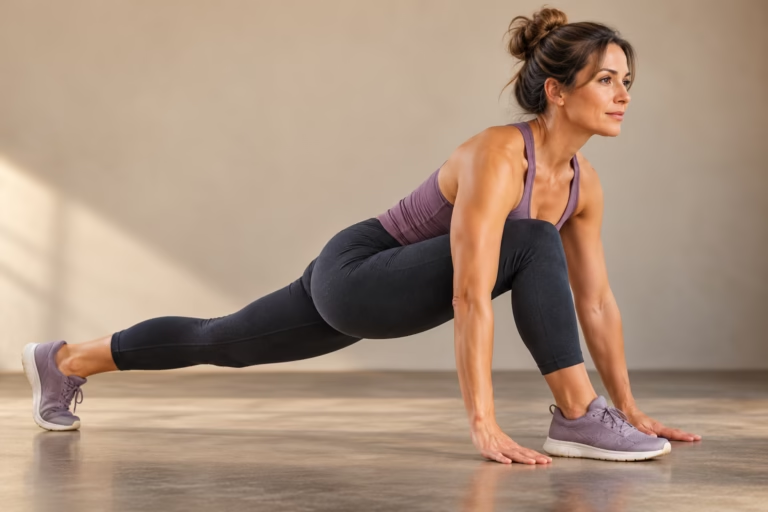
6. Low Lunge With Upper Body Twist
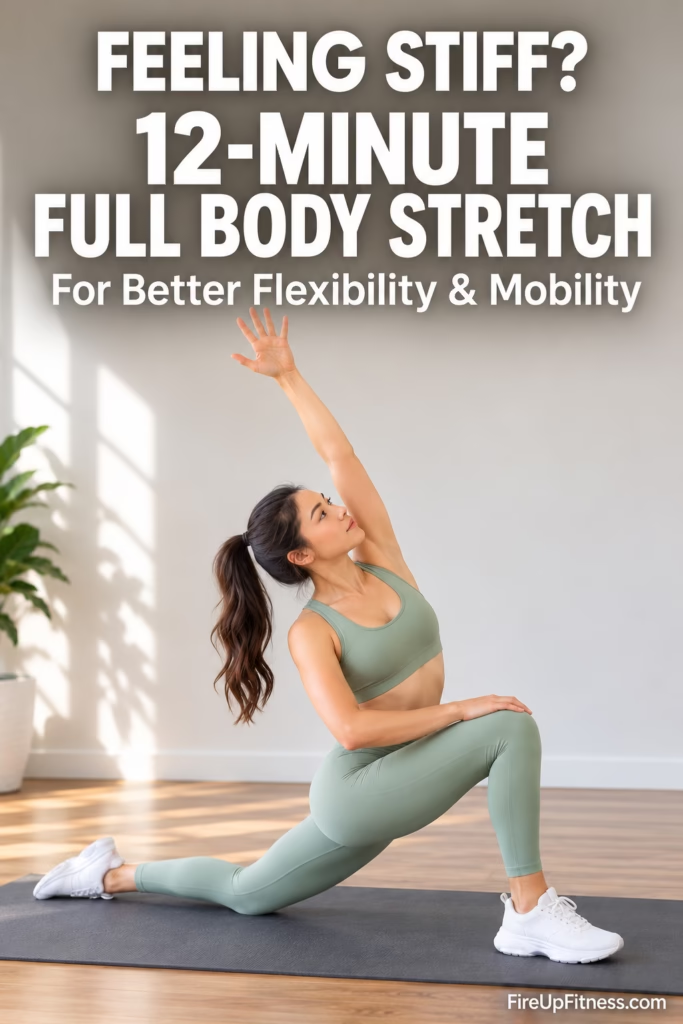
Approx. 1 minute | Hips and upper back
This movement combines a hip stretch with gentle rotation through your upper body.
How to do it:
- Step your right foot forward into a lunge.
- Extend your left leg behind you, keeping your toes on the floor.
- Place your left hand on the mat inside your right foot.
- Rotate your chest to the right and reach your right arm upward.
- Pause briefly, breathing steadily.
- Return your hand to the mat.
Keep your front knee aligned with your foot and avoid twisting through your lower back.
Stretching tip: Lower your back knee onto a padded surface for extra support.
7. Deep Hip Opener
Approx. 1 minute | Inner thighs and hips
After the lunge twist, stay in the same position to focus more directly on your hip mobility.
How to do it:
- Keep your right foot forward in a low lunge.
- Place both hands inside your right foot for support.
- Gently allow your right knee to move slightly outward, following the direction of your toes.
- Let your hips lower only as far as comfortable.
- Hold for several slow breaths before returning to the center.
You may feel this stretch around your inner thigh and front hip.
Stretching tip: Keep the movement controlled. Don’t press your knee farther outward than it naturally wants to move.
8. Kneeling Hip Flexor Stretch With Side Reach
Approx. 1 minute | Front of hips and side body
Your hip flexors spend a lot of time in a shortened position when you’re sitting. This stretch gives them an opportunity to lengthen gently.
How to do it:
- From your lunge, lower your back knee to the floor.
- Lift your torso upright and rest your hands on your front thigh.
- Gently tuck your pelvis and shift your hips forward slightly.
- Reach the arm on the same side as your back leg overhead.
- Lean gently toward your front-leg side.
- Hold for a few breaths.
You should feel a stretch along the front of the hip on your kneeling side.
Stretching tip: Avoid arching your lower back to deepen the movement.
Now repeat the lunge twist, deep hip opener, and kneeling hip flexor stretch on your opposite side.
9. Supine Spinal Twist
Approx. 1 minute | Back and outer hips
After the standing and kneeling movements, transition onto your back for a slower, relaxing stretch.
How to do it:
- Lie on your back with your arms extended in a T shape.
- Bend your right knee and guide it gently across your body toward the left.
- Keep your upper back relaxed against the mat.
- Turn your head to the right if comfortable, or look straight up.
- Hold for several slow breaths.
- Return to the center and switch sides.
Let your knee relax toward the floor without forcing it down.
Stretching tip: Place a pillow beneath your crossed knee if it doesn’t comfortably reach the ground.
10. Reclined Figure-Four Glute Stretch
Approx. 1 minute | Glutes and outer hips
This is a useful stretch for the muscles around your hips and buttocks, particularly after sitting for long periods.
How to do it:
- Lie on your back with your knees bent.
- Cross your right ankle over your left thigh, just above the knee.
- Gently guide your right knee outward.
- Lift your left leg and hold behind your left thigh.
- Draw both legs closer to your chest until you feel a comfortable stretch.
- Hold, then switch sides.
Keep your head and shoulders relaxed on the floor.
Stretching tip: Avoid pressing directly on your knee joint. Adjust the position of your legs instead.
11. Chest and Shoulder Opening Stretch
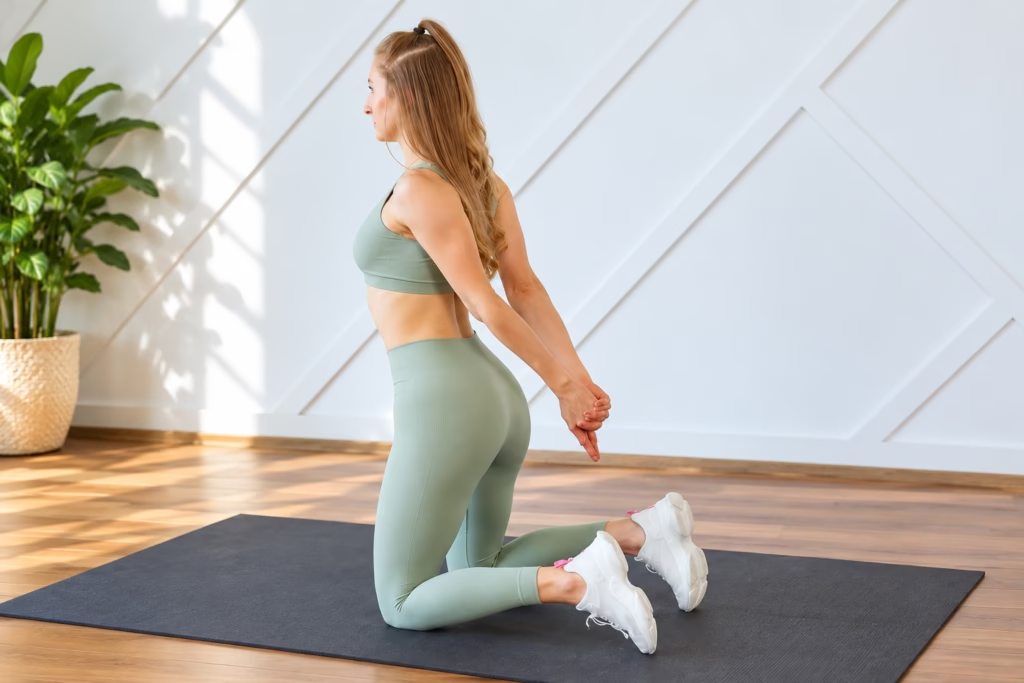
Approx. 1 minute | Chest, shoulders, and upper arms
This stretch is especially satisfying after a day spent typing, reading, or sitting with your shoulders rounded forward.
How to do it:
- Stand or kneel comfortably.
- Clasp your hands behind your back.
- Gently straighten your arms.
- Draw your shoulders back and down.
- Lift your chest slightly while keeping your ribs relaxed.
- Hold for a few deep breaths.
You should feel a gentle stretch across your chest and the front of your shoulders.
Stretching tip: Hold a small towel behind your back if clasping your hands feels uncomfortable.
12. Standing Lower Back Stretch and Slow Roll-Up
Approx. 1 minute | Lower back and posterior chain
Finish your routine with a gentle forward fold that encourages relaxation through your back.
How to do it:
- Stand with your feet hip-width apart.
- Bend your knees deeply and fold your upper body forward.
- Wrap your arms around your legs in a comfortable position.
- Gently round your back and allow your head and neck to relax.
- Hold for a few seconds, then release.
- Repeat two or three times.
- Place your hands toward the mat, bend your knees, and slowly return to standing.
Rise gradually to avoid feeling lightheaded.
Stretching tip: Keep your knees bent throughout the movement, especially if your hamstrings or lower back feel tight.
Follow Along With the 12-Minute Full Body Stretch Video
Sometimes stretching feels easier when someone guides you through each movement.
The video below demonstrates the complete routine, helping you follow the transitions between stretches without constantly checking a timer.
You can pause the video whenever you need extra time in a position or modify a movement to suit your flexibility.
When Is the Best Time to Do This Stretching Routine?
One of the advantages of this 12-minute full body stretch is how easily it fits into your schedule.
Morning stretching: Use the routine to gently wake up your muscles and ease stiffness after sleeping. Move slowly at first, particularly during deeper stretches.
Midday movement break: Spending hours at a desk can leave your neck, shoulders, hips, and back feeling uncomfortable. A few of these stretches can help break up prolonged sitting.
Evening stretching: The slower floor movements, including child’s pose, spinal twists, and glute stretches, can make a relaxing addition to your nighttime routine.
You can also use gentle stretches after a workout, once your breathing and heart rate have settled.
Tips to Get More Out of Your Daily Stretching Routine
Stretching should feel comfortable and controlled, not painful. A few small adjustments can make your routine more effective.
- Move slowly: Give your muscles time to relax into each position rather than forcing a deeper stretch.
- Breathe steadily: Avoid holding your breath, especially during hip and back stretches.
- Respect your current flexibility: Your range of motion may change from day to day.
- Use support when needed: A folded towel, pillow, or yoga block can make floor stretches more comfortable.
- Stay consistent: Short, regular stretching sessions are often more practical than occasional long sessions.
A mild stretching sensation is normal, but sharp pain, numbness, or tingling is a reason to stop. Anyone recovering from an injury or managing a condition that affects movement should seek individualized guidance before trying unfamiliar stretches.
Can You Do This Full Body Stretch Every Day?
For most healthy adults, gentle stretching can be part of a daily movement routine, provided the stretches remain comfortable.
You don’t have to complete every movement perfectly or reach the deepest version of a pose.
Some mornings, you may feel comfortable moving through the entire sequence. On other days, your body may need a slower pace or smaller range of motion.
The goal is to maintain comfortable movement, not to force flexibility.
Final Thoughts
A full body stretch routine doesn’t need to be complicated to feel worthwhile.
These 12 minutes give your neck, shoulders, spine, hips, and legs a chance to move after long periods of sitting or everyday activity. With regular practice, stretching can become a simple habit that supports flexibility, mobility, and relaxation.
Try this routine in the morning to ease into your day or in the evening when you’re ready to unwind.