15 Lymph Drainage Exercises for Full Body Movement
Some mornings, your body feels stiff before the day has even started. Your shoulders feel tight, your legs seem heavy, and getting moving takes more effort than usual.
A few minutes of gentle movement can make a difference in how your body feels.
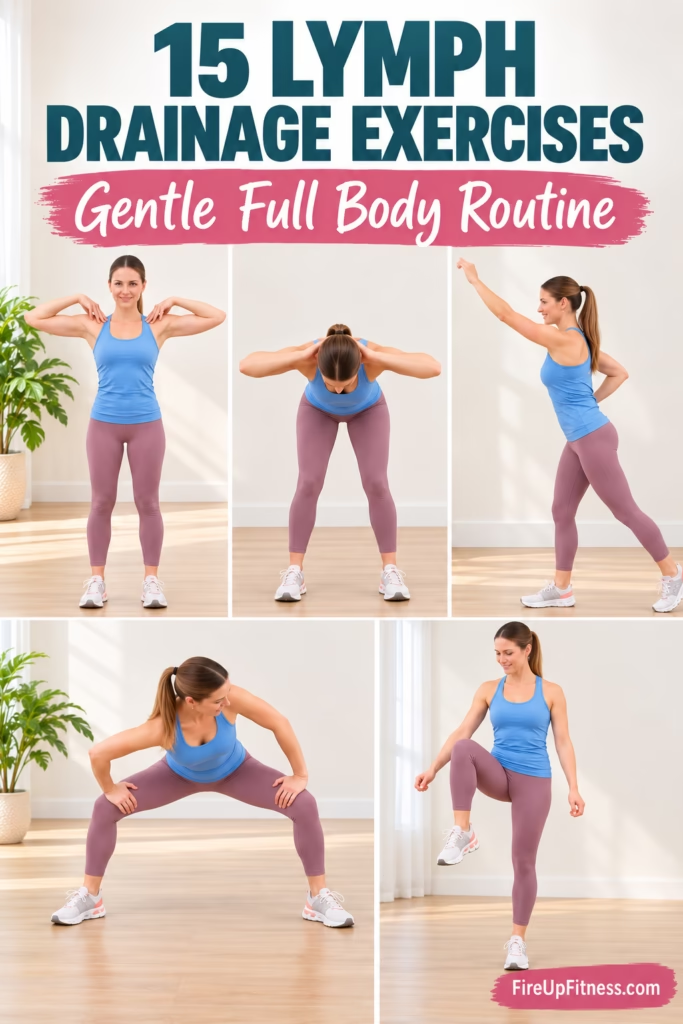
These lymph drainage exercises combine deep breathing, full body stretching, and simple standing movements to support your body’s natural circulation and lymphatic function. There’s no complicated equipment, floor workout, or intense exercise involved.
The routine includes 15 movements designed to activate your muscles, improve mobility, and encourage regular movement throughout the day.
You can complete the full routine in about 15 minutes or choose a few exercises for a quick movement break.
What Are Lymph Drainage Exercises?
Your lymphatic system is an important part of your immune and circulatory systems. It helps maintain fluid balance, transports immune cells, and filters substances through lymph nodes.
Unlike your circulatory system, which relies on your heart to pump blood, your lymphatic system depends partly on muscle contractions, breathing, and movement to transport lymph fluid.
This is why everyday activities such as walking, stretching, and moving your arms and legs help support normal lymphatic circulation.
Lymph drainage exercises use gentle, rhythmic movements to activate different muscle groups throughout the body.
You don’t necessarily need special exercises to keep a healthy lymphatic system functioning. Regular physical activity already supports this process.
Can exercise help drain the lymph system?
Yes. Muscle contractions and changes in pressure during breathing help move lymph fluid through lymphatic vessels.
However, these exercises should not be confused with medical treatments for lymphedema or other conditions that interfere with lymph drainage.
For most healthy adults, regular movement, adequate rest, and good overall health habits are the foundation of lymphatic health.
Where Are the Main Lymph Nodes Located?
Understanding lymph nodes location can help you appreciate how the lymphatic system works.
Lymph nodes are found throughout the body, with important groups located in several areas.
- Neck: Lymph nodes help filter lymph from parts of the head and neck.
- Armpits: Axillary lymph nodes receive lymph from the arms, chest, and nearby tissues.
- Abdomen: Groups of lymph nodes are located around the digestive organs and major blood vessels.
- Groin: Inguinal lymph nodes receive lymph from parts of the legs and lower body.
- Chest: Lymphatic vessels and nodes help transport and filter lymph from the upper body.
You don’t need to massage these areas to keep your lymph moving normally. Simple movements that engage surrounding muscles can help support natural lymphatic circulation.
15 Gentle Lymph Drainage Exercises for Your Whole Body
This standing routine combines upper-body mobility, lower-body muscle activation, breathing, and light cardio.
Workout overview
| Detail | Routine |
|---|---|
| Duration | Approximately 15 minutes |
| Exercises | 15 standing movements |
| Equipment | None |
| Time per move | About 40 seconds |
| Between moves | Gentle marching |
| Intensity | Low impact, with optional light jumping |
Move at a comfortable pace and avoid forcing any stretch. You can use a chair or countertop for balance when needed.
1. Deep breathing with overhead arm sweeps
Begin with slow, controlled breathing and gentle arm movements.
How to do it:
- Stand with your feet shoulder-width apart.
- Inhale deeply as you raise both arms overhead.
- Exhale slowly while lowering your arms.
- Add a small knee bend as your arms come down.
- Continue for about 40 seconds.
Allow your rib cage to expand naturally as you breathe.
Why it helps: Deep breathing creates pressure changes in your chest and abdomen that help move lymph fluid. The overhead reach also improves shoulder mobility.
2. Gentle neck stretches
Your neck often becomes stiff after long periods of sitting, reading, or looking at a screen.
How to do it:
- Stand tall with relaxed shoulders.
- Slowly tilt your right ear toward your right shoulder.
- Return to the center.
- Repeat on the left side.
- Continue alternating gently.
For additional movement, perform small, comfortable half-circles with your chin pointing downward.
Avoid throwing your head backward or forcing full neck circles.
Why it helps: These movements release everyday muscle tension and improve neck mobility. They are not a substitute for specialized lymphatic treatment.
3. Standing chest opener and spinal rounding
This movement resembles a standing version of cat-cow stretching.
How to do it:
- Stand with your knees slightly bent.
- Inhale and open your arms wide.
- Gently lift your chest.
- Exhale as you bring your arms forward.
- Round your upper back slightly.
- Repeat slowly.
Focus on moving your spine comfortably rather than stretching as far as possible.
Why it helps: This exercise encourages upper-body movement, improves thoracic mobility, and helps counteract stiffness from sitting.
4. Shoulder circles with bent elbows
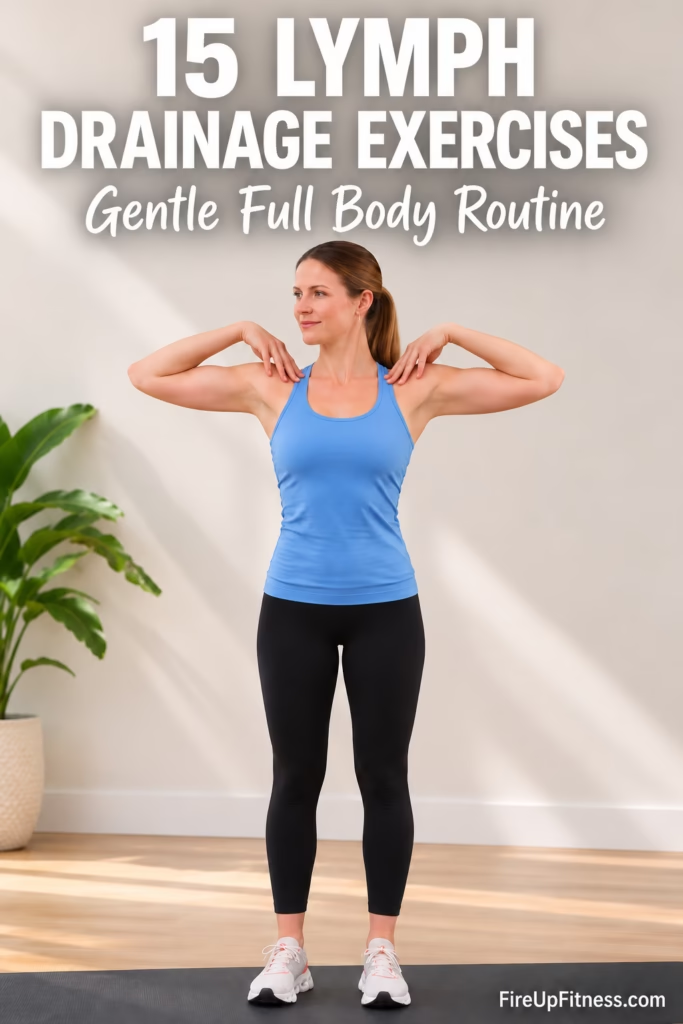
Your shoulders and upper arms contain muscles that are frequently underused during sedentary activities.
How to do it:
- Place your fingertips lightly on your shoulders.
- Lift your elbows outward.
- Make slow, controlled circles with your elbows.
- Reverse direction halfway through.
- Keep your neck relaxed.
Why it helps: Shoulder circles activate muscles around your shoulders and chest while improving joint mobility.
5. Marching in place
Marching is one of the easiest ways to activate your lower-body muscles without equipment.
How to do it:
- Stand upright with your feet hip-width apart.
- Lift one knee comfortably.
- Lower your foot and switch legs.
- Swing your arms naturally.
- Continue at a steady pace.
You can increase the height of your knees or add a gentle skipping motion if that feels comfortable.
Why it helps: Walking and marching activate your calf and leg muscles, which help move blood and lymph fluid from the lower body.
6. Calf raises with overhead reaches
Your calf muscles play an important role in helping return blood from your legs toward your heart.
How to do it:
- Stand with your feet hip-width apart.
- Slowly raise your heels.
- Reach both arms overhead.
- Lower your heels and arms with control.
- Repeat without rushing.
Hold a stable surface if you need support.
Why it helps: Calf contractions support circulation in the lower legs, while reaching overhead adds upper-body movement.
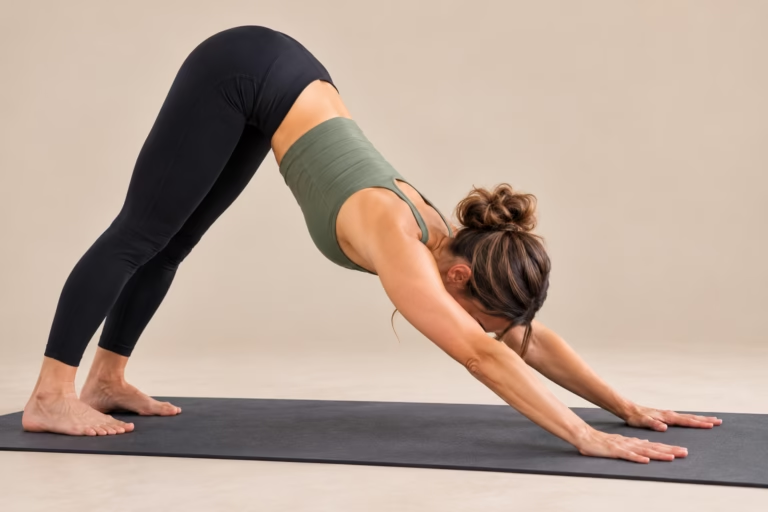
7. Standing hip hinge with upper-body rotation
This movement combines a gentle hip hinge with spinal rotation.
How to do it:
- Stand with your feet hip-width apart.
- Place your hands lightly behind your head.
- Bend your knees slightly.
- Push your hips backward while keeping your back comfortably aligned.
- Return to standing.
- Gently rotate your upper body to one side.
- Repeat, alternating directions.
Avoid twisting sharply or forcing the rotation through your lower back.
Why it helps: The movement activates your hips, back, and abdominal muscles while improving mobility through your upper spine.
8. Side-to-side torso sweeps
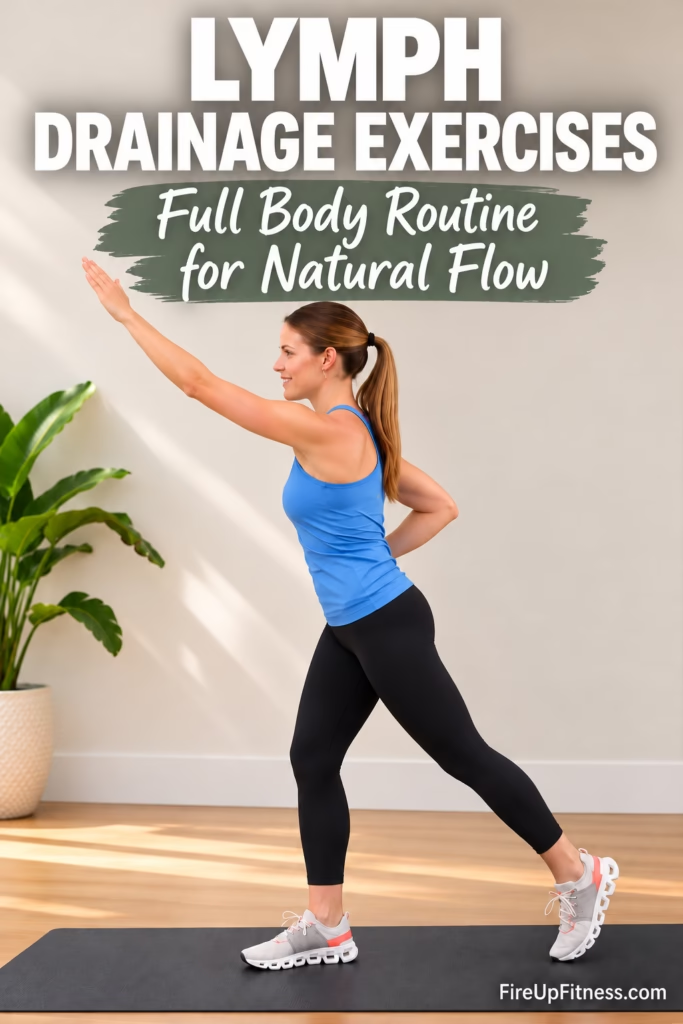
This exercise brings together arm movement, trunk rotation, and gentle footwork.
How to do it:
- Stand with your feet slightly wider than your hips.
- Sweep both arms across your body toward one side.
- Allow your hips and back foot to pivot naturally.
- Return through the center.
- Repeat on the opposite side.
Keep your movements fluid and controlled.
Why it helps: Torso sweeps engage several large muscle groups and encourage comfortable movement through the trunk.
9. Alternating hamstring scoops
This full body stretching movement targets the backs of your legs while keeping your upper body active.
How to do it:
- Step your right heel slightly forward.
- Point your toes upward.
- Bend your supporting knee.
- Hinge gently at your hips.
- Sweep both hands down and forward toward your extended foot.
- Return to standing and switch legs.
Keep your back comfortably aligned and avoid locking your knees.
Why it helps: Hamstring scoops improve flexibility and activate muscles in your legs, hips, and upper body.
10. Opposite knee lifts with arm pulls
This coordinated movement engages your arms, legs, and core.
How to do it:
- Stand tall with both arms overhead.
- Lift your right knee.
- Pull your left elbow downward toward the raised knee.
- Return to the starting position.
- Switch sides.
- Continue alternating.
Move slowly enough to maintain your balance.
Why it helps: Combining upper- and lower-body movements activates multiple muscle groups and challenges coordination.
11. Squat with alternating hip circles
Your hips can become stiff when you spend much of the day sitting.
How to do it:
- Stand with your feet slightly wider than hip-width apart.
- Lower into a comfortable squat.
- Stand up and lift your right knee.
- Open the knee outward in a gentle hip circle.
- Lower your foot.
- Repeat the squat, then circle your left hip.
Use a countertop or sturdy chair for balance if needed.
Why it helps: This movement strengthens your legs, encourages hip mobility, and activates muscles around the pelvis.
12. Alternating shoulder sweeps
This simple upper-body exercise encourages movement through your shoulders and chest.
How to do it:
- Stand with soft knees.
- Sweep your right arm backward in a comfortable arc.
- Return and repeat with your left arm.
- Continue alternating.
- Switch to forward arm sweeps halfway through.
Keep your shoulders relaxed.
Why it helps: Arm sweeps activate upper-body muscles and help maintain shoulder flexibility.
13. Gentle calf raises or light jumps
This exercise offers two options depending on your fitness level and comfort.
Option A: Calf raises
- Stand upright.
- Lift your heels.
- Lower slowly.
- Continue at a steady rhythm.
Option B: Light jump-rope movements
- Keep your feet close together.
- Perform small, gentle hops.
- Make light circular movements with your hands.
- Land softly with slightly bent knees.
Choose calf raises if jumping is uncomfortable or unsuitable for your joints.
Why it helps: Both options activate the lower-leg muscles. The jumping variation also increases cardiovascular activity and provides some weight-bearing impact.
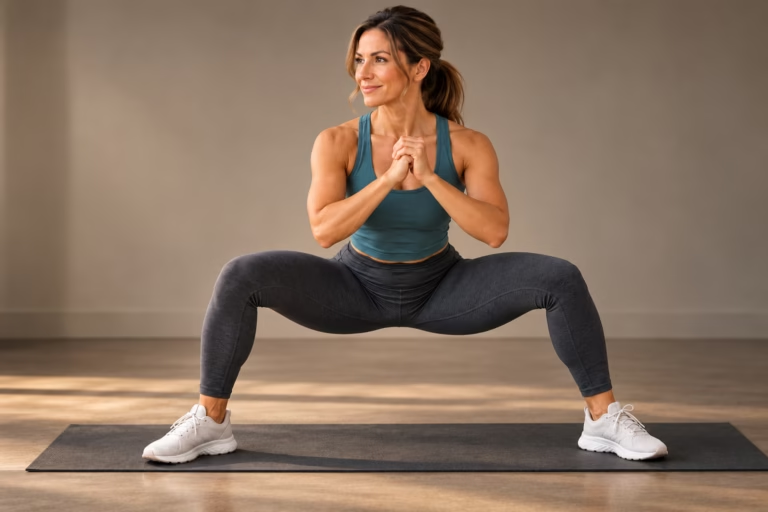
14. Wide squat with alternating shoulder drops
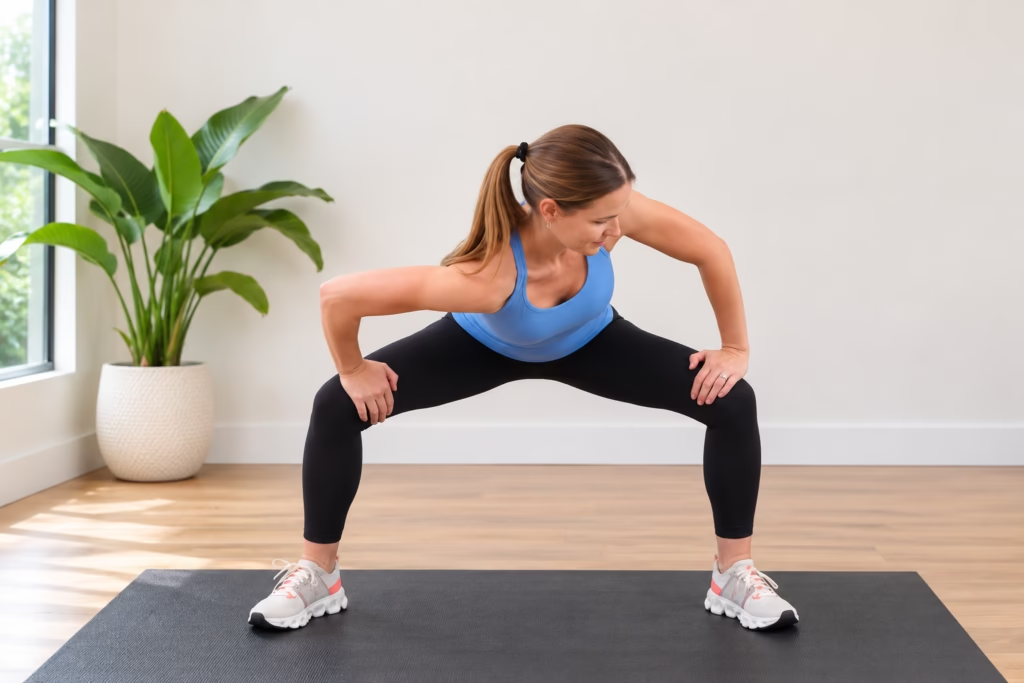
This gentle movement combines hip mobility with upper-body rotation.
How to do it:
- Stand with your feet wider than shoulder-width apart.
- Turn your toes slightly outward.
- Lower into a comfortable wide squat.
- Place your hands on your inner thighs.
- Gently lower your right shoulder toward the center while rotating your chest to the left.
- Return to the center and repeat on the opposite side.
Keep the movement slow and avoid pressing aggressively into your knees.
Why it helps: This exercise engages your thighs and hips while encouraging movement through your upper back.
15. Calf raises with shoulder rolls
Finish the routine with a combination of lower-body activation and relaxed shoulder movement.
How to do it:
- Stand with your feet hip-width apart.
- Slowly lift your heels.
- Roll your shoulders backward.
- Lower your heels.
- Continue with smooth, comfortable movements.
Gradually slow down and return to your normal breathing.
Why it helps: This final movement keeps your calf muscles active while helping your shoulders relax after the routine.
Follow Along With the 15-Minute Lymph Drainage Workout
Prefer following a guided routine instead of remembering each movement?
The video below demonstrates all 15 standing lymph drainage exercises, with explanations from physical therapist Kelly Sturm, who specializes in oncology rehabilitation and lymphedema care.
You’ll see how to perform each movement, adjust the intensity, and combine breathing with gentle full-body activity.
Follow along at your own pace. Pause whenever you need a break, and choose the low-impact modifications that feel best for your body.
Is Lymph Drainage Massage the Same as Exercise?
Lymph drainage massage and lymph drainage exercises both relate to lymphatic movement, but they are not the same thing.
Manual lymph drainage (MLD) is a specialized massage technique that uses gentle, specific movements to encourage lymph flow. It is commonly used as part of treatment for certain types of lymphedema.
Lymph drainage exercises, on the other hand, rely on breathing, muscle contractions, and regular body movement to support natural lymphatic circulation.
| Lymph drainage exercises | Manual lymph drainage |
|---|---|
| Use active muscle movement | Uses specialized gentle massage |
| Can support everyday lymphatic function | Often used for specific medical needs |
| Include walking, breathing, and stretching | Follows specific lymphatic pathways |
| Usually require no equipment | May require a trained therapist |
For most people with a healthy lymphatic system, ordinary physical activity is sufficient to support normal lymph flow.
People with diagnosed lymphedema may benefit from both exercise and professionally guided manual lymph drainage as part of an individualized treatment plan.
What About Lymph Drainage Massage for the Stomach?
Lymph drainage massage stomach techniques have become popular in wellness videos, particularly for people looking for relief from abdominal puffiness.
However, abdominal bloating and lymphatic swelling are not necessarily the same thing.
Bloating commonly relates to digestion, gas, constipation, or other gastrointestinal factors. Lymph drainage massage is not an established treatment for ordinary digestive bloating.
The standing routine above includes breathing, torso rotation, and gentle abdominal muscle activation. These movements can support overall mobility and normal lymphatic function without requiring abdominal massage.
Anyone with persistent abdominal swelling, pain, or unexplained bloating should seek medical advice rather than assuming lymph drainage is the solution.
How Often Should You Do Lymph Drainage Exercises?
One of the most useful messages from this workout is that consistency matters more than intensity.
You don’t have to complete all 15 exercises every day to support your circulation.
Try incorporating movement naturally into your routine:
- In the morning: Complete the full 15-minute standing workout.
- During work breaks: Spend five minutes marching, stretching, or doing shoulder circles.
- After sitting: Try calf raises and gentle walking to activate your leg muscles.
- In the evening: Choose slow breathing and comfortable upper-body stretches.
The goal is to move regularly rather than remain in one position for long periods.
A five-minute movement break can be a practical way to build a consistent habit.
Do You Need Special Equipment for Full Body Lymph Drainage?
You may have seen vibration plates, massage tools, dry brushing, or other products promoted for full body lymph drainage.
For most healthy people, these products are not necessary to maintain normal lymphatic function.
Your body already has systems designed to move lymph fluid, and everyday activities help support them.
Walking, regular exercise, deep breathing, and muscle movement are simple ways to maintain normal circulation.
Certain people with diagnosed lymphatic conditions may require additional treatment or equipment, but those decisions should be made with a qualified healthcare professional.
When to seek medical guidance
Gentle exercise is generally appropriate for many adults, but lymphatic conditions sometimes require specialized care.
Consult a healthcare professional before beginning a lymph drainage routine if you have diagnosed lymphedema, recent cancer treatment or surgery, unexplained swelling, or other conditions affecting fluid circulation.
Seek prompt medical attention for sudden one-sided leg swelling, especially with pain or redness. Chest pain or shortness of breath requires emergency care.
Final Thoughts
Supporting your lymphatic system doesn’t have to involve complicated routines, expensive tools, or intense workouts.
These 15 lymph drainage exercises offer a simple way to move your body, loosen stiff muscles, and build more activity into your day.
From deep breathing and shoulder circles to marching and calf raises, each movement encourages muscle activity and supports the body’s normal circulation.
You can follow the full video in the morning or choose a handful of movements when you’ve been sitting too long.
The most useful routine is the one you can return to consistently. A few minutes of comfortable movement, repeated throughout the week, can be a valuable part of your overall health.