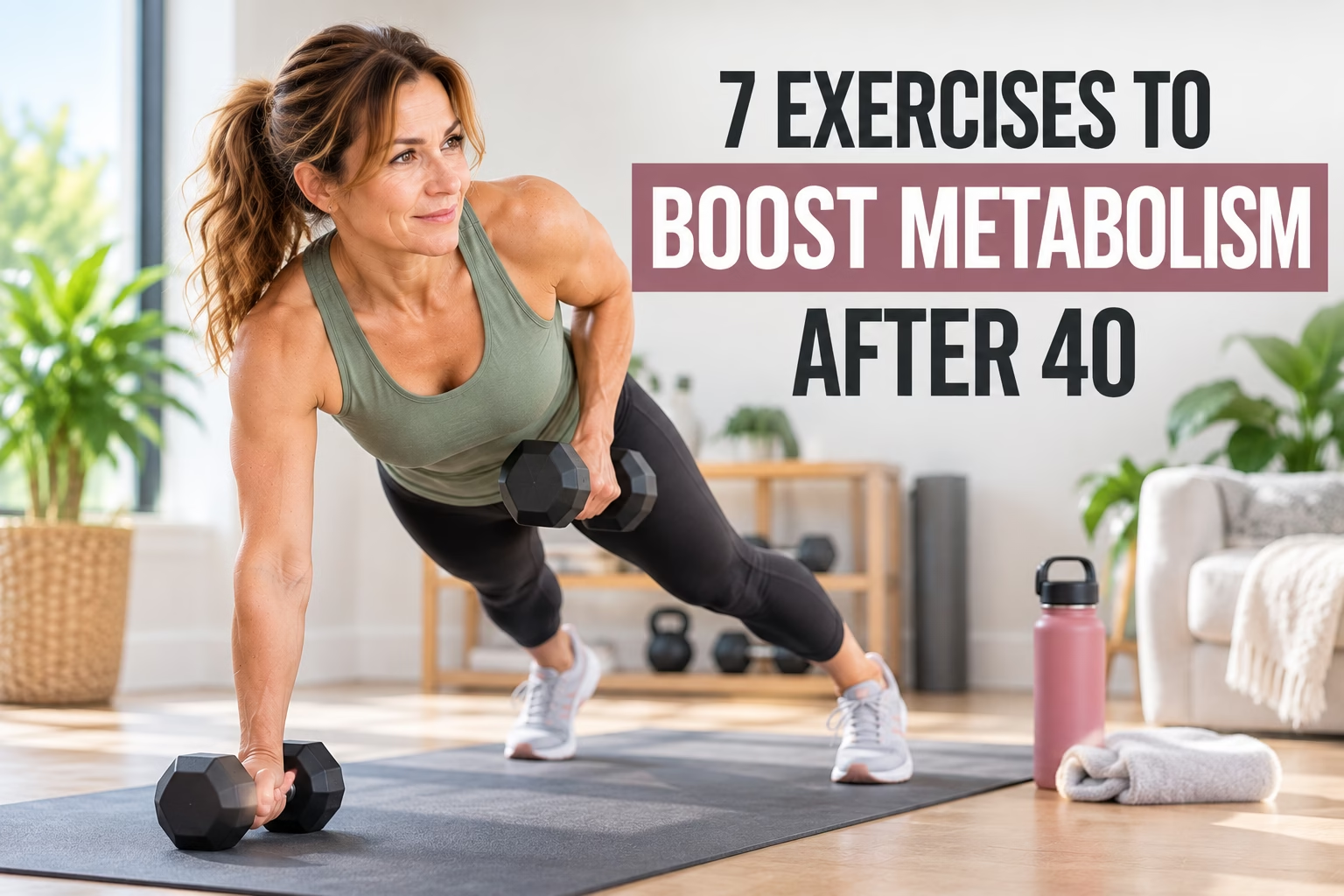
Metabolism Boosting Workout After 40: 7 Best Exercises
Your metabolism doesn’t need another detox.
It may need more muscle.
After 40, many women notice that maintaining their body composition feels different. Belly fat may seem more stubborn. Muscle definition can become harder to maintain. Energy levels may change, and the workouts that worked years ago don’t always seem as effective anymore.
The answer isn’t necessarily more cardio, harder workouts, or eating less.
One of the smartest things you can do is get stronger.
A well-designed metabolism boosting workout combines strength training with regular movement to help preserve muscle, improve fitness, support healthy blood sugar regulation, and increase the amount of physical activity you perform throughout the week.
And you don’t need a complicated gym program to get started.
This seven-exercise workout targets the major muscles of your entire body and can be performed at home with a pair of dumbbells.
If you’re over 40 and want to feel stronger, maintain muscle, support fat loss, and stay active as you age, this is a great place to begin.
Does Exercise Really Boost Your Metabolism?
Let’s clear up one common misconception first.
You probably won’t dramatically “speed up” your metabolism with one workout, one food, or one fitness trick.
Metabolism is much more complicated than that.
But exercise can influence several things that matter for metabolic health.
Regular physical activity can help you:
- preserve and build muscle
- improve strength
- increase daily energy expenditure
- improve insulin sensitivity
- support healthy blood sugar regulation
- maintain mobility
- improve cardiovascular fitness
- support healthy body composition
This becomes particularly important as you get older.
Without regular resistance training, muscle mass and strength can gradually decline with age.
That’s why the goal after 40 shouldn’t simply be:
Burn as many calories as possible.
A better goal is:
Build a body that stays strong, active, and capable.
Why Strength Training Matters After 40
Cardio is valuable.
Walking is fantastic.
But strength training deserves a permanent place in your routine, especially as you move through your 40s, 50s, and beyond.
Muscle isn’t just about appearance.
You use it to:
- climb stairs
- carry groceries
- get up from a chair
- lift objects
- maintain balance
- protect your joints
- stay independent
- perform everyday activities
Muscle also plays an important role in how your body handles glucose.
And because maintaining muscle becomes increasingly important with age, resistance training is one of the most useful exercise habits you can develop.
You don’t have to lift extremely heavy weights.
You simply need to challenge your muscles enough that they have a reason to adapt.
Metabolism Boosting Workout After 40
This workout uses seven compound and functional exercises to train most of your major muscle groups.
What You’ll Need
- A pair of dumbbells
- Comfortable workout shoes
- A little open floor space
- An exercise mat if desired
Beginners can start with light dumbbells or perform several of the exercises using only body weight.
The Workout
Perform:
8–12 repetitions per exercise
Complete:
2–3 rounds
Rest approximately:
30–60 seconds between exercises as needed
For exercises performed individually on each side, complete the repetitions on both sides.
Focus on controlled movement rather than racing through the routine.
Your final few repetitions should feel challenging while still allowing you to maintain good form.
Exercise 1: Dumbbell Squat
Squats deserve a place in almost every full-body strength routine.
They work some of the largest muscles in your body, including your quadriceps, glutes, and hamstrings, while also requiring your core to stabilize your torso.
Even better, squatting strengthens a movement pattern you use constantly in everyday life.
Think about sitting down and standing back up.
That’s essentially a squat.
How to Do a Dumbbell Squat
- Stand with your feet approximately shoulder-width apart.
- Hold one dumbbell in each hand at your sides.
- Keep your chest lifted and gently brace your core.
- Push your hips backward as though you’re sitting into a chair.
- Bend your knees and lower yourself comfortably.
- Keep your knees tracking in the same direction as your toes.
- Push through your feet to return to standing.
- Squeeze your glutes gently at the top.
Reps: 8–12
Beginner Modification
Place a sturdy chair behind you.
Lower yourself until your hips lightly touch the chair, then stand back up.
You can also practice without weights until the movement feels comfortable.
Form Tip
Don’t worry about how low someone else can squat.
Use a comfortable range of motion that allows you to maintain control.
Exercise 2: Dumbbell Romanian Deadlift
Don’t let the word “deadlift” intimidate you.
The Romanian deadlift is one of the best exercises for strengthening the back of your body, particularly your hamstrings and glutes.
It also teaches you how to hinge properly at your hips—a valuable movement for lifting objects safely.
How to Do It
- Stand tall with your feet about hip-width apart.
- Hold a dumbbell in each hand in front of your thighs.
- Keep your knees slightly bent.
- Brace your core.
- Push your hips backward.
- Allow the dumbbells to travel down the front of your legs.
- Keep your back neutral and shoulders relaxed.
- Lower until you feel tension through your hamstrings.
- Drive your hips forward and return to standing.
Reps: 8–12
What You Should Feel
You should primarily feel your:
- hamstrings
- glutes
- hips
You shouldn’t feel like you’re simply bending forward through your lower back.
Beginner Modification
Use very light dumbbells and shorten the range of motion.
Master the hip hinge before increasing weight.
Exercise 3: Bent-Over Dumbbell Row
Many everyday activities encourage us to spend hours sitting or leaning forward.
Rows strengthen muscles across your upper and middle back while also working your arms.
They’re especially useful for building balanced upper-body strength.
How to Do a Dumbbell Row
- Stand with your feet about hip-width apart.
- Hold a dumbbell in each hand.
- Bend your knees slightly.
- Hinge forward from your hips while keeping your back neutral.
- Let your arms hang naturally.
- Pull the dumbbells toward the sides of your ribs.
- Draw your shoulder blades gently toward each other.
- Lower the weights slowly.
Reps: 8–12
Form Tip
Don’t jerk the dumbbells upward.
Use a controlled pulling motion and avoid shrugging your shoulders toward your ears.
Beginner Modification
Perform a one-arm row while supporting your opposite hand on a sturdy bench or chair.
Exercise 4: Incline Push-Up
Push-ups are excellent for strengthening your chest, shoulders, triceps, and core.
But traditional floor push-ups can be difficult when you’re just beginning.
That’s where incline push-ups come in.
By placing your hands on an elevated surface, you reduce the amount of body weight you’re pushing.
How to Do an Incline Push-Up
- Place your hands on a sturdy countertop, bench, or other secure elevated surface.
- Walk your feet backward until your body forms a straight line.
- Keep your core gently engaged.
- Bend your elbows and lower your chest toward the surface.
- Press through your palms to return to the starting position.
Reps: 8–12
Make It Easier
Use a higher surface, such as a wall or countertop.
Make It Harder
Use a lower surface.
As you become stronger, you can eventually progress toward push-ups from the floor.
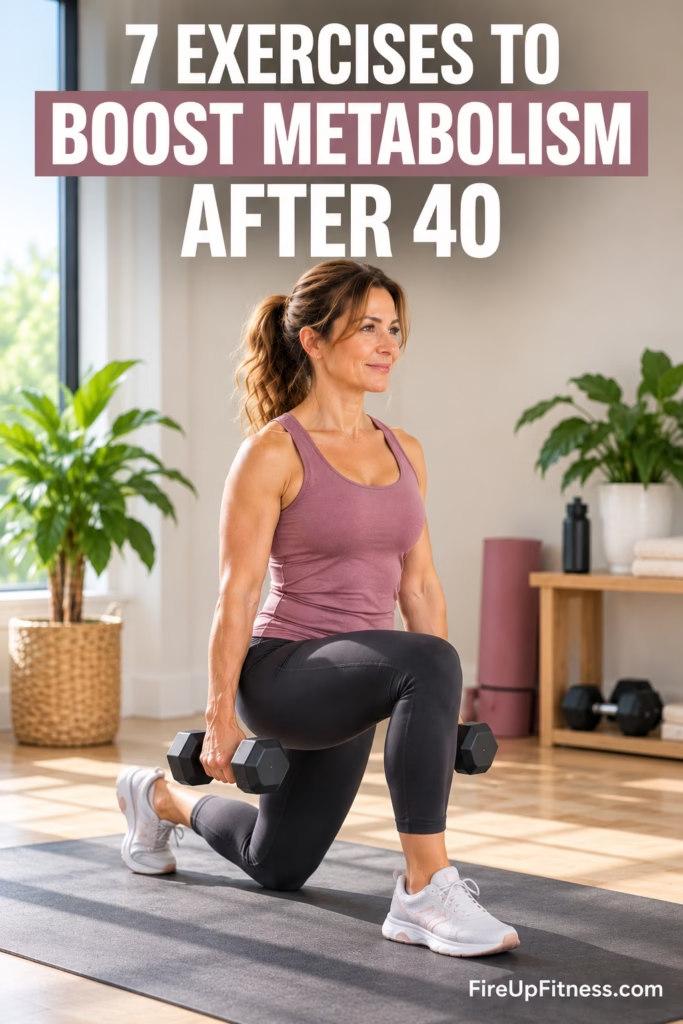
Exercise 5: Reverse Lunge
Lunges strengthen your legs and glutes while challenging balance and coordination.
For many beginners, reverse lunges can feel more manageable than stepping forward.
How to Do a Reverse Lunge
- Stand tall with your feet about hip-width apart.
- Hold dumbbells at your sides or begin without weights.
- Step your right foot backward.
- Bend both knees comfortably.
- Keep most of your control through the front leg.
- Push through your front foot and return to standing.
- Repeat on the opposite side.
Reps: 8–10 per side
Beginner Modification
Hold onto a wall, countertop, or sturdy chair for balance.
You can also reduce how far you step backward.
Knee-Friendly Option
If lunges don’t feel comfortable, replace them with step-ups or controlled chair squats.
Pain is not something you need to push through to make an exercise effective.
Exercise 6: Dumbbell Shoulder Press
The shoulder press strengthens your shoulders, arms, and upper body while your core works to keep you stable.
Strong shoulders make many everyday tasks easier, from putting something on a high shelf to carrying bags.
How to Do It
- Stand with your feet comfortably apart.
- Hold a dumbbell in each hand near shoulder height.
- Keep your ribs stacked over your hips.
- Brace your core gently.
- Press the dumbbells overhead.
- Avoid excessively arching your lower back.
- Slowly lower the weights back toward your shoulders.
Reps: 8–12
Beginner Modification
Perform the exercise seated in a sturdy chair.
Use lighter weights until you can control the entire movement.
Exercise 7: Farmer’s Carry
This exercise looks almost too simple.
Pick up weights and walk.
But don’t underestimate it.
A farmer’s carry challenges your:
- grip
- shoulders
- arms
- core
- legs
- posture
It’s also extremely functional because carrying objects is something we do throughout everyday life.
How to Do a Farmer’s Carry
- Hold a dumbbell in each hand.
- Stand tall with your shoulders relaxed.
- Brace your core.
- Walk slowly and deliberately.
- Keep your torso upright.
- Avoid leaning from side to side.
- Turn carefully and continue walking.
Duration: 30–45 seconds
Don’t Have Enough Space?
March in place while holding the dumbbells.
That’s an easy way to turn the exercise into a small-space home workout.
How to Turn These 7 Exercises Into a Full Workout
You don’t need to overcomplicate this.
Try this simple circuit:
Dumbbell Squat — 10 reps
Romanian Deadlift — 10 reps
Dumbbell Row — 10 reps
Incline Push-Up — 8–12 reps
Reverse Lunge — 8 reps per leg
Shoulder Press — 10 reps
Farmer’s Carry — 30–45 seconds
Rest for about 1–2 minutes after completing the circuit.
Then repeat.
Beginner
Complete 2 rounds.
Intermediate
Complete 3 rounds.
The entire workout can fit comfortably into roughly 20–30 minutes, depending on your rest periods and pace.
Don’t Skip the Warm-Up
Your body usually feels better when you give it a few minutes to prepare for exercise.
Try this simple 5-minute warm-up:
- March in place — 60 seconds
- Arm circles — 30 seconds
- Hip circles — 30 seconds
- Bodyweight squats — 10 reps
- Alternating knee lifts — 60 seconds
- Gentle hip hinges — 10 reps
- Shoulder rolls — 30 seconds
The goal isn’t to exhaust yourself.
You simply want to get your body moving and gradually prepare your muscles and joints.
How Often Should You Do This Metabolism Boosting Workout?
For many beginners, two or three full-body strength workouts per week is a practical goal.
You don’t need to perform this routine every day.
Your muscles need recovery time.
A simple weekly schedule could look like this:
Monday: Full-body strength workout
Tuesday: Walking
Wednesday: Full-body strength workout
Thursday: Walking or gentle mobility
Friday: Full-body strength workout
Saturday: Longer walk or enjoyable activity
Sunday: Rest or gentle movement
Beginners could start with only Monday and Thursday strength sessions.
Consistency matters much more than creating a perfect schedule.
Add Walking for an Even Better Routine
Strength training is only part of the equation.
One of the easiest ways to increase your overall movement is simply to walk more.
You don’t have to turn every walk into an intense workout.
Try:
- a 10-minute morning walk
- walking after lunch
- walking after dinner
- taking the stairs
- parking farther from entrances
- walking while talking on the phone
- taking short movement breaks during work
Walking after meals can be an especially convenient way to break up sitting and add movement to your day.
Three 10-minute walks can sometimes feel much more manageable than finding time for one long workout.
What About Cardio After 40?
You don’t have to choose between cardio and strength training.
Both have benefits.
Walking, cycling, swimming, dancing, jogging, and other aerobic activities can improve cardiovascular fitness and contribute to your weekly activity.
The mistake is assuming cardio is the only exercise that matters when you’re trying to lose body fat.
A balanced routine includes:
Strength + cardio + everyday movement + recovery
Think of strength training as the foundation for preserving muscle and physical capability.
Then use walking and other activities to keep yourself moving throughout the week.
Why Doing More Exercise Isn’t Always Better
It’s easy to fall into this trap:
Fat loss slows down.
So you exercise more.
Results still aren’t happening fast enough.
So you add another workout.
Then another.
Soon you’re exhausted, sore, hungry, and struggling to recover.
More isn’t automatically better.
Your body needs recovery to adapt to training.
Rest days aren’t wasted days.
They’re part of your program.
A sustainable routine you can follow for months will usually serve you better than an extreme plan you can tolerate for ten days.
How to Make This Workout Keep Working
Eventually, your body adapts.
That’s actually good news.
It means you’ve gotten stronger.
But continuing to perform exactly the same workout with exactly the same resistance forever won’t provide the same challenge.
That’s where progressive overload comes in.
It simply means gradually asking your muscles to do a little more.
You might:
- increase the dumbbell weight
- perform an extra repetition
- add another set
- improve your range of motion
- slow down each repetition
- progress to a harder exercise variation
You don’t need to change everything at once.
Small improvements are enough.
For example:
Maybe you squat with 8-pound dumbbells this month.
Eventually, those weights feel easy.
You move to 10 pounds.
That’s progress.
What Weight Dumbbells Should Women Over 40 Use?
There isn’t one correct dumbbell weight for every woman.
Your appropriate weight depends on:
- the exercise
- your current strength
- training experience
- previous injuries
- number of repetitions
Choose a resistance that allows you to complete your repetitions with good form while making the final few reps feel challenging.
If you can easily perform 20 repetitions when your goal was 10, the weight may be too light.
If you cannot complete the movement with proper technique, it’s probably too heavy.
Different exercises may also require different weights.
You may be able to deadlift substantially more than you can shoulder press.
That’s completely normal.
Can This Workout Help With Belly Fat?
This is where realistic expectations matter.
You cannot choose exactly where your body loses fat.
Doing abdominal exercises doesn’t specifically burn belly fat, and doing squats won’t selectively remove fat from your thighs.
Fat loss happens throughout the body according to factors including overall energy balance, genetics, hormones, age, and lifestyle.
But strength training can still be extremely valuable when body composition is your goal.
It helps preserve or build muscle while you work toward reducing body fat.
Combine your workouts with:
- balanced nutrition
- sufficient protein
- plenty of vegetables and fiber-rich foods
- regular walking
- adequate sleep
- stress management
Think about the entire lifestyle rather than searching for one belly-fat exercise.
Protein Matters When You’re Strength Training
Your muscles need adequate nutrition to recover from exercise.
Protein is particularly important.
Useful protein sources include:
- eggs
- Greek yogurt
- cottage cheese
- chicken
- turkey
- fish
- tofu
- tempeh
- lentils
- beans
Instead of obsessing over one “perfect” protein food, aim to include a meaningful protein source throughout your day.
Pair that with vegetables, fruit, whole grains, legumes, healthy fats, and other minimally processed foods.
Your workout and your nutrition should work together—not fight each other.
Sleep Is Part of Your Workout Plan Too
You can have the perfect exercise program on paper and still struggle when you’re chronically exhausted.
Sleep supports recovery.
And when you’re tired, everything becomes harder.
You may have less motivation to exercise.
You may move less during the day.
Your workouts may feel more difficult.
Food choices can become harder to manage.
Aim to create a consistent sleep routine whenever possible.
Fitness isn’t only about what happens while you’re exercising.
Recovery counts too.
5 Common Workout Mistakes After 40
1. Only Doing Cardio
Cardio is excellent for your heart and overall fitness, but don’t neglect resistance training.
Your muscles need a reason to stay strong.
2. Using Weights That Are Always Too Light
Starting light is smart.
Staying with weights that never challenge you isn’t.
Gradually increase resistance as you become stronger.
3. Changing Workouts Constantly
You don’t need a completely new routine every week.
Repeating key exercises allows you to practice them and track your progress.
4. Ignoring Recovery
Hard workouts every day aren’t necessary.
Give your muscles time to recover.
5. Expecting Instant Results
Strength takes time.
Body composition changes take time.
Healthy habits take time to become automatic.
Give yourself permission to think in months rather than days.
A Simple 4-Week Beginner Plan
Want to make this even easier?
Follow this progression.
Week 1
Complete the workout twice.
Perform 2 rounds with light weights.
Focus entirely on learning the exercises.
Week 2
Complete the workout twice.
Continue with 2 rounds, but increase resistance slightly where appropriate.
Week 3
Complete the workout 2–3 times.
Try adding a third round if you’re recovering comfortably.
Week 4
Continue with 2–3 workouts.
Look for small improvements.
Maybe you:
- use slightly heavier dumbbells
- complete one more repetition
- feel more stable during lunges
- squat more comfortably
- walk longer without getting tired
Those improvements matter.
Progress isn’t only what you see in the mirror.
When Should You Stop or Modify an Exercise?
Exercise should challenge you, but sharp or worsening pain isn’t something to ignore.
Stop or modify an exercise if it causes significant pain, dizziness, unusual shortness of breath, or other concerning symptoms.
Anyone with an injury, significant joint problem, cardiovascular condition, or other medical concern should discuss appropriate exercise with a qualified healthcare professional.
There’s almost always a way to modify a movement.
You don’t get extra credit for forcing yourself through an exercise that doesn’t suit your body.
The Best Metabolism Workout Is the One You Keep Doing
You don’t need to destroy yourself in the gym to support your metabolism after 40.
You need consistency.
Two or three strength sessions.
Regular walks.
More everyday movement.
Enough recovery.
Gradually heavier resistance as you become stronger.
It sounds almost too simple.
But simple habits repeated for months are far more powerful than complicated workouts performed for a week.
Start with these seven exercises:
Squat.
Hinge.
Row.
Push.
Lunge.
Press.
Carry.
Together, they train nearly your entire body while helping you build the strength you need for everyday life.
And remember—the goal isn’t simply to burn more calories today.
The bigger goal is to build and preserve a body that remains strong, active, capable, and resilient for years to come.
Start where you are.
Choose manageable weights.
Learn the movements.
And get a little stronger over time.
That’s a metabolism-supporting strategy worth keeping.