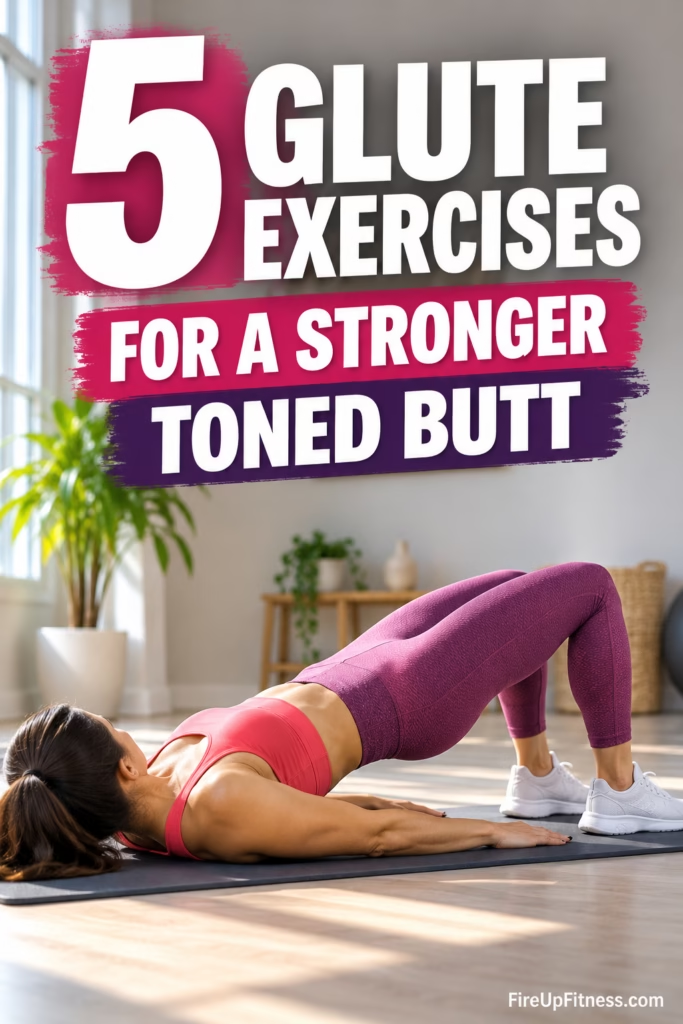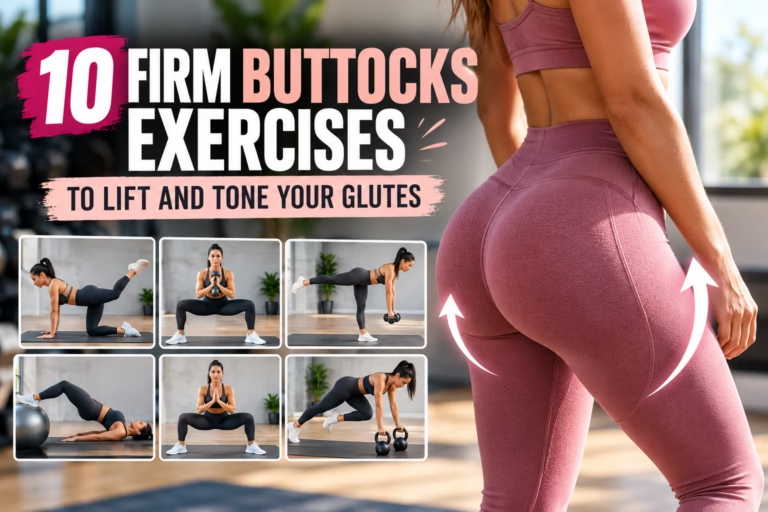
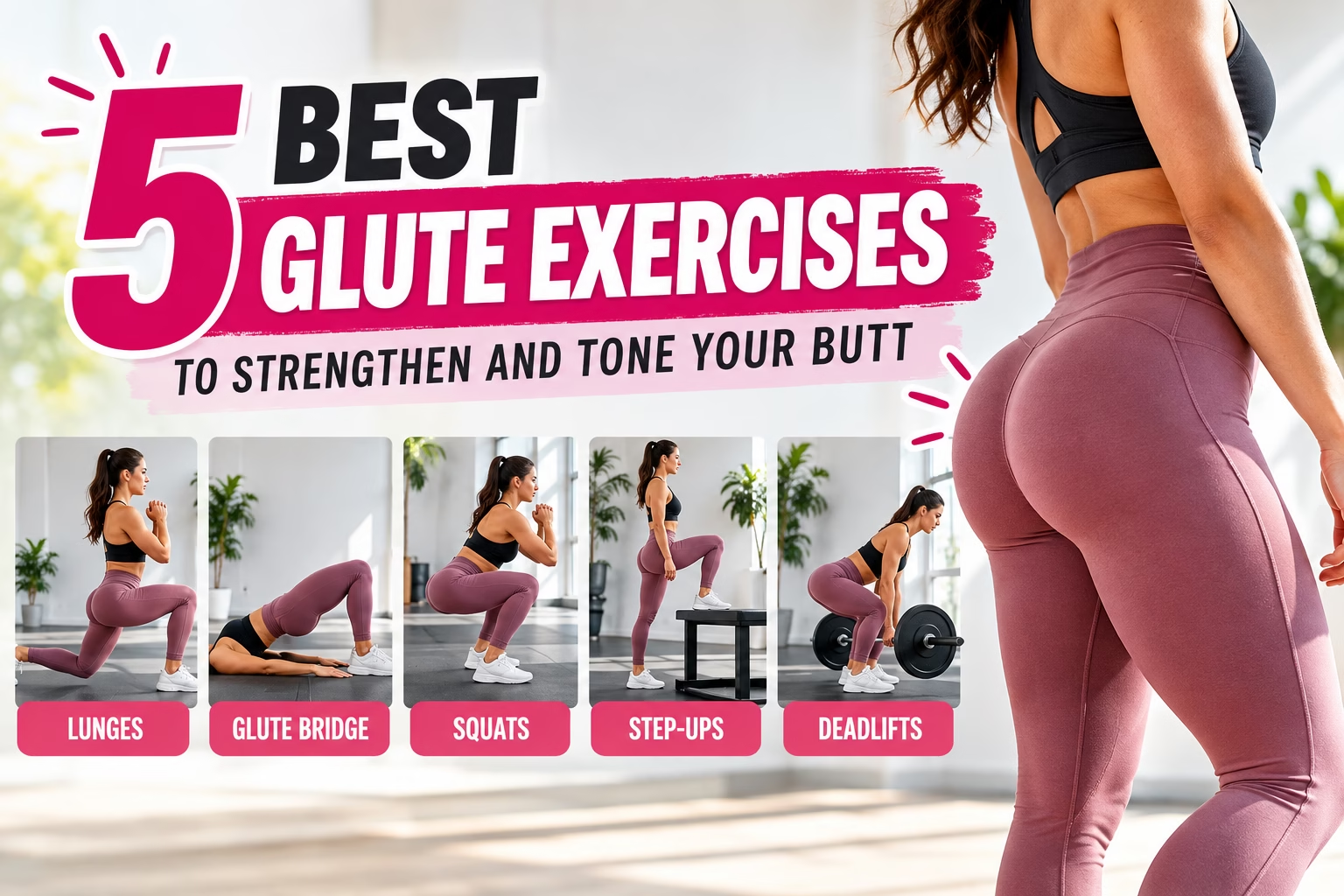
5 Best Glute Exercises to Strengthen and Tone Your Butt
Strong glutes do much more than shape your backside. They help power nearly everything you do—from walking and climbing stairs to squatting, running, lifting, and maintaining good balance.
That is one reason athletes spend so much time training their glutes. But you certainly don’t have to be an athlete to benefit from stronger glute muscles.
The glutes are actually a group of three muscles: the gluteus maximus, gluteus medius, and gluteus minimus. Together, they help extend and rotate your hips, stabilize your pelvis, and support many everyday movements.
And the good news? You don’t need a complicated workout to train them.
These 5 glute exercises target your lower body from slightly different angles, helping you build stronger, more active glutes. Most can also be modified for beginners or made more challenging as you get stronger.
Why Strong Glutes Matter
It is easy to think of glute exercises as something you do simply because you want a firmer or more defined butt. While appearance may be one goal, glute strength has plenty of practical benefits too.
Your glutes contribute to:
- Hip strength and stability
- Walking and running
- Climbing stairs
- Squatting and lifting
- Balance and lower-body control
- Maintaining a stable pelvis during movement
- Supporting athletic movements such as jumping and sprinting
Long periods of sitting can also mean your glutes aren’t challenged very much throughout the day. Adding targeted glute exercises to your workouts gives these powerful muscles a reason to work.
Ready to get started? Here are five effective exercises worth adding to your lower-body routine.
1. Lunges
Lunges are a classic lower-body exercise because they work one leg at a time. Your glutes, quadriceps, hamstrings, and core all contribute to the movement.
They are also incredibly versatile. Once you learn the basic lunge, you can experiment with reverse lunges, walking lunges, lateral lunges, or weighted variations.
How to Do a Forward Lunge
- Stand tall with your feet about hip-width apart.
- Keep your chest lifted and gently brace your core.
- Take a controlled step forward with one foot.
- Bend both knees as you lower your body toward the floor.
- Keep your front knee tracking in the same direction as your toes.
- Lower only as far as you can while maintaining good control.
- Push through your front foot to return to standing.
- Repeat with the opposite leg.
Aim for 8–12 repetitions per leg.
Beginner Modification
Reverse lunges are often easier to control than forward lunges. Instead of stepping forward, step one foot backward and lower into the lunge.
You can also hold onto a wall or sturdy chair for balance.
Make It Harder
Once bodyweight lunges become comfortable, hold a dumbbell in each hand or try walking lunges.
Form tip: Don’t worry about taking the deepest possible lunge. Controlled movement and comfortable range of motion matter more than getting your back knee all the way to the floor.
2. Glute Bridge
The glute bridge is one of the simplest exercises for learning how to actively squeeze and engage your glutes.
It requires no equipment, can be performed almost anywhere, and works well as either a beginner glute exercise or part of a warm-up before a more challenging lower-body workout.
How to Do a Glute Bridge
- Lie on your back with your knees bent.
- Place your feet flat on the floor approximately hip-width apart.
- Keep your arms relaxed beside your body.
- Brace your core gently.
- Press through your feet and squeeze your glutes.
- Lift your hips until your body forms a relatively straight line from your shoulders toward your knees.
- Pause briefly at the top.
- Slowly lower your hips back toward the floor.
Perform 12–15 repetitions.
Try to make the movement come from your hips rather than excessively arching your lower back.
Want More Glute Activation?
At the top of each repetition, pause for one or two seconds and deliberately squeeze your glutes before lowering.
That small pause can make a basic bridge feel surprisingly challenging.
Make It Harder
As you become stronger, you can progress to:
- Single-leg glute bridges
- Dumbbell glute bridges
- Hip thrusts
- Elevated glute bridges
Start with the basic version and earn your way into the harder variations.
3. Squats
No glute workout would feel complete without squats.
Squats train several major lower-body muscles at once, including your glutes, quadriceps, hamstrings, and core. They also mimic a movement pattern you use constantly in everyday life—sitting down and standing back up.
How to Do a Bodyweight Squat
- Stand with your feet approximately shoulder-width apart or slightly wider.
- Turn your toes slightly outward if that feels more natural.
- Brace your core and keep your chest comfortably lifted.
- Push your hips back as you begin bending your knees.
- Lower yourself as though you were sitting into a chair.
- Keep your knees tracking in line with your toes.
- Lower to a comfortable depth while maintaining control.
- Push through your feet and stand back up.
- Squeeze your glutes as you return to standing.
Perform 10–15 repetitions.
Beginner Modification
Place a chair behind you and squat down until your butt gently touches the seat. Stand back up without using your hands if possible.
Chair squats can help you become comfortable with the movement before progressing to regular bodyweight squats.
Make It Harder
You can eventually progress to goblet squats, dumbbell squats, or barbell squats once you have mastered the basic movement.
Remember: Everyone’s ideal squat depth looks a little different. Mobility, body proportions, strength, and experience all influence how deep you can comfortably squat.
4. Step-Ups
Want a glute exercise that also prepares you for real-life movement?
Try step-ups.
Every time you climb a staircase, you perform a similar movement. During exercise, however, slowing it down and intentionally pushing through the working leg can make the glutes work harder.
How to Do Step-Ups
- Stand in front of a sturdy step, bench, or low platform.
- Place your entire right foot securely on top.
- Brace your core and keep your chest upright.
- Push through your right foot as you step onto the platform.
- Bring your left foot up or raise the opposite knee if you have enough balance.
- Step back down slowly and under control.
- Complete your repetitions before changing sides.
Aim for 8–12 repetitions on each leg.
Beginner Modification
Choose a lower step.
A high platform isn’t automatically better. A lower height makes it easier to maintain control and prevents you from relying too heavily on momentum.
You can also perform step-ups next to a wall or railing if you need additional balance support.
Make It Harder
Once you can comfortably perform the movement, hold dumbbells at your sides.
Try not to launch yourself upward using your back leg. Think about pushing through the foot that is already on the platform.
5. Deadlifts
Deadlifts are one of the most effective exercises for training the muscles along the back of your body, particularly the glutes and hamstrings.
But unlike a squat, a deadlift relies heavily on the hip hinge.
Learning that difference is important.
During a squat, your knees and hips bend considerably. During a hip hinge, you primarily push your hips backward while keeping your spine controlled.
How to Do a Dumbbell Romanian Deadlift
For home workouts and beginners, starting with dumbbells can be more approachable than immediately using a barbell.
- Stand tall while holding a dumbbell in each hand.
- Keep your feet about hip-width apart.
- Soften your knees slightly.
- Brace your core.
- Push your hips backward as you lower the weights along the front of your legs.
- Keep the dumbbells close to your body.
- Continue until you feel tension through your hamstrings without losing your neutral back position.
- Push your hips forward as you return to standing.
- Finish by squeezing your glutes.
Perform 8–12 controlled repetitions.
Avoid turning the exercise into a squat. Think:
Hips back → feel the hamstrings → hips forward → squeeze the glutes.
Beginner Modification
Practice the hip-hinge pattern without weights first.
Stand a short distance in front of a wall and practice pushing your hips backward until your butt gently touches the wall. This can help you understand the movement before adding resistance.
Try This Simple 5-Move Glute Workout
Now that you know the exercises, you can combine them into one straightforward lower-body workout.
Try:
- Squats — 12 reps
- Reverse or forward lunges — 10 reps per side
- Glute bridges — 15 reps
- Step-ups — 10 reps per side
- Dumbbell Romanian deadlifts — 10 reps
Rest for approximately 30–60 seconds between exercises as needed.
Complete 2–3 rounds, depending on your fitness level.
Beginners can start with one or two rounds and gradually add more as their strength and confidence improve.
Quality matters more than rushing.
How Often Should You Train Your Glutes?
You don’t need to perform an intense glute workout every day.
For many people, adding glute-focused strength exercises to a lower-body or full-body routine two or three times per week can be a practical starting point.
Your exact training frequency will depend on your experience, workout intensity, other activities, and recovery.
Give your muscles time to recover between challenging strength workouts.
As you become stronger, progress doesn’t have to mean doing endless repetitions. You can gradually increase resistance, improve your range of motion, slow down the movement, or advance to a more challenging variation.
Common Glute Training Mistakes to Avoid
Even simple exercises become less effective when you rush through them.
One common mistake is using momentum instead of muscle control. Slow the movement down enough that you can actually feel what your lower body is doing.
Another is progressing to heavy weights too quickly. Adding resistance can be helpful, but only after you are comfortable with the movement.
You should also avoid assuming that more complicated exercises are automatically better. Basic squats, lunges, bridges, step-ups, and hip hinges can remain useful throughout your fitness journey.
Finally, pay attention to pain.
Muscle fatigue during a challenging workout is one thing. Sharp or unusual pain is another. Stop an exercise that causes pain and consider getting guidance from a qualified professional when needed.
How to Get More From Your Glute Workouts
Want these exercises to continue challenging you?
Focus on progressive overload.
That simply means gradually asking your muscles to do a little more over time.
You might:
- Add a few repetitions
- Use slightly heavier dumbbells
- Add another set
- Slow down the lowering portion
- Pause at the hardest part of the exercise
- Progress to a more difficult variation
You don’t need to change everything at once.
Small improvements made consistently can add up.
Final Thoughts
Building stronger glutes doesn’t require an enormous list of complicated exercises.
Start with the basics.
Lunges, glute bridges, squats, step-ups, and deadlift variations cover several important lower-body movement patterns and can be adapted to nearly every fitness level.
Choose variations that match your current ability, focus on controlled form, and gradually increase the challenge as you become stronger.
Most importantly, stay consistent.
A short glute workout you actually repeat week after week is far more useful than an extreme routine you do once and never want to try again.
Save these 5 glute exercises for your next lower-body workout—you’ll always have a simple routine ready when glute day comes around.