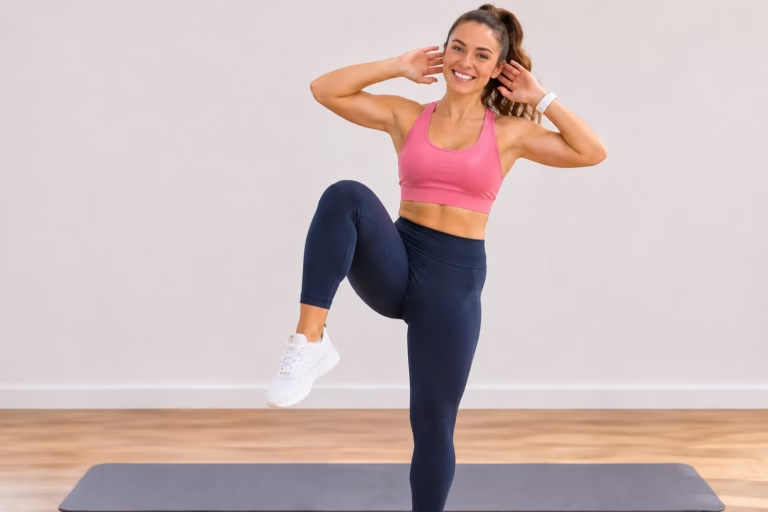
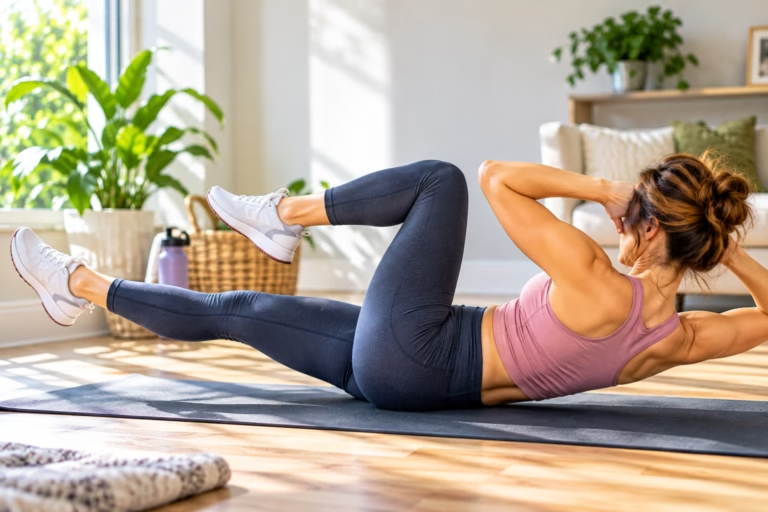
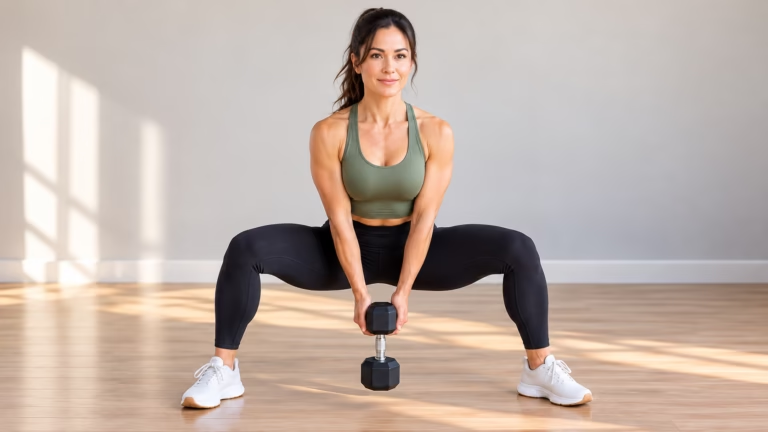
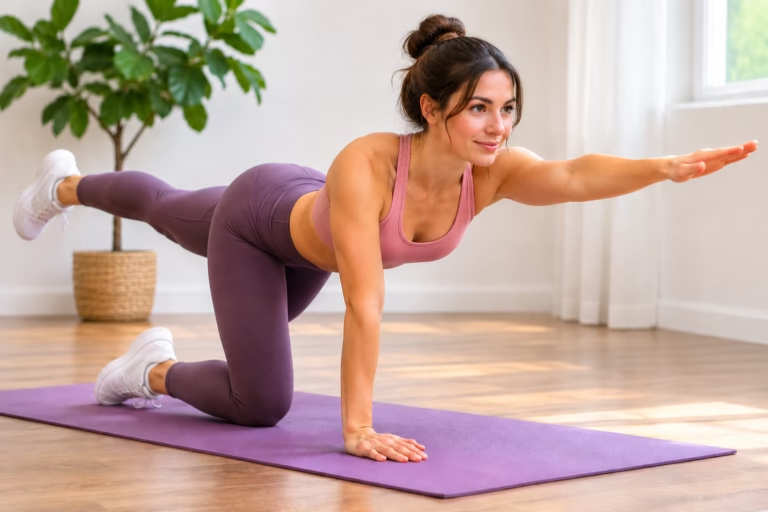
10-Minute Lymph Drainage Exercise for Full Body Circulation
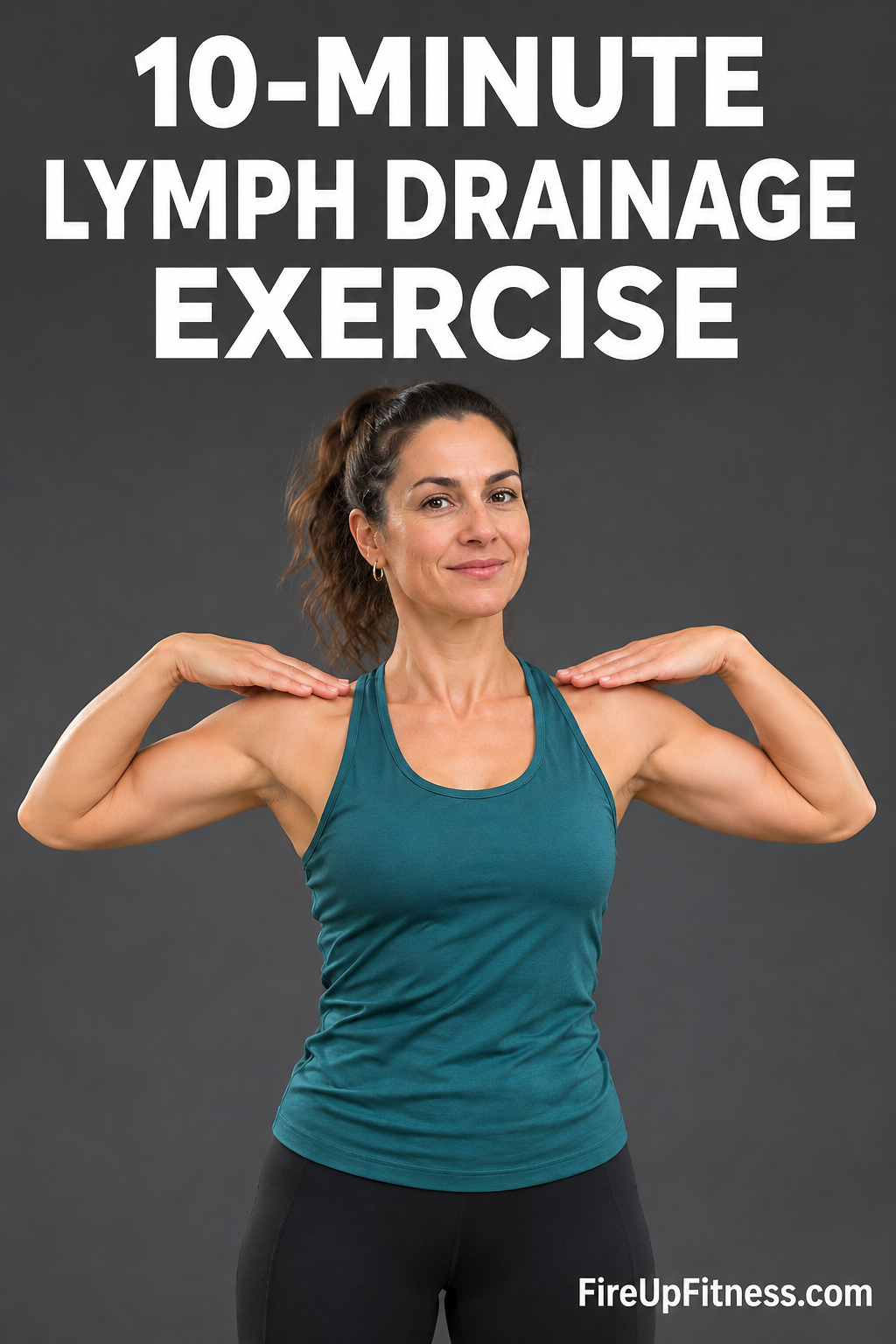
Your body has a natural system that helps manage fluid, support immune function, and keep things moving beneath the surface. It’s called the lymphatic system, and unlike your circulatory system, it doesn’t have a heart to pump fluid throughout the body.
Instead, it relies partly on muscle contractions, breathing, and everyday movement to help transport lymph fluid.
That’s one reason gentle movement can be so valuable, especially after spending hours sitting, during a quiet recovery day, or when your body feels stiff and sluggish.
This 10-minute lymph drainage exercise is a simple, full-body movement routine designed to encourage natural lymph flow while improving mobility, balance, and circulation.
There’s no equipment, no complicated choreography, and no need to work up a sweat. You’ll move through gentle shoulder rotations, spinal twists, hip circles, leg movements, and calf raises.
You can follow along with the video or move through the exercises at your own comfortable pace.
What Is the Lymphatic System, and Why Does Movement Matter?
The lymphatic system is a network of vessels, lymph nodes, and organs that helps maintain fluid balance and supports your body’s immune defenses.
As blood circulates through your tissues, some fluid moves out of the smallest blood vessels into the surrounding spaces. Much of that fluid returns directly to the bloodstream, while the lymphatic system collects the remainder and eventually returns it to circulation.
This collected fluid is called lymph fluid.
Your lymphatic system helps:
- Maintain healthy fluid balance in your tissues.
- Transport certain immune cells throughout the body.
- Filter lymph through lymph nodes.
- Absorb and transport dietary fats from the intestines.
- Return excess tissue fluid to the bloodstream.
Unlike blood circulation, lymph movement doesn’t depend on a central pump. Breathing, muscle contractions, movement, and valves inside lymphatic vessels all contribute to its flow.
This is where a gentle lymph drainage exercise can fit into your daily routine.
Walking, stretching, and moving your joints activate muscles that help support normal lymph transport. You don’t necessarily need an intense workout to enjoy these movement-related benefits.
However, it’s important to understand that exercise doesn’t literally flush toxins out of the body or clear a medically blocked lymphatic system. Your body already has specialized organs and processes for waste removal.
10-Minute Full Body Lymph Drainage Workout
This routine follows the movements demonstrated in the accompanying video, beginning with the shoulders and upper body before progressing through the hips, knees, and calves.
It combines mobility exercises, gentle muscle activation, and balance training.
Workout overview
- Duration: Approximately 10 minutes
- Equipment: None
- Fitness level: Beginner-friendly, with modifications
- Workout type: Gentle mobility and circulation
- Focus: Shoulders, neck, spine, hips, knees, and calves
The routine starts near the collarbone area, where major lymphatic ducts return lymph to the bloodstream, then moves through the rest of the body.
Although this is the sequence used in the video, there’s no established evidence that a general movement workout must follow this exact order to support normal lymph flow.
Watch the 10-Minute Lymphatic Drainage Workout
Follow along with the instructor for a guided 10-minute session. Keep your movements comfortable, breathe naturally, and reduce the range of motion whenever necessary.
1. Shoulder Rotations to Start Moving
The routine begins with gentle shoulder circles.
Your shoulders and upper chest are a useful starting point because movement in this area activates muscles surrounding the upper torso and encourages mobility around the collarbones.
How to do it:
- Stand comfortably with your feet about hip-width apart.
- Place your fingertips lightly on your shoulders.
- Slowly rotate your elbows in large forward circles.
- Allow your shoulder blades to move naturally.
- Reverse the direction and repeat.
Try to make the circles smooth rather than forcing them to be as large as possible.
As your shoulders move, you may notice some tension easing across your upper back.
Why it helps: Shoulder rotations improve joint mobility and activate muscles around the upper body. This movement may also contribute to normal lymph transport through gentle muscle activity.
2. Chest Expansion and Shoulder Blade Squeezes
Next, you’ll alternate between rounding your upper back and opening your chest.
This movement is especially useful after spending long periods sitting at a desk or looking down at a phone.
How to do it:
- Stand with your knees relaxed.
- Gently round your upper back and bring your shoulders forward.
- Allow your chest to move slightly inward.
- Slowly open your chest and squeeze your shoulder blades together.
- Continue alternating between these positions for approximately eight repetitions.
Keep your neck relaxed and avoid arching excessively through your lower back.
Why it helps: This exercise encourages movement through the upper spine, activates postural muscles, and reduces stiffness associated with prolonged sitting.
3. Gentle Qigong Arm Swings
The next exercise introduces a flowing movement inspired by Qigong.
Qigong often combines relaxed body movements with breathing and controlled attention. Here, the goal is to loosen your shoulders and encourage comfortable movement through your upper body.
How to do it:
- Stand with your feet slightly apart.
- Relax your arms beside your body.
- Gently rotate your torso from side to side.
- Allow your arms to swing naturally with the movement.
- Continue for approximately 10 relaxed swings.
Avoid forcing the rotation through your spine. Your arms should feel loose rather than tense.
Why it helps: Gentle swinging activates muscles through the torso and shoulders while encouraging coordinated, rhythmic movement.
4. Standing Spinal Twists
Spinal twists introduce a little more movement through the upper body.
The instructor also encourages you to move your head and eyes with the rotation, adding a balance and coordination component.
How to do it:
- Stand tall with your fingertips resting on your shoulders.
- Slowly rotate your upper body toward the right.
- Turn your head gently in the same direction.
- Return to the center.
- Rotate toward the left.
- Continue alternating for approximately five repetitions on each side.
Keep your hips relatively stable and move within a comfortable range.
Why it helps: Standing twists improve spinal mobility and engage your core muscles. Gentle head movements also involve the vestibular system, which contributes to balance and spatial awareness.
If turning your head makes you dizzy, keep your gaze forward or skip the head rotation.
5. Neck Mobility and Gentle Head Movements
Your neck contains important groups of lymph nodes, including cervical lymph nodes that help filter lymph from areas of the head and neck.
This part of the routine focuses on maintaining comfortable neck movement.
How to do it:
- Stand or sit upright.
- Slowly turn your head toward the right.
- Return to the center.
- Turn your head toward the left.
- Repeat approximately four times on each side.
The video then introduces a more challenging movement involving the eyes and head.
Hold one finger in front of you and keep your eyes focused on it while gently moving your head along a diagonal path. Repeat on both sides.
This exercise involves the vestibulo-ocular reflex, which helps stabilize vision during head movement.
Why it helps: Gentle neck rotations can maintain mobility, while gaze-stabilization exercises can challenge coordination between your eyes, head, and balance system.
The gaze-stabilization portion is optional. It isn’t necessary for lymph drainage and should be skipped if it causes dizziness, nausea, neck discomfort, or visual symptoms.
6. Hip Circles in Three Different Stances
Now the routine moves toward the lower body.
Hip circles activate muscles around your pelvis, abdomen, and lower back while introducing gentle movement through your legs.
You’ll perform this exercise in three different positions.
Normal stance hip circles
Stand with your feet about hip-width apart.
Place your hands on your hips and slowly move your pelvis in a circular motion.
Complete several circles in one direction before reversing.
Narrow stance hip circles
Bring your feet closer together.
Repeat the same circular movement, keeping your knees slightly bent.
You may notice that maintaining your balance requires more concentration in this position.
Wide stance hip circles
Move your feet into a comfortably wide stance.
Bend your knees slightly and make smaller circles with your pelvis.
Don’t force a deep range of motion.
Why it helps: Hip circles improve pelvic mobility, activate core and hip muscles, and encourage movement through an area that can become stiff from prolonged sitting.
These exercises also involve muscles near the groin, where important lymph nodes and vessels are located.
7. Alternating Standing Leg Swings
Next, you’ll work on hip mobility and balance.
This exercise involves gently swinging one leg across the front of your body while maintaining control through your standing leg.
How to do it:
- Stand upright near a wall or sturdy chair.
- Shift your weight onto your left leg.
- Gently swing your right leg across the front of your left leg.
- Return your right foot to the floor.
- Repeat with your left leg crossing in front.
- Continue alternating for approximately 10 repetitions.
Keep your movements controlled rather than swinging your legs forcefully.
Why it helps: Alternating leg swings activate the hip muscles and challenge balance. They also involve repeated muscle contractions that support normal fluid movement through the lower body.
For beginners, smaller swings are perfectly fine.
8. Standing Knee Circles
Your knees are next.
The area behind each knee contains lymph nodes known as popliteal lymph nodes. These help filter lymph from portions of the lower legs.
Gentle knee movements can also improve joint mobility and activate surrounding muscles.
How to do it:
- Stand with your feet close together or slightly apart.
- Bend your knees a little.
- Place your hands lightly on your thighs for support.
- Make small, comfortable circles with your knees.
- Reverse the direction after several repetitions.
Keep your heels grounded and avoid twisting or forcing your knees into uncomfortable positions.
Why it helps: Small knee circles activate muscles around the knee joint and help maintain comfortable movement.
Persistent swelling behind the knee should not automatically be assumed to be a lymphatic blockage. It can have several causes and deserves medical assessment.
9. Single-Leg Knee Circles and Hip Flexor Rocks
This exercise combines balance, knee movement, and gentle stretching.
You’ll begin by standing on one leg, then finish with a rocking movement that opens the front of your hips.
Part one: Single-leg knee circles
- Stand on your left leg and hold a wall if needed.
- Lift your right knee in front of you.
- Slowly make small circles with your raised knee.
- Reverse the direction.
- Lower your foot and repeat on the opposite side.
Part two: Hip flexor rocking
- Step your right leg behind you.
- Keep your left foot forward.
- Gently shift your hips forward until you feel a mild stretch through the front of your right hip.
- Rock back to your starting position.
- Repeat several times before changing sides.
You can move your arms naturally as you rock forward and backward.
Why it helps: These movements strengthen balance-related muscles, improve hip mobility, and activate muscles throughout the legs.
You may also notice your glutes and abdominal muscles working to keep you stable.
10. Gentle Heel Bounces and Calf Pumps
The routine finishes with a simple movement that activates your calf muscles.
Your calves play an important role in helping return venous blood from your legs toward your heart. Their contractions also support normal lymph movement.
How to do it:
- Stand with your feet hip-width apart.
- Slowly lift your heels off the floor.
- Lower them gently.
- Continue with small, rhythmic heel raises for approximately 10–20 seconds.
- Breathe comfortably throughout the movement.
You don’t need to jump or lift your heels very high.
For extra support, place your hands against a wall or hold the back of a sturdy chair.
Why it helps: Calf muscle contractions assist venous circulation and contribute to the movement of fluid through the lower limbs.
It’s a gentle way to finish your full body lymph drainage routine.
Can Lymph Drainage Exercises Really Help?
Gentle movement can support the normal function of your lymphatic system, but it’s important to distinguish everyday movement from medical treatment.
Muscle contractions and changes in pressure during breathing help lymph travel through lymphatic vessels.
Activities such as walking, stretching, and light exercise may also help maintain mobility and reduce the effects of prolonged inactivity.
However, there is limited research showing that a specific 10-minute lymph drainage exercise routine provides unique benefits beyond those of other gentle movement practices.
For generally healthy adults, the most realistic benefits of this routine include:
- Improved joint mobility and flexibility.
- Gentle muscle activation throughout the body.
- Support for normal circulation and lymph movement.
- Balance and coordination practice.
- A comfortable way to interrupt long periods of sitting.
You may feel more mobile or refreshed afterward, but that doesn’t necessarily mean excess lymph fluid has been removed.
People with diagnosed lymphedema may benefit from specially prescribed exercises, compression, and other treatments guided by a qualified healthcare professional.
What Is the Difference Between Manual Lymph Drainage and Exercise?
You may have heard about manual lymph drainage, sometimes called manual lymphatic drainage or MLD.
Although both approaches involve the lymphatic system, they are not the same thing.
Manual lymph drainage is a specialized technique involving gentle, carefully directed skin movements. It is commonly used as one component of lymphedema management, often alongside compression, exercise, and skin care.
A trained therapist may use particular sequences to encourage fluid movement toward functioning lymphatic pathways.
Lymph drainage exercise, on the other hand, relies primarily on natural muscle contractions, joint movements, and breathing.
The routine in this article is a gentle movement workout, not a substitute for professional manual lymph drainage or prescribed lymphedema treatment.
How Often Should You Do This Lymph Drainage Exercise?
For most healthy adults, this type of gentle mobility routine can be practiced regularly, including daily, provided it feels comfortable.
Because it doesn’t involve heavy resistance or intense cardio, you generally won’t need the same recovery time associated with demanding strength workouts.
You might enjoy doing it:
In the morning: Start your day with gentle movement to ease stiffness after sleeping.
During a work break: Spend 10 minutes moving your shoulders, spine, hips, and legs after sitting for an extended period.
Before a workout: Use the routine as a gentle mobility warm-up, adding more activity-specific warm-up exercises when needed.
On a rest day: Keep your body moving without committing to a demanding workout.
After a long period of inactivity: Ease back into comfortable movement at a pace that suits your energy level.
Consistency matters more than intensity. You don’t have to complete every exercise perfectly to benefit from a short movement break.
Can Deep Breathing Help Move Lymph Fluid?
Yes. Breathing plays a role in normal lymph transport.
As your diaphragm moves during breathing, it creates pressure changes within your chest and abdomen. These changes help support the movement of lymph through larger lymphatic vessels.
You can include a few relaxed diaphragmatic breaths before or after your workout.
Sit or stand comfortably, place one hand over your abdomen, and inhale gently through your nose.
Allow your abdomen to expand naturally without forcing a deep breath.
Exhale slowly and relax your shoulders.
Repeat for approximately five comfortable breaths.
Avoid breath-holding or exaggerated breathing. The goal is to breathe naturally while allowing your diaphragm to move.
Important Safety Tips Before Trying Lymph Drainage Exercises
Although this routine is gentle, not every movement will suit everyone.
Keep these precautions in mind:
- Move slowly and avoid forcing uncomfortable stretches.
- Use a wall or sturdy chair during balance exercises.
- Skip neck or head movements that cause dizziness.
- Stop any exercise that causes pain, unusual breathlessness, or significant discomfort.
- Modify wide stances and knee circles if you have joint limitations.
Avoid exercising through an acute illness, fever, or unexplained swelling. Seek medical advice before attempting lymph drainage exercises if you have diagnosed lymphedema, an active infection, a suspected blood clot, or significant heart or kidney disease.
New, unexplained, or persistent swelling should be assessed rather than treated with a self-directed drainage routine. Sudden one-sided leg swelling, particularly with pain or redness, requires prompt medical attention. Chest pain or shortness of breath requires emergency care.
Final Thoughts: Keep Your Body Moving
Supporting your lymphatic system doesn’t require complicated routines or expensive equipment.
Your body already has natural mechanisms for transporting lymph fluid, and everyday movement helps those processes work.
This 10-minute lymph drainage exercise offers a practical way to move your shoulders, spine, hips, knees, and calves while giving your body a break from sitting.
The routine is also a gentle introduction to balance training and full-body mobility, making it useful even when lymphatic drainage isn’t your main goal.
Try adding it to your morning routine, using it as a short movement break, or following the video on days when you want something light.
And remember, you don’t need to chase the feeling of a dramatic cleanse. Sometimes, 10 minutes of comfortable movement is simply a good way for lymph drainage to care for your body.