15-Minute Cardio Workout at Home (No Jumping)
Some days, you want to get your heart pumping and work your abs without jumping, getting down on the floor, or pulling out workout equipment. That’s where this 15-minute cardio workout at home comes in.
This beginner-friendly routine combines simple cardio movements with standing ab exercises to help strengthen your core, improve coordination, and build cardiovascular endurance. You’ll move through step jacks, squats, standing crunches, marches, and other easy-to-follow exercises that keep your whole body active.
The best part? There’s no jumping, no equipment, and no floor exercises. Just clear a little space, put on comfortable shoes, and follow along.
Whether you’re getting back into exercise or looking for a low impact workout at home, this routine offers a practical way to add movement to your day.
Why Try This 15-Minute Cardio Workout at Home?
You don’t need a complicated exercise plan to enjoy the benefits of cardio. Short, consistent workouts can help you build endurance and feel more comfortable with regular physical activity.
This routine combines two types of movement:
- Low-impact cardio: Stepping, marching, and controlled lower-body movements help raise your heart rate without jumping.
- Standing core exercises: Knee lifts, standing crunches, and reaching movements challenge your abdominal muscles while you remain on your feet.
Together, they create an abs and cardio workout that feels manageable for beginners while still offering opportunities to challenge yourself.
Benefits of Standing Cardio and Abs Exercises
1. Builds cardiovascular endurance
Continuous movements such as step jacks, marches, and side steps challenge your heart and lungs. With regular practice, everyday activities like walking and climbing stairs may begin to feel easier.
2. Strengthens your core
Standing crunches and knee-to-elbow movements engage your abdominal muscles as you lift, rotate, and stabilize your body. A stronger core supports posture, balance, and everyday movement.
3. Reduces jumping-related impact
Because this routine keeps at least one foot on the ground, it avoids the repeated landing forces associated with jumping exercises. However, movements such as squats and toe touches still place demands on your joints.
4. Improves balance and coordination
Alternating knee lifts, side steps, and reaching movements encourage your upper and lower body to work together.
5. Makes exercise more accessible
For anyone exploring workouts at home for beginners, a short standing routine can be less intimidating than a workout that requires several pieces of equipment or frequent transitions to the floor.
How This Beginner Cardio Workout Works
This 15-minute workout follows a simple circuit structure. You’ll alternate between two exercises, take a short active recovery, and move on to the next pair.
The instructor guides you through two circuits, repeating each circuit before moving to the next one.
Workout overview
- Duration: Approximately 15 minutes
- Fitness level: Beginner
- Equipment: None
- Workout style: Low-impact cardio and standing abs
- Format: One-minute movement blocks with 15-second rests between exercise pairs
- Rounds: Two circuits, each repeated twice
During each one-minute block, you’ll alternate between the paired exercises. Follow the video for the exact transitions and timing.
Try to keep your recovery active by stepping gently from side to side. You can also rest completely whenever needed.
Follow Along: 15-Minute Standing Cardio and Abs Workout
Watch the full workout video below and follow the instructor through both circuits.
The video demonstrates every movement and provides the exercise transitions, making it easy to follow without memorizing the routine.
Move at a pace that allows you to maintain control and comfortable breathing. You can slow down, reduce your range of motion, or take additional breaks.
Circuit 1: Low-Impact Cardio and Standing Core Exercises
The first circuit introduces basic movements that combine cardio, lower-body strength, and abdominal engagement.
1. Step Jacks
Step jacks are a beginner-friendly alternative to traditional jumping jacks. They get your arms and legs moving without requiring you to leave the ground.
How to do them:
- Stand tall with your feet together and arms by your sides.
- Step your right foot out while raising your arms overhead.
- Return to the starting position.
- Repeat on the left side, alternating at a comfortable pace.
Keep your arms strong and your movements controlled. Focus on a steady rhythm rather than speed.
2. Standing Cross-Body Punches
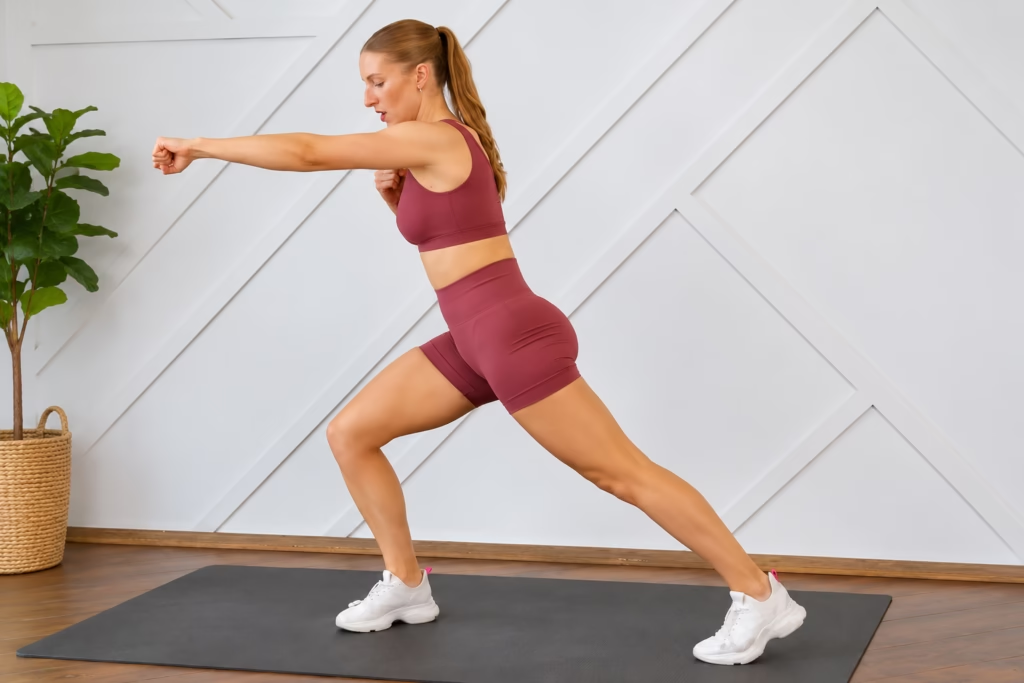
This exercise adds upper-body movement to your side steps, helping maintain your heart rate while engaging your shoulders and core.
How to do them:
- Stand with your feet comfortably apart.
- Step to one side and punch the opposite arm across your body.
- Return to the center and repeat on the other side.
- Continue alternating, allowing your torso to rotate naturally.
Extend your arms with purpose without locking your elbows. Avoid forcing the rotation through your lower back.
Repeat the step jacks and cross-body punches as directed in the video.
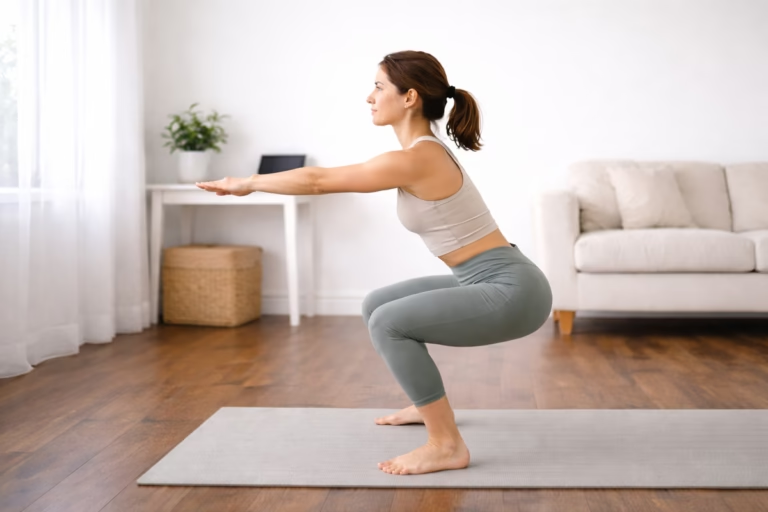
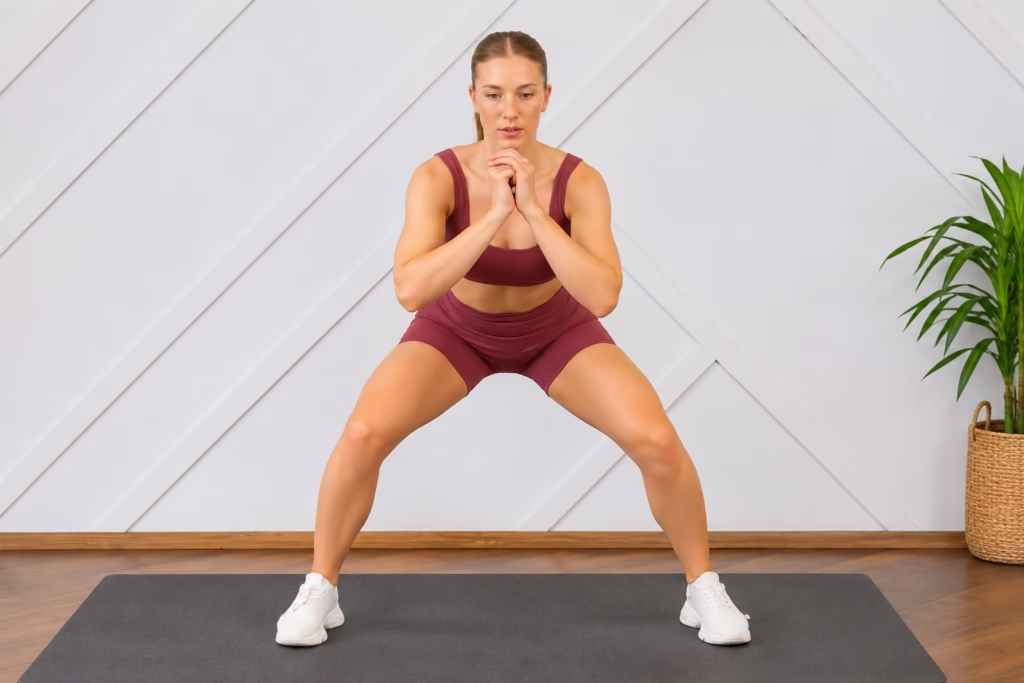
3. Bodyweight Squats
Squats strengthen your thighs, glutes, and hips while adding a lower-body challenge to this cardio workout at home.
How to do them:
- Stand with your feet slightly wider than shoulder-width apart.
- Bend your knees and send your hips backward.
- Lower into a comfortable squat while keeping your heels grounded.
- Push through your feet to return to standing.
Keep your chest lifted and your knees tracking in the direction of your toes. Lower only as far as you can comfortably control.
4. Single-Leg Standing Crunches
This standing ab exercise targets your core while challenging your balance.
How to do them:
- Stand tall and extend one leg slightly in front of you.
- Bring that knee upward toward your torso.
- Contract your abdominal muscles as the knee rises.
- Exhale during the crunch and lower your leg with control.
Complete the movement on one side, return to squats, and then repeat the crunch on the opposite side, following the instructor.
Try not to lean too far backward or pull your upper body forward aggressively.
5. Rise-Up and Reach Down
This movement combines a calf raise with a full-body reach and controlled forward bend.
How to do it:
- Stand with your feet hip-width apart.
- Rise onto your toes while stretching both arms overhead.
- Lower your heels and bend forward at your hips.
- Reach your fingertips toward the floor, bending your knees as needed.
- Return to standing and repeat.
Move smoothly between the upward reach and downward bend. You don’t need to touch the floor to benefit from the exercise.
6. Standing Knee-to-Hand Taps
Knee-to-hand taps bring your attention back to your abdominal muscles while maintaining gentle cardio movement.
How to do them:
- Stand upright and place one hand over the other in front of your torso.
- Lift one knee toward your hands.
- Lower your foot and switch legs.
- Continue alternating with a steady rhythm.
Keep your core engaged and avoid leaning backward to lift your knees higher.
Repeat Circuit 1: After completing these exercise pairs, take the guided recovery and repeat the entire circuit once more.
Circuit 2: Standing Abs and Cardio Workout
The second circuit introduces new standing workouts at home that challenge your coordination, lower body, and core.
7. Standing Elbow-to-Knee Crunches
This movement brings your upper and lower body together to work your abdominal muscles.
How to do them:
- Stand tall with your fingertips lightly placed near your ears.
- Lift one knee in front of your body.
- Bring your opposite elbow toward the raised knee.
- Return to standing and alternate sides.
Exhale as you bring your elbow and knee together. Keep your neck relaxed and avoid pulling on your head.
8. Squat Side Steps With Overhead Reach
This exercise combines a squat position with lateral movement and an overhead reach.
How to do it:
- Begin in a comfortable partial squat.
- Take two controlled steps to one side while maintaining your squat position.
- Reach your arms overhead as demonstrated in the video.
- Lower your arms and step in the opposite direction.
Try to keep your hips at a consistent height during the side steps.
You can remain in a shallower squat if your legs begin to fatigue.
9. Standing Marches
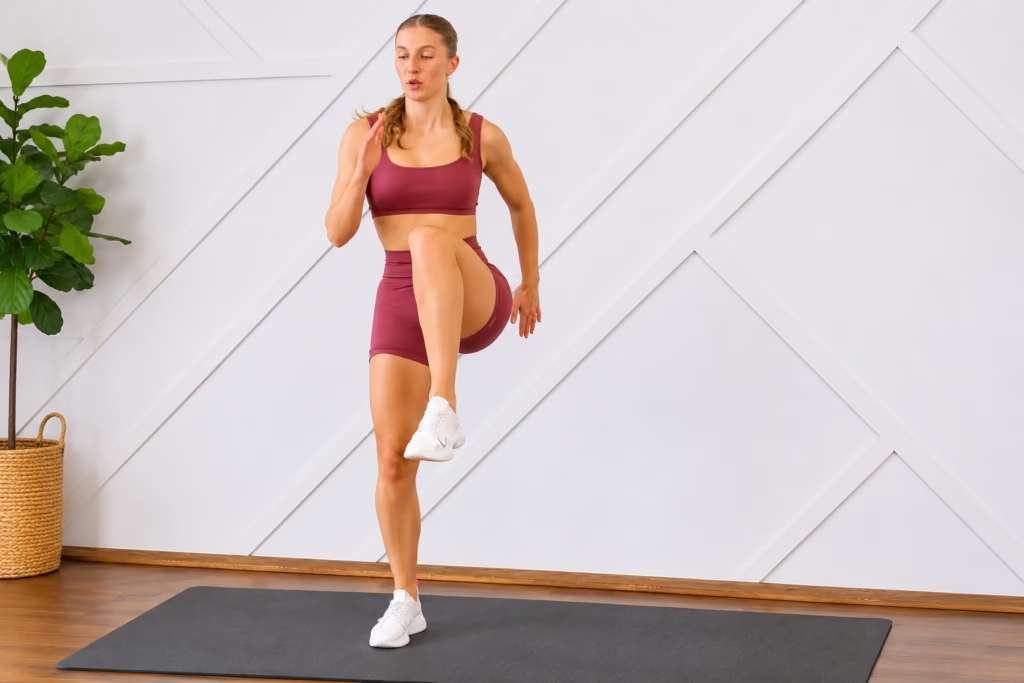
Marching is one of the simplest ways to keep moving during a low impact workout at home.
How to do them:
- Stand with your feet hip-width apart.
- Lift one knee toward your waist.
- Lower your foot and repeat with the opposite leg.
- Swing your arms naturally as you march.
Keep your posture upright and land softly. Increase the pace slightly if you feel comfortable and want more of a cardio challenge.
10. Standing Butt Kicks
Butt kicks add variety to your cardio routine while encouraging repeated knee bending.
How to do them:
- Stand tall with your arms relaxed.
- Bend one knee, bringing your heel toward your glutes.
- Lower your foot and repeat on the other side.
- Continue alternating without jumping.
Add natural arm movements to increase your overall activity.
11. Standing Star Crunches
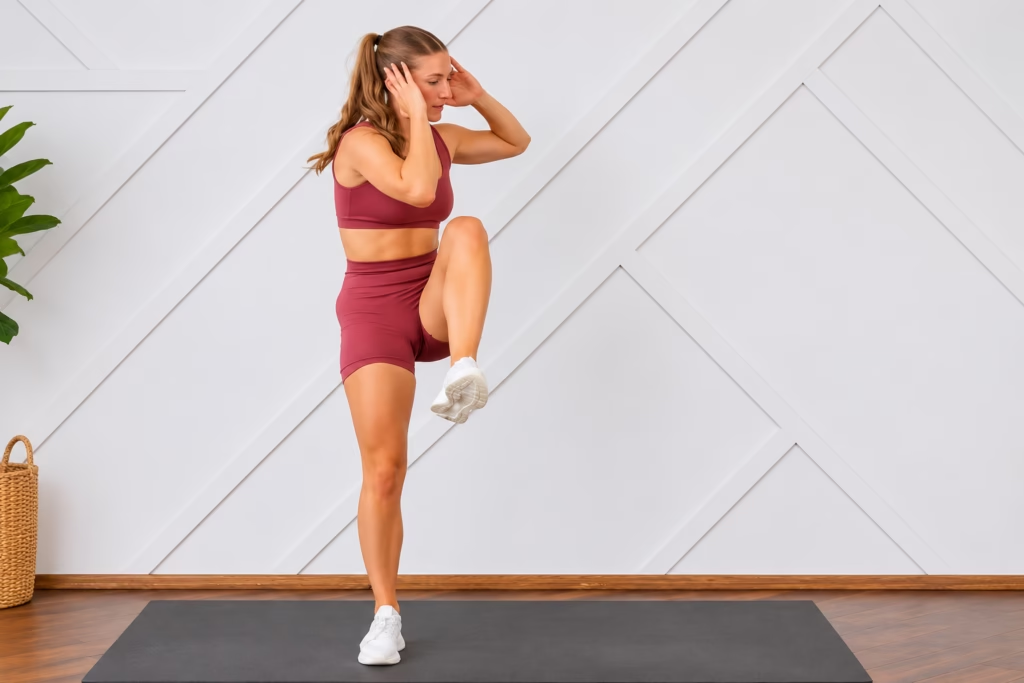
Standing star crunches combine abdominal engagement with a reaching movement.
How to do them:
- Stand with your feet comfortably apart and extend your arms outward.
- Lift one leg in front of your body.
- Reach the opposite hand toward your raised foot.
- Return to the starting position and switch sides.
Keep the movement controlled rather than trying to kick your leg as high as possible.
Beginner modification: Bend your knee and reach toward it instead of trying to touch your toes.
12. Side-to-Side Overhead Reaches
The final exercise keeps your upper body moving while finishing the workout with gentle lateral steps.
How to do them:
- Stand with your feet comfortably apart.
- Step to one side while reaching your arms upward in that direction.
- Return through the center.
- Repeat on the opposite side.
Maintain a steady pace and avoid leaning excessively through your lower back.
Repeat the second circuit as instructed in the video. During the final minute, focus on controlled movement and finish at a pace you can comfortably maintain.
How to Make This Low Impact Workout at Home Easier or Harder
One advantage of a standing cardio routine is how easily you can adjust the intensity.
For beginners
- Take smaller steps during step jacks and side steps.
- Keep your squats shallow until your strength improves.
- Lift your knees only as high as feels comfortable.
- Slow down during standing crunches to maintain balance.
- Take longer recovery breaks when necessary.
For a little more challenge
- Increase your stepping pace while maintaining good form.
- Use stronger, more deliberate arm movements.
- Add a slightly deeper squat when comfortable.
- Focus on engaging your abdominal muscles during every standing crunch.
- Reduce unnecessary pauses without sacrificing technique.
You should feel your breathing increase during the cardio portions, but you should still be able to speak in short sentences. Slow down if you become overly breathless or lose control of your movements.
Tips for Getting the Most Out of Your Workout From Home
A few simple habits can help make your workout more comfortable and effective.
Warm up before starting. Spend two to three minutes gently marching, rolling your shoulders, and moving your hips and ankles. The video begins with exercise, so a separate warm-up is a good idea.
Focus on form before speed. Moving quickly isn’t always better. Controlled repetitions help you maintain stability and use the intended muscles.
Breathe throughout the workout. Avoid holding your breath during squats and crunches. Exhale during the more demanding part of each movement.
Keep your core gently engaged. Think about keeping your torso stable rather than forcefully pulling your stomach inward.
Cool down afterward. Finish with a few minutes of slow walking and gentle stretches for your calves, thighs, shoulders, and hips.
If you experience dizziness, chest pain, or unusual shortness of breath, stop exercising. Anyone with an injury, significant joint discomfort, or a medical condition that affects exercise tolerance should seek individualized guidance before starting.
How Often Should You Do This 15-Minute Cardio Workout?
For beginners, completing this workout two or three times per week can be a manageable starting point.
As your endurance improves, you can gradually add more sessions or combine the routine with walking, strength training, and mobility exercises.
Here’s one example of how to include it in a balanced weekly routine:
| Day | Activity |
|---|---|
| Monday | 15-minute standing cardio and abs |
| Tuesday | Easy walk or gentle stretching |
| Wednesday | Beginner strength training |
| Thursday | 15-minute standing cardio and abs |
| Friday | Gentle yoga or mobility exercises |
| Saturday | Walking or another enjoyable activity |
| Sunday | Rest or light movement |
Adults are generally encouraged to work toward at least 150 minutes of moderate-intensity aerobic activity per week, along with muscle-strengthening activities on two or more days. You can build toward that recommendation gradually as your fitness improves.
Frequently Asked Questions
Is a 15-minute cardio workout at home effective?
Yes. A 15-minute workout can contribute to your weekly physical activity, improve your exercise consistency, and help build cardiovascular endurance over time. The results depend on your effort, current fitness level, and how regularly you exercise.
Can standing ab exercises strengthen your core?
Yes. Standing crunches, knee lifts, and controlled reaching movements engage your abdominal muscles. However, a well-rounded core routine should also include exercises that challenge stability and other trunk muscles.
Is this workout suitable for complete beginners?
The routine is designed for beginners because it uses familiar movements, requires no equipment, and avoids jumping. You can also adjust the pace and range of motion to match your abilities.
Can I do this workout without shoes?
Supportive athletic shoes may improve comfort and traction, particularly during side steps and squats. Exercising barefoot may be appropriate for some people on a safe, nonslip surface, but footwear is generally a practical choice for this cardio routine.
Can I combine this routine with other workouts?
Absolutely. This workout can complement walking, Pilates, yoga, and beginner strength training. Allow adequate recovery between more demanding sessions, especially when you’re starting a new exercise routine.
Final Thoughts: Small Workouts Can Build Lasting Fitness Habits
A good workout doesn’t need to be complicated or exhausting. Sometimes, 15 minutes of purposeful movement is exactly what you need to feel more active and build confidence.
This cardio workout at home brings together low-impact cardio, standing abdominal exercises, and simple strength movements in a routine you can follow without special equipment.
Start with a comfortable pace, focus on your technique, and give yourself time to improve. As the movements become more familiar, you may find it easier to stay active throughout the week.
Ready to move? Play the 15-minute workout video above and give this beginner-friendly standing routine a try.
What’s your favorite way to get cardio in at home: walking, standing workouts, or dancing? Share your thoughts in the comments.