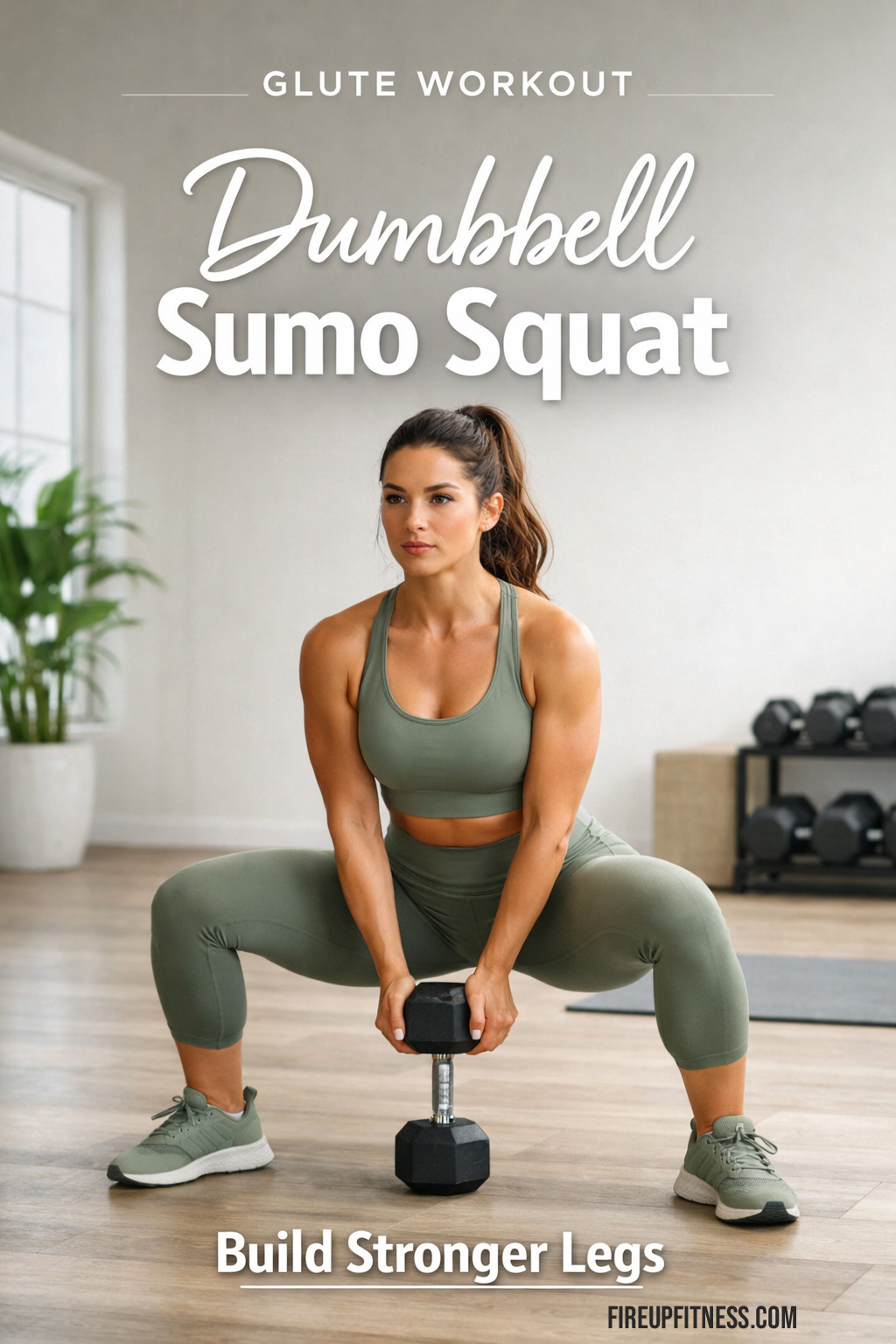
Dumbbell Sumo Squat: The Glute Workout That Builds Strong Legs Fast
If you’re looking for an exercise that sculpts your glutes, strengthens your legs, and improves overall lower-body power, the Dumbbell Sumo Squat deserves a permanent place in your workout routine.
This powerful squat variation is one of the most effective movements used in modern fitness routines because it activates multiple muscle groups at once. With its wide stance and controlled movement pattern, the sumo squat places extra emphasis on the glutes and inner thighs, helping you build both strength and definition.
The best part? You don’t need complicated equipment or a gym full of machines. A single dumbbell and proper form are enough to turn this movement into a highly effective glute workout.
As fitness expert Bret Contreras once said:
“Strong glutes improve performance, posture, and power.”
And the dumbbell sumo squat is one of the simplest ways to start building that strength.
We will learn:
- How to perform the dumbbell sumo squat correctly
- Why it’s one of the best glute exercises
- Common mistakes to avoid
- Powerful variations to upgrade your fitness routines
Let’s get started.
Why Dumbbell Sumo Squats Are So Effective
The dumbbell sumo squat is similar to a traditional squat, but the wider stance shifts more emphasis toward the glutes and inner thighs. This small adjustment makes a huge difference in muscle activation.
Because multiple muscles work together during this movement, it becomes a compound exercise, which means you burn more energy and build more strength in less time.
Here are some of the biggest benefits of including this exercise in your fitness routines.
Stronger Glutes
The wide stance encourages deeper hip engagement, making this one of the most effective exercises for building and strengthening the glutes.
Toned Inner Thighs
Unlike many traditional squat variations, sumo squats heavily activate the adductor muscles of the inner thighs.
Better Core Stability
Holding a dumbbell while performing the squat forces your core to stabilize your body throughout the movement.
Improved Hip Mobility
The wide stance improves hip flexibility and range of motion, which supports better movement patterns in other workouts.
Functional Strength for Everyday Life
Squats mimic everyday movements like sitting, lifting, and bending. Practicing them regularly strengthens the muscles you rely on daily.
Simply put, if your goal is stronger legs and a more powerful lower body, this glute workout exercise delivers real results.
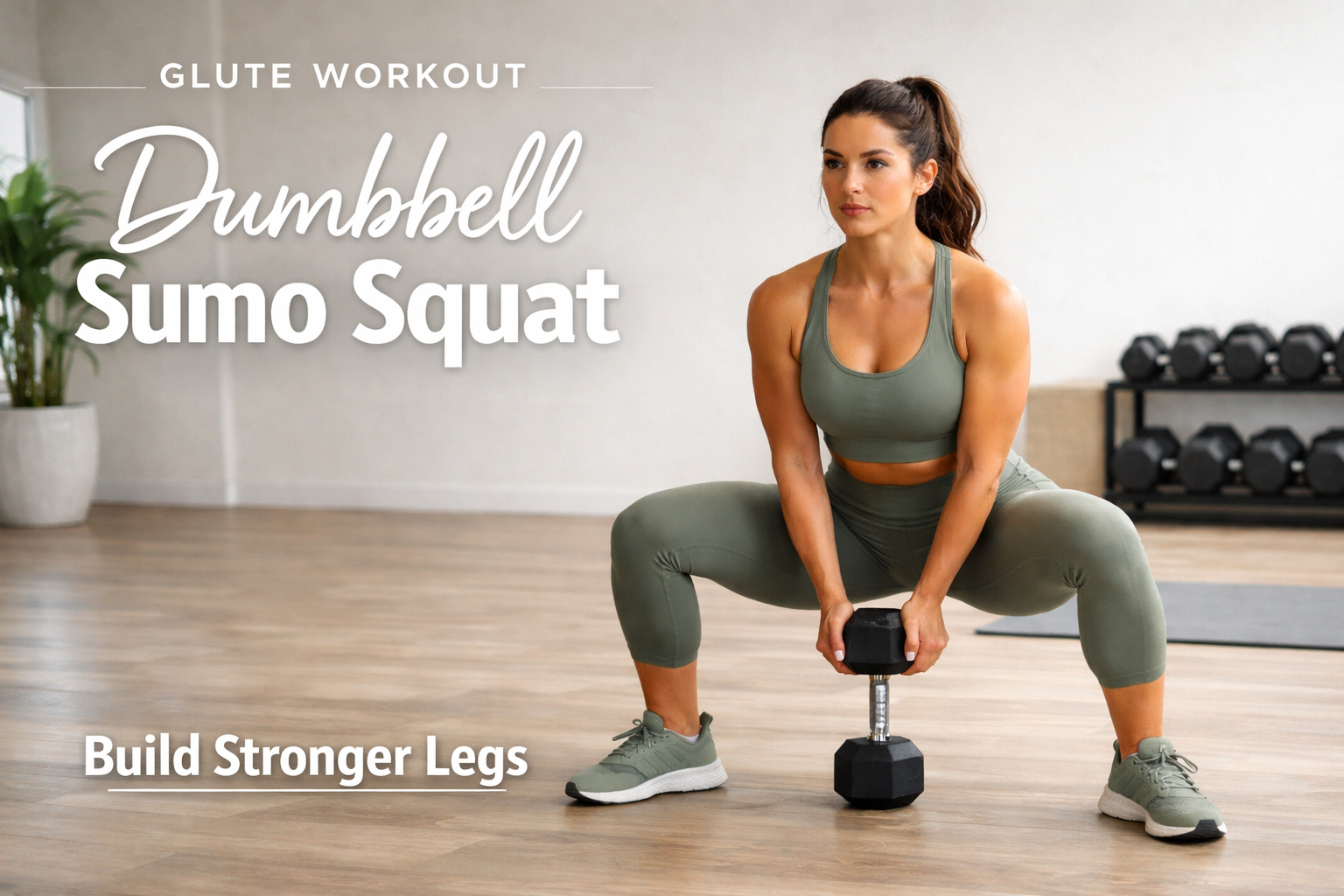
How to Do a Dumbbell Sumo Squat
Performing this exercise with proper form ensures you activate the right muscles while protecting your joints and lower back.
Starting Position
Stand with your feet wider than shoulder-width apart. Turn your toes slightly outward at about a 30–45 degree angle.
Hold the Dumbbell
Grip a dumbbell with both hands and allow it to hang naturally in front of your body.
Keep your arms relaxed but controlled.
Engage Your Core
Lift your chest, pull your shoulders back, and tighten your core muscles to maintain stability.
Lower Into the Squat
Push your hips back and bend your knees to lower your body.
Keep your knees aligned with your toes and allow the dumbbell to move straight down toward the floor.
Stand Back Up
Press through your heels to return to the starting position while squeezing your glutes at the top.
Suggested Sets and Reps
For most fitness routines, perform:
3–4 sets of 10–15 repetitions
Adjust weight and repetitions depending on your fitness level.
Pro Tip:
Move slowly and focus on control rather than speed. This helps activate your glutes more effectively.
Common Mistakes to Avoid
Even though the dumbbell sumo squat is simple to learn, small mistakes can reduce its effectiveness.
Here are a few things to watch for.
Rounding the Lower Back
Always keep your spine neutral and your chest lifted to protect your lower back.
Knees Collapsing Inward
Your knees should track in the same direction as your toes.
Allowing them to collapse inward can put unnecessary stress on the joints.
Shallow Squats
To fully activate the glutes and thighs, aim to lower your body until your thighs are parallel to the floor.
Shifting Weight to the Toes
Your weight should remain primarily in your heels, which helps engage the glutes and maintain balance.
Sumo Squat Variations to Upgrade Your Fitness Routines
Once you master the basic movement, you can introduce variations to keep your fitness routines exciting and challenging.
These variations also target your muscles in slightly different ways.
Sumo Squat Pulse
Remain at the bottom of the squat and perform small pulses.
This increases time under tension and intensifies your glute workout.
Sumo Squat to Calf Raise
At the top of the squat, raise your heels to activate your calves and improve balance.
Kettlebell Sumo Squat
Swap the dumbbell for a kettlebell to change the grip and challenge your stabilizing muscles.
Sumo Squat Jump
Explode upward into a jump and land softly.
This variation improves power, speed, and athletic performance.
Bulgarian Sumo Squat
Elevate one foot behind you and perform the squat to increase the challenge for each leg individually.
Resistance Band Sumo Squat
Adding a resistance band around the thighs increases tension and helps improve glute activation.
Goblet Sumo Squat
Hold the weight close to your chest rather than letting it hang.
This variation increases core engagement.
Sumo Squat Hold
Pause at the bottom of the squat for 30–60 seconds to build endurance and stability.
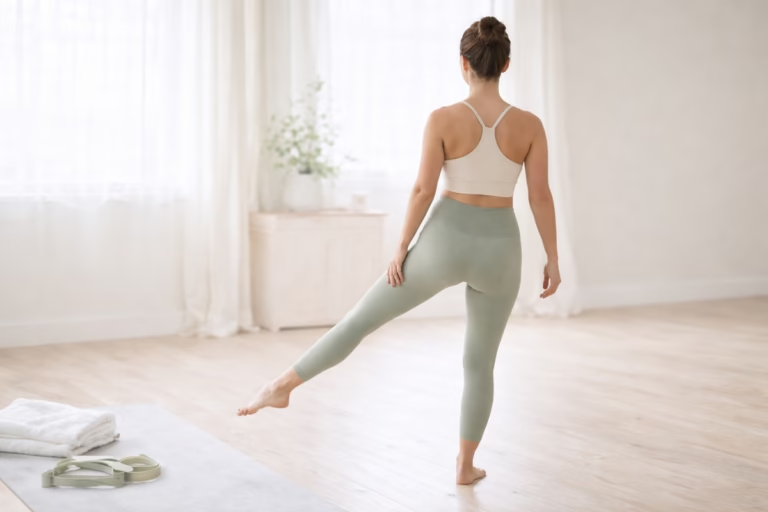
Sumo Squat with Side Leg Lift
Add a side leg raise after each squat to activate the hips and outer glutes.
Including these variations ensures your glute workout stays challenging and prevents training plateaus.
How to Add Sumo Squats to Your Fitness Routine
If you’re building a lower-body workout plan, the dumbbell sumo squat works well as either a primary strength movement or a supporting exercise.
Here are two simple routines you can try.
Beginner Glute Workout
Dumbbell Sumo Squat — 3 sets of 12 reps
Bodyweight Lunges — 3 sets of 12 reps per leg
Glute Bridges — 3 sets of 15 reps
Plank Hold — 3 sets of 30 seconds
This routine helps beginners build foundational strength and stability.
Advanced Lower Body Routine
Dumbbell Sumo Squat — 4 sets of 15 reps
Bulgarian Split Squats — 3 sets of 12 reps per leg
Romanian Deadlifts — 3 sets of 10 reps
Jump Squats — 3 sets of 15 reps
Weighted Step-Ups — 3 sets of 12 reps per leg
This routine adds intensity and builds more strength and power.
Tips to Get the Most Out of Your Glute Workout
To maximize the benefits of your fitness routines, keep these simple tips in mind.
Focus on muscle engagement
Actively squeeze your glutes at the top of every squat.
Increase resistance gradually
As your strength improves, slowly increase the weight you use.
Train consistently
Perform lower-body workouts two or three times per week for the best results.
Allow time for recovery
Muscles grow stronger when they have time to repair between workouts.
Final Thoughts
The Dumbbell Sumo Squat is one of the most effective exercises you can add to your glute workout and lower-body fitness routines.
With its ability to target the glutes, inner thighs, and core simultaneously, it helps build strength, improve balance, and sculpt a stronger lower body.
The key to results is consistency. When you practice proper form and gradually challenge your muscles, this simple exercise can deliver powerful results.
Remember:
Strength is built one rep at a time.
Add sumo squats to your workouts, explore the variations, and watch your lower-body strength and confidence grow.