15-Minute Back Workout at Home for Strength and Posture
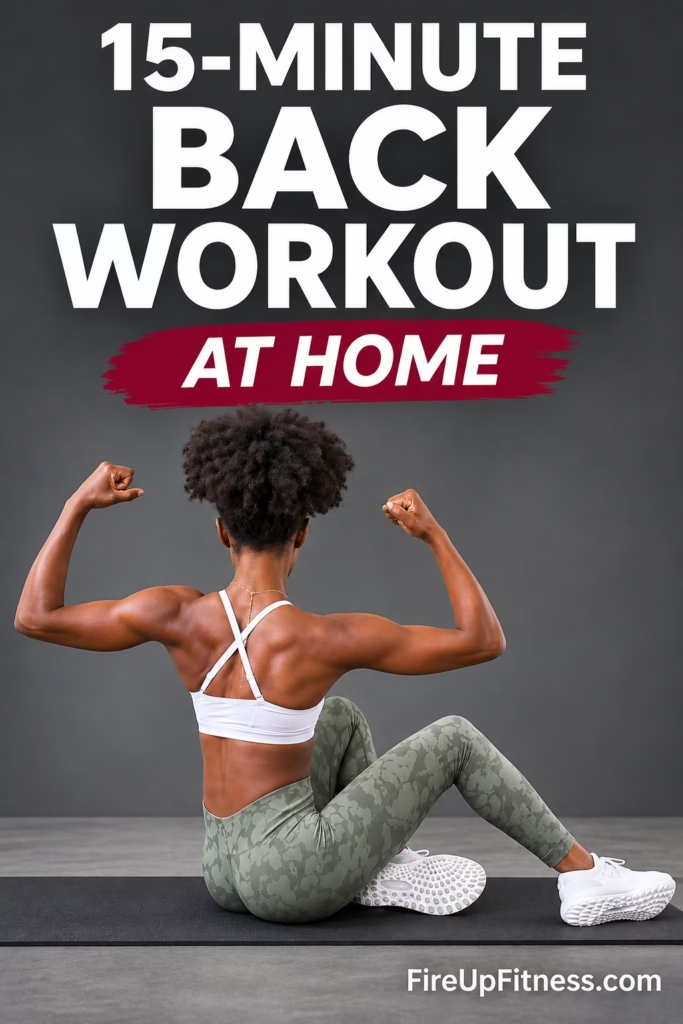
A strong back helps you move comfortably, maintain stability, and handle everyday activities with greater ease. But it’s also one of the most overlooked muscle groups in home workouts.
Long hours at a desk, limited movement, and everyday physical demands can leave your back feeling tired or stiff. Regular strength training can help build the muscular endurance needed to support your spine.
This 15-minute back workout at home includes 15 bodyweight exercises targeting your upper back, lower back, shoulders, and core. You don’t need dumbbells or resistance bands—just an exercise mat and enough space to move.
With beginner modifications and adjustable work intervals, you can follow the routine at your own pace.
Benefits of Strengthening Your Back
Your back muscles work together with your shoulders, glutes, and core to support everyday movement.
Regular back-strengthening exercises can help:
- Build upper and lower back strength.
- Improve muscular endurance and stability.
- Support healthy shoulder movement.
- Strengthen the muscles involved in maintaining posture.
- Improve body awareness and movement control.
- Make everyday activities such as lifting and reaching feel easier.
A balanced fitness routine should also include mobility exercises and regular movement throughout the day.
How This 15-Minute Back Workout Works
The workout includes 15 exercises, with approximately one minute allocated to each movement.
| Fitness level | Exercise | Rest |
|---|---|---|
| Beginner | 30 seconds | 30 seconds |
| Intermediate | 45 seconds | 15 seconds |
Workout details:
- Duration: 15 minutes
- Equipment: Exercise mat
- Exercises: 15
- Fitness level: Beginner to intermediate
- Workout type: Bodyweight strength and endurance
- Target areas: Back, shoulders, core, and glutes
The video includes audio cues to signal rest periods, allowing you to concentrate on your movements.
Follow Along With the 15-Minute Back Workout
Follow the instructor through the complete routine. Choose the beginner modifications whenever needed, and prioritize controlled movement over speed.
15 Back Strengthening Exercises You Can Do at Home
1. Superflys
Superflys activate your upper back, spinal extensors, and glutes.
How to do it:
- Lie face down with your legs extended.
- Stretch your arms outward to your sides.
- Gently lift your chest, arms, and legs.
- Sweep your arms backward toward your feet.
- Return to the starting position with control.
Beginner modification: Keep your legs on the mat and lift only your chest and arms.
2. Plank to Dolphin
This exercise combines shoulder strength with core stability.
How to do it:
- Begin in a forearm plank.
- Press through your elbows and forearms.
- Lift your hips toward the ceiling into an inverted V position.
- Slowly lower back into a plank.
- Repeat while keeping your movements controlled.
Beginner modification: Perform the movement from your knees.
3. O Raise Extension
The O raise extension challenges your back extensors and shoulders.
How to do it:
- Lie on your stomach with your arms rounded overhead in an O shape.
- Gently lift your chest and arms.
- Raise your legs slightly if comfortable.
- Pause briefly.
- Lower with control.
Avoid forcing your lower back into an exaggerated arch.
Beginner modification: Keep your legs on the floor and focus on lifting your upper body.
4. Plank March
Plank marches strengthen your shoulders and core while challenging balance.
How to do it:
- Start in a high plank.
- Widen your feet slightly for stability.
- Lift one hand briefly from the floor.
- Return it to the mat.
- Alternate hands while keeping your hips steady.
Beginner modification: Perform the exercise from your knees.
5. Butterfly
Inspired by the butterfly swimming stroke, this movement works your upper back and shoulders.
How to do it:
- Lie face down with your arms extended forward.
- Lift your chest slightly.
- Sweep your arms outward and backward.
- Bring your arms forward again.
- Lift your legs slightly if comfortable.
Beginner modification: Keep your legs grounded and concentrate on the arm movement.
6. Scapula Push-Ups
Scapula push-ups strengthen the muscles responsible for controlling your shoulder blades.
How to do it:
- Begin in a high plank with straight arms.
- Allow your shoulder blades to move toward each other, lowering your chest slightly.
- Push the floor away to spread your shoulder blades apart.
- Keep your elbows straight.
- Repeat using a small range of motion.
Beginner modification: Perform the exercise from your knees or against a wall.
7. Reverse Angels
Reverse angels target the upper back and rear shoulders.
How to do it:
- Lie on your stomach with your arms near your sides.
- Lift your chest and arms slightly.
- Sweep your arms outward and overhead.
- Bring them back toward your hips.
- Continue slowly.
Beginner modification: Keep your chest and legs on the mat while moving your arms.
8. Up-Down Push-Ups
This plank variation challenges your arms, shoulders, and core.
How to do it:
- Start in a high plank.
- Lower one forearm to the mat.
- Lower your opposite forearm.
- Press through your hands to return to a high plank.
- Alternate your leading arm.
Keep your hips from rocking excessively.
Beginner modification: Perform the exercise from your knees.
9. Alternating Extension
Alternating extensions work your spinal extensors and glutes while improving coordination.
How to do it:
- Lie face down with your arms extended overhead.
- Lift your right arm and left leg.
- Pause briefly.
- Lower and switch sides.
- Continue alternating.
Beginner modification: Lift one arm or leg at a time.
10. Boat Hold
This prone holding exercise develops back and glute endurance.
How to do it:
- Lie on your stomach with your arms extended.
- Engage your abdominal muscles and glutes.
- Gently lift your chest, arms, and legs.
- Hold while breathing normally.
- Lower when the interval ends.
Keep your neck aligned with your spine.
Beginner modification: Keep your legs grounded and lift only your upper body, or use shorter holds.
11. Push-Up Extension to Renegade Row
This combination challenges your upper-body strength and coordination.
How to do it:
- Begin in a high plank.
- Perform one push-up.
- Return to the plank and row one elbow toward your ribs.
- Repeat the row with your opposite arm.
- Lower onto your stomach and lift your arms into a W shape.
- Return to the starting position.
Beginner modification: Perform the push-up from your knees and use a supported plank for the rows.
12. Boat Pulse
Boat pulses add a dynamic challenge to the back-extension position.
How to do it:
- Lie face down with your arms extended.
- Gently lift your legs and upper body.
- Perform small upward pulses with your chest.
- Keep your movements controlled.
- Avoid excessive arching through your lower back.
Beginner modification: Hold a low half-plank, as demonstrated in the video.
13. Plank Slider
Plank sliders develop shoulder stability and core endurance.
How to do it:
- Begin in a high plank.
- Keep your hands and feet planted.
- Shift your body slightly forward.
- Rock backward slowly.
- Repeat through a comfortable range.
Beginner modification: Perform the movement from your knees.
14. Tabletop Flip Over
This exercise works your glutes, shoulders, and supporting back muscles.
How to do it:
- Sit with your knees bent and feet flat.
- Place your hands behind you, fingers pointing toward your body if comfortable.
- Press through your hands and feet.
- Lift your hips toward a tabletop position.
- Pause before lowering.
Beginner modification: Use a smaller hip lift.
15. Reverse Push-Up
The final exercise challenges your arms, shoulders, and upper-body control.
How to do it:
- Begin in a reverse tabletop position.
- Bend your elbows to lower your torso slightly.
- Press through your palms to straighten your arms.
- Keep your core engaged.
- Repeat with controlled movements.
Beginner modification: Keep your hips lower and use smaller elbow bends.
Tips for a Safe and Effective Workout
A few simple habits can help you get more from each session.
Move slowly: Focus on technique rather than completing as many repetitions as possible.
Keep your neck neutral: During floor exercises, avoid lifting your chin excessively.
Engage your core: Gently brace your abdominal muscles during planks and back extensions.
Breathe naturally: Avoid holding your breath during challenging movements.
Use modifications: Reduce your range of motion or take additional rest when necessary.
Stop any exercise that causes sharp, radiating, or increasing pain. People with existing back injuries or persistent back pain should seek individualized guidance before attempting the routine.
How Often Should You Do This Back Workout?
For most beginners, two sessions per week on nonconsecutive days provide a manageable starting point.
As your endurance improves, you can gradually work toward three weekly sessions, depending on your recovery and other activities.
Start with 30 seconds of exercise and 30 seconds of rest. Once the movements feel comfortable, try increasing your working intervals to 45 seconds.
Because this routine includes several planks and back extensions, balance it with other forms of exercise, including walking, stretching, and pulling movements.
Consistency and gradual progression matter more than completing every exercise at maximum intensity.
Final Thoughts
You don’t need a gym or complicated equipment to build a stronger back.
This 15-minute back workout brings together 15 exercises that challenge your back, shoulders, core, and glutes using only your bodyweight.
Some movements may feel difficult initially, particularly the longer holds and plank variations. Start with the beginner modifications and give yourself time to build strength.
Follow along with the video, focus on good form, and make this routine a regular part of your home workouts. Small, consistent efforts can lead to noticeable improvements in strength and endurance over time.