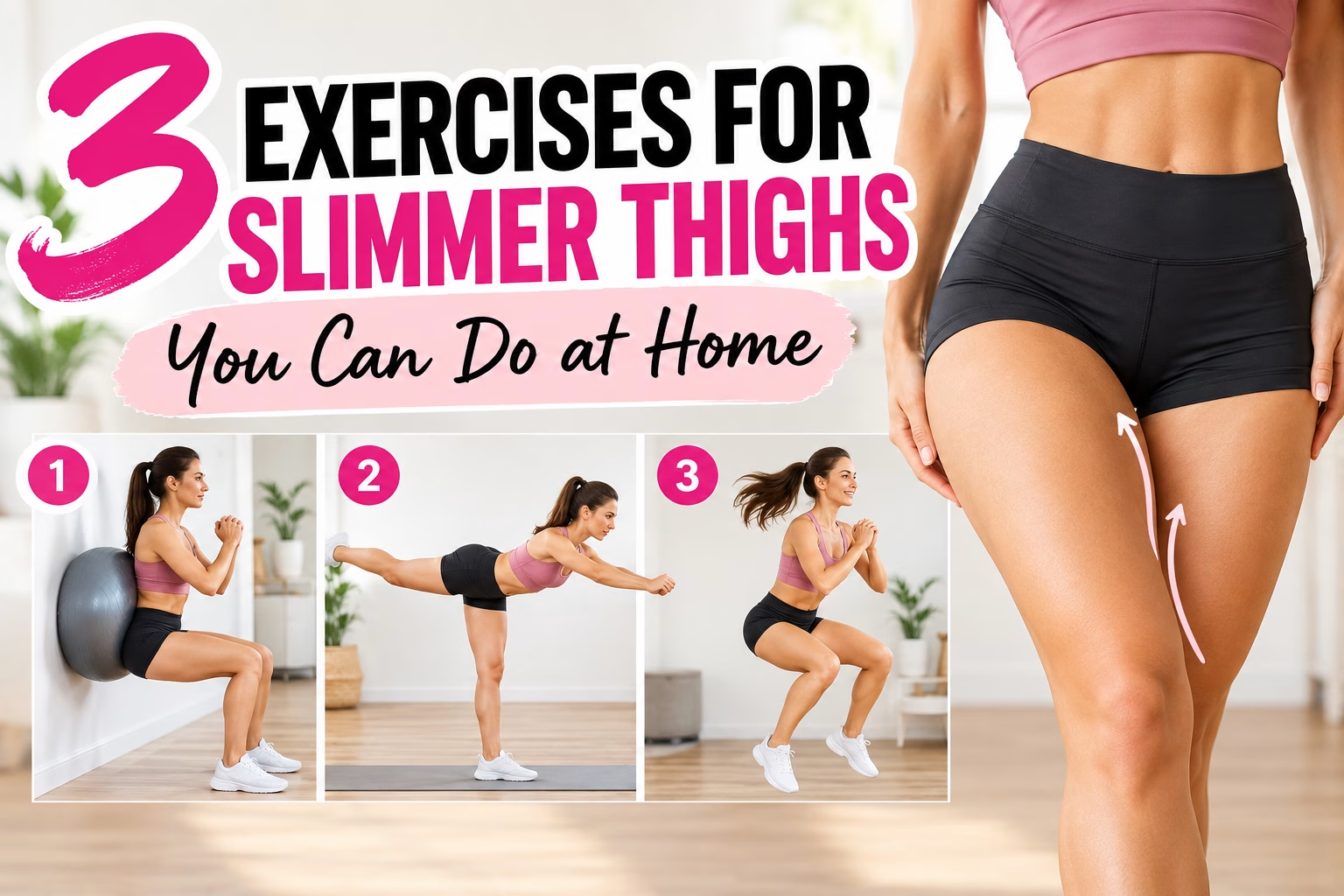
3 Exercises for Slimmer Thighs You Can Do at Home
Do your thighs seem to be the last place to change, even when you’re walking more, eating better, and trying to stay active?
You’re definitely not alone.
For many women, the hips and thighs are areas where the body naturally prefers to store fat. And as we get older, changes in activity levels, muscle mass, and body composition can make the lower body feel even more stubborn.
But here’s the encouraging part:
You don’t need to spend an hour doing endless leg exercises.
A few well-chosen movements can strengthen your thighs, wake up your glutes, improve muscle definition, and help your legs feel noticeably stronger.
This simple workout for slimmer thighs uses just three exercises. You can do it at home, adjust it for beginners, and finish it in about 10–15 minutes.
And there’s a no-jumping option too.
Before we start, though, there’s one important thing every woman trying to slim her thighs should know.

Can You Actually Slim Your Thighs With Exercise?
Yes—but not by trying to “burn thigh fat” with hundreds of leg exercises.
Your body doesn’t allow you to choose exactly where fat disappears first. That’s why doing 100 squats every morning won’t necessarily make fat come specifically from your thighs.
What squats and other lower-body exercises can do is strengthen and develop the muscles underneath.
Combine that with regular physical activity and nutrition habits that support overall fat loss, and your thighs may gradually look leaner, firmer, and more defined.
So rather than thinking:
“How can I burn thigh fat?”
A better question is:
“How can I build stronger legs while reducing overall body fat?”
That’s exactly what this routine is designed to support.
Why Thigh Fat Can Feel So Stubborn
Have you ever noticed changes around your waist, face, or upper body while your thighs seem determined to stay exactly the same?
Your genetics play a major role in where your body prefers to store fat—and where it loses fat first.
For many women, the hips, buttocks, and thighs are common fat-storage areas.
That means you shouldn’t assume your routine isn’t working simply because your thighs aren’t changing as quickly as you’d hoped.
Your progress might show up first as:
- Stronger legs
- Better balance
- Easier stair climbing
- More comfortable squats
- Improved walking endurance
- Firmer-feeling muscles
- Clothes fitting differently
Keep going.
Visible changes often happen after strength and fitness improvements have already begun.
The 3-Exercise Workout for Slimmer, Stronger Thighs
This routine combines three different types of lower-body movement:
Exercise 1: Strength and control
Exercise 2: Balance and stability
Exercise 3: Strength plus cardio
Together, they target your thighs, glutes, hamstrings, calves, hips, and core.
For beginners, start with one or two rounds.
As you become stronger, work toward three rounds.
Let’s begin.
1. Wall Squat With an Exercise Ball
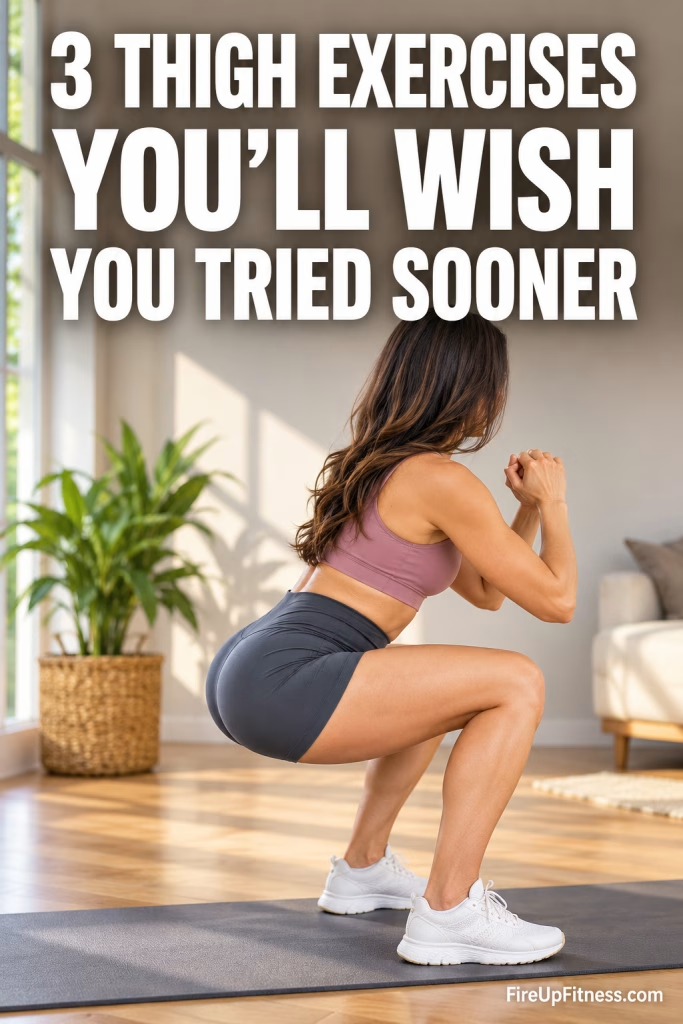
If you’re starting a thigh workout, squats are difficult to beat.
They train several large lower-body muscles at the same time, including your quadriceps, hamstrings, and glutes.
But regular squats can feel intimidating when you’re new to exercise.
That’s where the exercise ball comes in.
Placing a stability ball between your back and a wall gives you additional support and can make it easier to practice the squatting movement with control.
What it works
This exercise primarily targets your:
- Quadriceps
- Glutes
- Hamstrings
- Calves
- Core
How to do it
- Place an exercise ball between your lower back and a sturdy wall.
- Stand with your feet approximately shoulder-width apart.
- Move your feet slightly forward so they aren’t directly underneath your hips.
- Keep your chest lifted and gently tighten your core.
- Slowly bend your knees and push your hips down as the ball rolls along the wall.
- Lower yourself only as far as you can comfortably control.
- Pause for 1–3 seconds.
- Press through your feet and slowly return to standing.
Aim for 8–12 repetitions.
Rest for about 30–60 seconds before repeating.
Beginner option
You don’t need to squat deeply.
Even a small controlled squat can challenge your thighs when you’re just starting.
Another option is a chair squat.
Stand in front of a sturdy chair, push your hips backward, lightly touch the chair with your bottom, and stand again.
Want to make it harder?
Don’t immediately add more repetitions.
Instead, slow down.
Try lowering yourself for a count of:
3…2…1…
Pause.
Then stand.
That slow lowering phase can make your thighs work surprisingly hard without adding jumping or complicated equipment.
2. Flamingo Balance
This exercise looks simple.
Then you try it.
The flamingo balance challenges your legs in a completely different way from squats because one leg has to support and stabilize your body while the other moves behind you.
You’ll feel your standing leg, glutes, hamstrings, hips, and core working together.
And that’s exactly what makes this exercise so useful.
What it works
The flamingo balance targets your:
- Glutes
- Hamstrings
- Hips
- Core
- Ankles
- Stabilizing muscles
Add a dumbbell curl and you’ll work your arms too.
How to do it
- Stand tall with your feet about hip-width apart.
- Shift your weight onto your right foot.
- Keep your right knee slightly bent rather than locking it.
- Tighten your core.
- Slowly hinge forward from your hips.
- Extend your left leg behind you as your upper body moves forward.
- Keep your back long and controlled.
- Pause when you feel your glutes and hamstrings working.
- Slowly return your left foot toward the floor.
- Repeat for 8–12 controlled repetitions.
- Switch sides.
Don’t worry about lifting your back leg extremely high.
The goal is control—not height.
Can’t balance?
Use the wall.
Place your fingertips against a wall, countertop, or sturdy chair.
There’s nothing wrong with using support. In fact, it’s better to perform the movement correctly with assistance than wobble through every repetition.
As your balance improves, gradually use less support.
Optional dumbbell variation
Want more of a full-body challenge?
Hold a light dumbbell in one hand and perform a biceps curl while balancing.
Master the basic movement first, though.
Balance before weight.
3. Plyometric Squat
Now we’re turning up the intensity.
Plyometric squats—or jump squats—combine a traditional squat with an explosive upward movement.
Your thighs and glutes have to produce force to propel you upward, while your legs and core work again to control the landing.
Your heart rate will probably climb quickly too.
What it works
Jump squats primarily challenge your:
- Quadriceps
- Glutes
- Hamstrings
- Calves
- Core
How to do it
- Stand with your feet approximately shoulder-width apart.
- Push your hips backward.
- Bend your knees and lower into a comfortable squat.
- Keep your chest lifted.
- Press through your feet and jump upward.
- Land softly on both feet.
- Immediately bend your knees and hips to absorb the landing.
- Reset your position before repeating.
Aim for 6–10 repetitions.
Rest for 30–60 seconds.
Complete 2–3 sets depending on your fitness level.
The rule that matters most: land quietly
Imagine you’re exercising upstairs while someone is sleeping downstairs.
Your landing should be soft.
If every repetition makes a loud thump, slow down and concentrate on absorbing the landing through your hips and knees.
Don’t want to jump? Do this instead
Jumping is completely optional.
Replace jump squats with a squat-to-calf raise.
Here’s how:
- Perform a normal bodyweight squat.
- Stand back up.
- Rise onto the balls of your feet.
- Squeeze your calves briefly.
- Lower your heels.
- Repeat.
You still train your thighs, glutes, and calves—without the impact.
This is an especially useful alternative for beginners or anyone who simply prefers no-jumping workouts.
Try This 10-Minute Thigh Workout at Home
Now let’s put everything together.
Round 1
Ball Squats: 10–12 reps
Flamingo Balance: 8–10 reps each leg
Jump Squats: 6–10 reps
Rest for 30–60 seconds.
Repeat for 2–3 rounds.
Prefer no jumping?
Use:
Ball or Chair Squats: 10–12 reps
Flamingo Balance: 8–10 reps each leg
Squat-to-Calf Raises: 10–12 reps
That’s it.
Three exercises.
No complicated routine.
And you can finish the entire workout in roughly 10–15 minutes.
Want Slimmer-Looking Thighs? Don’t Make This Mistake
One of the biggest mistakes is doing thigh exercises every single day because you want faster results.
More isn’t automatically better.
Strength training creates a challenge for your muscles. Recovery gives them time to repair and adapt.
Instead of hammering your thighs seven days a week, try this workout 2–3 nonconsecutive days per week.
On the other days, stay active with walking, cycling, swimming, mobility work, or another activity you enjoy.
Consistency over several months matters far more than exhausting yourself for seven days and quitting.
The Walking + Strength Combination
Want a simple strategy that doesn’t require living at the gym?
Combine strength training with walking.
Your thigh exercises strengthen the muscles of your lower body.
Walking increases your daily movement and helps improve cardiovascular fitness.
The two work beautifully together.
You might start with:
Monday: Thigh workout
Tuesday: 20–30 minute walk
Wednesday: Full-body strength workout
Thursday: Easy walk
Friday: Thigh workout
Saturday: Longer relaxed walk or another enjoyable activity
Sunday: Rest or gentle mobility
You don’t need to follow that schedule perfectly.
Think of it as a framework.
Even a few 10-minute walks scattered throughout your day count.
What About Inner Thigh Fat?
Here’s where a lot of women get frustrated.
You might perform inner-thigh exercises until your muscles burn and still wonder:
“Why isn’t the fat disappearing?”
Because muscle strengthening and fat loss are two different processes.
Exercises such as sumo squats, lateral lunges, and leg lifts can strengthen your inner-thigh muscles, but they cannot tell your body to burn the fat directly above those muscles.
Overall fat loss happens throughout the body.
And your genetics largely influence which areas become leaner first.
So don’t judge your progress only by whether you suddenly have a thigh gap or dramatically smaller legs.
Your natural bone structure and genetics matter too.
Strong, healthy legs come in many shapes.
5 Things That Can Help Your Thighs Look More Defined
Your workout is important—but what you do outside the workout matters too.
1. Walk more throughout the day
Don’t underestimate ordinary movement.
Taking the stairs, walking after dinner, parking farther away, or doing a quick 10-minute walk can increase your overall activity without feeling like another workout.
2. Strength train your entire body
Don’t spend every workout focusing on your thighs.
Train your back, shoulders, arms, chest, glutes, and core too.
A balanced strength routine can help you maintain and build muscle throughout your body.
3. Eat enough protein
Protein supports muscle maintenance and recovery, especially when you’re strength training.
Try building meals around foods such as eggs, Greek yogurt, fish, chicken, beans, lentils, tofu, cottage cheese, or other protein-rich foods you enjoy.
4. Don’t rely on extreme dieting
You don’t need to survive on salads to lose body fat.
Extreme restriction can be difficult to sustain and may leave you tired, hungry, and more likely to abandon your plan.
Build meals around nutritious foods you actually enjoy and can continue eating.
5. Give your body time
This might be the hardest one.
You can complete a workout in 10 minutes.
Changing your body takes longer.
Think in terms of weeks and months rather than days.
What If You’re Over 40?
After 40, it can become especially important to think beyond simply “burning calories.”
Maintaining muscle matters.
Strength training can help you preserve or improve muscular strength as you age, while activities such as walking can help you stay active without making every workout exhausting.
That makes exercises such as squats particularly useful.
You don’t need the hardest version.
Start with chair squats.
Use a wall for balance.
Skip jumping.
Use lighter weights.
Your goal isn’t to prove how difficult a workout you can survive.
Your goal is to find a routine you can keep doing consistently.
Common Mistakes That Can Slow Your Progress
Doing hundreds of repetitions
More reps don’t automatically equal slimmer thighs.
Once an exercise becomes easy, improve the challenge gradually through better control, additional resistance, more range of motion, or another set.
Rushing through every squat
Slow down.
Your muscles should control the movement rather than momentum doing the work.
Ignoring your glutes
Your glutes are a major part of your lower body.
Squats, hip hinges, bridges, step-ups, and lunges can all help develop stronger glutes alongside your thighs.
Expecting spot reduction
This is worth repeating:
You cannot choose exactly where your body burns fat.
Train your thighs to make them stronger. Use your overall lifestyle to support fat loss.
Comparing your legs with someone else’s
Two women can follow the exact same workout and end up with very different-looking legs.
Why?
Genetics.
Height.
Hip structure.
Muscle mass.
Fat distribution.
Age.
Training history.
Your goal should be improving your body, not trying to copy somebody else’s shape.
How Long Before You Notice Results?
There isn’t one answer that applies to everyone.
You might notice strength improvements before you see obvious physical changes.
For example, perhaps you begin with five chair squats and, several weeks later, can comfortably perform 12 regular squats.
That’s progress.
Maybe climbing stairs becomes easier.
That’s progress too.
Visible changes depend on many factors, including your starting point, genetics, nutrition, overall activity, training consistency, sleep, and recovery.
Instead of checking your thighs in the mirror every morning, give your routine time to work.
Save This Workout for Your Next Leg Day
Here’s the entire routine one more time:
1. Ball Squats — 10–12 reps
Strengthen the thighs, glutes, and hamstrings.
2. Flamingo Balance — 8–10 reps per leg
Challenge the glutes, hamstrings, core, and balance.
3. Jump Squats — 6–10 reps
Add an explosive lower-body challenge.
No-jumping option: Replace jump squats with 10–12 squat-to-calf raises.
Rest for 30–60 seconds, then repeat the circuit 2–3 times.
Screenshot it.
Save it.
Pin it.
And most importantly—actually try it.
Final Thoughts
When your thighs are an area you’ve struggled with for years, it’s tempting to believe you need a punishing workout to finally change them.
You don’t.
You need a plan you can repeat.
Start with these 3 exercises for slimmer thighs and focus on building stronger legs rather than chasing instant results.
Squats strengthen your major lower-body muscles.
The flamingo balance challenges your stability, glutes, and hamstrings.
Plyometric squats add intensity when you’re ready for it.
Then support those workouts with walking, full-body strength training, balanced nutrition, protein, sleep, and patience.
Your thighs may not change overnight.
But your strength can.
Your balance can.
Your endurance can.
And when you consistently build those things, changes in how your body looks and feels can follow.
Start with one round today. You don’t have to be perfect—you just have to begin.