7 Standing Core Exercises for Women Over 40
Want to strengthen your core but don’t love getting down on the floor for crunches and planks?
You don’t have to.
Some of the most practical core exercises can be done completely standing. And for women over 40, a standing core workout can be an especially comfortable way to build strength, improve balance, support better posture, and make everyday movement feel easier.
There’s no mat required. No endless crunches. No complicated equipment.
These 7 standing core exercises for women target your abs, obliques, hips, and deeper stabilizing muscles while keeping the workout simple enough to do at home.
Even better, the entire routine can be finished in about 10–15 minutes.
So clear a little space, stand tall, and get ready to work your core without ever touching the floor.
Why Standing Core Exercises Are So Effective
When most people hear “ab workout,” they picture crunches, sit-ups, and planks.
But your core wasn’t designed only to curl your torso forward.
Your core helps stabilize your body while you walk, turn, reach, bend, carry groceries, climb stairs, and perform countless other everyday movements.
That’s why standing exercises can be such a useful addition to your routine.
During standing core exercises, your abdominal muscles have to work while the rest of your body is moving and maintaining balance.
You’re not simply training your abs.
You’re teaching your core to support your entire body.
Standing core exercises can help develop:
- Core strength
- Balance and stability
- Coordination
- Postural control
- Hip stability
- Functional strength
- Body awareness
And because many standing movements involve your arms and legs at the same time, they can feel more dynamic than traditional floor exercises.
Why Core Strength Becomes Even More Important After 40
A strong core matters at every age, but maintaining strength becomes increasingly important as we get older.
Your core includes much more than the visible muscles at the front of your stomach. It involves muscles around your abdomen, back, pelvis, and hips that work together to stabilize your trunk.
When these muscles are strong, they help your body move efficiently.
Think about ordinary activities such as:
carrying grocery bags, getting out of a chair, gardening, reaching for something on a shelf, walking on uneven ground, lifting laundry, or climbing stairs.
Your core is involved in all of them.
That’s why core exercises for women over 40 shouldn’t only be about creating a flatter-looking stomach.
The bigger goal is building a body that feels strong, stable, and capable.
And you don’t need an exhausting workout to begin.
7 Standing Core Exercises for Women Over 40
For this workout, perform each exercise for 40 seconds, followed by approximately 20 seconds of rest.
Complete all seven exercises once if you’re a beginner.
As you become stronger, repeat the circuit two or three times.
Move slowly enough that you can actually feel your core working. Faster isn’t necessarily better.
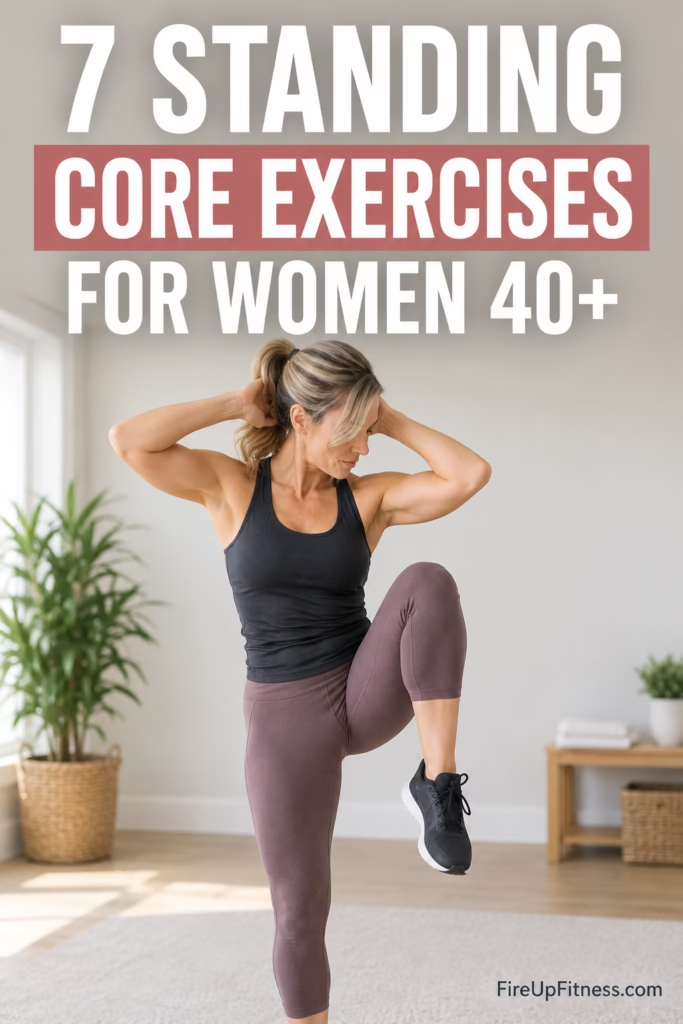
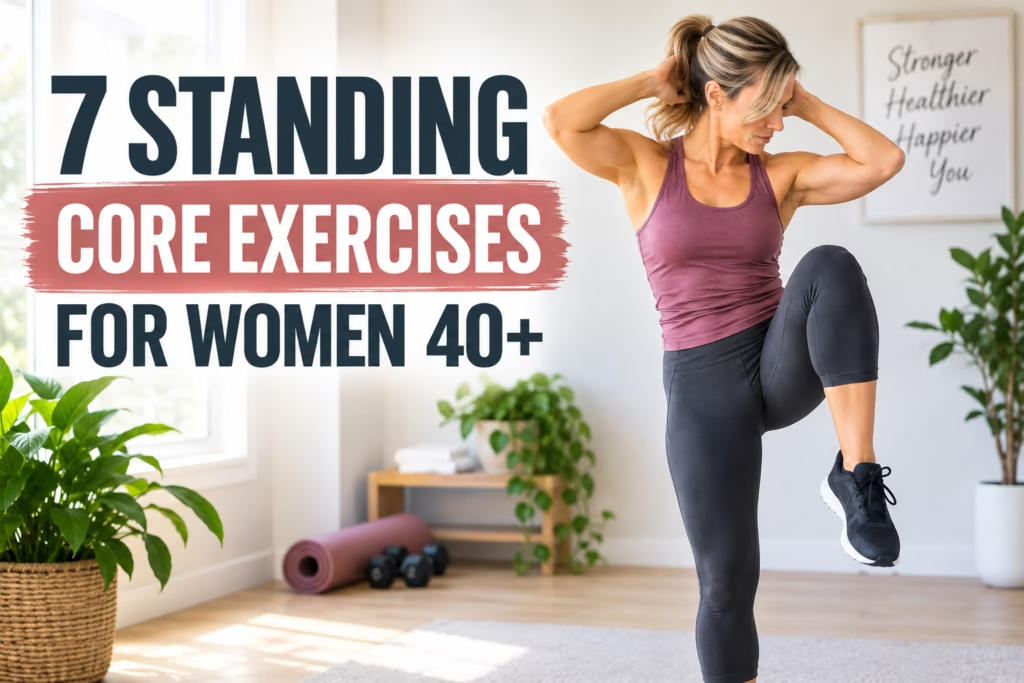
1. Standing Knee-to-Elbow Crunch
This simple movement is a great alternative to traditional crunches because it allows you to train your abs while remaining upright.
How to do it:
- Stand with your feet about hip-width apart.
- Place your hands lightly behind your head.
- Keep your chest lifted.
- Raise your right knee toward your torso.
- Bring your right elbow slightly toward the knee while contracting your abs.
- Lower your foot with control.
- Repeat on the opposite side.
- Continue alternating.
Avoid pulling your head forward with your hands.
Instead, imagine your abdominal muscles bringing your rib cage and pelvis slightly closer together.
Beginner modification: Don’t lift your knee as high. Concentrate on balance and controlled movement.
Make it harder: Slow down each repetition and pause briefly when your knee reaches the top.
2. Cross-Body Knee Drive
Now we’ll introduce rotation to engage your obliques—the muscles along the sides of your waist.
How to do it:
- Stand tall with your feet slightly wider than your hips.
- Extend your arms overhead or place your hands behind your head.
- Lift your right knee diagonally toward your left elbow.
- Rotate gently through your torso.
- Return to standing.
- Switch sides.
- Continue alternating.
Try not to simply swing your arms toward your knee.
The movement should come from your torso.
Think: ribs moving toward the opposite hip.
That small change can make the exercise much more effective.
3. Standing Side Crunch
This movement targets your obliques while also challenging your balance.
How to do it:
- Stand tall with your feet hip-width apart.
- Place your hands behind your head.
- Shift your weight slightly onto your left leg.
- Lift your right knee outward toward the side.
- Bring your right elbow toward your right knee.
- Contract the side of your waist.
- Lower slowly.
- Repeat before switching sides.
Keep your torso relatively upright rather than collapsing toward your knee.
Beginner tip: Lightly hold the back of a chair or countertop with one hand if balance is difficult.
Balance improves with practice, so there’s nothing wrong with using support while you’re learning the movement.
4. Standing Bicycle Crunch
Love the idea of bicycle crunches but not lying on the floor?
Try them standing.
This variation combines knee lifting, rotation, coordination, and abdominal engagement.
How to do it:
- Stand tall with your hands behind your head.
- Lift your right knee.
- Rotate your torso and bring your left elbow toward the knee.
- Return to the starting position.
- Lift your left knee.
- Bring your right elbow toward it.
- Continue alternating sides.
Keep the movement smooth rather than rushing.
You don’t actually need your elbow to touch your knee.
The goal is controlled rotation through your torso.
Common mistake: Folding forward instead of rotating.
Imagine turning your rib cage toward the opposite knee while keeping your chest open.
5. Standing Wood Chop
The standing wood chop trains your core through a diagonal movement similar to many motions you perform in everyday life.
You can perform it without weight or hold a light dumbbell if you’re comfortable with resistance training.
How to do it:
- Stand with your feet slightly wider than hip-width.
- Bring both hands together near your right shoulder.
- Brace your core gently.
- Move your hands diagonally across your body toward your left hip.
- Allow your torso to rotate naturally.
- Return slowly to the starting position.
- Complete your repetitions.
- Switch sides.
Keep your knees slightly soft rather than locking them.
Your hips and torso can rotate together naturally.
Beginner option: Perform the movement without any weight.
Progression: Hold one light dumbbell with both hands.
The exercise doesn’t need to be fast to be effective. Controlled rotation is more important than momentum.
6. Standing March With Core Brace
Don’t underestimate this one.
A controlled standing march may look simple, but when performed correctly, it can teach you how to stabilize your torso while your legs move.
That’s a very practical core skill.
How to do it:
- Stand tall with your feet hip-width apart.
- Gently tighten your abdominal muscles.
- Lift your right knee toward hip height.
- Keep your torso upright.
- Lower your foot slowly.
- Lift your left knee.
- Continue marching.
The key is resisting unnecessary movement.
Try not to lean backward or sway dramatically from side to side.
Imagine balancing a glass of water on your head.
Your legs move.
Your torso stays strong and controlled.
Make it harder: Slow the march and hold each knee at the top for two seconds.
You’ll quickly discover how much your core has to work.
7. Standing Cross-Body Reach
We’ll finish with a movement that challenges your abs, obliques, coordination, and balance.
How to do it:
- Stand with your feet slightly wider than your hips.
- Extend both arms overhead.
- Lift your right knee.
- Reach your left hand diagonally toward your right knee.
- Return to standing.
- Repeat on the opposite side.
- Continue alternating.
Keep your movements deliberate rather than swinging your arms.
You should feel your core helping control the rotation.
This is a great exercise to finish the routine because it gets several parts of the body working together.
10-Minute Standing Core Workout
Want to turn these exercises into a quick routine?
Try this:
Standing Knee-to-Elbow Crunch — 40 seconds
Rest — 20 seconds
Cross-Body Knee Drive — 40 seconds
Rest — 20 seconds
Standing Side Crunch — 40 seconds
Rest — 20 seconds
Standing Bicycle Crunch — 40 seconds
Rest — 20 seconds
Standing Wood Chop — 40 seconds
Rest — 20 seconds
Standing March With Core Brace — 40 seconds
Rest — 20 seconds
Standing Cross-Body Reach — 40 seconds
Rest — 60 seconds.
Then repeat selected exercises or the entire circuit if you want a longer workout.
Beginners can start with just one round.
You don’t need to finish multiple rounds for the workout to “count.”
Consistency matters much more.
How to Actually Feel These Standing Ab Exercises Working
One of the most common mistakes with standing ab exercises is moving too quickly.
When you’re swinging your arms and legs around, momentum can do much of the work.
Slow everything down.
Before lifting your knee or rotating your torso, gently brace your abdominal muscles as though you’re preparing for someone to poke you in the stomach.
Don’t suck your stomach in aggressively or hold your breath.
Instead, create gentle tension around your midsection while continuing to breathe normally.
Then perform the movement.
You may notice a surprisingly big difference.
Can Standing Core Exercises Flatten Your Stomach?
This is where it’s important to separate core training from fat loss.
Standing core exercises can strengthen and develop the muscles underneath your abdominal area.
However, exercises cannot selectively remove fat from one specific part of your body.
In other words, doing hundreds of standing crunches won’t specifically burn lower belly fat.
Changes in body fat happen through overall energy balance combined with habits such as regular physical activity, strength training, nutritious eating, sufficient sleep, and consistency.
That doesn’t make ab training pointless.
Far from it.
Strengthening your core can improve muscle tone, posture, stability, and the way your body moves. When combined with an overall fitness routine, it can contribute to a stronger and more defined midsection.
Standing Abs vs. Floor Abs: Which Is Better?
Neither is automatically better.
They’re simply different tools.
Floor exercises such as dead bugs, bird dogs, planks, and modified crunches can be excellent for core training.
Standing exercises offer different advantages.
They require you to maintain balance while coordinating your upper and lower body, and they often resemble everyday movement more closely.
They can also be more convenient when you:
- Don’t want to get down on the floor
- Don’t have an exercise mat
- Have limited workout space
- Want a quick exercise break
- Prefer upright workouts
- Find traditional crunches uncomfortable
A balanced fitness routine can include both standing and floor-based core exercises.
But you certainly don’t need crunches to start strengthening your abs.
How Often Should Women Over 40 Train Their Core?
More isn’t always better.
Your abdominal muscles need recovery just like other muscles.
For many people, dedicated core training two to four times per week is plenty, especially when the rest of your workout routine already includes exercises such as squats, lunges, rows, carries, and push-ups that also require core stability.
A short 10-minute routine performed consistently can be more useful than a long workout you only do occasionally.
For example:
Monday: Standing core workout
Tuesday: Walking or lower-body strength
Wednesday: Rest or mobility
Thursday: Standing core workout
Friday: Full-body strength
Saturday: Walking or another enjoyable activity
Sunday: Rest or gentle stretching
Your schedule doesn’t have to look exactly like this.
The best routine is one you can realistically maintain.
Common Standing Core Workout Mistakes
Moving Too Fast
Speed often turns a core exercise into an arm-and-leg swinging exercise.
Slow down and control every repetition.
Holding Your Breath
Your abs should be engaged, but you should still be able to breathe.
Exhale during the hardest part of the movement and inhale as you return.
Pulling on Your Neck
When your hands are behind your head, keep them light.
Your hands shouldn’t drag your head toward your knee.
Leaning Back During Knee Lifts
If you have to lean dramatically backward to lift your knee, lower the height of the movement.
A smaller controlled knee lift is better than a high uncontrolled one.
Trying to “Burn Belly Fat” With More Repetitions
More ab exercises don’t automatically equal more abdominal fat loss.
Train your core for strength and combine it with an overall healthy lifestyle.
How to Make Standing Core Exercises More Challenging
Once these exercises start feeling easy, you don’t necessarily need completely new movements.
Progress the exercises you already know.
You can:
- Increase each interval from 40 to 50 seconds
- Add another round
- Slow down your repetitions
- Pause at the hardest part of each movement
- Add a light dumbbell to suitable exercises
- Increase your range of motion gradually
- Reduce reliance on balance support
Progress doesn’t always mean moving faster.
Often, moving slower with greater control makes an exercise considerably harder.
What Else Should You Do Alongside Core Training?
Strong abs are useful, but your body works as one connected system.
For a well-rounded routine after 40, combine core exercises with:
Strength Training
Train the major muscle groups throughout your body at least a couple of times per week.
Squats, rows, presses, hip hinges, lunges, and other resistance exercises can help maintain strength and muscle.
Walking and Cardio
Walking is one of the simplest ways to increase daily movement.
Brisk walking, cycling, swimming, dancing, and other cardiovascular activities can support heart health and overall fitness.
Mobility Work
Maintaining comfortable movement through your hips, shoulders, ankles, and spine can make both workouts and everyday activities easier.
Recovery
Rest is part of training.
Give your body enough time to recover, prioritize sleep, and avoid believing that every workout has to leave you exhausted.
A Simple Beginner Rule: Control Before Intensity
There’s a temptation to make every workout harder as quickly as possible.
But especially when learning standing core exercises, control should come first.
Before adding weights or increasing speed, ask yourself:
Can I maintain my balance?
Can I control the movement?
Can I keep breathing?
Can I feel my abdominal muscles working?
Can I perform the exercise without discomfort?
Once the answer is yes, gradually increase the challenge.
That’s how strength is built.
Can Beginners Do This Standing Core Workout?
Yes.
In fact, standing exercises can be an approachable introduction to core training because many movements can easily be modified.
Start with:
20–30 seconds per exercise
instead of 40 seconds.
Rest whenever you need to.
Keep your knee lifts lower.
Use a chair, countertop, or wall for balance when appropriate.
Complete one circuit instead of two.
After a couple of weeks, you may naturally notice that your balance and coordination improve.
Then you can gradually increase your workout time.
Fitness doesn’t have to begin with the hardest version of an exercise.
Start where your body is today.
Try These 7 Standing Core Exercises This Week
You don’t need hundreds of crunches to build a stronger core.
And you certainly don’t need to spend an hour exercising.
These 7 standing core exercises for women over 40 give you a simple way to train your abs, obliques, hips, balance, and coordination—all without getting down on the floor.
Remember the seven moves:
- Standing Knee-to-Elbow Crunch
- Cross-Body Knee Drive
- Standing Side Crunch
- Standing Bicycle Crunch
- Standing Wood Chop
- Standing March With Core Brace
- Standing Cross-Body Reach
Save this workout and try it two or three times this week.
Start with one round.
Move slowly.
Focus on control.
And as the exercises become easier, increase the challenge little by little.
A stronger core isn’t built from one exhausting workout.
It’s built through small workouts you actually come back to.
Frequently Asked Questions
Do standing ab exercises really work?
Yes. Standing ab exercises can challenge the abdominal muscles when performed with proper control and core engagement. They also introduce balance, coordination, and stability demands that you don’t always get from traditional floor crunches.
Are standing core exercises good for women over 40?
They can be an excellent option. Standing exercises can develop core strength, balance, coordination, and functional movement while eliminating the need to repeatedly get down onto the floor.
Can I do standing core exercises every day?
You don’t need to train your abs intensely every day. Your core muscles benefit from recovery like other muscle groups. A few focused sessions per week can work well alongside full-body strength training and regular movement.
Can standing ab exercises reduce belly fat?
Standing ab exercises strengthen your abdominal muscles, but they cannot specifically remove fat from your stomach. Overall fat loss depends on your broader nutrition, activity, sleep, and lifestyle habits.
How long should a standing core workout be?
A workout doesn’t need to be long. About 10–15 minutes can provide a useful core session when the exercises are performed with good form and consistent effort.
Do I need weights?
No. All seven exercises can be performed using your body weight. Once you’re comfortable with the movements, light resistance can be added to exercises such as the standing wood chop.
What should I do if I have trouble balancing?
Use a sturdy chair, wall, or countertop for support and reduce the height of your knee lifts. Balance can improve over time, and using support is a sensible modification—not something you need to rush away from.
Final Thoughts
Core training doesn’t have to mean lying on the floor doing crunch after crunch.
Standing exercises provide another practical way to build strength—and they fit easily into busy days.
You could do this routine first thing in the morning, during a work break, before a walk, or as a short workout when you don’t have time for a longer session.
The goal isn’t perfection.
It’s consistency.
Give these standing core exercises for women a try, pay attention to how your body feels, and focus on making each repetition controlled and intentional.
Ten minutes might not seem like much.
But repeated week after week, those ten minutes can add up to a stronger, steadier, more capable body.