6-Move Glute Workout Routine for Stronger Glutes
Want stronger, firmer glutes without spending hours at the gym? A simple glute workout routine can help you build lower-body strength, improve stability, and give your glutes the attention they deserve—all from the comfort of home.
And the best part? You don’t need complicated equipment or an intense workout schedule to get started.
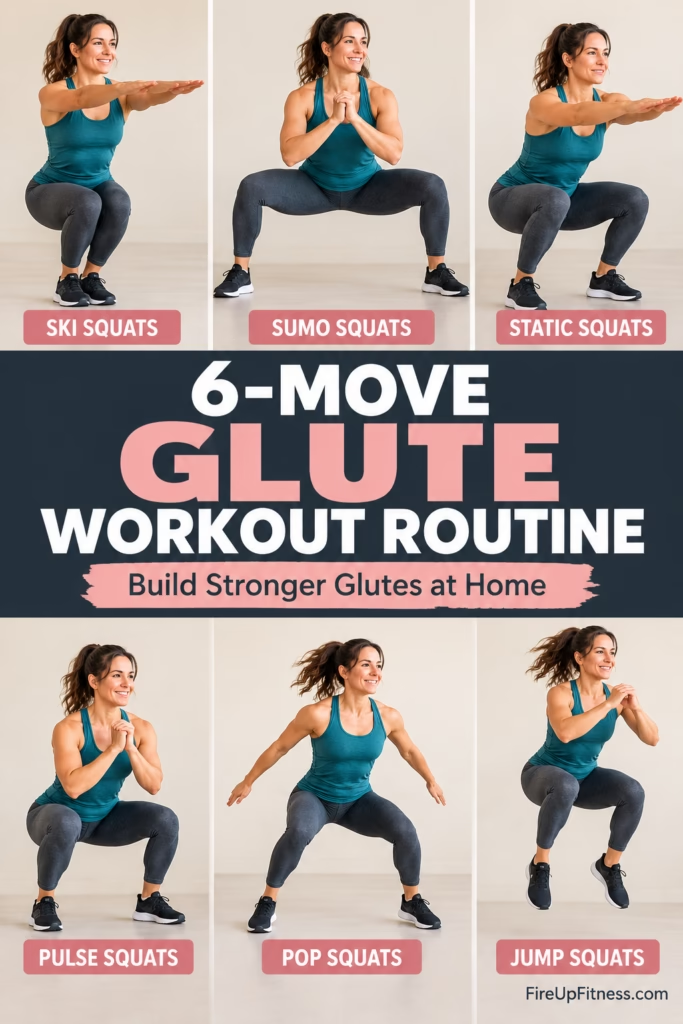
This six-move routine uses different squat variations to challenge your glutes, thighs, and legs. Some exercises focus on slow, controlled movements, while others add pulses, holds, and explosive movements to keep things interesting.
Whether you’re new to strength training or looking to refresh your lower-body workouts, these exercises offer a practical way to build strength and endurance.
Why This Glute Workout Routine Works
Your glutes are among the largest and most powerful muscle groups in your body. They help you stand, walk, climb stairs, maintain balance, and support your hips during everyday movement.
Training them regularly can help you:
- Build stronger glutes and legs.
- Improve hip stability and lower-body control.
- Strengthen muscles used for everyday activities.
- Develop better squat technique and muscular endurance.
- Support an active lifestyle as you age.
This workout combines six squat variations that challenge your muscles in slightly different ways. Although squats also work your quadriceps and other leg muscles, focusing on proper depth, hip movement, and controlled repetitions can help increase glute involvement.
Your 6-Move Glute Workout Routine at Home
Perform each exercise for 40 seconds, followed by a 5-second transition. Complete all six moves to finish one round. Rest for 60–90 seconds between rounds.
Beginners can start with 20–30 seconds per exercise and longer breaks. Warm up for 3–5 minutes with marching, gentle hip circles, and bodyweight squats before beginning.
1. Ski Squats – Build Lower-Body Control
Ski squats are a great starting point because they challenge your legs while encouraging balance and controlled movement.
How to do it:
- Stand with your feet close together and arms resting at your sides.
- Push your hips backward and bend your knees into a comfortable squat.
- Raise your arms straight forward to shoulder height for balance.
- Keep your chest lifted and your heels grounded.
- Push through your feet to return to standing, lowering your arms as you rise.
Beginner tip: Keep the squat shallow and widen your stance slightly if needed for balance.
Feel it: Your thighs and glutes working together as you lower and rise.
2. Sumo Squats – Strengthen Your Glutes and Inner Thighs
Sumo squats use a wider stance than traditional squats, making them a useful addition to a glute workout routine. They work your glutes, quadriceps, and inner thighs.
How to do it:
- Stand with your feet wider than shoulder-width apart.
- Turn your toes slightly outward, about 30–45 degrees if comfortable.
- Bring your hands together in front of your chest.
- Bend your knees and lower your hips while keeping your back neutral.
- Keep your knees tracking in the same direction as your toes.
- Press through your feet to stand tall again.
Beginner tip: Lower only as far as you can while maintaining control. Your knees may naturally move past your toes, which is fine when the movement feels comfortable.
Make it harder: Hold a dumbbell close to your chest for added resistance.
3. Static Squats – Challenge Your Muscle Endurance
Sometimes the most challenging part of a workout is staying still!
Static squats, also called squat holds, keep your muscles working without repeated up-and-down movement. They are especially useful for developing lower-body endurance.
How to do it:
- Stand with your feet about shoulder-width apart.
- Push your hips backward and lower into a squat.
- Hold the position with your chest lifted and core gently engaged.
- Keep your weight balanced across your feet.
- Maintain the position for 20–40 seconds, then slowly stand.
Beginner tip: Hold a higher squat for 10–15 seconds or use a wall for support.
Feel it: A steady challenge through your thighs and glutes as the hold continues.
4. Pulse Squats – Keep Your Glutes Working
Pulse squats add small, controlled movements to the bottom portion of a squat. Instead of standing fully between repetitions, you stay in a partial squat to maintain muscular tension.
How to do it:
- Stand with your feet slightly wider than shoulder-width.
- Lower into a comfortable squat position.
- Keep your core engaged and chest upright.
- Raise your hips a few inches, then lower again.
- Continue pulsing smoothly without bouncing.
- Return to standing when your interval ends.
Beginner tip: Perform 8–10 pulses, stand up for a short break, and repeat.
Make it harder: Hold a light dumbbell at chest height while maintaining good form.
5. Pop Squats – Add a Cardio Challenge
Ready to increase the intensity? Pop squats combine a squat with a quick movement of the feet, adding a cardio element to your lower-body workout.
How to do it:
- Stand tall with your feet together or hip-width apart.
- Make a small jump, moving your feet outward into a wider stance.
- Land softly and lower into a squat.
- Push through your feet and jump back to the starting stance.
- Continue alternating between the narrow and wide positions.
Beginner tip: Skip the jump. Step one foot outward, squat, stand, and step back in. Alternate sides.
Focus on: Soft landings, controlled knees, and a steady rhythm rather than speed.
6. Jump Squats – Finish With Explosive Strength
Jump squats bring an energetic finish to this glute workout routine. They challenge your glutes and legs while developing lower-body power.
Because this exercise involves jumping, it’s best performed when you can already complete regular squats comfortably.
How to do it:
- Stand with your feet shoulder-width apart.
- Lower into a squat by bending your hips and knees.
- Push through your feet and jump upward.
- Land softly with your knees slightly bent.
- Lower into your next squat and repeat at a controlled pace.
Beginner tip: Replace jump squats with regular squats or squats followed by a calf raise.
Remember: Quality matters more than the height of your jump. Stop when your landings become difficult to control.
Glute Workout Routine: Quick Reference
Save this simple workout plan so you can follow along without scrolling through every exercise.
| Exercise | Duration | Main focus |
|---|---|---|
| Ski squats | 40 seconds | Control and balance |
| Sumo squats | 40 seconds | Glutes and inner thighs |
| Static squats | 40 seconds | Muscular endurance |
| Pulse squats | 40 seconds | Sustained muscle tension |
| Pop squats | 40 seconds | Cardio and coordination |
| Jump squats | 40 seconds | Explosive lower-body power |
Rest 5 seconds between exercises and 60–90 seconds between rounds. Complete 2–3 rounds according to your fitness level.
How Often Should You Do This Glute Workout?
You don’t need to train your glutes every day to make progress. Giving your muscles time to recover is an important part of building strength.
For most beginners, two to three glute-focused workouts per week is a practical starting point, ideally with at least one recovery day between challenging sessions.
As your strength improves, you can gradually increase your repetitions, add another round, or introduce resistance using dumbbells or resistance bands.
One thing to remember: This routine is squat-focused. For more complete glute development, combine it with exercises such as glute bridges, hip thrusts, and hip hinges on other workout days. These movements train your glutes in different ways and can provide a more balanced strength-building program.
Simple Tips to Get Better Results
Consistency makes a difference, but so does the way you perform each movement.
- Focus on technique. Controlled movements help you work the intended muscles without rushing.
- Progress gradually. Increase resistance or repetitions as the exercises become easier.
- Allow recovery. Muscles need rest between challenging workouts.
- Fuel your workouts. Eat balanced meals with enough protein and energy to support muscle recovery.
- Stay patient. Strength and visible muscle development take time, and progress varies from person to person.
Final Thoughts: Stronger Glutes Start With Consistency
A good glute workout routine doesn’t need to be complicated. These six squat variations offer a simple way to strengthen your lower body, challenge your endurance, and make home workouts more engaging.
Start with the movements that feel comfortable, choose low-impact options when needed, and gradually build your strength.
Save this 6-move glute workout routine to your Pinterest workout board so it’s ready for your next lower-body training day. And share it with a friend who loves a good at-home workout!