4 Ab Exercises Without Crunches for a Stronger Core
Want to strengthen your stomach muscles without doing endless crunches? You have more options than you might think.
Crunches are often the first exercise that comes to mind when we talk about abdominal workouts. But they aren’t the only way to build a stronger core. In fact, some of the most effective core exercises don’t involve traditional crunches at all.
Your core does much more than help your stomach look toned. It supports your spine, improves balance, helps maintain good posture, and makes everyday movements easier.
The best part? You don’t need expensive equipment or a complicated workout routine to get started.
These four ab exercises without crunches challenge your abdominal muscles in different ways, helping you build strength, stability, and better body control.
Why You Don’t Need Crunches for Stronger Abs
Your abdominal muscles work together with the muscles surrounding your lower back, hips, and pelvis. This means core strength isn’t just about bending forward or lifting your shoulders off the floor.
Think about the last time you carried heavy groceries, reached for something on a high shelf, or tried to keep your balance on an uneven surface. Your core was working throughout those movements.
Exercises that challenge your body to stay stable can strengthen these muscles without relying on traditional sit-ups or crunches.
And while abdominal exercises can help your stomach feel firmer as your muscles become stronger, they don’t specifically burn fat from your belly. Overall body fat loss depends on several factors, including nutrition, physical activity, sleep, and individual health.
With that in mind, here are four exercises worth trying.
1. Plank Walkouts: Challenge Your Entire Core
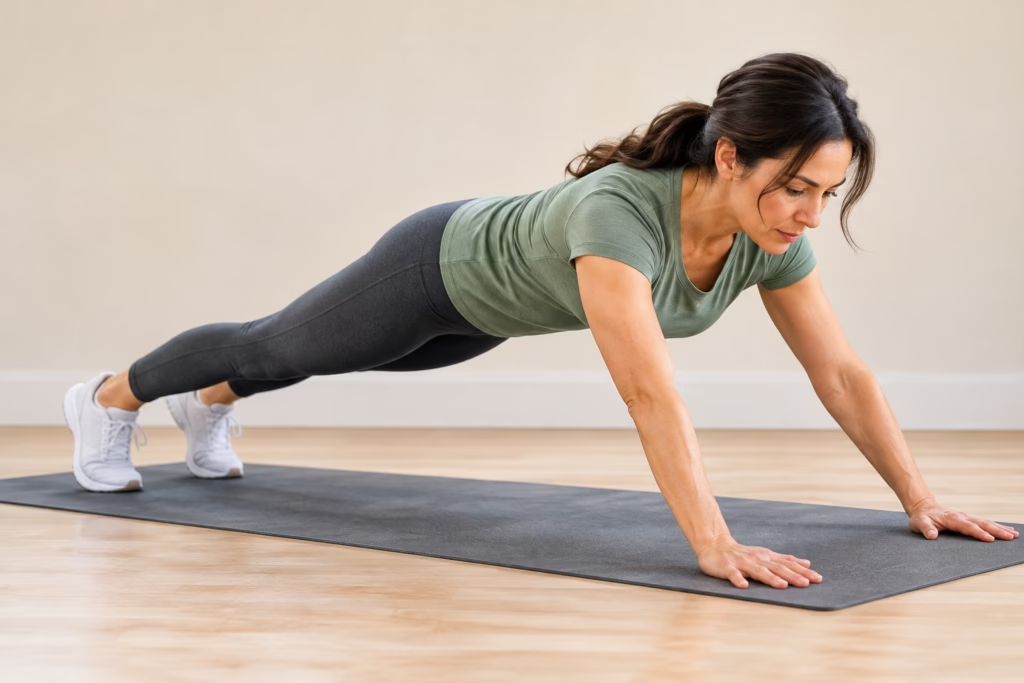
Plank walkouts may look simple, but you’ll quickly discover how much work your abdominal muscles do to keep your body steady.
This exercise challenges your core while engaging your shoulders, arms, and upper body.
How to do it:
- Begin in a high plank position with your hands slightly wider than shoulder-width apart.
- Keep your stomach muscles engaged and your body in a straight line.
- Slowly walk your hands forward a few inches without allowing your hips to sag.
- Pause briefly, then walk your hands back to the starting position.
- Repeat 6–10 times, moving slowly and with control.
The farther your hands move forward, the more challenging the exercise becomes. There’s no need to reach too far, especially when you’re just starting.
Make it easier: Perform the movement with your hands against a sturdy counter-top or wall.
What makes plank walkouts interesting is how they challenge your body to resist movement. Your abdominal muscles must work to prevent your lower back from arching as your arms move.
2. Alligator Drag: A Different Way to Work Your Abs
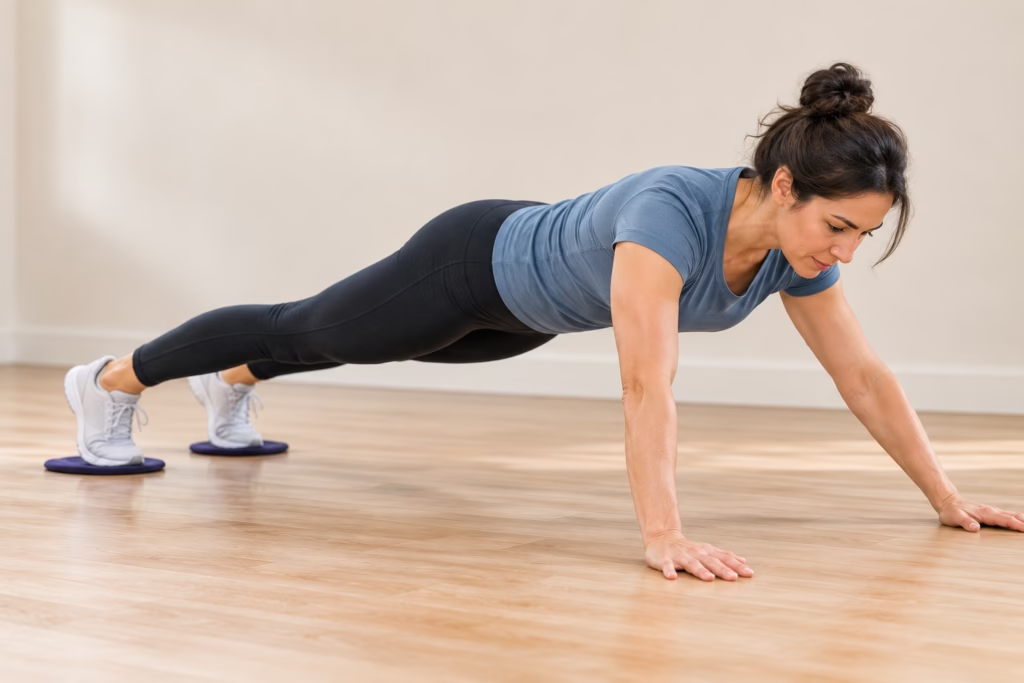
The alligator drag is one of those exercises that looks unusual until you try it.
Instead of holding a plank in one place, you move across the floor using your hands while your feet slide behind you.
It combines upper-body strength with core stability and can also raise your heart rate.
How to do it:
- Find a smooth, clear floor surface with enough room to move.
- Place your feet on exercise sliders or small towels suitable for the flooring.
- Start in a high plank position, keeping your hips level.
- Walk your hands forward in small steps while allowing your feet to slide behind you.
- Continue for a short distance, then rest before repeating.
Start with just a few controlled steps rather than trying to travel across an entire room.
Make it easier: Try a regular high plank or plank shoulder taps before progressing to the sliding movement.
The biggest challenge isn’t how quickly you move. It’s keeping your hips steady while your arms pull your body forward.
3. Bridge With Opposite Arm and Leg Reach: Build Stability
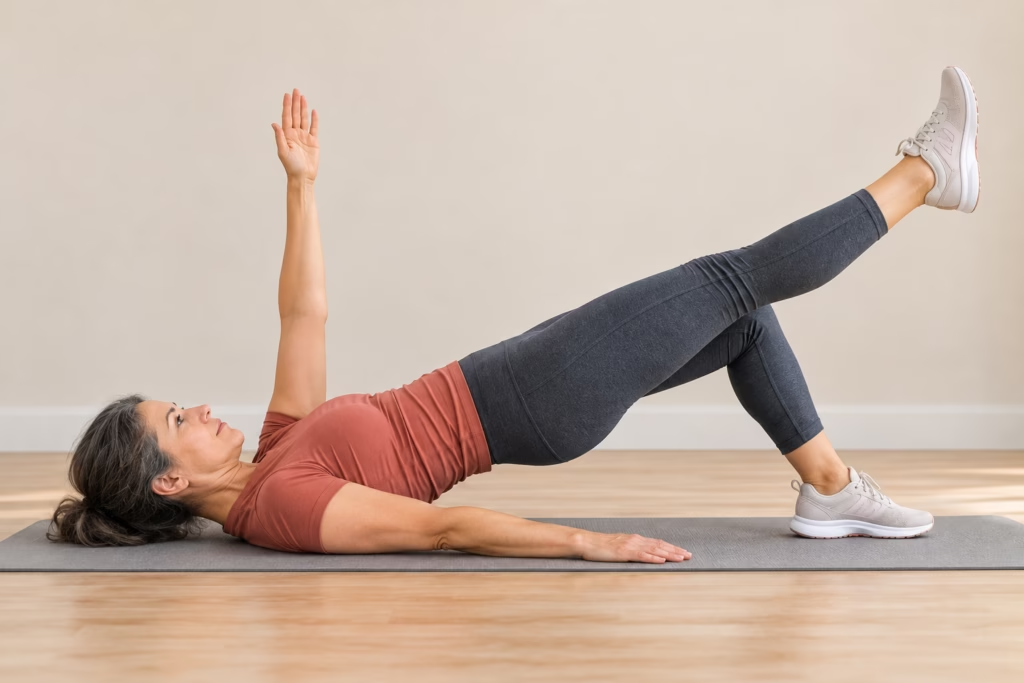
Not every effective abdominal exercise has to feel intense.
The bridge with an opposite arm and leg reach challenges your balance, strengthens your glutes, and encourages your core muscles to work together.
It’s especially useful for developing control through your hips and pelvis.
How to do it:
- Lie on your back with your knees bent and feet flat on the floor.
- Lift your hips into a comfortable bridge position.
- Slowly extend your right leg while reaching your left arm toward the ceiling.
- Keep your hips level and avoid twisting your body.
- Return to the starting position and repeat on the opposite side.
Aim for 6–8 controlled repetitions on each side.
Make it easier: Keep both feet on the floor and practice regular glute bridges first.
You may notice that one side feels steadier than the other. That’s common, and it’s a good reminder that core strength is about coordination as much as muscle strength.
4. Bent-Knee Leg Extensions: Focus on Your Lower Abs
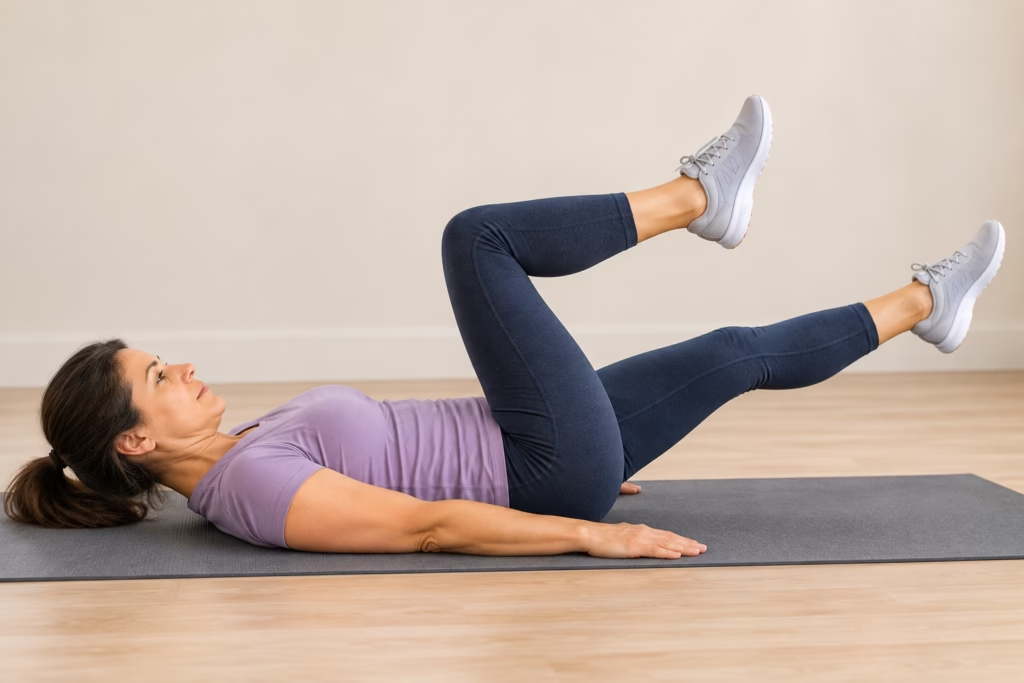
Have you ever noticed your lower back arching when you try to extend your legs while lying on the floor?
That’s one reason controlled leg extensions can be challenging.
This movement works your abdominal muscles as they help stabilize your pelvis and lower back.
Although people often call this a lower-ab exercise, your abdominal muscles work together rather than as completely separate sections.
How to do it:
- Lie comfortably on your back with your knees bent at approximately 90 degrees and raised above your hips.
- Rest your arms beside your body.
- Gently tighten your abdominal muscles.
- Slowly extend one leg forward, keeping it above the floor.
- Return to the starting position and switch legs.
Try 8–10 repetitions on each side.
Make it easier: Keep your knees bent and lower one heel toward the floor at a time.
The secret is to move only as far as you can while keeping your lower back comfortable and stable. You don’t need to straighten your leg completely to benefit.
What Makes These Ab Exercises Worth Trying?
One of the biggest mistakes people make with abdominal workouts is assuming that harder always means better.
But a stronger core isn’t built by rushing through repetitions or pushing through discomfort.
It’s built by learning how to control your movements.
Plank walkouts teach your body to resist excessive back arching. Alligator drags challenge stability while moving. Bridge reaches develop coordination, and leg extensions help you control your pelvis.
Together, these movements offer variety without making your workout unnecessarily complicated.
And variety matters. When an exercise feels enjoyable and manageable, you’re more likely to return to it.
How Often Should You Work Your Abs?
You don’t have to train your abdominal muscles every day to make progress.
For many beginners, practicing core exercises two or three times per week is a reasonable starting point, allowing time for recovery between challenging sessions.
You can choose two movements at first and gradually try the others as your confidence improves.
Focus on comfortable, controlled repetitions rather than completing a particular number at all costs. Stop or modify any exercise that causes pain, especially in your neck, shoulders, or lower back.
Remember that walking, strength training, and many everyday activities also engage your core.
Can You Get a Flatter Stomach Without Crunches?
It’s possible to strengthen and develop your abdominal muscles without ever doing a traditional crunch.
However, a stronger core and a flatter stomach aren’t necessarily the same thing.
Your stomach’s appearance is influenced by body fat distribution, genetics, posture, digestion, and other factors. No single abdominal exercise can guarantee a flat stomach or remove fat from one specific area.
What you can work toward is better core strength, improved stability, and greater confidence in how your body moves.
Those benefits are worth pursuing regardless of what your stomach looks like.
Final Thoughts
Crunches aren’t a requirement for building stronger abdominal muscles.
Sometimes, changing the way you exercise is all it takes to make core training more interesting and comfortable.
Whether you enjoy the challenge of plank walkouts, the movement of alligator drags, or the controlled pace of leg extensions, there’s more than one way to strengthen your abs.
Start with the exercise that feels most manageable, give yourself time to improve, and focus on consistency rather than perfection.
A stronger core isn’t built in one workout. It’s developed through small efforts that add up over time.