
4 Gentle Bedtime Exercises for Better Sleep
Ever climb into bed feeling exhausted, only to find yourself tossing and turning? Your shoulders feel tight, your legs won’t settle, and somehow your mind decides it’s the perfect time to think about everything.
Sometimes, your body needs a little help slowing down.
A few minutes of gentle movement before bed may help ease muscle tension, calm physical restlessness, and make it easier to settle into a comfortable sleeping position.
And no, you don’t need a long yoga session or an intense workout.
These 4 simple bedtime exercises take just 10 minutes, require little to no equipment, and are easy enough for beginners and women over 40.

Can Exercising Before Bed Really Help You Sleep?
Yes, but the type of exercise matters.
Regular physical activity is associated with better sleep quality. Gentle evening movement may also help you feel more relaxed, especially after a day spent sitting, standing, or rushing between responsibilities.
The trick is to keep things comfortable.
You’re not trying to work up a sweat or push your muscles to exhaustion. You’re simply giving your body a chance to release tension before resting.
Here are four exercises worth trying tonight.
1. Reclining Pigeon Stretch: Relax Tight Hips
Your hips do a lot of work throughout the day, even when you’re sitting.
Long hours at a desk, driving, or standing in the kitchen can leave the muscles around your hips feeling stiff.
The reclining pigeon stretch, also known as the figure-four stretch, gently targets your hips and glutes.
It’s one of the easiest stretches to add to your bedtime routine because you can do it while lying comfortably on your back.
How to Do It
- Lie on your back with your knees bent and feet flat on the floor.
- Cross your right ankle over your left thigh, just above your knee.
- Gently lift your left leg toward your chest.
- Hold behind your left thigh with both hands.
- Stop when you feel a comfortable stretch in your right hip.
- Hold for 20–30 seconds, breathing slowly.
- Switch sides and repeat.
Make it easier: Keep your left foot on the floor instead of lifting your leg.
There’s no need to pull hard. Let your muscles gradually relax into the stretch.
2. Slow Arm Circles: Release Shoulder Tension

Think about how much time you spend looking down at your phone, working at a computer, or doing household chores.
By evening, your shoulders might be holding more tension than you realize.
Slow arm circles encourage gentle shoulder movement and can help ease that stiff, uncomfortable feeling.
How to Do It
- Stand with your feet hip-width apart.
- Relax your shoulders and keep your back comfortably upright.
- Raise your arms out to your sides.
- Make small forward circles for 20–30 seconds.
- Reverse the direction for another 20–30 seconds.
- Lower your arms and let your shoulders relax.
Make it easier: Keep your arms below shoulder height or perform the circles while seated.
Avoid making large, fast circles. Slow, controlled movements are all you need.
3. Wall Push-Ups: Gently Move Your Upper Body
Push-ups before bed? They might sound a little unusual.
But you don’t have to perform demanding floor push-ups to get your upper body moving.
Wall push-ups offer a gentler alternative that works your arms, chest, and shoulders without putting as much pressure on your wrists or requiring you to get down on the floor.
They’re particularly useful for beginners who want a little strength-focused movement in their evening routine.
How to Do It
- Stand facing a sturdy wall.
- Place your hands against the wall at shoulder height.
- Step your feet back slightly.
- Slowly bend your elbows, bringing your chest toward the wall.
- Push through your palms to return to standing.
- Complete 8–10 comfortable repetitions.
Make it easier: Move your feet closer to the wall.
Keep your breathing steady and avoid rushing. This isn’t a fitness challenge.
If wall push-ups leave you feeling energized, do them earlier in the evening and save the relaxing stretches for bedtime.
4. Gentle Crunches: Wake Up Your Core Without Overdoing It
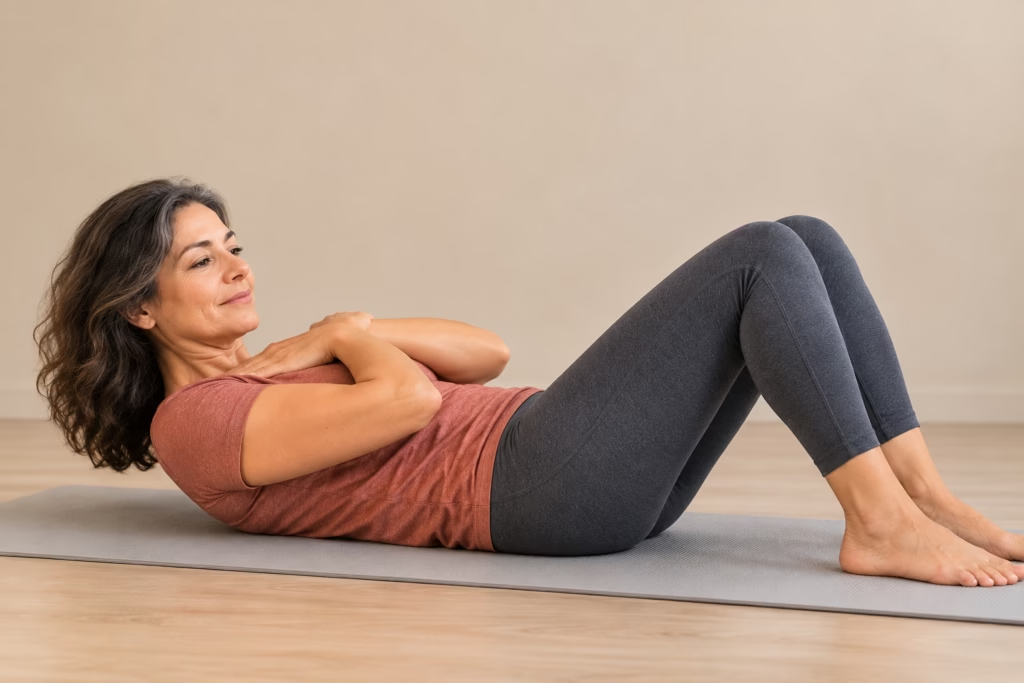
Your abdominal muscles help support your posture, stabilize your spine, and make everyday movements easier.
A few gentle crunches can activate these muscles without requiring a long workout.
However, crunches aren’t specifically proven to improve sleep, so think of them as an optional addition to your evening movement routine.
How to Do It
- Lie on your back with your knees bent.
- Keep your feet flat on the floor.
- Cross your arms over your chest or lightly support your head.
- Gently tighten your abdominal muscles.
- Slowly lift your head and shoulders a few inches.
- Lower yourself with control.
- Repeat 6–10 times.
Make it easier: Try pelvic tilts instead. Lie on your back with bent knees, gently flatten your lower back toward the floor, then release.
Avoid pulling on your neck or forcing yourself through uncomfortable movements.
Your 10-Minute Bedtime Routine
You don’t have to remember a complicated sequence. Follow this simple plan and adjust it to your comfort level.
| Exercise | Duration |
|---|---|
| Reclining pigeon stretch | 2 minutes |
| Slow arm circles | 1 minute |
| Wall push-ups | 1 minute |
| Gentle crunches or pelvic tilts | 1 minute |
| Gentle full-body stretching | 2 minutes |
| Slow, relaxed breathing | 3 minutes |
| Total | 10 minutes |
Finish by lying comfortably on your back or sitting quietly.
Take a slow breath in, then exhale gently. Repeat for a few minutes without forcing your breathing.
Notice how your shoulders, hips, and back feel compared with when you started.
The goal isn’t to complete every exercise perfectly. It’s to finish feeling calmer and more comfortable.
When Is the Best Time to Do Bedtime Exercises?
For gentle stretching, around 30–60 minutes before bed is a practical starting point.
You can also perform the routine earlier in the evening, especially if movement close to bedtime makes you feel more awake.
A few things to keep in mind:
- Avoid exercising immediately after a large dinner if it causes digestive discomfort.
- Keep the movements slow and comfortable.
- Skip any exercise that causes pain or makes you feel more alert.
- Choose relaxing stretches over demanding strength exercises when you’re already tired.
Most importantly, pay attention to how your body responds. Everyone’s ideal evening routine is a little different.
Make These Exercises Part of a Relaxing Nighttime Habit
Here’s something worth remembering: You don’t need to do all four exercises every night.
Some evenings, a couple of stretches will be enough. Other nights, you might enjoy the full 10-minute routine.
Try pairing your movement with a few simple habits: dim the bedroom lights, put your phone aside, keep your room comfortably cool, and follow a consistent sleep schedule.
Over time, repeating a familiar routine may help your mind and body associate these activities with winding down.
Final Thoughts
A better bedtime routine doesn’t have to be complicated.
Sometimes, the simplest habits are the easiest to maintain.
Whether it’s stretching your hips, relaxing your shoulders, or spending a few minutes breathing quietly, gentle movement can be a pleasant way to end a busy day.
Try just two of these bedtime exercises tonight. Notice how your body feels afterwards, and gradually build a routine that works for you.
Better sleep isn’t guaranteed by a 10-minute workout, but creating a calmer evening is a worthwhile place to start.