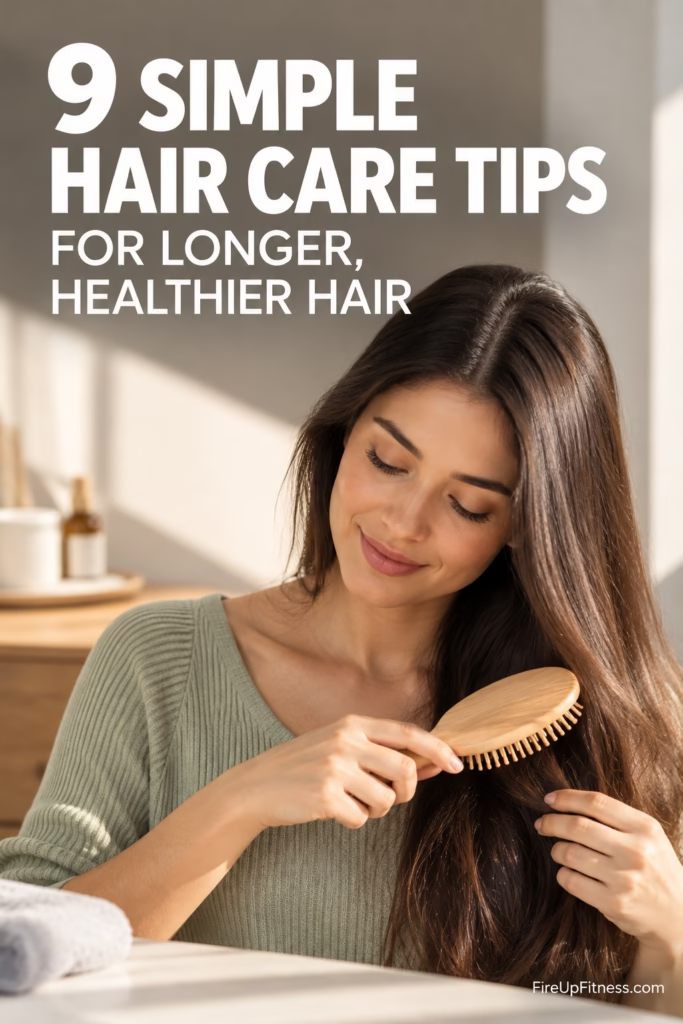
How to Grow Your Hair Faster: 9 Simple Tips

Long, healthy-looking hair doesn’t always require expensive salon treatments, complicated routines, or a shelf full of hair products. Sometimes, the biggest difference comes from small changes in how you wash, moisturize, style, and protect your hair.
Many women search for ways to grow hair faster, especially when dealing with hair fall, dryness, breakage, or hair that seems to stay the same length for months. But there’s something important to understand: growing new hair and keeping the hair you already have are two different things.
Your hair may be growing normally, but frequent breakage can make it difficult to notice the progress.
The good news? A consistent hair care routine can help reduce unnecessary damage, support scalp health, and make it easier to retain length.
Here are nine practical hair care tips that can help you work toward stronger, healthier, longer-looking hair without spending a fortune.
1. Treat Your Hair Care Routine Like Self-Care
One of the simplest ways to improve your hair’s condition is to start giving it regular attention.
Hair care doesn’t need to feel like another chore. Think of it as a few minutes of self-care that can make a difference over time.
You don’t have to wash your hair every day, apply multiple treatments, or spend hours styling it. What matters is understanding what your hair needs and staying consistent.
Start with these simple habits:
- Use a gentle shampoo suited to your scalp and hair type.
- Condition your hair after shampooing.
- Detangle carefully rather than pulling through knots.
- Limit unnecessary heat styling.
- Trim damaged ends when needed.
Healthy hair habits are more valuable than constantly switching products in search of instant results.
Hair care tip: Take a few minutes each week to check whether your hair feels dry, tangled, brittle, or weighed down. Adjust your routine based on what you notice.
2. Keep Your Hair Moisturized to Prevent Breakage
Dryness is one of the most common reasons hair becomes difficult to manage.
When hair lacks adequate conditioning, it can become rough, tangled, and more likely to break during brushing or styling.
This is especially important for curly, coily, chemically treated, and naturally dry hair types.
To help maintain softness and manageability:
- Apply conditioner after washing, concentrating on the mid-lengths and ends.
- Use a leave-in conditioner when your hair needs extra moisture.
- Consider a small amount of hair oil or serum on the ends to reduce friction.
- Avoid repeatedly washing with harsh cleansing products.
- Use a deep conditioner occasionally if your hair is particularly dry.
Remember, oils don’t hydrate hair in the same way water-based conditioners do. Their main role is often to lubricate hair strands and help reduce friction.
You also don’t need to coat your scalp in oil to encourage growth. Some people find that heavy oils cause buildup or irritation.
The goal is to keep your hair comfortable, conditioned, and easier to handle.
3. Try Gentle Natural Treatments for Hair Care
Natural treatments are popular because many ingredients are affordable and easy to find.
However, natural doesn’t automatically mean safe or effective for hair growth.
Some ingredients may improve the way hair feels, while others can irritate your scalp or leave your strands dry.
Here are a few options worth understanding.
Coconut oil for dry, damaged hair
Coconut oil may help reduce protein loss from hair strands, making it useful for some people dealing with damage and breakage.
Apply a small amount to the hair lengths before washing, then shampoo thoroughly. Start with a short treatment and see how your hair responds.
Aloe vera for scalp and hair comfort
Aloe vera is commonly used in soothing hair products. Although it may help some people with dryness or discomfort, strong evidence that it speeds up hair growth is lacking.
Choose a formulated product or patch-test carefully before using pure aloe vera gel.
Argan oil for smoother hair
Argan oil can help improve shine and reduce friction, particularly on dry ends.
A few drops are usually enough. Applying too much may make fine hair look greasy.
Important: Avoid applying undiluted essential oils, lemon juice, or irritating DIY mixtures directly to your scalp. Stop using any treatment that causes itching, redness, or burning.
Natural treatments can complement a good routine, but they aren’t a guaranteed hair fall solution.
4. Change Your Hairstyles Without Damaging Your Hair
Changing your hairstyle can be fun, but how you style your hair matters just as much as the products you use.
Braids, twists, buns, and other protective hairstyles can help reduce daily manipulation when they’re done gently.
However, braiding or weaving doesn’t make hair grow faster.
In fact, hairstyles that constantly pull on the roots can contribute to a condition called traction alopecia, which may lead to permanent hair loss if the tension continues.
To protect your hair:
- Choose loose braids and twists rather than tight styles.
- Avoid hairstyles that cause scalp pain or tenderness.
- Give your hairline a break from extensions and heavy accessories.
- Change the position of ponytails and buns occasionally.
- Avoid sleeping with tightly pulled hairstyles.
When you decide to change hair styles, focus on comfort and reducing tension rather than simply choosing a style advertised for extreme hair growth.
A good protective hairstyle should protect your strands without stressing your scalp.
5. Pay Attention to Your Scalp Health
A healthy scalp provides a better environment for normal hair growth.
Excessive buildup, persistent dandruff, inflammation, and irritation can make your scalp uncomfortable and may contribute to certain hair problems.
You don’t need an elaborate scalp routine. Start with basic care.
Wash your scalp as often as your hair type, oil production, and lifestyle require. Some people need frequent washing, while others do well with longer intervals.
When shampooing, gently massage the scalp with your fingertips rather than scratching with your nails.
Rinse thoroughly to remove shampoo and product residue.
If you experience persistent itching, flaking, sores, or redness, consider seeing a dermatologist instead of repeatedly trying home remedies.
Scalp massages can feel relaxing, but research is limited on whether they meaningfully increase hair growth.
6. Reduce Heat Styling and Chemical Damage
Heat styling can make your hair look smooth and polished, but frequent exposure to high temperatures may weaken the hair shaft.
Blow dryers, curling irons, and straighteners can all contribute to damage, especially when combined with coloring, bleaching, or chemical straightening.
You don’t have to stop styling your hair completely.
Instead, make a few practical adjustments:
- Use the lowest effective heat setting.
- Apply a heat-protectant product before styling.
- Avoid using flat irons on damp hair.
- Allow your hair to air-dry partially when practical.
- Reduce repeated passes with hot styling tools.
- Space out chemical treatments when possible.
Hair that breaks less frequently is easier to grow to your desired length.
That’s why reducing damage can be one of the most effective ways to grow hair longer in appearance, even though it doesn’t change how quickly your follicles produce new hair.
7. Eat Foods That Support Healthy Hair Growth
Hair health isn’t only about what you apply to your scalp. Your overall nutrition matters, too.
Hair follicles need adequate energy, protein, and essential nutrients to function normally.
A balanced diet can help support healthy hair growth, particularly when it corrects a nutritional deficiency.
Include a variety of foods such as:
- Eggs, beans, fish, poultry, and lentils for protein.
- Leafy greens and legumes for iron and other nutrients.
- Nuts and seeds for healthy fats and minerals.
- Fruits and vegetables for vitamin C and other antioxidants.
- Dairy products or fortified alternatives for additional nutrients.
Iron, zinc, vitamin D, and certain B vitamins are among the nutrients involved in normal hair health.
However, consuming extra vitamins when your levels are already sufficient won’t necessarily make your hair grow faster.
8. Understand When Vitamins for Hair Growth May Help
You’ve probably seen supplements promising thicker hair, less shedding, or extreme hair growth within a few weeks.
Those claims can be tempting, especially when you’re worried about thinning hair.
But vitamins for hair growth are most likely to help when hair problems are related to a specific deficiency.
For example, low iron levels can contribute to shedding in some people. Correcting the deficiency may help, but taking iron without medical guidance can be harmful.
Biotin supplements are also widely marketed for hair growth, although evidence of benefit in people without biotin deficiency is limited.
Excessive amounts of certain nutrients, including vitamin A and selenium, can actually contribute to hair loss.
Before starting supplements, consider speaking with a healthcare professional, particularly if you’re experiencing noticeable shedding.
A blood test may help identify an underlying nutritional problem when clinically appropriate.
Hair care tip: Don’t assume every hair fall problem requires supplements. Finding the reason behind the shedding is more useful than buying products based on marketing promises.
9. Understand Hair Fall and Give Your Hair Time
One of the most frustrating parts of growing longer hair is waiting for visible results.
Scalp hair typically grows around half an inch per month on average, although growth rates vary.
There is no reliable home treatment that can suddenly turn normal growth into extreme hair growth.
What you can do is support your hair’s natural growth cycle and minimize preventable breakage.
It’s also important to distinguish between shedding and breakage.
Hair shedding happens when strands fall out from the follicle as part of the hair growth cycle. Losing roughly 50–100 hairs a day can be normal, although individual patterns vary.
Hair breakage happens when the hair shaft snaps, often due to dryness, friction, chemical processing, or excessive styling.
These two problems require different approaches.
If these symptoms occur, a dermatologist can help identify the cause and discuss evidence-based treatment options.
A Simple Weekly Hair Care Routine for Longer, Healthier Hair
You don’t need to follow a complicated schedule to improve your hair care habits. Here’s an example you can adjust based on your hair type.
| When | Hair care habit |
|---|---|
| Wash days | Gently shampoo your scalp and condition the lengths |
| After washing | Detangle carefully and apply leave-in conditioner if needed |
| Between washes | Protect ends from friction and avoid unnecessary pulling |
| Once a week, if needed | Use a conditioning treatment for extra softness |
| At bedtime | Wear a loose hairstyle and consider a smooth pillowcase |
| As needed | Trim split ends and check for signs of damage |
Consistency matters more than how many products you own.
Common Hair Growth Mistakes to Avoid
Even a well-intentioned hair care routine can work against you when certain habits become excessive.
Some common mistakes include brushing aggressively, wearing tight hairstyles every day, applying too much heat, using irritating DIY treatments, and constantly switching products.
Another mistake is expecting a hair fall solution to work immediately.
Hair growth happens gradually, and improvements in shedding or hair density may take several months to become noticeable, depending on the cause.
Instead of chasing every new trend, focus on a routine that keeps your scalp comfortable and your hair protected.
Frequently Asked Questions About Hair Growth
How can I grow my hair faster naturally?
You can support normal hair growth by eating a balanced diet, caring for your scalp, avoiding damaging hairstyles, and addressing nutritional deficiencies when present. These habits won’t dramatically accelerate your natural growth rate, but they can help you retain length.
What is the best natural hair fall solution?
There isn’t one natural treatment that works for every cause of hair fall. Gentle hair care can reduce breakage, but persistent shedding or thinning may require medical evaluation and targeted treatment.
Does braiding help hair grow faster?
No. Braiding doesn’t increase the rate of hair growth. Loose, comfortable braids may reduce daily manipulation and help prevent breakage, while tight braids can damage follicles.
Which vitamins are best for hair growth?
Iron, vitamin D, zinc, biotin, and other nutrients support normal body functions, including hair health. Supplementation is generally most useful when a deficiency is identified. Taking unnecessary high-dose supplements can cause harm.
How long does it take to notice healthier hair?
You may notice improved softness and manageability relatively quickly after changing your conditioning routine. Visible improvements in length or density usually take longer because hair grows slowly.
Final Thoughts: Healthy Hair Starts With Simple Habits
Growing longer, healthier hair doesn’t have to be expensive or overwhelming.
Sometimes, the most meaningful improvements come from using a good conditioner, changing a damaging hairstyle, reducing heat exposure, or paying closer attention to your scalp.
Rather than searching for an overnight transformation, focus on habits that help your hair stay strong as it grows.
Your hair has its own texture, growth cycle, and individual needs. The best routine is one that works with those characteristics instead of fighting against them.
With patience, consistent care, and realistic expectations, you can make progress toward healthier, more manageable hair.