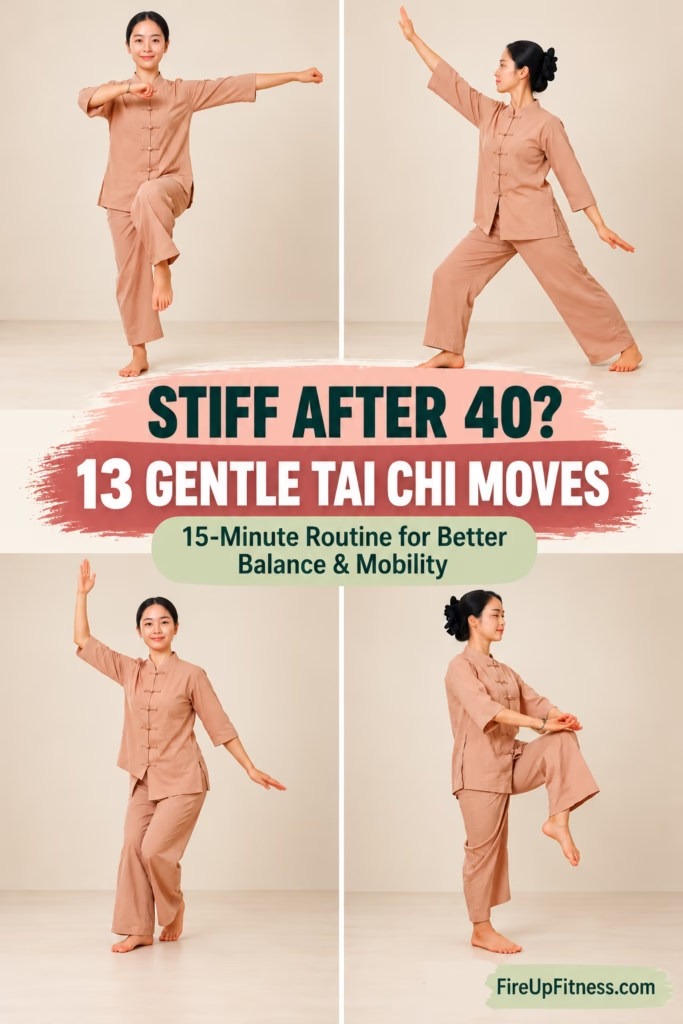
13 Tai Chi Walking Exercises for Women Over 40
Looking for a gentle way to stay active, improve balance, and feel more energized after 40? Tai Chi walking exercises offer a simple way to move your entire body without jumping, running, or putting unnecessary stress on your joints.
These slow, flowing movements combine controlled steps, gentle arm swings, and mindful breathing. They help you stay active while working on coordination, flexibility, and everyday strength.
One of the best things about this low-impact workout for women over 40 is that you can practice it at home without special equipment. You don’t need to be particularly flexible or have previous Tai Chi experience.
This beginner-friendly routine features 13 standing movements inspired by Tai Chi. Whether you’re starting a new fitness habit or looking for something gentler between workouts, these exercises can help you build a more comfortable and consistent movement routine.
Why Try Tai Chi Walking After 40?
As we get older, maintaining balance, mobility, and muscle strength becomes increasingly important. Everyday activities such as climbing stairs, carrying groceries, and getting up from a chair depend on how well our muscles and joints work together.
Tai Chi-inspired walking exercises offer a gentle way to practice these abilities.
Here are a few reasons to give them a try:
- Better balance: Slow weight shifts and controlled steps challenge your stability.
- Improved mobility: Flowing movements encourage comfortable motion through the hips, shoulders, and ankles.
- Gentle muscle activation: Standing movements engage the legs, arms, and core without heavy equipment.
- Better coordination: Moving your arms and legs together helps develop body awareness.
- Relaxation: A comfortable pace and steady breathing can help you unwind.
- Easy home workouts: You can practice in a small, open space without a gym membership.
Although these movements are inspired by Tai Chi, they are best described as a gentle standing exercise flow rather than a traditional Tai Chi form.
13 Tai Chi Walking Exercises to Try at Home
Start by standing tall with your feet about hip-width apart. Relax your shoulders, soften your knees, and breathe naturally.
Move slowly enough to stay in control. You can perform each exercise for approximately 45 seconds, resting for 15 seconds between movements. Including a short warm-up and cool-down, the routine takes around 15 minutes.
1. Side Swing Knee Lift
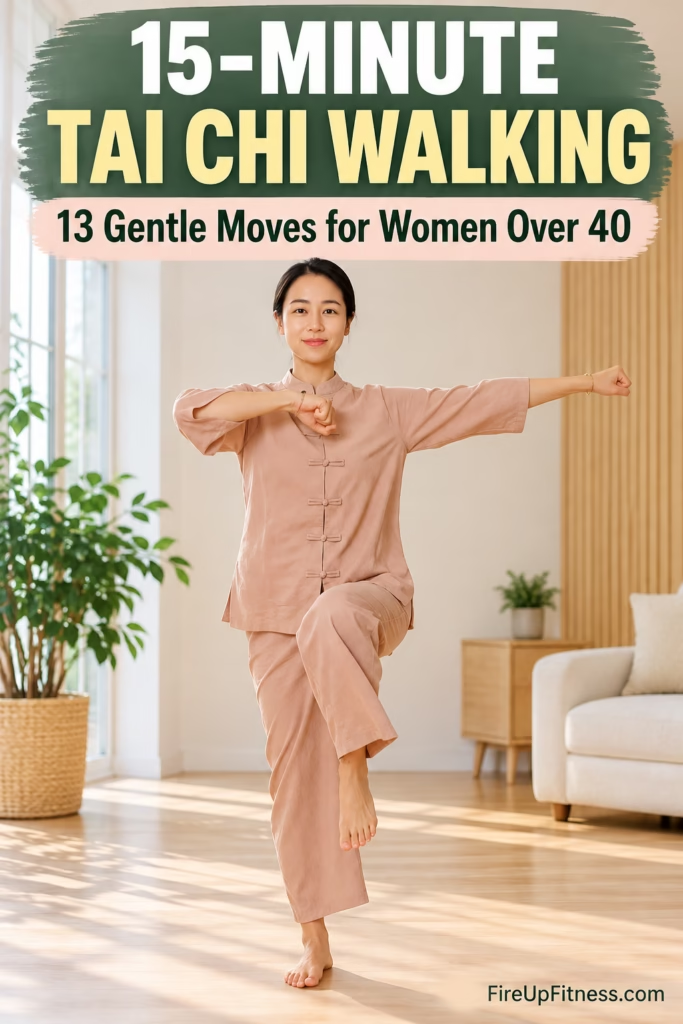
This opening exercise combines gentle knee lifts with coordinated arm movements.
How to do it:
- Stand upright with your arms relaxed.
- Swing both arms gently toward one side.
- Lift the knee on that side to a comfortable height.
- Lower your foot and return your arms to center.
- Repeat on the opposite side.
Keep your standing knee slightly bent and avoid leaning backward as you lift your leg.
Beginner tip: Keep your toes close to the floor or lightly touch a sturdy chair for support.
2. Side Step Arm Swing
Sideways walking is a useful addition to your daily movement routine because it challenges your body in a direction that ordinary walking often doesn’t.
How to do it:
- Begin with your feet together or hip-width apart.
- Step gently to the right.
- Swing your arms naturally forward and backward.
- Bring your left foot toward your right foot.
- Repeat to the left, maintaining a steady rhythm.
Keep your steps small and your knees relaxed.
3. March Pull Flow
This standing movement adds an easy marching rhythm to alternating arm pulls.
How to do it:
- Stand tall and begin marching slowly in place.
- Pull one arm upward while lowering the opposite arm.
- Switch arm positions as you lift the next knee.
- Continue alternating with smooth, controlled movements.
Allow your shoulders to stay relaxed rather than forcing your arms into a large range of motion.
Beginner tip: March with your feet barely leaving the floor until you feel comfortable coordinating both movements.
4. Back Reach Arm Swing
This exercise introduces backward leg movement while keeping the upper body active.
How to do it:
- Stand with your feet hip-width apart.
- Swing one arm forward and the other backward.
- Extend one leg gently behind you, keeping your toes close to the floor.
- Return to the starting position.
- Change sides and continue.
Focus on keeping your torso upright instead of arching your lower back.
5. Open Arm Back Reach
This flowing movement combines a gentle chest-opening action with a backward leg extension.
How to do it:
- Stand with both hands in front of your body.
- Open your right arm behind you.
- Extend your right leg backward at the same time.
- Return your arm and leg to the starting position.
- Repeat on the left side.
Move only as far as your shoulders and hips comfortably allow.
6. Windmill Squat Flow
The Windmill Squat Flow adds gentle knee bending and circular arm movements to the routine.
How to do it:
- Stand with one foot slightly forward and the opposite leg extended behind.
- Bend your front knee gently.
- Rotate both arms in a comfortable windmill-like motion.
- Maintain an easy pace while keeping your balance.
- Switch your leg position and repeat.
Avoid deep knee bends. The goal is controlled movement, not a demanding squat.
Beginner tip: Use a shallow bend and make smaller arm circles.
7. Overhead Pull Knee Lift
This standing exercise brings your arms and legs together in one coordinated motion.
How to do it:
- Stand tall and raise both hands comfortably overhead.
- Lift your right knee.
- Pull both hands downward beside the lifted knee.
- Return your foot to the floor and raise your arms again.
- Repeat with your left knee.
Keep your movements smooth and avoid pulling your arms down forcefully.
8. Hip Push Arm Sweep
The Hip Push Arm Sweep introduces gentle sideways movement through the hips and waist.
How to do it:
- Stand with your feet comfortably apart.
- Sweep one arm overhead in a relaxed circular motion.
- Move the opposite arm downward in front of your body.
- Shift your hips gently toward one side.
- Reverse the arm movements and shift to the other side.
Keep your knees soft and avoid forcing your hips beyond their natural range.
9. Knee Tap Arm Drop
This exercise uses a controlled knee lift with a downward arm movement.
How to do it:
- Stand tall and open both arms outward.
- Slowly lift your right knee.
- Lower your arms toward the raised knee.
- Return to the starting position.
- Repeat with your left knee.
You don’t need to touch your knee. Bring your hands down only as far as feels comfortable.
10. Waist Circle Flow
Waist Circle Flow offers a gentle way to move your upper body without complicated footwork.
How to do it:
- Stand with your knees slightly bent.
- Hold your arms in front of your stomach with your elbows relaxed.
- Begin making smooth circular movements with your arms.
- Allow your waist and upper body to follow naturally.
- Continue at a slow, comfortable pace.
Avoid twisting sharply or forcing your lower back to rotate.
11. Cross Arm Side Press
This movement combines a wider stance with gentle side-to-side weight shifts.
How to do it:
- Stand with your feet wider than hip-width apart.
- Cross your arms in front of your chest.
- Bend one knee while keeping the opposite leg extended comfortably.
- Shift your weight toward the bent knee.
- Return through center and repeat on the other side.
Keep both feet grounded and move within a comfortable range.
Beginner tip: Use a narrower stance if you feel unsteady.
12. Heel Raise Arm Fan
Heel raises are a simple way to challenge ankle control and strengthen the calf muscles.
How to do it:
- Stand with your feet hip-width apart and elbows bent.
- Gently lift your heels, rising onto the balls of your feet.
- Fan your arms upward in a comfortable motion.
- Lower your heels while bringing your arms down.
- Repeat slowly without bouncing.
Keep your body upright and avoid leaning forward.
For additional stability, stand near a wall or countertop.
13. Prayer Lean Back Sweep
Finish the routine with a gentle combination of arm movement, forward leaning, and lower-body control.
How to do it:
- Stand comfortably and bring your palms together in front of your chest.
- Place one foot slightly forward, bending that knee gently.
- Keep the opposite leg extended behind you.
- Hinge forward slightly at your hips while sweeping your arms backward.
- Return to an upright position and repeat with the opposite leg forward.
Keep your back long and avoid bending farther than feels natural.
How to Make This a 15-Minute Tai Chi Walking Routine
You don’t need a complicated schedule to enjoy these exercises. A short session can fit into your morning, afternoon, or evening.
Try this simple structure:
| Activity | Duration |
|---|---|
| Gentle marching and shoulder rolls | 1 minute |
| 13 Tai Chi-inspired exercises | 45 seconds each |
| Rest between exercises | 15 seconds each |
| Slow walking and relaxed breathing | 1 minute |
| Total | About 15 minutes |
Start with shorter intervals if needed. You can also divide the routine into two smaller sessions when you’re short on time.
The most important thing is maintaining a pace that allows you to move comfortably and confidently.
Tips for Beginners Over 40
Starting a new exercise routine doesn’t mean you have to push yourself through every movement immediately.
Choose a clear space with a stable, nonslip surface. Wear comfortable shoes that allow you to move naturally, and keep a sturdy chair nearby if you need extra balance support.
Pay attention to how your body feels. Gentle muscle activity is normal, but sharp pain, dizziness, or unusual discomfort are reasons to stop.
Keep breathing throughout the routine rather than holding your breath during knee lifts or weight shifts.
If you have significant balance difficulties, joint problems, or a medical condition that affects exercise, consider checking with a healthcare professional before beginning.
How Often Should You Practice Tai Chi Walking?
For beginners, practicing three to five days per week can be a manageable starting point.
You might enjoy these movements first thing in the morning to gently wake up your body, during an afternoon movement break, or in the evening to unwind.
As the exercises become more familiar, focus on smoother transitions and improved control rather than simply moving faster.
Tai Chi-inspired walking can complement your regular walking, strength training, and other physical activities. It doesn’t need to replace them.
Final Thoughts
Staying active after 40 doesn’t have to involve intense workouts or complicated routines.
These 13 Tai Chi walking exercises give you an approachable way to practice gentle movement, balance, and coordination at home. Each exercise can be adjusted to suit your comfort level, making the routine accessible even when you’re just getting started.
Try the routine a few times this week and notice how your movements feel. Small, consistent habits can make everyday activity feel more natural and enjoyable.