Yin Yoga Sequence for Improved Flexibility: 5 Restorative Poses for Women
Your body isn’t tight because you’re “bad at stretching.”
It’s tight because it’s been protecting you.
From long hours of sitting, rushing from one task to the next, carrying stress in your shoulders, and pushing through exhaustion… your body adapts by holding on. Hips tighten. Hamstrings shorten. The lower back stiffens. And slowly, flexibility starts to feel like something you “used to have.”
But what if flexibility didn’t require intense workouts or forcing deep stretches?
What if the fastest way to feel open again… was to slow down?
That’s the beauty of Yin Yoga.
A gentle Yin Yoga sequence gives you permission to pause, breathe, and unwind — while creating powerful changes beneath the surface. This practice is slow and still, yet deeply effective. It targets the connective tissues that influence long-term mobility, making it one of the best forms of yoga for flexibility, stress relief, and emotional reset.
In this post, you’ll learn what Yin Yoga is, why it works so well for women, and how to follow a beginner-friendly Yin Yoga flow you can return to anytime your body feels tight or your mind feels overloaded.

What Makes Yin Yoga Different? (And Why It Works)
Most yoga styles are “yang” by nature — active, dynamic, and movement-based. They build heat and strength. That’s great… but it’s not always what your body needs.
Yin Yoga is the opposite.
It’s slower-paced and designed to work deeper than muscle. In Yin Yoga, poses are held for longer periods — usually 2 to 5 minutes — allowing the body to gradually open without force.
Instead of targeting muscle flexibility, Yin Yoga focuses on deeper tissues such as:
- connective tissue
- fascia
- ligaments
- tendons
- joints
This matters because connective tissues respond best to gentle, sustained pressure over time — not quick stretches.
And for many women, this is exactly what the body has been craving: a calm, supportive approach to flexibility that feels safe, sustainable, and deeply releasing.
The Real Benefits of Yin Yoga (Beyond Flexibility)
Yes, Yin Yoga improves flexibility — but that’s only the surface-level benefit. The deeper benefit is what happens internally when you finally slow down.
Here’s what a consistent Yin Yoga practice can help you with:
1) Flexibility That Actually Lasts
A well-structured Yin Yoga sequence works with your body rather than against it. Over time, it can noticeably improve mobility in the hips, spine, hamstrings, and lower back.
2) Stress Relief You Can Feel Immediately
Yin Yoga naturally shifts your body into a calmer state. Holding poses and breathing slowly signals safety to your nervous system, which helps stress soften instead of staying stored.
3) Better Joint Mobility
Because Yin Yoga places gentle focus on the joints, it supports range of motion and comfort in day-to-day movement.
4) Stronger Mind-Body Connection
The stillness gives you time to notice what your body is actually saying. Yin Yoga teaches body awareness in a way fast workouts can’t.
5) A Deeper Sense of Yoga Balance
Not just physical balance — emotional balance. Yin Yoga helps you feel steady even when life is busy.
Yin Yoga Sequence for Beginners: A Restorative Yin Yoga Flow
This sequence is designed specifically for women who want more flexibility without pushing too hard.
These Yin yoga poses focus on hips, hamstrings, spine, and tension release — the areas where women often hold stress and tightness.
Before You Begin (This Changes Everything)
- Do this sequence on a mat, carpet, or soft surface
- Use props freely (pillows, folded blankets, yoga blocks)
- The goal is to feel supported, not strained
- In Yin Yoga, the pose should be intense but not painful
Remember: you’re not here to “perform.” You’re here to release.
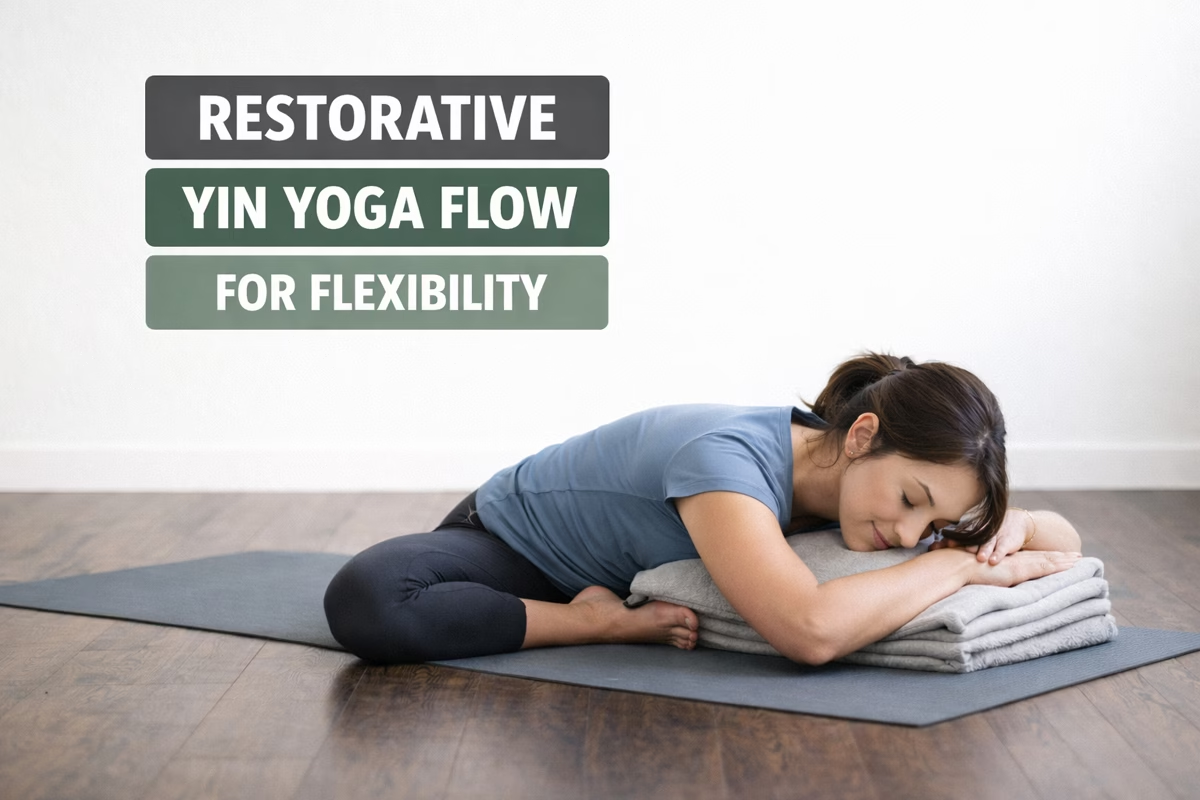
Pose 1: Child’s Pose (Balasana) — Hold 3 to 5 Minutes
Child’s pose is where your Yin Yoga flow begins — and where your body gets the message that it’s safe to slow down.
This pose gently opens the hips and lower back while encouraging deep breathing.
How to do it:
- Kneel on the mat with big toes touching
- Knees wide, hips back
- Fold forward slowly and rest your chest down
- Extend arms forward or relax by your sides
- Let your forehead rest and breathe deeply
Make it more restorative:
Place a pillow or bolster under your torso so you can fully relax.
Pose 2: Caterpillar Pose (Seated Forward Fold) — Hold 3 to 5 Minutes
Caterpillar pose is a staple in many Yin Yoga sequences because it works deeply through the back body — hamstrings, spine, and even the nervous system.
This pose invites your body to soften instead of “stretch harder.”
How to do it:
- Sit with legs extended forward
- Fold forward slowly, letting your back round naturally
- Relax your shoulders and neck
- Let gravity do the work
Beginner tip:
If your hamstrings are tight, bend your knees slightly or use a strap around your feet.
Pose 3: Dragon Pose (Low Lunge Hold) — Hold 3 to 5 Minutes Each Side
Dragon pose is one of the most powerful Yin Yoga poses for the hips.
If you sit often (or feel tight in the front of your hips), this pose can be a game-changer for yoga for flexibility.
How to do it:
- Start in tabletop
- Step right foot forward between hands
- Lower left knee down
- Sink hips forward gently
- Relax your chest and breathe slowly
Support option:
Place a folded blanket under the back knee for comfort.
After 3–5 minutes, switch sides.
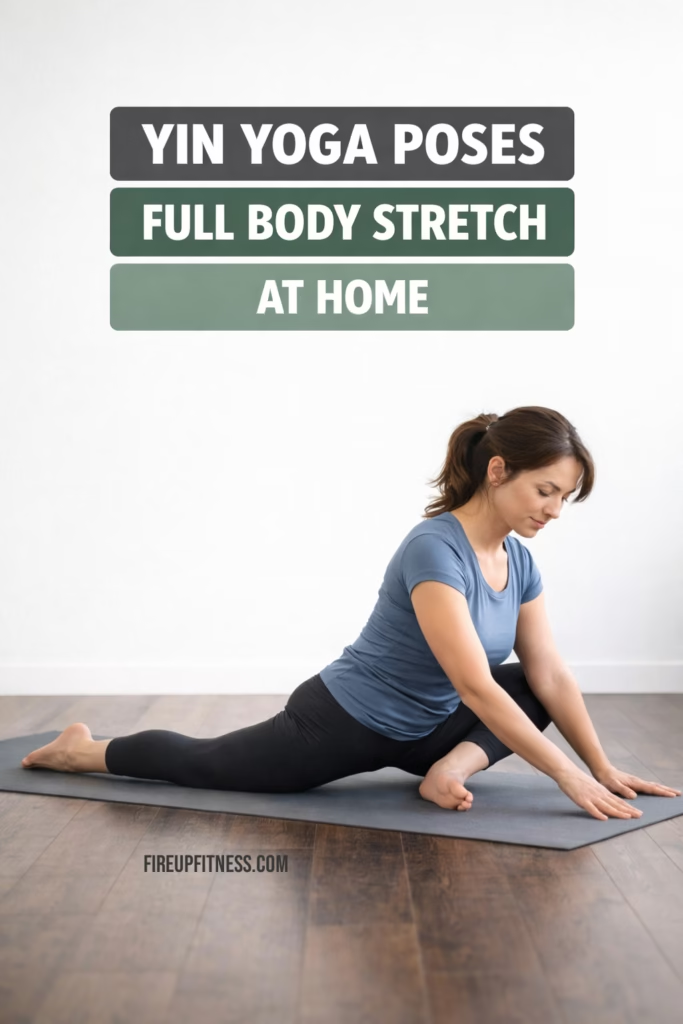
Pose 4: Swan Pose (Pigeon Pose Hold) — Hold 3 to 5 Minutes Each Side
Swan pose (often called Pigeon) targets the glutes and deep hip rotators — areas where women commonly store tension.
This pose is not always comfortable at first, but it is one of the most effective restorative yoga poses for deep release.
How to do it:
- From tabletop, bring right knee behind right wrist
- Slide left leg back long
- Lower hips gently toward the mat
- Stay upright or fold forward
Important note:
If your hips don’t reach the floor, place a cushion/block under the lifted side.
After 3–5 minutes, switch sides.
Pose 5: Reclining Twist (Supta Matsyendrasana) — Hold 3 to 5 Minutes Each Side
Reclining twist is the exhale of your practice.
It releases the lower back and spine and helps your body transition into calm. This pose also creates that “light and loose” feeling that people love after a Yin Yoga flow.
How to do it:
- Lie on your back, knees bent
- Drop both knees to the right
- Keep shoulders grounded
- Extend arms out in a T position
- Turn your head left if comfortable
Make it more restorative:
Place a pillow under your knees so the twist feels supported.
Switch sides after 3–5 minutes.

Why This Yin Yoga Sequence Improves Flexibility So Well
Yin Yoga improves flexibility in a different way than quick stretching does.
When you hold poses for minutes:
- muscles soften
- connective tissue gradually adapts
- joints receive gentle stimulation
- the body releases “protective tension”
This is why Yin Yoga often leads to flexibility improvements that feel more natural — not forced.
And because the pace is slow, your mind relaxes too, which makes it easier for the body to let go.
How Often Should You Do Yin Yoga?
If your goal is flexibility and stress relief, consistency matters more than intensity.
A good schedule for most women:
- 2–4 times per week
- 20–40 minutes per session
- even 10–15 minutes can help if done consistently
Morning Yin Yoga Flow
Perfect if you wake up stiff or tight.
Evening Restorative Yin Yoga
Perfect if you feel stressed, overwhelmed, or want better sleep.
Final Thoughts: Yin Yoga Is a Practice of Letting Go
Yin Yoga is more than stretching.
It’s a practice of releasing.
Releasing tension. Releasing stress. Releasing the pressure to push harder.
And for women especially — who often carry so much without realizing it — a Yin Yoga sequence becomes a quiet reminder that your body deserves softness too.
Yin Yoga quote:
“In the process of letting go, you create space for something better to come into your life.” — Anonymous
So the next time your body feels tight or your mind feels too full, return to this practice. Breathe. Stay. Soften.
Because you don’t always need to do more to feel better.
Sometimes, the most powerful thing you can do… is pause.