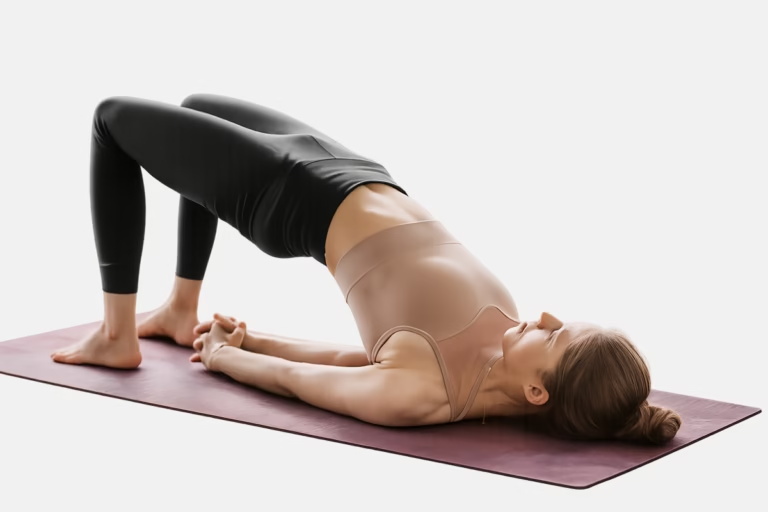

5 Mobility Drills That Fix Bad Posture Naturally
Bad posture is more than just an aesthetic issue — it affects how you feel throughout your day. Whether you’re sitting at a desk, looking down at your phone, or standing with rounded shoulders, poor posture can lead to neck tension, tight back muscles, and reduced mobility. But good news: mobility work can retrain your body to move better and stand taller. Mobility isn’t just stretching — it helps you move well through your full range of motion and supports muscle strength and joint control.
Below are 5 mobility drills that fix bad posture. These moves are accessible, require minimal equipment (or none), and can be done daily for noticeable results.
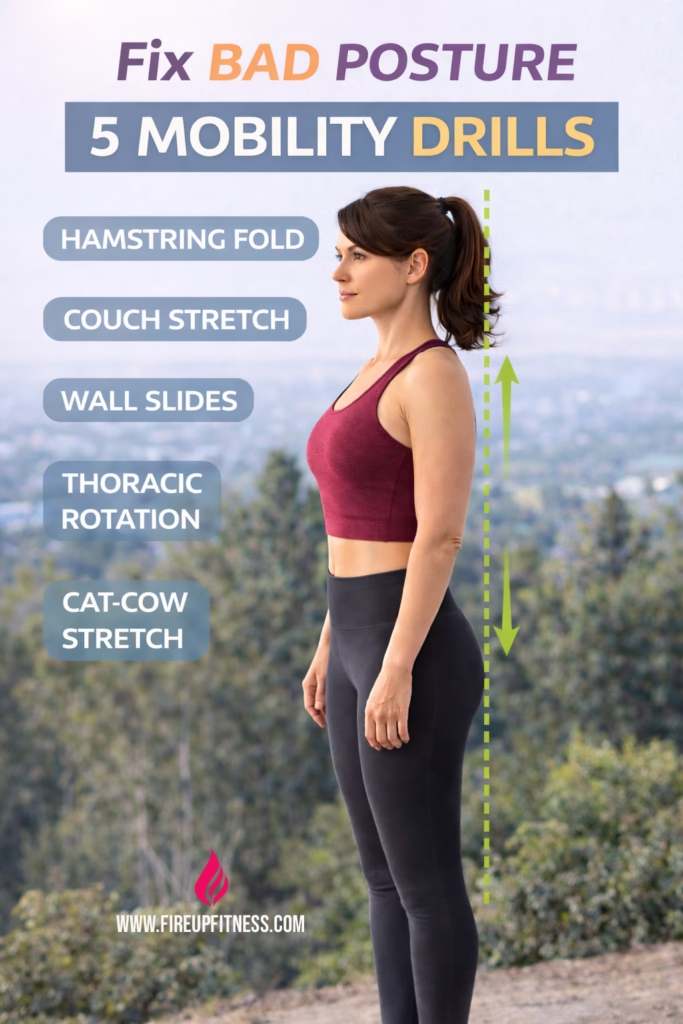
1. Wall Slides
Why it Works: Wall slides teach your shoulders and upper back to move properly while opening up tight chest muscles that contribute to hunched posture. By keeping your back and arms in contact with the wall, you reinforce proper shoulder blade mechanics.
How to Do It:
- Stand with your back flat against the wall.
- Place arms out to the sides with elbows bent at 90 degrees, forearms and backs of hands touching the wall.
- Slowly slide arms upward overhead, keeping contact with the wall, then lower back down.
- Repeat for 10–12 controlled reps.
Benefits: Improves shoulder mobility, upper back activation, and reduces upper-body “slouching.”
2. Cat-Cow Circles
Why it Works: The spine is meant to move. Cat-Cow Circles gently guide the spine through extension and flexion, helping restore mobility after long periods of sitting. This dynamic motion lubricates the vertebrae and retrains your body how to transition between postures.
How to Do It:
- Begin on hands and knees.
- Arch your spine (cow), then round toward the ceiling (cat).
- Add a gentle sideways shift as you move, making a fluid circle.
- Perform 8–10 reps in each direction.
Benefits: Reawakens spinal mobility, eases stiffness, and improves awareness of posture transitions.
3. Thread the Needle
Why it Works: This mobility drill helps you rotate your upper spine while gently stretching back and shoulder muscles. Rotational mobility is key to reducing stiffness and resisting the hunched-forward position many people adopt during the day.
How to Do It:
- Start on hands and knees.
- Slide one arm under your body, lowering your shoulder and head gently to the ground.
- Reach the opposite arm up toward the ceiling.
- Hold briefly, then return and repeat on the other side.
- Aim for 8–10 reps per side.
Benefits: Enhances upper-back rotation, reduces mid-back stiffness, and helps correct rounded posture.
4. Couch Stretch
Why it Works: Prolonged sitting tightens the hip flexors and can pull your pelvis forward — a common contributor to poor posture. The Couch Stretch targets these tight muscles, allowing your hips and pelvis to realign so your core and back muscles can support better posture.
How to Do It:
- Kneel with one foot in front and the back leg bent behind you next to a wall or couch.
- Lean forward in a lunge position, pressing hips gently toward the floor.
- Hold for 30–45 seconds and switch legs.
Benefits: Lengthens hip flexors, improves pelvis alignment, and supports upright posture from the base of the body up.
5. Hamstring Fold
Why it Works: Tight hamstrings (back of the thighs) can pull on your pelvis and lower back, contributing to a slumped posture. The Hamstring Fold helps restore flexibility and reduces tension that can throw your posture off balance.
How to Do It:
- Place one heel on a slightly raised surface.
- Keep the leg straight or slightly bent for comfort.
- Hinge at your hips and lean forward gently until you feel a stretch in the back of the leg.
- Hold for 20–30 seconds, then switch sides.
Benefits: Improves lower-body flexibility, reduces compensatory strain on the lower back, and supports upright posture.
How Often Should You Do These Mobility Drills?
These drills don’t require equipment and can be woven seamlessly into your day:
- Daily or every other day yields the best results.
- Use them as a warm-up before workouts or as a cool-down at night.
- Even 5–10 minutes can make a difference if you’re consistent.
Mobility work improves not just how you stand but how you move. Over time, this can reduce strain, release tension, and help prevent injuries — especially if you spend long hours sitting or on screens.
Final Thoughts
Poor posture doesn’t improve overnight, but it does respond to consistent mobility training. These drills focus on freeing up tight muscles, strengthening dormant ones, and encouraging proper joint motion throughout the body. Unlike static stretching alone, mobility drills help you develop strength through movement, which is essential for long-term posture correction and functional fitness.
If you’re ready to stand taller, feel more confident, and move with less stiffness and pain, add these five drills into your routine and watch your posture transform.
Mistakes to Avoid When Using Mobility Drills to Fix Posture
Mobility drills are powerful, but only when done correctly and consistently. Avoid these common mistakes to get the best posture-improving results.
1. Moving Too Fast
Mobility is about control, not speed. Rushing through drills reduces their effectiveness and increases the risk of poor form. Slow, intentional movement helps your nervous system learn better posture patterns.
2. Skipping Breathing
Holding your breath limits mobility gains. Deep, controlled breathing helps muscles relax and allows joints to move more freely. Always pair mobility drills with steady nasal breathing.
3. Ignoring Pain Signals
You should feel a stretch or gentle tension — never sharp pain. Forcing range of motion can lead to strain and setbacks. If something hurts, scale it back.
4. Only Focusing on the Upper Body
Posture starts from the ground up. Tight hips and hamstrings can pull the pelvis out of alignment, which affects the spine and shoulders. That’s why full-body mobility (not just shoulders) is essential.
5. Being Inconsistent
Doing mobility drills once a week won’t undo years of poor posture habits. Short, frequent sessions (5–10 minutes) are far more effective than long, infrequent workouts.
Frequently Asked Questions (FAQ)
1. How long does it take to fix bad posture with mobility drills?
Most people notice small improvements in 1–2 weeks, such as reduced stiffness or better posture awareness. Visible posture changes usually occur after 4–6 weeks of consistent practice.
2. Should I do mobility drills every day?
Yes. These drills are low-impact and safe for daily use. Even 5 minutes a day can significantly improve posture over time.
3. Are mobility drills better than stretching for posture?
Mobility drills are generally more effective because they combine movement, strength, and control. Stretching alone improves flexibility, but mobility helps you use that flexibility in real-life posture.
4. Can mobility drills help with neck and shoulder pain?
Yes. Many posture-related neck and shoulder issues are caused by limited mobility in the upper spine, shoulders, or hips. Improving mobility often reduces tension and discomfort.
5. Do I need equipment to improve posture with mobility drills?
No. Most posture-focused mobility drills use bodyweight only. A wall, floor, or foam roller can help, but they are optional.
6. Can I do these drills if I already strength train?
Absolutely. Mobility drills complement strength training by improving joint movement and reducing soreness, which can improve lifting form and recovery.
Final Reminder
Posture isn’t fixed by one workout — it’s built through daily movement habits. These mobility drills work best when practiced consistently, patiently, and with attention to form. Over time, your body learns to hold better posture naturally, without constant effort.