10-Minute Core Workout: Yoga Poses for Beginners
You don’t need an hour.
You don’t need fancy equipment.
And you definitely don’t need to master hundreds of poses.
Ancient yoga traditions describe thousands of postures. But let’s be honest — with a busy schedule, carving out time for even a fraction of them feels unrealistic.
What you can do?
Ten focused minutes.
A simple, structured core workout built around foundational yoga poses for beginners can strengthen your body, improve flexibility, and reduce stress — all from the comfort of your living room. This at home workout is designed for real life: efficient, effective, and beginner-friendly.
Let’s build your foundation.
Why This 10-Minute Core Workout Works
When it comes to fitness, consistency beats intensity.
A short daily yoga session can:
- Strengthen deep core muscles
- Improve posture and spinal alignment
- Increase flexibility and mobility
- Boost circulation
- Support joint health
- Lower stress levels
- Improve balance and coordination
Yoga isn’t just stretching. It’s strength training with control, breath, and precision — especially when it comes to your core.
Your core is more than abs. It includes the muscles that stabilize your spine, hips, and pelvis. Strengthening it improves nearly everything you do — walking, lifting, sitting, even standing.
Start with these three essential poses.
Master them.
Then grow from there.
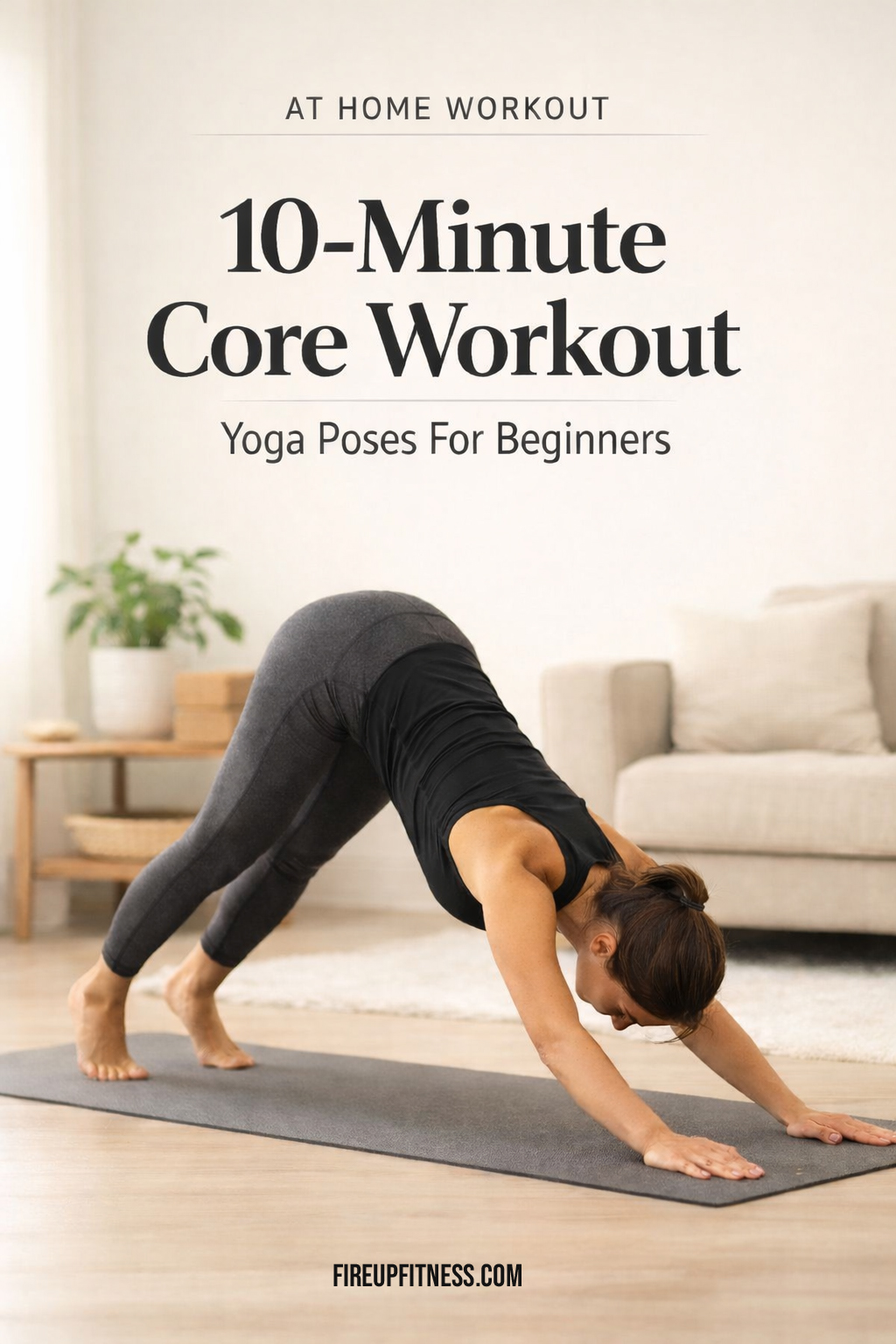
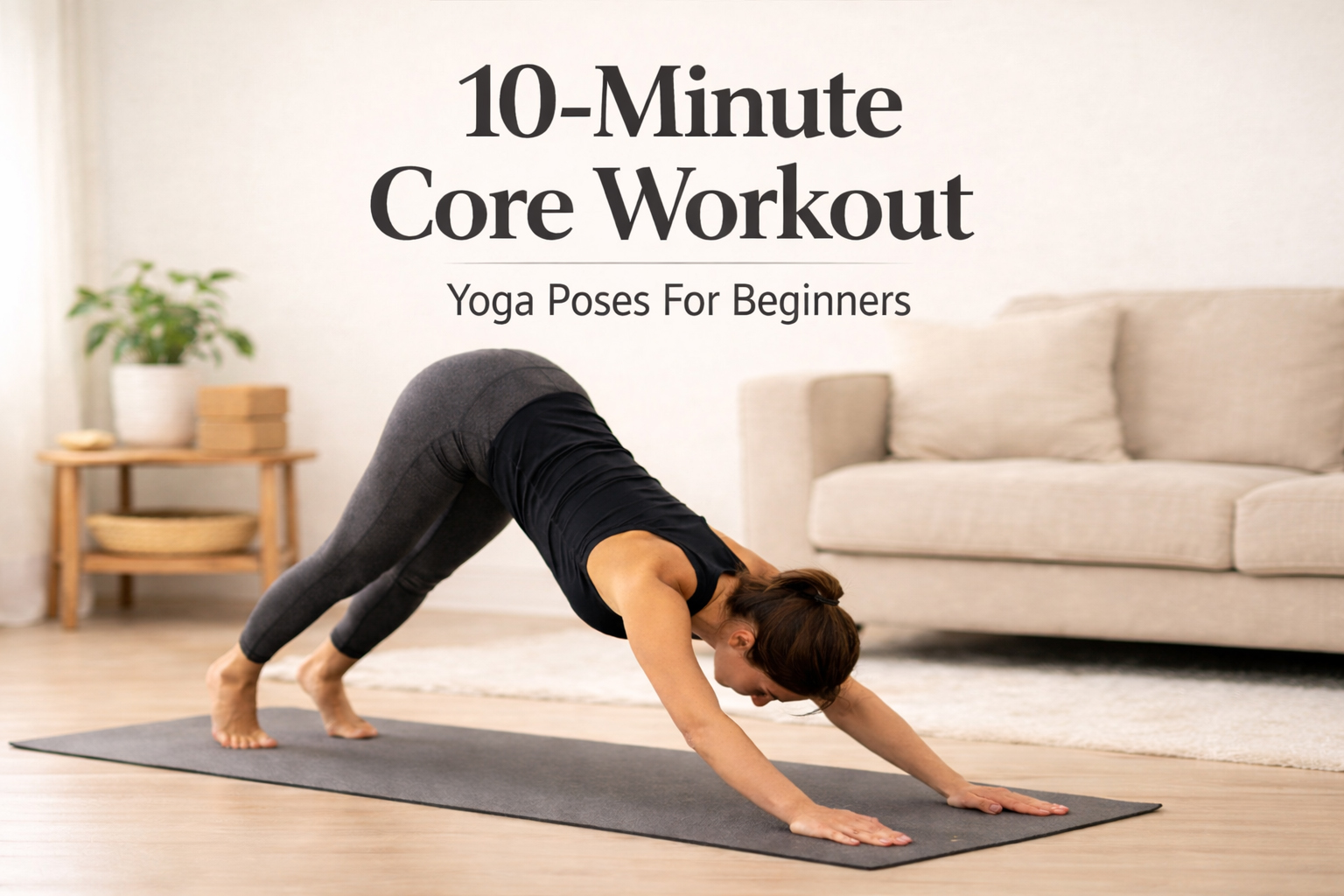
1. Downward-Facing Dog (Adho Mukha Svanasana)
This is one of the most recognizable yoga poses for beginners — and one of the most effective.
Downward Dog strengthens and stretches your body at the same time. It activates your core while lengthening your spine and legs.
What It Does
- Strengthens shoulders, arms, and wrists
- Engages abdominal muscles
- Lengthens the spine
- Stretches hamstrings and calves
- Improves circulation
It’s also a gentle inversion, meaning your hips lift above your heart. That shift supports healthy blood flow and helps counteract long hours of sitting.
How to Do It
- Start in tabletop (shoulders over wrists, hips over knees).
- Tuck your toes under.
- Lift your hips toward the ceiling.
- Press your palms firmly into the mat.
- Lengthen your spine first — then straighten your legs as flexibility allows.
- Let your head relax between your arms.
Draw your belly slightly inward to activate your core without holding your breath.
Beginner tip: Bend your knees if your hamstrings feel tight. A long spine matters more than straight legs.
Hold for 30–60 seconds.
2. Garland Pose (Malasana)
We spend hours sitting. Over time, that tightens the hips and weakens supportive muscles.
Garland Pose restores what modern life takes away.
It’s a deep squat that builds mobility and core control while opening the hips.
Why It’s Essential
- Opens hips and inner thighs
- Strengthens lower body
- Encourages spinal alignment
- Activates deep core stabilizers
- Improves pelvic mobility
This pose improves both flexibility and strength — a rare combination that makes it incredibly valuable in a beginner’s at home workout.
How to Do It
- Stand with feet slightly wider than hip-width.
- Turn toes slightly outward.
- Lower into a deep squat.
- Keep your chest lifted and spine long.
- Bring hands to prayer at mid-chest.
- Gently press elbows into inner knees.
If your heels lift, place a rolled towel or blanket underneath for support.
Hold for 30–45 seconds while breathing deeply.
Focus on lengthening your spine instead of rounding forward.
3. Plank Pose
If you want a true core workout, plank delivers.
It looks simple — but it builds serious strength.
Plank trains your entire body to work together.
What It Strengthens
- Deep abdominal muscles
- Shoulders and arms
- Glutes
- Quadriceps
- Stabilizing muscles along the spine
It also teaches proper alignment and body awareness — critical for beginners.
How to Do It
- Start in Downward Dog.
- Shift forward onto the balls of your feet.
- Stack shoulders directly over wrists.
- Keep hips level — not sagging, not lifted.
- Engage your core and press through your heels.
Imagine creating one long, straight line from head to heels.
Beginner modification: Lower your knees to the floor while keeping your core engaged and back straight.
Hold for 20–40 seconds.
Quality over duration.
Your 10-Minute At Home Workout Plan
Here’s how to combine these yoga poses for beginners into one simple routine:
- Downward Dog – 1 minute
- Garland Pose – 45 seconds
- Plank – 30 seconds
- Rest – 30 seconds
Repeat 2–3 rounds.
In less than 10 minutes, you’ve completed a focused core workout that strengthens, stretches, and stabilizes your body.
How to Progress Safely
As you grow stronger:
- Increase plank time gradually.
- Transition from Plank back to Downward Dog smoothly.
- Add slow, controlled breathing to deepen each pose.
- Practice 4–5 times per week for noticeable results.
Progress isn’t about complexity.
It’s about consistency.
Final Thoughts
You don’t need dozens of poses.
You don’t need extreme flexibility.
You need structure.
These three foundational yoga poses for beginners create a powerful core workout that fits into real life. This at home workout strengthens your body, improves posture, and builds resilience — physically and mentally.
Start with ten minutes.
Build the habit.
Let strength follow.