Back Pain Exercises for Fast Back Pain Relief
Back pain has a way of quietly taking over your life.
It starts as stiffness after a long day. Then it becomes discomfort when you wake up. Eventually, even simple movements — tying your shoes, lifting groceries, sitting too long — feel harder than they should.
Severe back pain can result from sports injuries, accidents, or medical conditions like Scoliosis. But for many people, the real cause is much less dramatic: daily habits.
Hours at a desk. Poor posture. Weak core muscles. Carrying heavy bags on one side. Not moving enough.
The encouraging part? The body adapts — in both directions. Just as poor habits can create pain, the right back pain exercises can restore strength, alignment, and long-term back pain relief.
And when you focus on exercises for strong back exercises, you’re not just treating discomfort — you’re building protection against future pain.
Let’s rebuild your back the smart way.
Why Your Back Hurts (And Why Strength Fixes It)
Your spine isn’t meant to work alone.
It relies on surrounding muscles — core, glutes, upper back, and hips — to stabilize and distribute load evenly. When those muscles are weak or tight, your lower back compensates. Over time, that overload leads to pain.
Strong back muscles:
- Improve posture
- Reduce joint compression
- Protect spinal discs
- Improve balance
- Prevent recurring flare-ups
Think of strength as support beams for your spine.
Without them, pressure builds. With them, your back works the way it was designed to.
4 Powerful Back Pain Exercises for Lasting Relief
These movements focus on stability, posture correction, and mobility — the foundation of sustainable back pain relief.
1. Back Strengthener (Bird-Dog)
This is one of the most effective exercises for strong back exercises because it activates deep stabilizing muscles that most people neglect.
How to Perform
- Start on all fours — hands under shoulders, knees under hips.
- Keep your spine neutral and gaze toward the floor.
- Take a slow breath in.
- Exhale and extend your right arm forward and left leg backward.
- Keep hips level — don’t tilt or rotate.
- Engage your core.
- Hold for 2–3 seconds.
- Return slowly and switch sides.
Recommended Sets
8–10 reps per side, 2–3 sets.
Why It Works
The bird-dog strengthens the deep spinal stabilizers, glutes, and core muscles simultaneously. It teaches your body to resist rotation — which is essential for protecting your lower back during daily movement.
Move slowly. Precision matters more than speed.
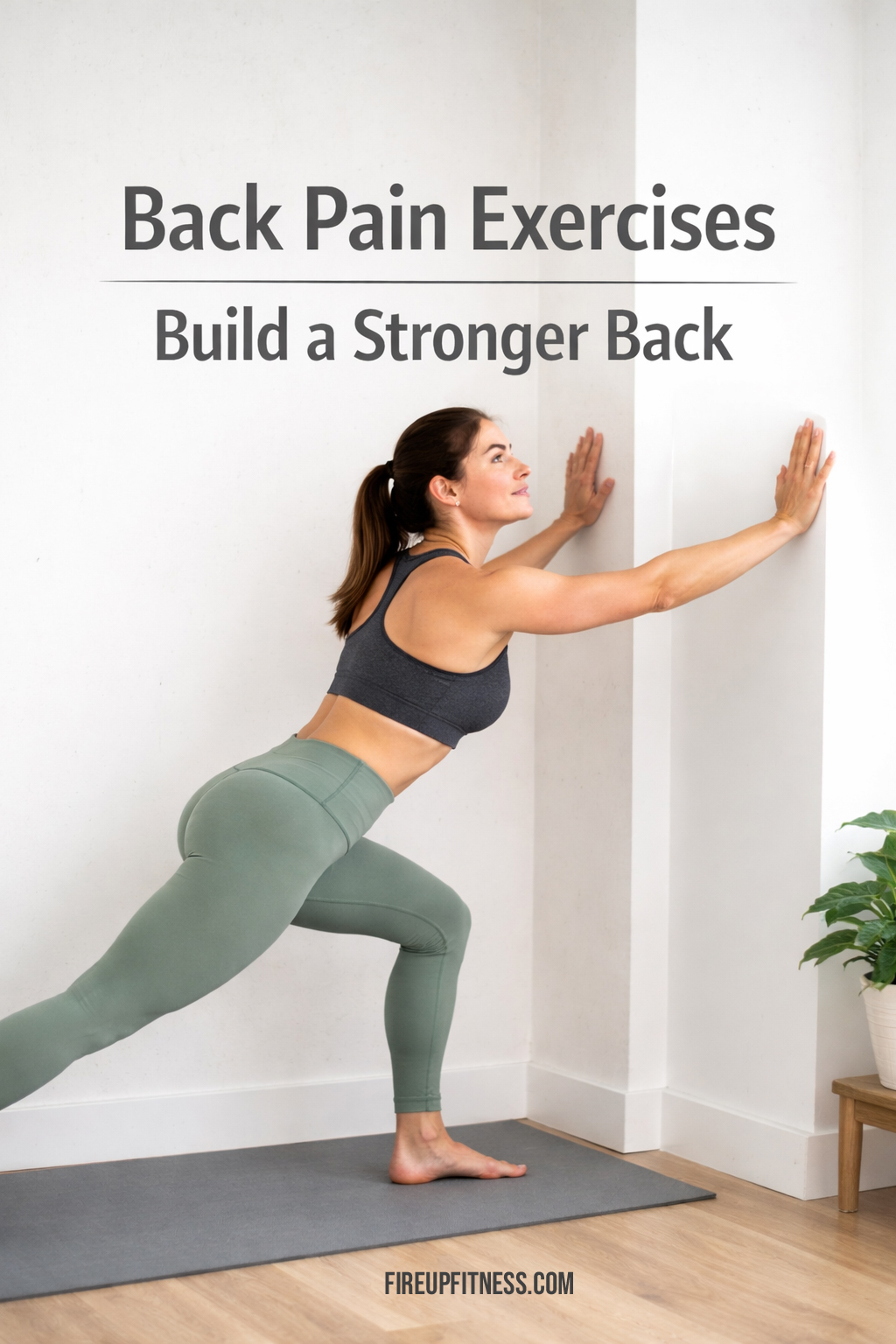
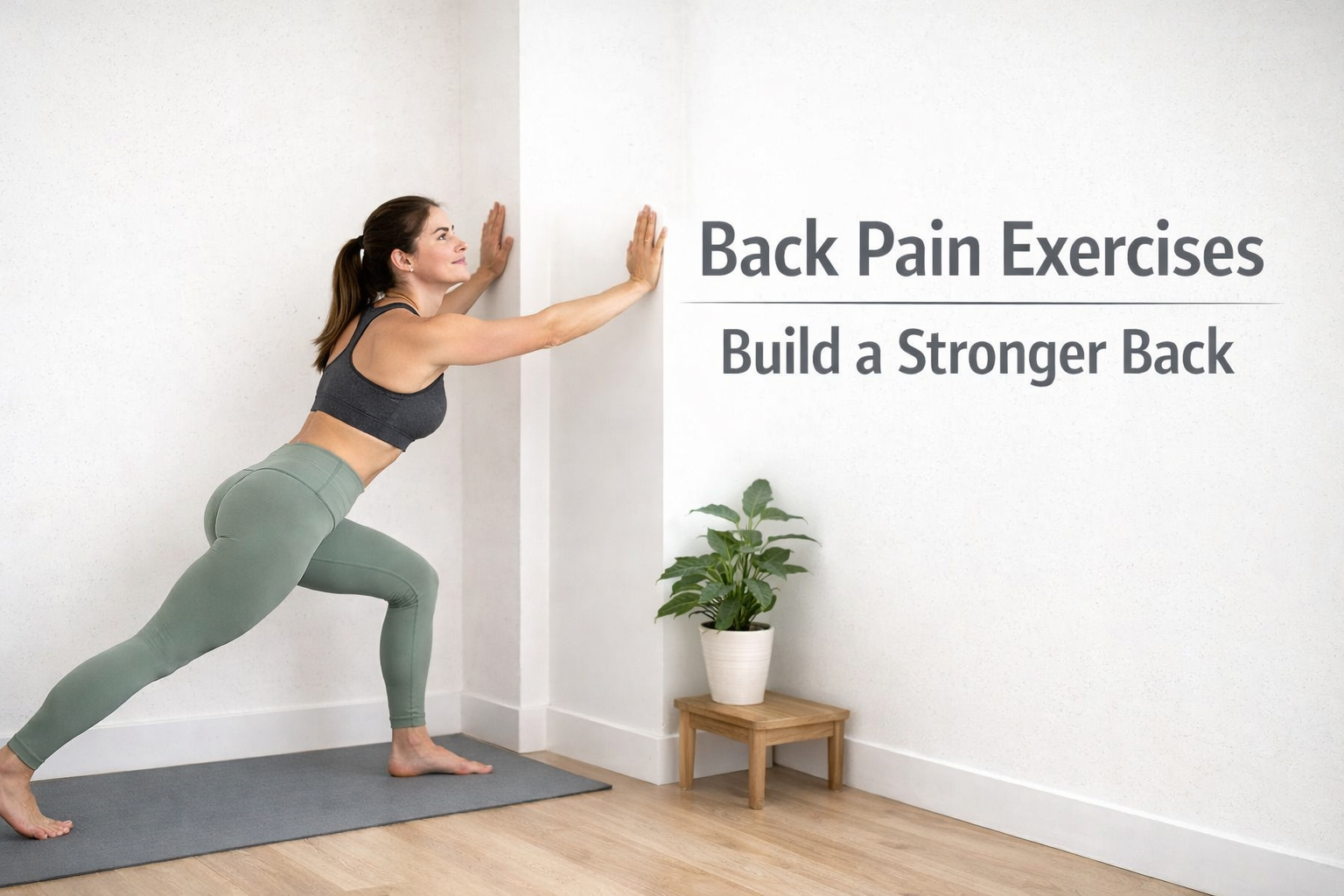
2. Upper Body Corner Stretch
Many back problems begin in the front of the body. Tight chest muscles from sitting and screen time pull the shoulders forward, rounding the upper back.
This stretch opens the chest and restores balance.
How to Perform
- Stand facing a corner.
- Place forearms against each wall at shoulder height.
- Step one foot forward.
- Gently lean into the corner while keeping your back straight.
- Keep chest lifted and chin slightly tucked.
- Hold for 20–30 seconds.
Why It Works
Opening the chest reduces tension across the upper back and allows your shoulders to return to a natural position.
Better posture = less strain = improved back pain relief.
3. Stand Tall Wall Alignment Drill
This simple posture reset may look easy, but it’s incredibly effective.
How to Perform
- Stand against a wall.
- Heels, glutes, and shoulder blades touch the wall.
- Maintain a small natural curve in your lower back.
- Gently tuck your chin so the back of your head meets the wall.
- Hold for 30 seconds.
- Step away while maintaining alignment.
Why It Works
Most people don’t realize how far forward their head and shoulders drift during the day. This drill retrains muscle memory.
Practiced consistently, it transforms posture — and posture is foundational for back pain relief.
4. Arm Across Chest Stretch
Upper back tightness often contributes to discomfort between the shoulder blades.
How to Perform
- Lift your right arm to shoulder height.
- Use your left hand to gently pull it across your chest.
- Keep shoulders relaxed.
- Hold for 20 seconds.
- Switch sides.
Why It Works
Improving shoulder mobility reduces compensations that strain the mid-back.
Mobility supports strength — and together they create lasting relief.
The Missing Link: Core Engagement
Back pain exercises only work if you engage your core correctly.
Think of your core as a natural brace. Before each movement:
- Gently tighten your abdominal muscles.
- Avoid holding your breath.
- Keep your spine neutral.
A strong core reduces pressure on the lower back during movement.
Common Mistakes That Slow Down Back Pain Relief
Avoid these common errors:
Moving Too Quickly
Fast reps reduce muscle engagement. Slow, controlled movements build real stability.
Arching the Lower Back
Maintain neutral alignment. Overarching increases compression.
Stretching Through Pain
Stretching should feel relieving, not sharp or intense.
Inconsistency
Back strength builds gradually. Aim for 3–5 sessions per week.
How Long Until You Feel Results?
Many people notice:
- Reduced stiffness within 1–2 weeks
- Improved posture in 2–3 weeks
- Stronger back support in 4–6 weeks
Consistency is more important than intensity.
Your goal is steady progress — not overnight transformation.
When to Seek Professional Help
Stop and consult a professional if you experience:
- Pain radiating down the leg
- Numbness or tingling
- Sudden severe pain
- Pain after a traumatic injury
These exercises are designed for general muscular and postural discomfort — not acute injuries.
Build a Back That Supports You
Pain is often a signal — not a sentence.
Your body responds to movement. It responds to strength. It responds to alignment.
By committing to these back pain exercises, you’re not just chasing temporary comfort. You’re building resilience. You’re correcting posture. You’re strengthening support systems.
True back pain relief comes from consistency and intention.
Start small. Move mindfully. Stay consistent.
A strong back changes everything — how you move, how you sit, how you stand, and how you feel at the end of the day.
And the best time to start strengthening it is now.