6 Core Exercises for Women to Strengthen Abs
Your core might be weaker than you think—and your body could be giving you little clues every day.
Maybe your lower back feels tired after standing for a while. Perhaps you struggle to keep your balance during certain exercises. Or you’ve been doing crunches for months, wondering why your stomach doesn’t feel any stronger.
Here’s something many women don’t realize: A strong core has very little to do with how flat your stomach looks.
You can have a perfectly flat stomach and still have weak core muscles. You can also carry extra belly fat and have an incredibly strong core.
The difference is in what those muscles can actually do.
Your core helps you get out of bed, carry groceries, climb stairs, maintain good posture, and keep your balance. It’s quietly working throughout your day, even when you’re not exercising.
And the good news? You don’t need 100 crunches a day to strengthen it.
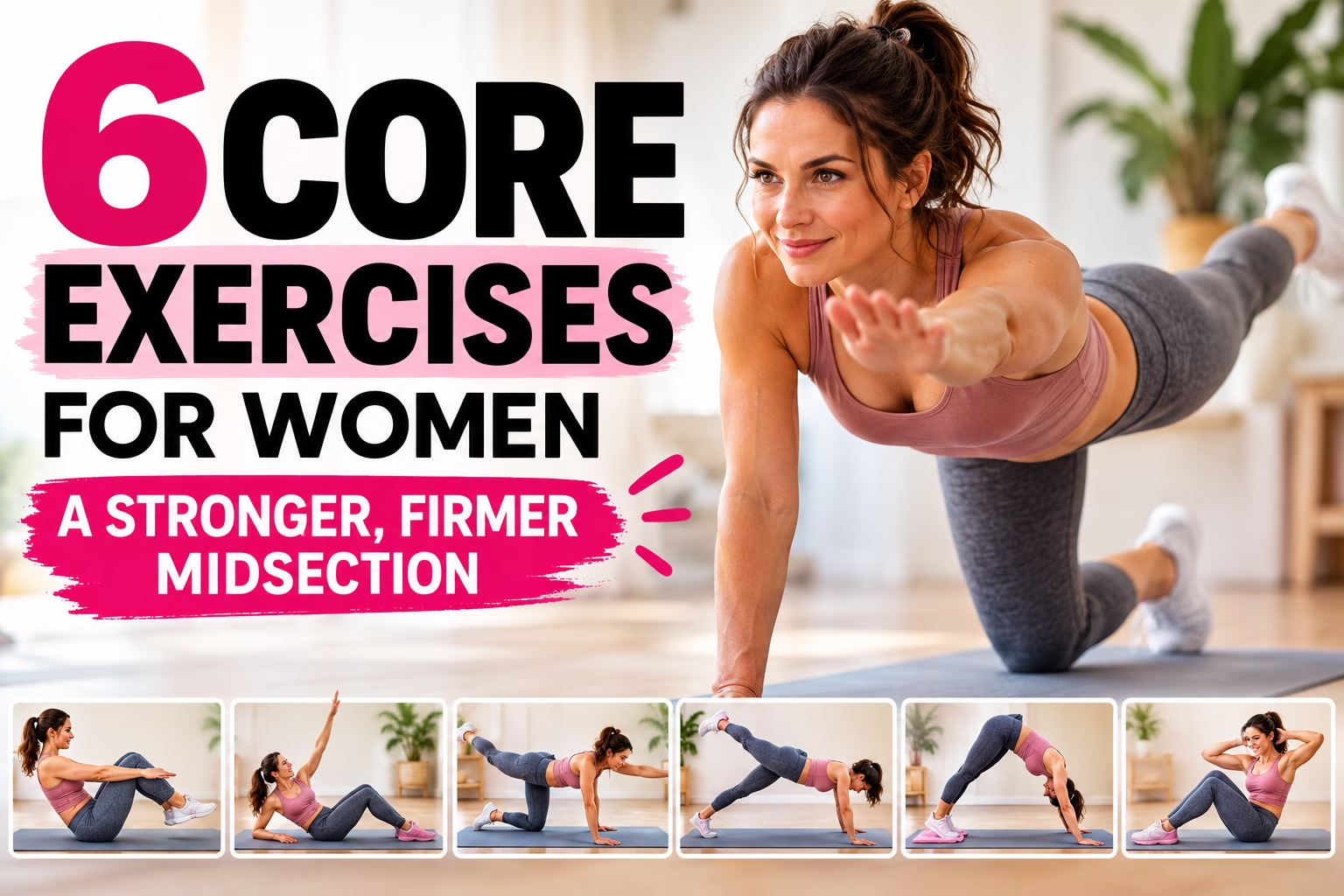
These 6 core exercises for women work your abdominal muscles from different angles, helping you build strength, stability, and better body control. They’re especially useful for women who want to feel stronger after 40, but anyone can benefit.
Some moves are easy to start with, while others give you something to work toward.
Why Your Core Might Need More Attention Than Your Abs
When most women think about core exercises, they picture crunches, sit-ups, and planks.
But your core is much more than the muscles running down the front of your stomach.
Think of it as your body’s natural support system.
Your abdominal muscles, back muscles, diaphragm, and pelvic floor work together to help stabilize your spine and pelvis.
When these muscles work well together, everyday movements can feel easier.
You may notice that:
- Standing tall feels more natural.
- You have better control during workouts.
- Balancing on one leg becomes easier.
- Getting up from the floor feels less challenging.
- Carrying groceries doesn’t leave you feeling as unstable.
- Your lower back feels better supported during movement.
Core strength isn’t a guaranteed solution for back pain, but improving strength and movement control can be helpful for many people.
And there’s another benefit worth mentioning.
A stronger core can improve the way you carry yourself, even before you notice visible changes in your waistline.
That’s a pretty good reason to give these muscles some attention.
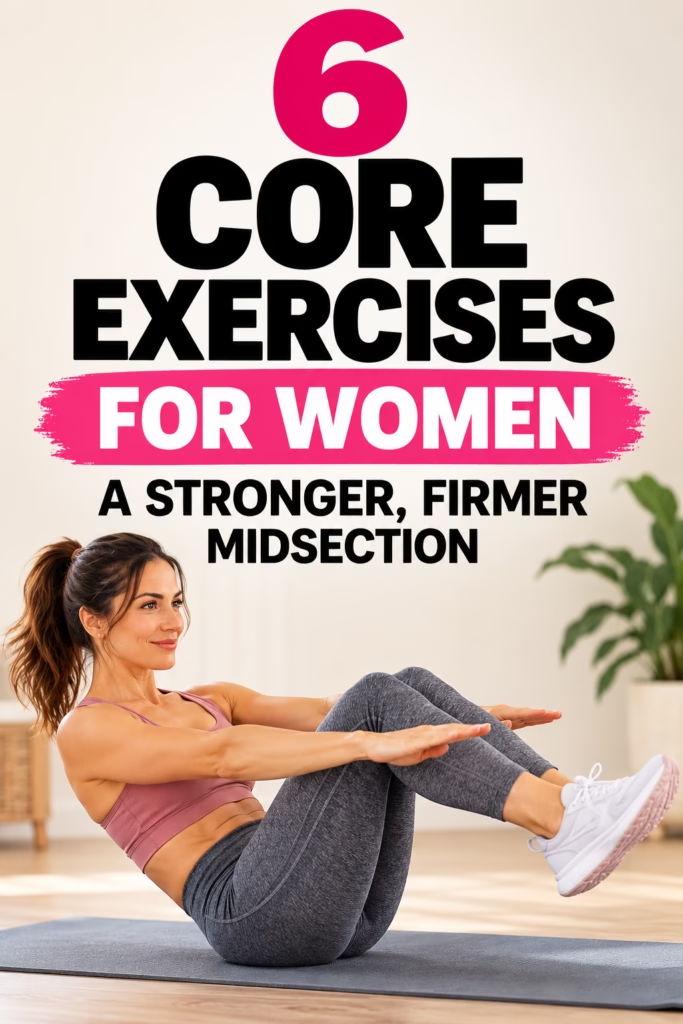
1. Knee Fold Tuck: The Small Move That Makes Your Abs Work Hard
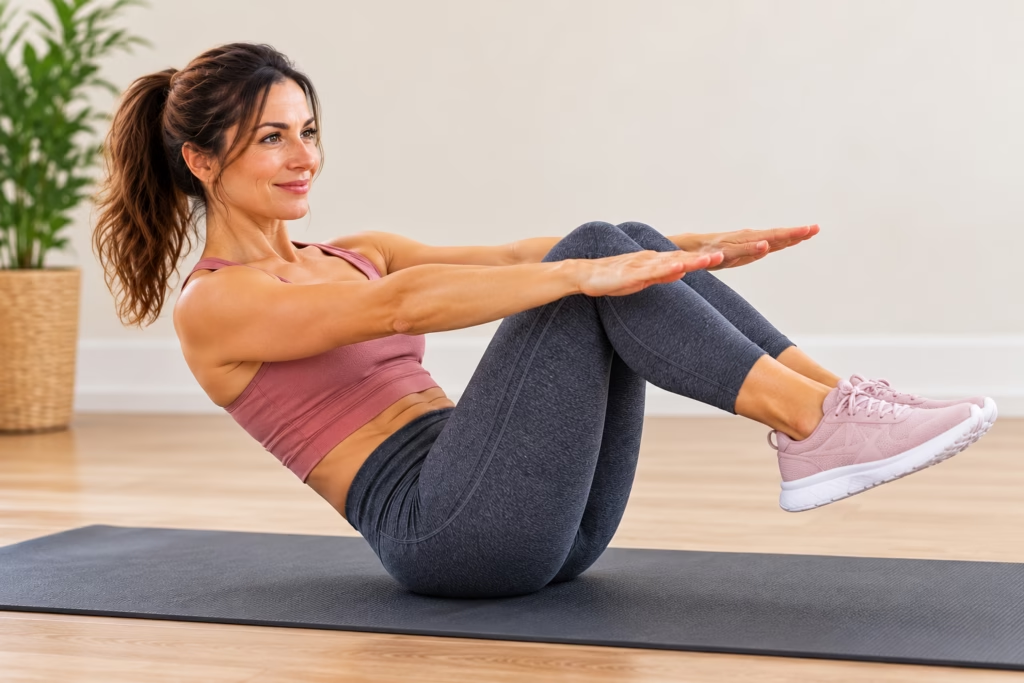
Don’t be fooled by how simple this exercise looks.
The knee fold tuck challenges your abdominal muscles to keep your upper body steady while your legs move.
It’s a great reminder that an effective core exercise doesn’t have to involve a lot of movement.
How to try it:
- Sit on an exercise mat with your knees bent and feet flat.
- Place your hands beside your hips for support.
- Lean backward slightly, keeping your chest lifted.
- Raise your feet until your shins are nearly parallel to the floor.
- Slowly bring your knees toward your chest.
- Extend your legs forward again without losing control.
Start with: 10–12 repetitions.
Want to make it more challenging? Try reaching your arms forward instead of keeping your hands on the floor.
If you’re just getting started, keep your hands down and move one leg at a time.
What to notice: Your stomach muscles should be working to keep you balanced. If you’re swinging your legs or rounding your back excessively, slow down.
This is one of those exercises where smaller, controlled movements can be more useful than big, fast ones.
2. Climbing Rope: An Ab Exercise That Doesn’t Feel Like Another Crunch
Ever wished you could strengthen your abs without doing endless sit-ups?
Try this one.
The climbing rope exercise uses alternating upward reaches to challenge your abdominal muscles and the obliques along the sides of your waist.
It also adds a little coordination, making it more interesting than repeating the same crunch over and over.
How to try it:
- Sit on the floor with your knees slightly bent.
- Lean backward a little, keeping your spine in a comfortable position.
- Imagine a rope hanging directly above you.
- Reach your right arm upward as though you’re grabbing it.
- Follow with your left arm.
- Continue alternating, allowing a small, controlled rotation through your upper body.
Start with: 10 reaches per arm.
You don’t need to lean back very far to feel your core working.
For an easier version, sit upright with your back against a wall and practice the reaching motion.
What to notice: Keep your movements smooth. Your abdominal muscles should help you stay stable as your arms alternate.
It’s a fun way to break up a traditional ab workout, especially when you’re tired of crunches.
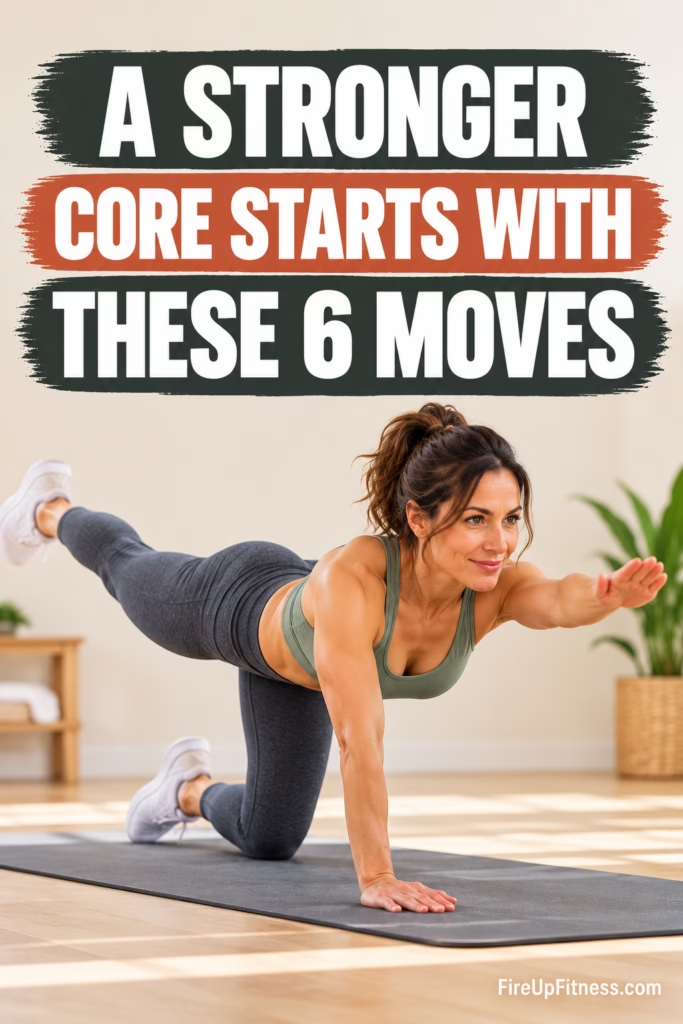
3. Side Balance Crunch: The Move That Challenges Your Waist and Balance
This is where things get interesting.
The side balance crunch doesn’t just work your abdominal muscles. It also challenges your ability to stay steady while moving an arm and leg.
And that’s important because your core isn’t only designed to bend and twist.
It’s also there to prevent your body from moving when you need stability.
How to try it:
- Kneel on a mat and place your left hand directly beneath your left shoulder.
- Keep your left knee beneath your hip.
- Extend your right leg out to the side.
- Reach your right arm overhead.
- Slowly bring your right elbow and knee toward each other.
- Extend them again with control.
Start with: 8–10 repetitions on each side.
If balancing feels difficult, keep your extended foot lightly touching the floor.
What to notice: Try not to collapse into your supporting shoulder or rock your hips.
You might find one side easier than the other. That’s common, and it’s one reason unilateral exercises like this can be useful.
Give both sides attention rather than rushing through the one that feels harder.
4. Circle Plank: When Your Regular Plank Starts Feeling Too Easy
Holding a plank is one thing.
Holding a plank while moving one leg is another.
The circle plank adds a small challenge to a familiar exercise. Your abdominal muscles must work to prevent your hips from shifting as your leg moves.
You don’t need large circles to make it effective.
In fact, the smaller you keep the movement, the easier it is to maintain proper control.
How to try it:
- Begin in a high plank with your hands beneath your shoulders.
- Extend both legs behind you.
- Keep your head, shoulders, hips, and heels in a straight line.
- Lift your right foot slightly off the floor.
- Make a small circle with your right leg.
- Reverse the direction, then repeat with your left leg.
Start with: 5 circles in each direction per leg.
If a regular plank is already challenging, skip the circles for now.
You can begin with a plank against a sturdy countertop or hold a high plank briefly with both feet on the floor.
What to notice: Your hips should remain relatively steady.
The moment your lower back starts sagging or your shoulders lose control, it’s time to rest.
Remember, a 15-second plank with good form is more valuable than struggling through a full minute with poor technique.
5. Sliding Pike: A Serious Core Challenge Without a Gym Machine
This exercise looks impressive, but it’s not one you need to rush into.
The sliding pike challenges your abdominal muscles, shoulders, and hip control at the same time.
All you need is a smooth floor and two small towels or exercise sliders.
How to try it:
- Place a towel or slider under each foot.
- Begin in a high plank with your hands beneath your shoulders.
- Tighten your abdominal muscles gently.
- Keeping your legs mostly straight, slide your feet toward your hands.
- Allow your hips to rise toward the ceiling, forming an upside-down V.
- Slowly slide your feet back into the plank position.
Start with: 5–8 repetitions.
This is an advanced move, so don’t worry if it feels too difficult at first.
Instead, practice sliding one knee toward your chest at a time while holding a stable plank.
What to notice: You should feel your abdominal muscles working to control the movement rather than letting your lower back do all the work.
Avoid forcing the pike higher than your strength or flexibility allows.
And don’t underestimate the easier version. Controlled plank knee tucks can be challenging enough on their own.
6. Oblique Reach: Give the Sides of Your Waist Some Attention
It’s easy to focus only on the front of your stomach when training your abs.
But the muscles along the sides of your waist deserve attention, too.
Your obliques help you rotate, bend sideways, and resist unwanted twisting during everyday movements.
The oblique reach challenges these muscles without requiring complicated equipment.
How to try it:
- Sit on the floor with your knees bent and feet flat.
- Lean back slightly while keeping your spine comfortable.
- Place your left hand lightly behind your head.
- Extend your right arm forward.
- Slowly rotate your upper body toward the left, reaching across your body.
- Return to the starting position and repeat.
Start with: 8–10 repetitions per side.
For a gentler option, sit upright in a chair and perform the same controlled rotation.
What to notice: Keep your hips relatively still and avoid pulling on your neck.
You don’t need a dramatic twist to work your obliques.
And one important reminder: strengthening these muscles won’t selectively remove fat from the sides of your waist. It will, however, improve the strength and control of the muscles underneath.
Save This: Your 10-Minute Core Workout at Home
Now that you know the six exercises, here’s how to turn them into a routine you can actually use.
You don’t need to remember complicated combinations or spend half an hour on the floor.
Your core workout checklist:
| Exercise | Beginner target |
|---|---|
| Knee Fold Tuck | 10 reps |
| Climbing Rope | 10 reaches per arm |
| Side Balance Crunch | 8 reps per side |
| Circle Plank | 5 circles each direction per leg |
| Sliding Pike | 5 reps |
| Oblique Reach | 8 reps per side |
Rest for approximately 20–40 seconds between exercises, or longer when needed.
One round may take around 10 minutes, depending on your pace and rest periods.
Warm up with a few minutes of gentle movement before starting.
New to core training? Choose the knee fold tuck, climbing rope, and supported oblique reach first. You can add the more challenging exercises as your strength improves.
Try the routine two or three times a week, allowing recovery between challenging sessions.
The goal isn’t to finish every exercise perfectly on day one.
It’s to get a little more comfortable with the movements over time.
5 Signs Your Core Is Getting Stronger (Even if Your Stomach Looks the Same)
Here’s something that doesn’t get talked about enough.
You can be making excellent progress with core training without seeing a dramatic change in your waistline.
And that’s because strength and fat loss aren’t the same thing.
So how can you tell whether your workouts are helping?
1. You can hold a plank without shaking as much.
A little shaking during challenging exercises is normal. But as your muscles become better conditioned, you may notice improved control.
2. Getting up from the floor feels easier.
You might find yourself relying less on your hands or feeling more stable when changing positions.
3. Your balance is improving.
Exercises that once felt awkward may become smoother, especially movements like the side balance crunch.
4. You can perform more repetitions without losing your form.
Perhaps you started with five controlled knee tucks and can now complete twelve.
That’s progress worth recognizing.
5. Other exercises feel more stable.
Squats, lunges, and even carrying heavier grocery bags may feel more manageable as your overall strength improves.
These are practical signs that your efforts are paying off.
And unlike a number on the scale, they tell you something about what your body can actually do.
The Belly Fat Question: Will Core Exercises Make Your Stomach Flatter?
Let’s clear up one of the biggest misunderstandings about abdominal workouts.
You cannot choose where your body burns fat by exercising that particular area.
Doing more crunches won’t automatically burn the fat covering your stomach.
Your body determines where it loses fat based on several factors, including genetics, hormones, overall energy balance, and lifestyle.
But core exercises still have an important place in a well-rounded fitness routine.
They strengthen your abdominal muscles, improve stability, and can help you perform other exercises more effectively.
If losing body fat is also your goal, combine core training with full-body strength exercises, regular walking or other enjoyable cardio, and balanced eating habits.
For women over 40, maintaining muscle strength becomes particularly valuable as age-related changes in muscle mass and body composition become more noticeable.
You don’t have to choose between wanting a stronger body and wanting to feel good about your appearance.
Just remember that a strong core is an achievement in its own right.
Why Doing More Crunches Isn’t Always the Answer
Have you ever finished a long ab workout feeling exhausted but wondered whether it actually accomplished anything?
That can happen when exercise becomes more about counting repetitions than controlling movement.
Your core responds to progressive challenges, just like other muscles.
That means you can make progress by improving technique, adding a few repetitions, increasing resistance appropriately, or choosing a slightly more challenging variation.
You don’t have to keep adding more and more crunches.
And you certainly don’t need to exercise your abs intensely every day.
In fact, a shorter workout performed with attention and consistency may be easier to maintain than an exhausting routine you dread repeating.
The best core workout is one that challenges you appropriately and that you can return to consistently.
A Simple 2-Week Core Challenge to Get Started
Want to turn these exercises into a habit rather than another workout you try once and forget?
Give yourself two weeks.
Week 1: Learn the movements
Choose three or four exercises that match your current ability.
Complete one round on two nonconsecutive days. Focus on breathing, balance, and control rather than speed.
Week 2: Build a little confidence
Repeat your routine two or three times during the week.
If the movements feel comfortable, add a few repetitions or introduce one additional exercise.
You don’t have to increase everything at once.
And you don’t need to master the sliding pike by the end of two weeks.
The real purpose of this challenge is to make core training feel like a manageable part of your routine.
After two weeks, ask yourself:
- Do I feel more stable during these movements?
- Can I complete more repetitions with good form?
- Which exercise feels easier than it did at the beginning?
- Which movement still needs more practice?
Those answers can tell you much more about your progress than simply checking your stomach in the mirror.
A Few Things Worth Remembering Before You Start
Your core workout shouldn’t leave you with sharp back pain, uncomfortable pelvic pressure, or the feeling that you have to strain through every repetition.
Start with a version of each exercise that allows you to breathe naturally.
If you have ongoing back problems, pelvic floor symptoms, or concerns related to pregnancy or postpartum recovery, a qualified healthcare professional can help you choose appropriate movements.
There’s no prize for attempting the hardest variation before you’re ready.
Building strength is about making your body more capable, not punishing it.
Final Thoughts: Strong Abs Are Nice, but a Strong Core Is Better
It’s easy to get caught up in wanting a flatter stomach or a smaller waist.
But your core does so much more for you than influence how your midsection looks.
It helps you move, balance, lift, bend, and stay stable through countless moments of everyday life.
And strengthening it doesn’t require endless crunches or an expensive gym membership.
Start with a few of these six exercises. Practice them consistently. Notice the small improvements that happen along the way.
Maybe you’ll hold a plank a little longer. Maybe the side balance crunch won’t feel so wobbly. Maybe getting up from the floor will feel easier.
Those changes matter.
Save this 6-exercise core workout so you have it ready the next time you want to strengthen your abs at home.
And share it with a friend who thinks the only way to train her core is by doing endless sit-ups.
Because a stronger midsection isn’t just about looking fit.
It’s about feeling strong in the body you live in every day.