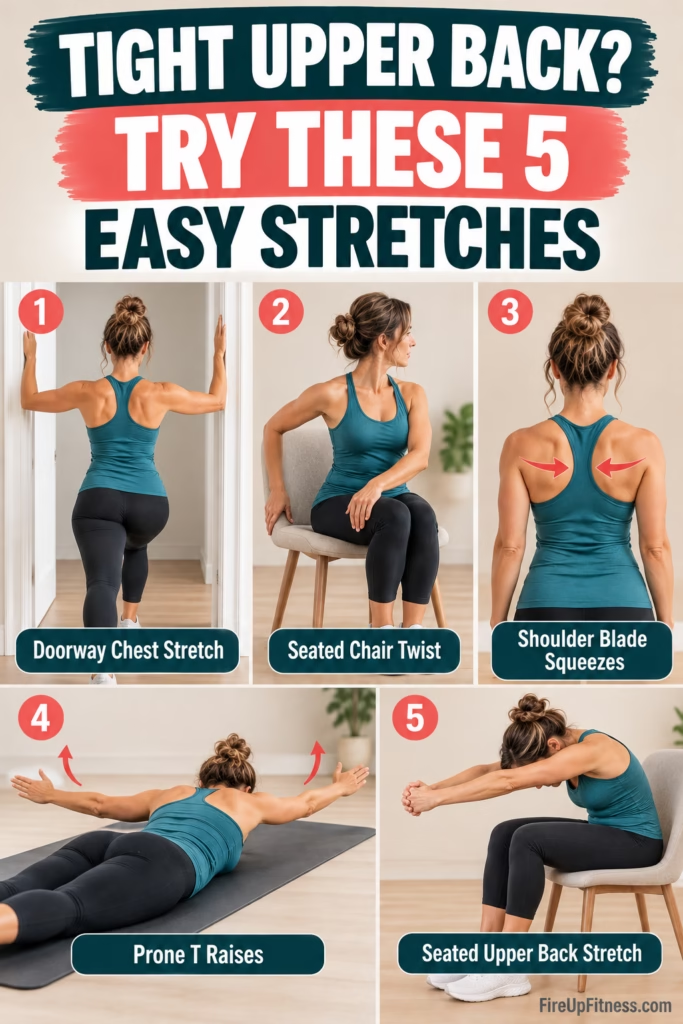
5 Upper Back Stretches for Tight Muscles and Stiffness
Does your upper back feel tight after sitting for hours? Maybe you notice an uncomfortable pulling sensation between your shoulder blades, or your shoulders feel heavy by the end of the day.
Sometimes, even simple activities like reaching overhead, turning your upper body, or sitting comfortably can become frustrating when your back feels stiff.
The good news is that you don’t necessarily need a massage or an intense workout to feel more comfortable. A few gentle upper back stretches and strengthening exercises can help reduce muscle tension, improve mobility, and make everyday movements easier.
Whether you spend hours working at a desk, looking down at your phone, or doing household chores, these five exercises are simple enough to fit into your daily routine.
Let’s start by understanding where that tightness comes from and which movements may help.

Why Does Your Upper Back Feel So Tight?
Your upper back contains several muscles that help support your neck, shoulders, and spine. These include the trapezius, rhomboids, and smaller muscles that control movement around your shoulder blades.
When these muscles remain in one position for long periods, they may begin to feel stiff, tired, or uncomfortable.
Some common reasons include:
- Sitting for too long: Staying in the same position for hours can contribute to muscle stiffness.
- Looking down frequently: Spending long periods using your phone or laptop may strain the muscles around your neck and shoulders.
- Stress: You may unknowingly tighten your shoulders when feeling anxious or overwhelmed.
- Repetitive movements: Certain household chores, workouts, and work activities can leave upper back muscles fatigued.
- Limited movement: A lack of regular movement and upper body strengthening may contribute to stiffness.
Here’s something worth knowing: upper back tightness doesn’t always mean your muscles simply need more stretching. Sometimes, improving strength, movement variety, and shoulder control is just as important.
That’s why the following routine combines gentle stretches with exercises that activate your upper back muscles.
Where Do You Feel the Tightness?
Before starting, pay attention to where your upper back feels uncomfortable.
Different movements target different muscles and areas of your upper body.
| Where you feel tightness | Exercise to try |
|---|---|
| Between your shoulder blades | Seated upper back stretch |
| Across your chest and front of shoulders | Doorway chest stretch |
| Upper back feels stiff when turning | Seated chair twist |
| Shoulders feel tired after sitting | Shoulder blade squeezes |
| Upper back muscles need strengthening | Prone T raises |
These are general movement suggestions, not a way to identify the cause of pain. Start with whichever exercise feels comfortable rather than forcing a movement into a painful area.
1. Doorway Chest Stretch to Open Tight Shoulders
You might wonder why a chest stretch belongs in a routine for upper back tension.
The reason is simple: your chest, shoulders, and upper back work together whenever you move your arms.
When the muscles across the front of your chest feel tight, reaching overhead or moving your shoulders backward may feel restricted.
The doorway chest stretch helps improve flexibility across your chest and the front of your shoulders.
How to do it:
- Stand in an open doorway with your feet hip-width apart.
- Place your forearms against the sides of the doorframe, with your elbows around shoulder height or slightly lower.
- Step one foot forward.
- Gently shift your body forward until you feel a comfortable stretch across your chest.
- Hold for 20–30 seconds while breathing normally.
- Relax and repeat twice.
What you should feel: A gentle pulling sensation across your chest and the front of your shoulders.
Common mistake: Leaning too far forward or arching your lower back. You don’t need a deep stretch to benefit from this movement.
When to try it: After long periods of computer work or whenever your chest and shoulders feel restricted.
2. Seated Chair Twist to Improve Upper Back Mobility
Have you ever tried turning to look behind you and noticed that your upper back feels unusually stiff?
Your thoracic spine, the section of your spine between your neck and lower back, is designed to rotate.
However, spending much of the day sitting in one position can make that movement feel less comfortable.
A seated chair twist gently encourages rotation through your upper back without requiring you to lie on the floor.
How to do it:
- Sit upright in a sturdy chair with both feet flat on the floor.
- Keep your hips facing forward.
- Slowly rotate your upper body toward the right.
- Rest your left hand on your right thigh and your right hand lightly on the chair for support.
- Hold for 10–15 seconds.
- Return to the center and repeat on the left side.
Complete 2–3 repetitions per side.
What you should feel: A gentle stretch through your upper back and the muscles around your torso.
Common mistake: Pulling yourself too far into the twist. Rotate slowly and avoid forcing your neck or lower back.
When to try it: During a work break, after a long drive, or when your upper back feels stiff from sitting.
3. Shoulder Blade Squeezes to Activate Upper Back Muscles
Think about how you hold your shoulders when you’re stressed, tired, or concentrating.
You may notice that they gradually creep upward or become tense without you realizing it.
Shoulder blade squeezes are a simple way to activate the muscles between your shoulder blades, including your rhomboids and middle trapezius.
Unlike a traditional stretch, this exercise focuses on controlled muscle movement.
How to do it:
- Sit or stand upright with your arms relaxed at your sides.
- Keep your shoulders down and your neck relaxed.
- Slowly draw your shoulder blades toward each other.
- Hold the position for 3–5 seconds.
- Release completely.
- Repeat 10–12 times.
What you should feel: Gentle muscle engagement between your shoulder blades.
Common mistake: Shrugging your shoulders toward your ears or squeezing so hard that your neck becomes tense.
When to try it: Between computer tasks, after sitting for a long time, or whenever your shoulders feel fatigued.
You can perform this exercise without leaving your desk, making it one of the easiest movements to practice throughout the day.
4. Prone T Raises to Strengthen Your Upper Back
Stretching can help improve flexibility, but it isn’t the only thing your upper back needs.
The muscles supporting your shoulder blades also need enough strength and endurance to handle everyday activities.
Prone T raises help strengthen the middle trapezius and other muscles involved in controlling your shoulder blades.
This exercise requires no weights, making it a good starting point for beginners.
How to do it:
- Lie face down on a comfortable exercise mat.
- Rest your forehead on a small folded towel, keeping your neck neutral.
- Extend both arms out to your sides to form a T shape.
- Turn your thumbs toward the ceiling.
- Gently squeeze your shoulder blades together while lifting your arms a few inches off the floor.
- Pause for 1–2 seconds.
- Slowly lower your arms and repeat 8–10 times.
What you should feel: Gentle effort across the upper back and around your shoulder blades.
Common mistake: Lifting your chest, arching your lower back, or raising your arms too high.
When to try it: As part of a regular upper body strengthening routine, rather than every time your back feels stiff.
Start with one set and allow recovery between strengthening sessions when needed.
5. Seated Upper Back Stretch to Release Tension Between Your Shoulder Blades
When tension builds between your shoulder blades, you may feel the urge to round your back and reach forward.
This simple movement can actually be used as a gentle upper back stretch.
It encourages your shoulder blades to move apart while stretching the muscles across your upper back.
How to do it:
- Sit comfortably in a chair with your feet flat on the floor.
- Extend both arms straight in front of you at shoulder height.
- Clasp your hands together.
- Gently reach forward while allowing your upper back to round slightly.
- Keep your shoulders relaxed and breathe slowly.
- Hold for 15–20 seconds.
- Return to your starting position and repeat 2–3 times.
What you should feel: A comfortable stretch across your upper back, especially between your shoulder blades.
Common mistake: Pulling your head forcefully downward or rounding your entire body excessively.
When to try it: After a busy day, during a stretching break, or whenever you feel mild stiffness between your shoulder blades.
This is a particularly convenient movement because it doesn’t require equipment or much space.
Try This Simple 5-Minute Upper Back Reset
Now that you know the exercises, here’s an easy way to put them together.
You can use this routine after a long day at your desk or whenever your upper back feels mildly stiff.
| Exercise | Duration |
|---|---|
| Doorway chest stretch | 30 seconds × 2 |
| Seated chair twist | 15 seconds per side × 2 |
| Shoulder blade squeezes | 10 repetitions |
| Prone T raises | 8–10 repetitions |
| Seated upper back stretch | 20 seconds × 2 |
Allow a little extra time to change positions and rest when necessary.
There’s no need to rush through the movements. Stretching should feel comfortable, and strengthening exercises should remain controlled.
For everyday stiffness, you can use the gentle stretches regularly. Prone T raises can be included in your strengthening routine a few times per week, with recovery as needed.
4 Everyday Habits That Can Help Prevent Upper Back Stiffness
Stretching may make your upper back feel better temporarily, but what you do during the rest of the day also matters.
1. Change Positions More Often
Even a comfortable sitting position can become tiring when you remain in it for hours.
Try standing up, walking around, or changing positions every 30–60 minutes.
You don’t need to perform a full workout. A short movement break can help interrupt prolonged sitting.
2. Make Your Workspace More Comfortable
A laptop positioned too low or a keyboard placed too far away may encourage awkward or tiring positions.
Try keeping your screen at a comfortable viewing height and your keyboard within easy reach.
Your shoulders should be able to relax naturally while working.
3. Stop Holding Tension in Your Shoulders
Stress can cause you to tighten your muscles without realizing it.
The next time you’re concentrating on something, check whether your shoulders are raised toward your ears.
Relax them, take a few slow breaths, and allow your arms to rest comfortably.
This small habit may help you become more aware of unnecessary muscle tension.
4. Strengthen Your Upper Body
Stretching is useful, but don’t overlook strength training.
Simple exercises such as wall push-ups, resistance exercises, and controlled shoulder blade movements can help build upper body strength and muscular endurance.
A combination of regular movement, flexibility work, and strengthening is often more helpful than relying on stretching alone.
How Long Does It Take to Relieve Upper Back Tension?
Some people notice that their upper back feels more comfortable immediately after gentle stretching. For others, improvement may take longer.
The results depend on what is contributing to the stiffness.
Temporary discomfort from prolonged sitting may respond well to movement breaks, while recurring muscle tension may require changes to your daily routine.
Strength and mobility improvements generally develop over weeks of consistent practice.
Remember, stretching isn’t supposed to hurt. Stop when you experience sharp pain, increasing discomfort, or unusual symptoms.
Persistent or worsening upper back pain should be assessed by a healthcare professional. Seek urgent care if upper back pain occurs with chest pain, difficulty breathing, sudden weakness, or other serious symptoms.
Frequently Asked Questions About Upper Back Stretches
How often should I stretch my upper back?
Gentle upper back stretches can often be performed daily when they feel comfortable. Start with short sessions and increase gradually based on how your body responds.
Strengthening exercises, such as prone T raises, may require recovery time between sessions.
Can I do upper back stretches while sitting at my desk?
Yes. Seated chair twists, shoulder blade squeezes, and seated upper back stretches can all be performed while sitting in a sturdy chair.
These exercises are convenient when you don’t have time or space for a full workout.
Is stretching enough to prevent upper back stiffness?
Not always. Stretching can help improve flexibility and temporarily reduce muscle tension, but regular movement, strengthening, and comfortable workstation habits also play important roles.
Should I stretch when my upper back is painful?
Gentle movement may help ordinary muscle stiffness, but don’t force stretches through pain. Sharp, severe, persistent, or worsening pain requires medical assessment, especially when accompanied by other concerning symptoms.
Final Thoughts
Upper back tension can make everyday activities uncomfortable, especially when you spend hours sitting, working, or repeating the same movements.
Fortunately, improving how your upper back feels doesn’t have to involve complicated exercises or expensive equipment.
These five upper back stretches and exercises offer a simple way to work on flexibility, shoulder movement, and upper back strength.
Start with the movements that feel comfortable, take regular breaks from sitting, and give your muscles time to adapt.
A few minutes of thoughtful movement can be a useful addition to your daily routine.