
What Your Posture Says About Your Health (And How to Fix It)
Posture is one of those things most of us don’t think about—until something starts to feel off.
A stiff neck at the end of the day.
A dull ache in the lower back.
That sense of feeling “compressed” after sitting too long.
Posture isn’t just about how you look when you stand up straight. It quietly shapes how your body moves, how your muscles work together, and how comfortable you feel throughout the day. Over time, small habits—how you sit, how you carry bags, how you scroll on your phone—can begin to change the way your body holds itself.
The good news is that posture isn’t fixed. Once you start paying attention, you can make gentle adjustments that support your body instead of working against it.
This article explores common posture patterns, what they often reveal about how your body is functioning, and simple ways to begin fixing your posture—without pressure or perfection.
What Becomes Clear After a While
Most posture issues don’t come from doing something “wrong.”
They come from doing the same things repeatedly.
Sitting in the same position every day.
Carrying weight on one side.
Standing unevenly without realizing it.
Over time, the body adapts. Some muscles become overworked. Others quietly weaken. Posture shifts—not suddenly, but gradually.
That’s why posture correction works best when it’s approached with awareness rather than force.
Why Posture Matters More Than We Think
Your posture influences how your muscles, joints, and spine share load. When alignment is off, certain areas work harder to compensate. This can lead to tension, fatigue, and movement patterns that feel increasingly uncomfortable.
Improving posture doesn’t mean holding yourself rigid. It means helping your body find balance again—so movement feels easier, not strained.
Fix Your Posture: 6 Common Patterns and Gentle Fixes
1. Sagging or Drooping Buttocks
This posture pattern is often linked to weakness in the deep core and lower back muscles. These muscles help stabilize the spine and maintain the natural curve of the lower back. When they’re underactive, the pelvis can tilt backward, flattening the lower spine.
Over time, this can affect both posture and comfort.
What Helps
- Gentle core engagement exercises such as bridges and planks
- Low-load back strengthening movements
- Resistance band work that encourages glute activation
As these muscles regain strength, posture often improves naturally—without forcing alignment.
2. Rounded Shoulders and a Hunched Upper Back
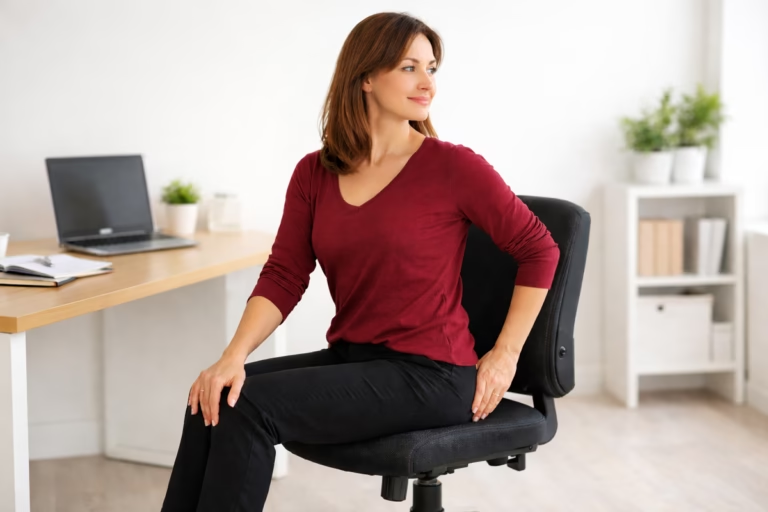
This is one of the most common posture patterns today, especially for anyone who spends time working at a desk or looking down at screens.
Rounded shoulders often happen when the muscles in the front of the body shorten while the upper back muscles lose strength. The body gradually adapts to this forward-leaning position.
What Helps
- Strengthening exercises for the upper back
- Gentle chest opening movements
- Wall-supported stretches that encourage extension
The goal isn’t to “pull your shoulders back,” but to restore balance between the front and back of the body.
3. One Hip Sitting Lower Than the Other
If you notice that one hip appears lower when you stand, it’s often related to weakness in the gluteus medius—a muscle that helps stabilize the pelvis during standing and walking.
This imbalance can affect how weight is distributed through the hips, knees, and ankles.
What Helps
- Side-lying leg lifts
- Clamshells
- Controlled single-leg movements
With consistent attention, the body often begins to re-center itself.
4. Protruding Lower Belly
A lower belly that pushes forward isn’t always about abdominal strength. In many cases, it’s linked to tight muscles along the sides and back of the torso—particularly the lats—which can pull the spine into an exaggerated arch.
This posture pattern can make the body feel compressed rather than supported.
What Helps
- Overhead reaches
- Gentle side stretches
- Mobility exercises that restore length through the torso
As mobility improves, posture often feels more upright without extra effort.
5. One Foot Turning Outward
If one foot naturally turns outward when standing, it can be a sign of hip tightness or imbalance. This pattern may seem minor, but it affects how force travels through the legs during movement.
Over time, it can influence knee alignment and walking mechanics.
What Helps
- Strengthening both inner and outer thigh muscles
- Lateral movements that promote balanced hip control
- Hip-opening stretches performed slowly and consistently
Improving hip mobility often leads to more symmetrical standing posture.
6. One Shoulder Higher Than the Other
This posture pattern is often associated with daily habits—like carrying bags on one side or repeatedly favoring one arm. Over time, muscles adapt unevenly, pulling one shoulder higher.
This imbalance can place extra strain on the neck and upper back.
What Helps
- Balanced shoulder strengthening exercises
- Gentle neck and shoulder stretches
- Being mindful of load distribution during daily activities
Small changes in habits can lead to noticeable posture improvements.
Who This Is For
This guide is for you if:
- You’ve noticed recurring aches or stiffness without a clear cause
- You feel uneven or compressed in certain positions
- You want to improve posture without extreme workouts
- You’re looking for a gentle, sustainable approach to movement
You don’t need perfect posture to benefit. Awareness alone is a powerful starting point.
Fixing Your Posture Without Overthinking It
Posture doesn’t improve overnight. And it doesn’t need to.
The most meaningful changes come from:
- noticing patterns
- making small adjustments
- allowing the body time to adapt
Instead of correcting posture constantly, think of supporting it—through movement, strength, and mobility that fit into real life.
Over time, standing taller becomes less of a conscious effort and more of a natural outcome.
A Final Reflection
Your posture isn’t a flaw to fix—it’s information.
It reflects how your body has adapted to daily life. When you understand what it’s telling you, you can respond with care rather than correction.
Improving posture isn’t about forcing alignment. It’s about restoring balance, comfort, and ease of movement—so your body works with you, not against you.
And often, the most noticeable change isn’t how you look—but how you feel moving through your day.