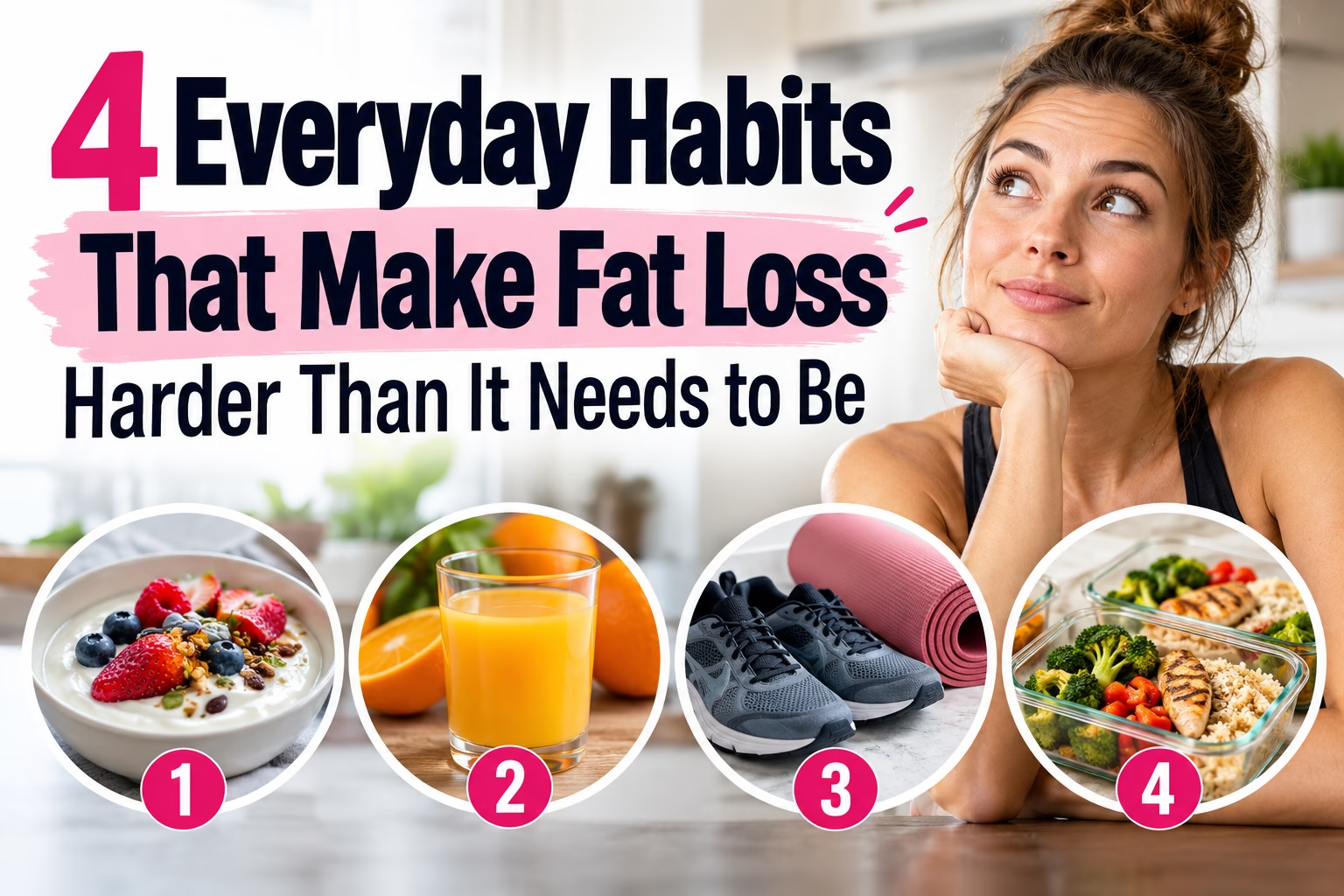
4 Everyday Habits That Make Fat Loss Harder
You can eat fairly well, exercise when you have time, and still feel like your fat-loss progress is moving painfully slowly.
Sometimes the problem is not one big mistake. It is the small habits repeated every day—the glass of juice that barely registers as food, the workouts that happen only when life is quiet, or the last-minute dinner decision that turns into takeout because nothing is prepared.
None of these habits automatically causes weight gain on its own. But when they regularly lead to more calories, less movement, increased hunger, or inconsistent routines, they can quietly make maintaining a calorie deficit much harder.
Before making your diet more restrictive or adding another exhausting workout, take a look at these four habits.
You may find that a few simple adjustments make healthy eating and regular exercise much easier to maintain.

1. You Are Overlooking High-Protein Yogurt
Yogurt does not magically burn body fat, but choosing the right type can make it easier to build a filling, nutrient-rich meal or snack.
Greek yogurt and other high-protein varieties can provide a useful combination of protein, calcium, and—in varieties containing live cultures—beneficial bacteria.
Protein is especially helpful when fat loss is your goal because it can make meals more satisfying and helps support muscle while you are losing body fat.
The problem is that not every yogurt is nutritionally the same.
Some flavored yogurts contain considerable amounts of added sugar while providing relatively little protein. Instead of assuming that every yogurt is a healthy choice, check the nutrition label.
Try plain Greek yogurt topped with:
- Fresh berries
- Sliced apple
- Chia or ground flaxseed
- A small portion of nuts
- Cinnamon
This gives you a snack with protein, fiber, texture, and natural sweetness.
If you do not eat dairy, look for an unsweetened plant-based yogurt with a reasonable amount of protein.
The goal is not to force yourself to eat yogurt. It is simply to choose snacks that actually satisfy you rather than leaving you hungry again 30 minutes later.
2. You Are Drinking Your Fruit Instead of Eating It
Fruit absolutely belongs in a healthy eating pattern.
Fruit juice, however, is much easier to consume quickly and usually contains considerably less fiber than whole fruit.
Think about how easy it is to drink a large glass of orange juice with breakfast. Eating the number of whole oranges needed to produce that glass would probably take considerably longer and feel much more filling.
That difference matters.
Whole fruit gives you fiber and requires chewing, both of which can contribute to fullness. Juice makes it much easier to consume the calories from several pieces of fruit without feeling as satisfied.
That does not mean you can never drink juice.
A small serving can fit into a balanced diet. But when fat loss is the goal, make whole fruit your everyday choice more often.
Instead of drinking apple juice, eat an apple.
Instead of drinking orange juice, have an orange.
Instead of relying on bottled fruit drinks when you are thirsty, choose water and enjoy fruit alongside your meal.
This simple switch can help you feel fuller without eliminating fruit or carbohydrates from your diet.
3. Your Exercise Routine Is Too Inconsistent
One extremely hard workout followed by six inactive days usually is not the best strategy for building lasting fitness.
Consistency matters much more than creating a “perfect” workout schedule.
Adults should generally aim for at least 150 minutes of moderate-intensity aerobic activity each week, along with muscle-strengthening activities on at least two days.
That might sound like a lot when your schedule is already full, but you do not have to complete it all at once.
You could walk briskly for 30 minutes five days per week.
Or break your movement into shorter sessions throughout the day.
A 10-minute morning walk, 10 minutes after lunch, and another 10 minutes after dinner still adds meaningful activity to your day.
Strength training is worth prioritizing as well.
Building and maintaining muscle supports physical function, strength, and body composition—something that becomes increasingly important as we get older.
Instead of asking:
“How hard can I work out today?”
Try asking:
“What amount of exercise can I realistically repeat every week?”
That change in mindset can make your routine much easier to maintain.
4. You Wait Until You Are Hungry to Decide What to Eat
It is 6:30 p.m.
You are hungry, tired, and staring into the refrigerator hoping dinner will somehow appear.
There is chicken somewhere in the freezer, vegetables that still need chopping, and absolutely no desire to cook any of it.
So you reach for whatever is quickest.
Sound familiar?
This is exactly why meal planning can be so helpful.
You do not need to spend your entire Sunday filling dozens of identical containers. Even a loose plan removes some of the decisions you have to make when you are already hungry.
Before the week begins, decide on a few:
- Breakfasts
- Lunches
- Dinners
- Protein-rich snacks
- Easy emergency meals
Then buy the ingredients you need.
You can also prepare a few basics ahead of time.
Cook some protein, wash and chop vegetables, prepare whole grains, boil eggs, or portion snacks so that assembling a meal takes minutes instead of starting from scratch.
Keep a few simple backup foods available too.
Eggs, frozen vegetables, canned beans, tuna, Greek yogurt, fruit, oats, and pre-cooked whole grains can turn into quick meals when your original plan falls apart.
Because some weeks will fall apart.
A good meal plan should make those weeks easier—not make you feel guilty because you did not follow a rigid menu perfectly.
Why These Small Habits Matter
Fat loss is rarely determined by one food, one workout, or one “bad” day.
Your overall pattern matters much more.
Small habits become powerful because you repeat them.
Choosing whole fruit instead of juice once will not dramatically change your body. But making that choice most days for several months can influence your overall calorie intake and eating habits.
The same applies to exercise.
A single workout will not change much. A realistic routine that you repeat week after week can.
And one planned dinner may not seem important, but having healthy ingredients ready several nights each week can prevent dozens of last-minute food decisions over time.
That is why sustainable fat loss often feels less dramatic than social media makes it appear.
It is mostly about making your everyday choices a little easier to repeat.
A Simple Fat-Loss Habit Check
Before changing your entire routine, ask yourself:
Am I eating enough protein and fiber to stay satisfied?
Am I drinking calories that I could easily replace with water or whole foods?
Am I exercising consistently, or only when I feel motivated?
Do I know what I am eating tomorrow?
You do not need perfect answers to all four.
Choose the habit that is causing you the most trouble and work on that one first.
Once it feels normal, move to the next.
The Bottom Line
When fat loss feels harder than expected, the answer is not always eating dramatically less or exercising dramatically more.
Sometimes the better solution is improving the habits surrounding your food and workouts.
Choose satisfying foods. Eat whole fruit more often than drinking it. Create an exercise schedule you can actually maintain. Give yourself a basic meal plan before hunger makes the decision for you.
These changes may look small, but that is exactly what makes them useful.
The best habits are not the ones you can follow perfectly for seven days.
They are the ones you can still imagine doing months from now.