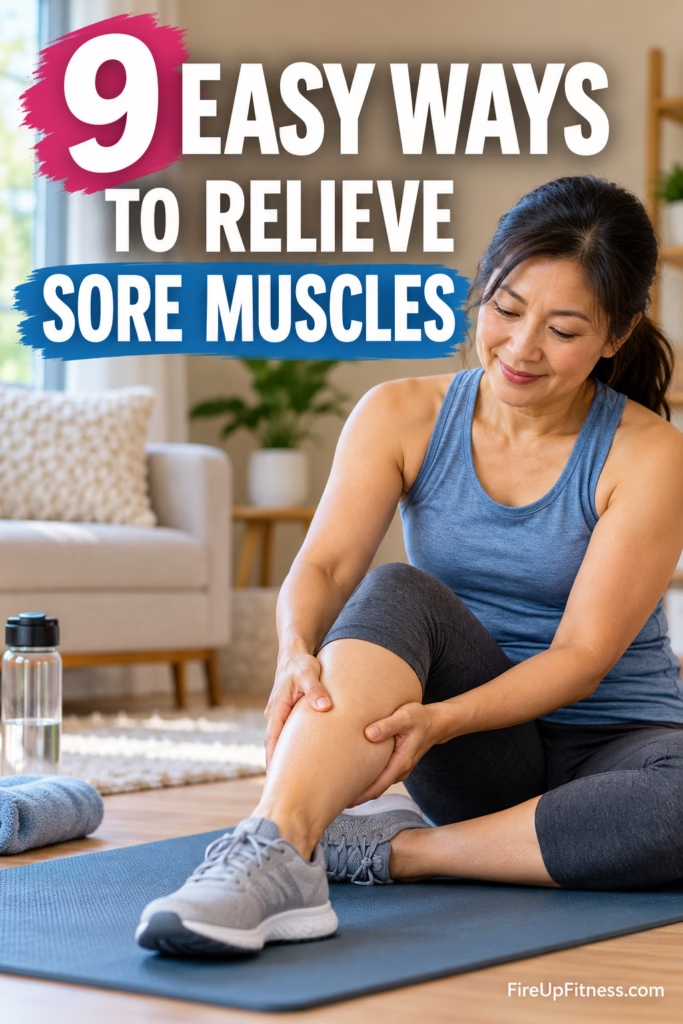
How to Relieve Sore Muscles After a Workout
You finish a workout feeling great, but the next morning, your legs feel stiff, your arms ache, and even sitting down becomes uncomfortable. Sound familiar?
Muscle soreness after a workout is common, especially when starting a new exercise routine, increasing intensity, or trying unfamiliar movements.
The good news? You don’t need complicated recovery treatments to feel better. A few simple habits can help ease stiffness, improve comfort, and support your body’s natural recovery process.
Whether you’re new to fitness or staying active after 40, these muscle recovery tips can help you get back to moving comfortably.
Why Do Muscles Feel Sore After Exercise?
When you challenge your muscles with unfamiliar or demanding exercises, microscopic damage can occur within the muscle fibers. Your body responds with a natural repair process that may cause temporary soreness and stiffness.
This is called delayed onset muscle soreness (DOMS).
Soreness usually begins 12–24 hours after exercise, peaks within 24–72 hours, and gradually improves over the following days.
Common triggers include strength training, squats, lunges, running downhill, and trying new exercises.
Remember, muscle soreness doesn’t necessarily mean you had a better workout. You can build strength and improve fitness without feeling sore afterward.
1. Warm Up Before Exercising
A proper warm-up prepares your muscles and joints for movement while gradually increasing your heart rate.
Before starting your workout, spend 5 minutes doing gentle movements such as:
- Marching in place
- Arm circles
- Side steps
- Bodyweight squats
- Gentle leg swings
Dynamic warm-ups help prepare your body for exercise, although they don’t guarantee that you won’t experience soreness.
2. Drink Enough Water
Staying hydrated supports normal muscle function and helps your body cope with physical activity.
During exercise, you lose fluids through sweat, especially during longer or more intense workouts.
Drink water throughout the day, take small sips during exercise, and replace fluids afterward.
Water-rich foods such as oranges, cucumbers, and watermelon can also contribute to hydration.
While drinking water won’t eliminate muscle soreness, proper hydration supports overall recovery.
3. Keep Moving Gently
When your muscles feel sore, spending the entire day on the couch might sound tempting.
However, gentle movement can sometimes help relieve stiffness and improve comfort.
Try these easy active recovery exercises:
- A relaxed 10-minute walk
- Gentle yoga stretches
- Easy cycling
- Slow shoulder circles
- Light mobility exercises
Avoid intense workouts targeting muscles that are still significantly sore. The goal is comfortable movement, not pushing through pain.
4. Take a Warm Shower
Warm water can feel especially soothing when your muscles are tight and stiff.
Heat helps promote relaxation and may temporarily ease muscle discomfort.
Try taking a warm shower, enjoying a comfortable bath, or applying a heating pad to the sore area for 15–20 minutes.
Always use a protective layer with heating pads and avoid excessive temperatures.
This simple recovery habit can be particularly relaxing before bedtime.
5. Try Cold Therapy
Cold therapy may temporarily reduce muscle pain and discomfort after demanding exercise.
You can use a cold pack wrapped in a towel and apply it to the sore area for approximately 10–15 minutes.
Never place ice directly against your skin.
Although ice baths are popular among athletes, they’re not necessary for everyday muscle recovery. Frequent cold-water immersion immediately after strength training may also reduce some muscle-building adaptations.
Choose gentle cooling methods that feel comfortable rather than forcing yourself into extremely cold water.
6. Massage Your Sore Muscles
A gentle massage can help relieve tension and temporarily reduce post-workout soreness.
You can massage your legs, shoulders, or arms using your hands or a foam roller.
Try slow, gentle movements for 30–60 seconds over a sore muscle area.
Avoid pressing too hard, especially when muscles are particularly tender.
A short massage after a warm shower can also be a relaxing addition to your evening routine.
7. Eat Muscle Recovery Foods
Your muscles need proper nutrition to repair and recover after exercise.
Protein supports muscle repair, while carbohydrates help replenish energy used during physical activity.
Some helpful muscle recovery foods include:
- Greek yogurt with berries
- Eggs and whole-grain toast
- Salmon with vegetables
- Bananas and nuts
- Chicken, beans, or lentils
- Leafy greens and colorful fruits
You don’t need expensive recovery supplements. Balanced meals with adequate protein, carbohydrates, and essential nutrients provide a strong foundation for muscle health.
8. Get Enough Sleep
Sleep is one of the most important parts of muscle recovery.
While you sleep, your body carries out processes involved in tissue repair and physical recovery.
Aim for 7–9 hours of quality sleep each night and try to maintain a consistent bedtime.
Rest days are important, too. After challenging strength workouts, allowing approximately 48 hours before training the same muscle groups intensely again is a useful starting point.
Recovery is part of getting stronger, not a break from progress.
9. Increase Workout Intensity Slowly
Doing too much too soon is a common reason people experience uncomfortable muscle soreness.
Instead of jumping into a demanding routine, gradually increase your exercise intensity.
Start with shorter sessions, lighter resistance, and fewer repetitions.
For example, begin with 10 comfortable squats rather than attempting 50 on your first day.
As your body adapts, gradually add more repetitions or resistance.
This approach helps you build strength consistently while giving your muscles time to adjust.
A Simple 10-Minute Muscle Recovery Routine
On days when your muscles feel stiff, try this gentle recovery routine at home.
| Activity | Duration |
|---|---|
| Slow walking or marching | 2 minutes |
| Gentle shoulder circles | 1 minute |
| Easy hip and leg movements | 2 minutes |
| Comfortable full-body stretches | 3 minutes |
| Relaxed breathing | 2 minutes |
| Total | 10 minutes |
Move slowly, avoid forcing stretches, and stop anything that causes sharp pain.
When Is Muscle Soreness a Concern?
Normal post-workout soreness usually feels like mild to moderate tenderness or stiffness and improves within a few days.
However, sudden sharp pain, significant swelling, worsening discomfort, or difficulty moving normally may indicate an injury rather than ordinary soreness.
Severe muscle pain or weakness accompanied by dark urine after intense exercise requires immediate medical attention.
Final Thoughts
Muscle soreness after exercise is common, but it doesn’t have to interrupt your fitness routine.
Simple habits like staying hydrated, eating balanced meals, getting enough sleep, and practicing gentle movement can support recovery and help your body feel more comfortable.
Most importantly, don’t measure your fitness progress by how sore you feel afterward.
A successful workout isn’t about how much your muscles ache. It’s about building strength, improving mobility, and staying consistent.
Give your body the care and recovery time it needs, and you’ll be better prepared for your next workout.