4 Easy Yoga Poses for Period Pain Relief at Home
Period discomfort can make even simple daily tasks feel harder than usual, leaving many of us looking for gentle ways to feel better. While painkillers may offer short-term relief, there’s another supportive option that doesn’t rely on medication — yoga.
Slow, mindful movement can help relax tense muscles, ease cramping, and encourage calm during your cycle. These are not intense stretches or advanced routines. Instead, they’re easy yoga poses you can do at home, specifically chosen to support period pain relief. Whether you’re new to yoga or simply need something soothing, these poses focus on comfort, breathing, and gentle movement to help your body feel supported when it needs it most.
Following yoga poses will help you manage menstrual pain:
1. Forward Standing Fold Yoga
Forward fold yoga (Uttanasana) is a standing yoga pose that involves folding forward from the hips while keeping the legs straight.
How to perform forward standing fold pose:
- Begin standing with your feet hip-distance apart and your arms at your sides.
- Inhale and reach your arms up overhead.
- Exhale and fold forward from the hips, keeping your legs straight.
- Place your hands on the floor or on your shins, depending on your flexibility.
- Allow your head and neck to relax.
- Hold the pose for several breaths, then inhale and slowly rise back up to standing.
Forward fold yoga can help to release tension in the hamstrings, calves, and lower back, making it a helpful pose for those who spend a lot of time sitting or standing. It can also help to calm the mind and reduce stress and anxiety.
In addition to its physical and mental benefits, forward fold yoga can also be a helpful pose for those experiencing menstrual pain. The pose can help to stretch and release tension in the lower back and pelvic region, which can reduce cramping and discomfort.
It is important to practice forward fold yoga with caution if you have any injuries or conditions affecting the back or hamstrings.
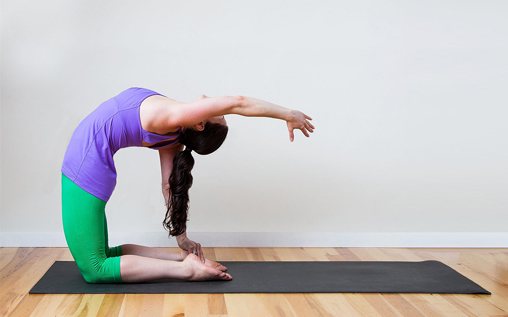
2. Camel pose
Camel pose yoga (Ustrasana) is a back bend yoga pose that stretches the chest, abdomen, and quadriceps.
How to perform Camel pose:
- Begin by kneeling on the floor with your knees hip-distance apart and your thighs perpendicular to the floor.
- Place your hands on your lower back, fingers pointing downward.
- Inhale and draw your tailbone down toward the floor while lifting your chest upward.
- Exhale and lean back, placing your hands on your heels or on your lower back for support.
- Allow your head to drop back if comfortable, but keep your neck relaxed.
- Hold the pose for several breaths, then slowly come back up to kneeling position.
Camel pose yoga can be a challenging pose, but it can have many benefits. It can help to improve posture, stretch the front of the body, and open up the chest and shoulders. It can also help to improve digestion and alleviate back pain.
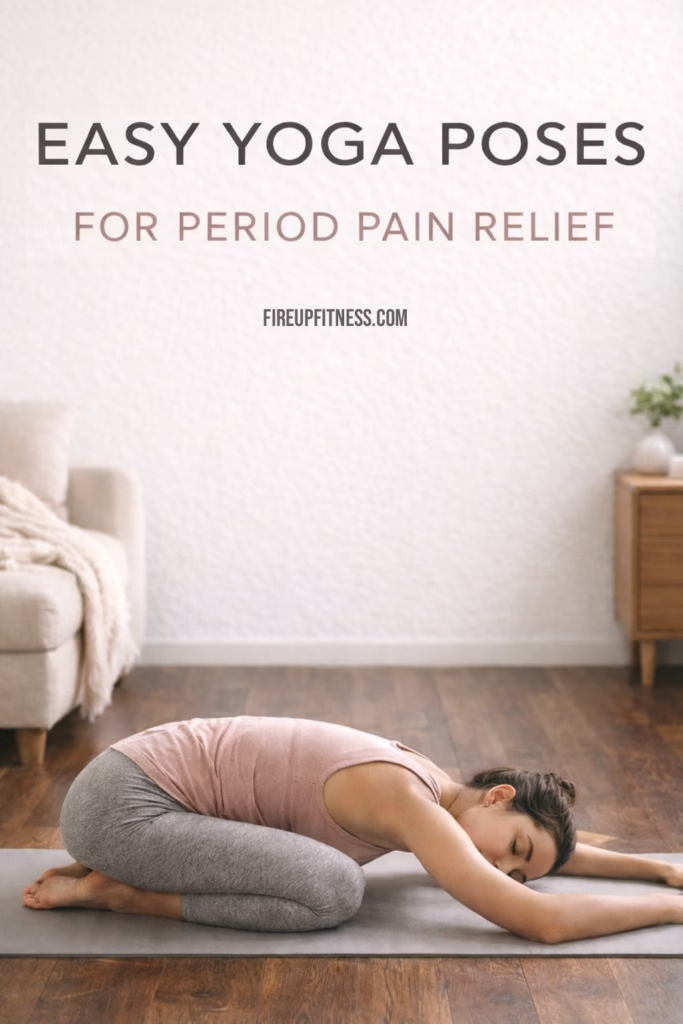
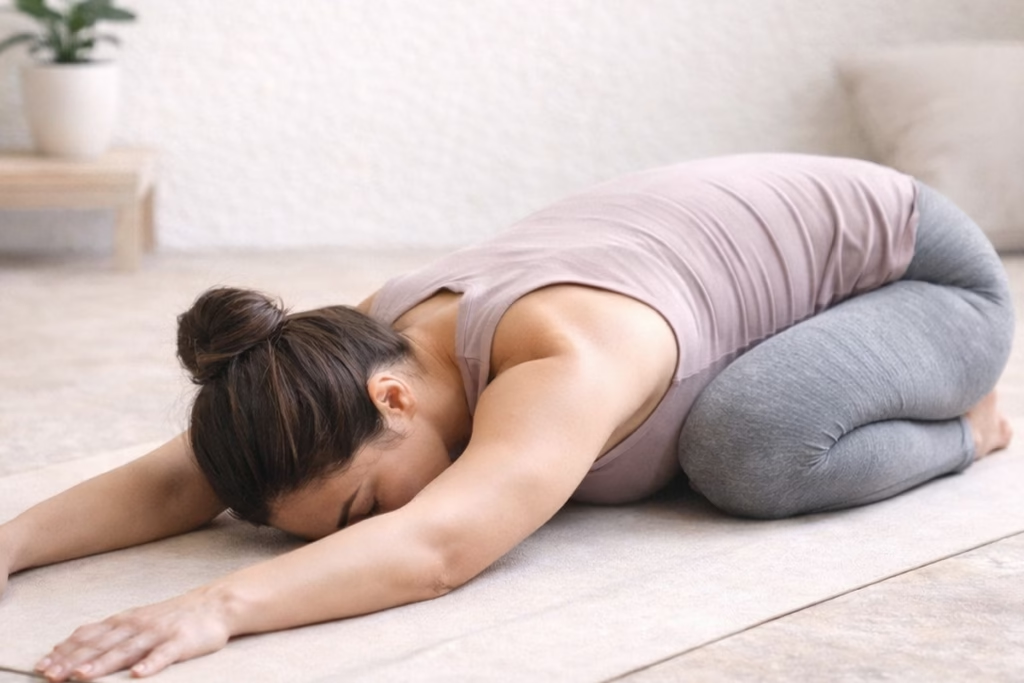
3. Wide child’s pose
Wide child’s pose yoga (Balasana) is a yoga pose that involves sitting back on your heels with your knees apart, and then reaching your arms forward, lowering your forehead to the ground.
How to perform Wide Child’s pose:
- Begin by kneeling on the floor with your big toes touching and your knees apart, wider than hip-distance.
- Sit back on your heels and stretch your arms forward, palms facing down.
- Lower your forehead to the ground or to a prop if needed.
- Allow your body to relax, breathing deeply and evenly.
- Hold the pose for several breaths, then slowly come back up to sitting position.
Wide child’s pose yoga can help to release tension in the back, shoulders, and hips, making it a helpful pose for those who spend a lot of time sitting or standing. It can also help to calm the mind and reduce stress and anxiety.
4. Arching pigeon
yoga pose called “Pigeon Pose” is often used to stretch the hips and thighs.
How to perform Pigeon Pose:
- Start in a tabletop position with your hands and knees on the ground.
- Bring your right knee forward and place it behind your right wrist.
- Slide your left leg back, straightening your knee and lengthening through the front of your left hip.
- Lower your torso onto the floor and rest your hands on the ground in front of you.
- You can stay upright or fold forward, depending on your flexibility and comfort level.
- Hold the pose for several deep breaths, then repeat on the other side.
Pigeon Pose can be a difficult pose for some people, especially if you have tight hips or knee problems. Always listen to your body and modify the pose if needed. A yoga teacher can also help guide you through the pose safely and effectively.
Final Thoughts
Period pain can feel overwhelming, especially when it disrupts your daily routine. While there’s no single solution that works for everyone, gentle movement can offer real comfort when your body needs extra care. These easy yoga poses are meant to support period pain relief in a calm, non-intimidating way — without pressure or strain.
Listen to your body, move slowly, and rest whenever you need to. Even a few minutes of gentle stretching and deep breathing can help ease tension and create a sense of relief. Over time, making space for simple, supportive practices like yoga can help you feel more connected to your body and better equipped to manage period discomfort naturally.
Save this routine and return to it whenever your body asks for a softer approach.