5 Leg and Glute Exercises for a Stronger Lower Body
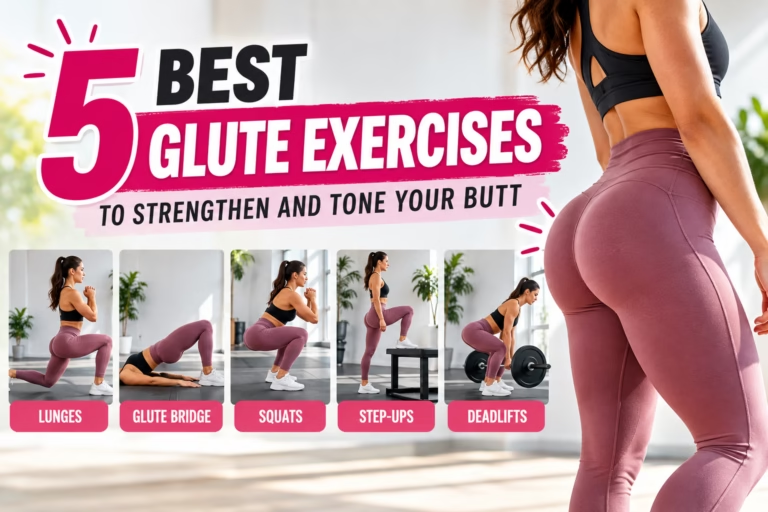
Want stronger, firmer glutes without spending hours at the gym? A few well-chosen exercises can make a real difference in how your lower body looks, feels, and moves.
Your glutes do more than give your lower body shape. They support your hips, help stabilize your knees, and make everyday activities like climbing stairs, walking, and getting up from a chair easier.
The best part? You can build an effective leg and glute workout at home with a few simple pieces of equipment.
These five exercises target your glutes, thighs, and hamstrings while helping improve balance, strength, and lower-body stability. Whether you’re getting back into exercise or looking to refresh your routine, this workout gives you a practical place to start.
Why Strengthening Your Glutes Matters
Strong glutes aren’t just about appearance. They play an important role in keeping your lower body stable and supporting healthy movement.
Regular glute training can help you:
- Build stronger, more defined glute muscles.
- Improve hip stability and balance.
- Support better posture and movement.
- Make walking and climbing stairs easier.
- Maintain lower-body strength as you age.
And you don’t need complicated exercises to get started. The key is choosing movements that challenge your muscles in different ways.
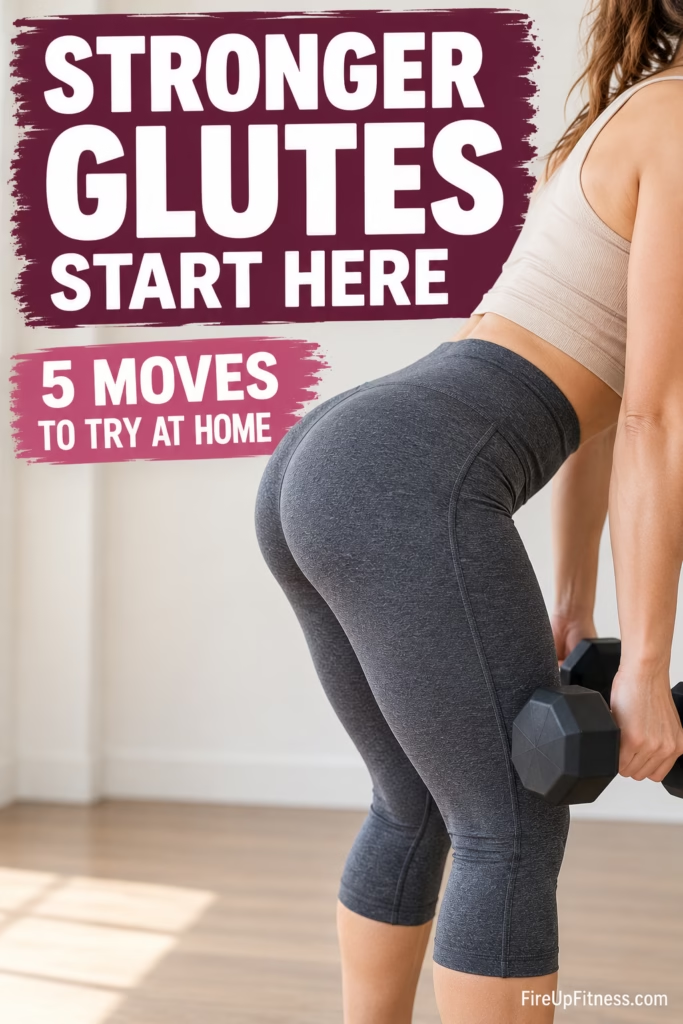
1. Dumbbell Deadlifts for Stronger Glutes and Hamstrings
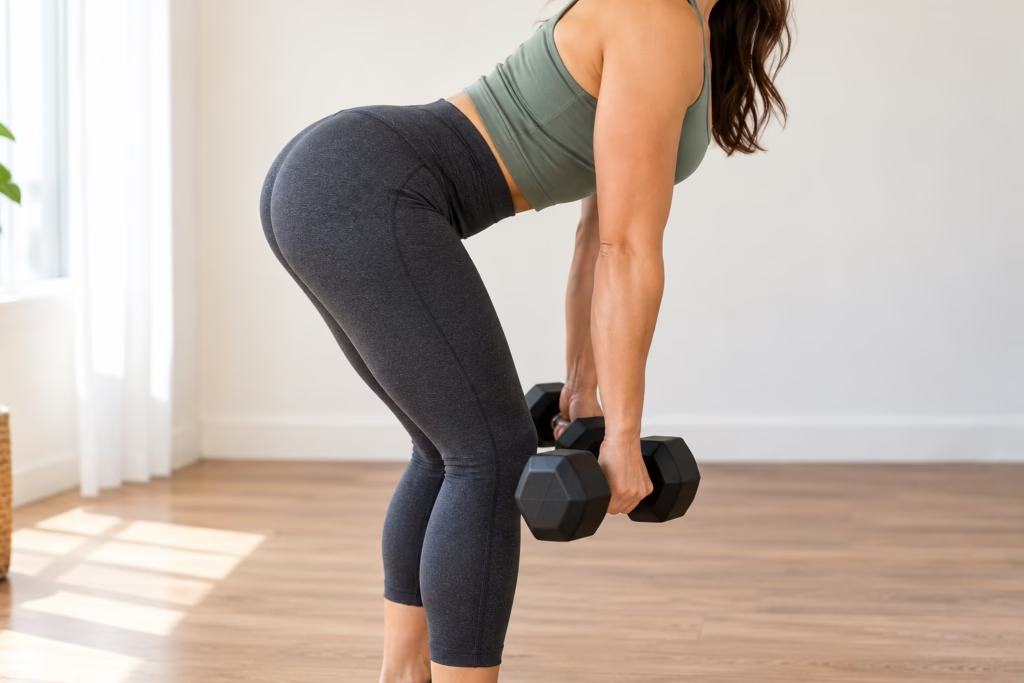
Deadlifts are one of the best exercises for strengthening the muscles along the back of your body, especially your glutes and hamstrings.
How to do it:
- Stand with your feet hip-width apart, holding a dumbbell in each hand.
- Keep your knees slightly bent and your back neutral.
- Push your hips backward as you lower the weights along your legs.
- Stop when you feel a comfortable stretch in your hamstrings.
- Press through your feet and bring your hips forward to stand tall.
Reps: 10–12
Beginner tip: Start with light dumbbells or practice the hip-hinge movement without weights.
Make it count: Keep the dumbbells close to your legs and avoid rounding your back. You should feel your glutes and hamstrings doing most of the work.
2. Step-Ups to Strengthen and Shape Your Legs
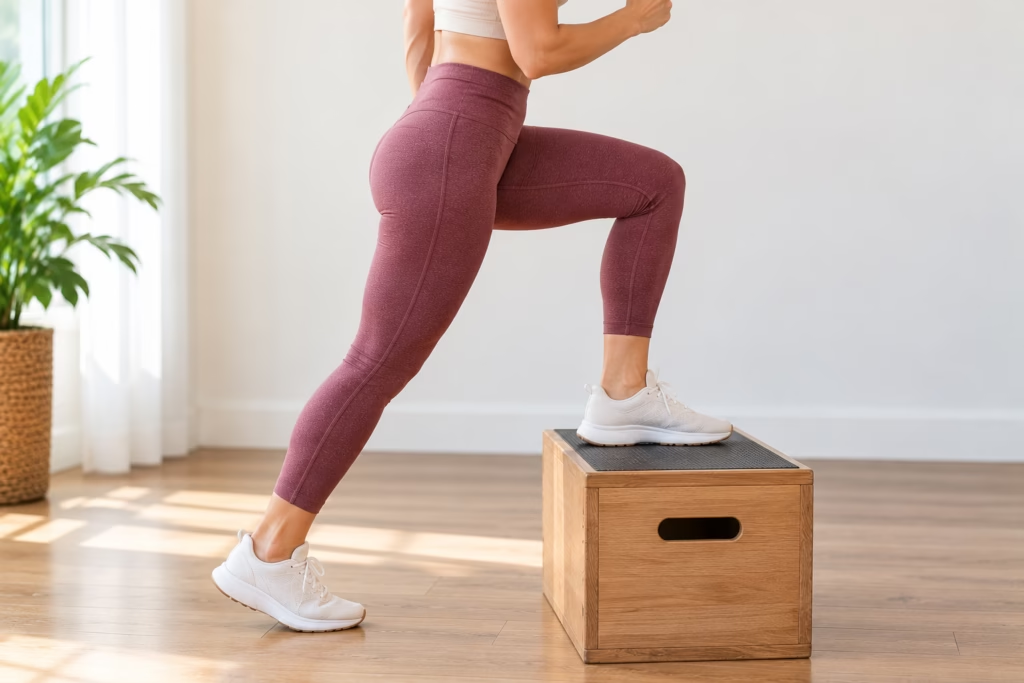
Step-ups are a great way to train your glutes and thighs while improving balance. They also strengthen the muscles you use when climbing stairs.
How to do it:
- Stand in front of a sturdy, low step.
- Place your right foot firmly on the step.
- Push through your right foot to lift your body.
- Bring your left foot up or keep it slightly raised for a balance challenge.
- Slowly step back down and repeat before switching legs.
Reps: 10 per leg
Beginner tip: Use a low step and hold a wall or railing for support.
Make it count: Avoid pushing off too much with your back foot. Let the leg on the step do most of the lifting.
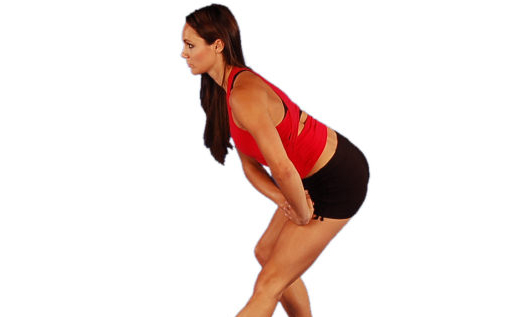
3. Kettlebell Swings for Glute Power
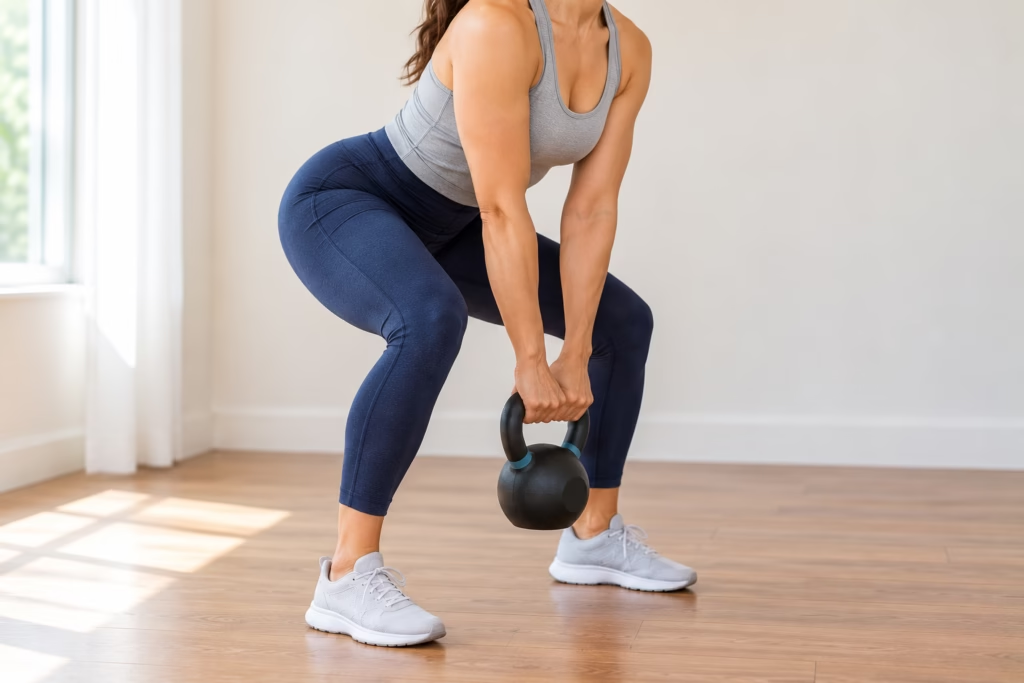
Kettlebell swings add a more dynamic movement to your leg and glute workout. They challenge your glutes, hamstrings, and core while helping develop hip power.
How to do it:
- Stand with your feet slightly wider than hip-width apart.
- Hold a kettlebell with both hands.
- Bend your knees slightly and hinge backward at your hips.
- Swing the kettlebell back between your legs.
- Drive your hips forward to swing the kettlebell to approximately chest height.
- Let it swing back down with control.
Reps: 12–15
Beginner tip: Master the deadlift first. You can also replace swings with 12–15 glute bridges until you’re comfortable with the hip-hinge technique.
Make it count: Your hips create the movement, not your arms. Avoid lifting the kettlebell with your shoulders or leaning backward at the top.
4. Single-Leg Jumps for Balance and Lower-Body Strength
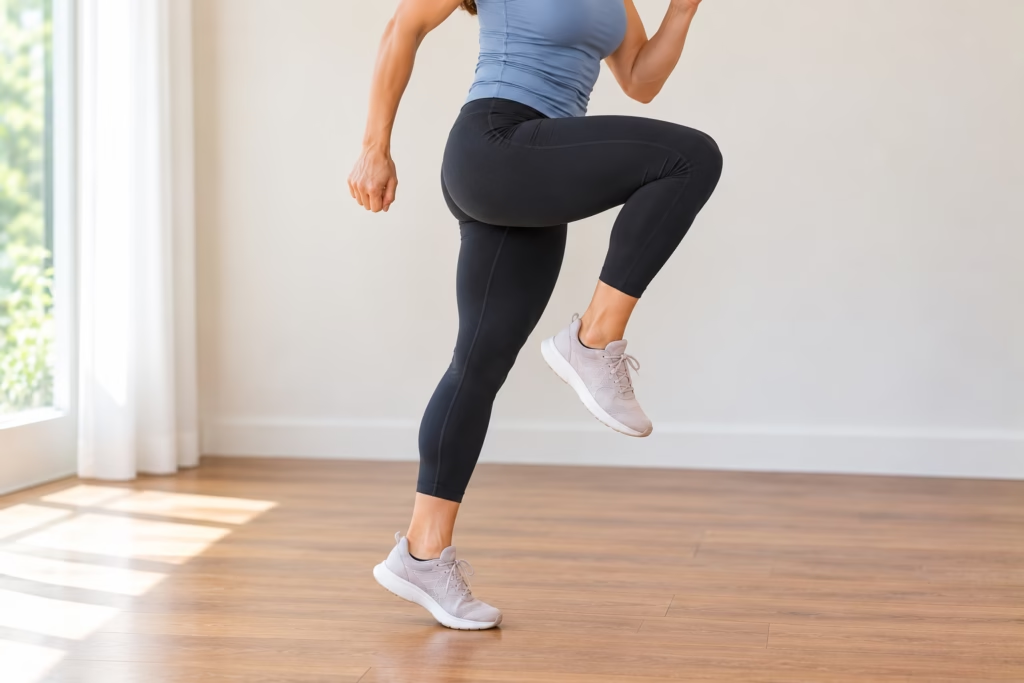
Want to add a little challenge to your routine? Single-leg jumps work your glutes, thighs, calves, and stabilizing muscles while improving coordination.
How to do it:
- Stand on your right leg with your knee slightly bent.
- Move your hips backward a little.
- Push through your foot and make a small upward jump.
- Land softly with your knee aligned over your foot.
- Regain your balance before repeating.
- Switch legs after completing your reps.
Reps: 6–8 per leg
Beginner-friendly alternative: Skip the jumping and perform supported single-leg sit-to-stands or regular step-ups instead.
Make it count: Focus on a soft, controlled landing rather than jumping high. Avoid this movement if jumping aggravates your knees or ankles.
5. Stability Ball Leg Lifts for Glute Activation
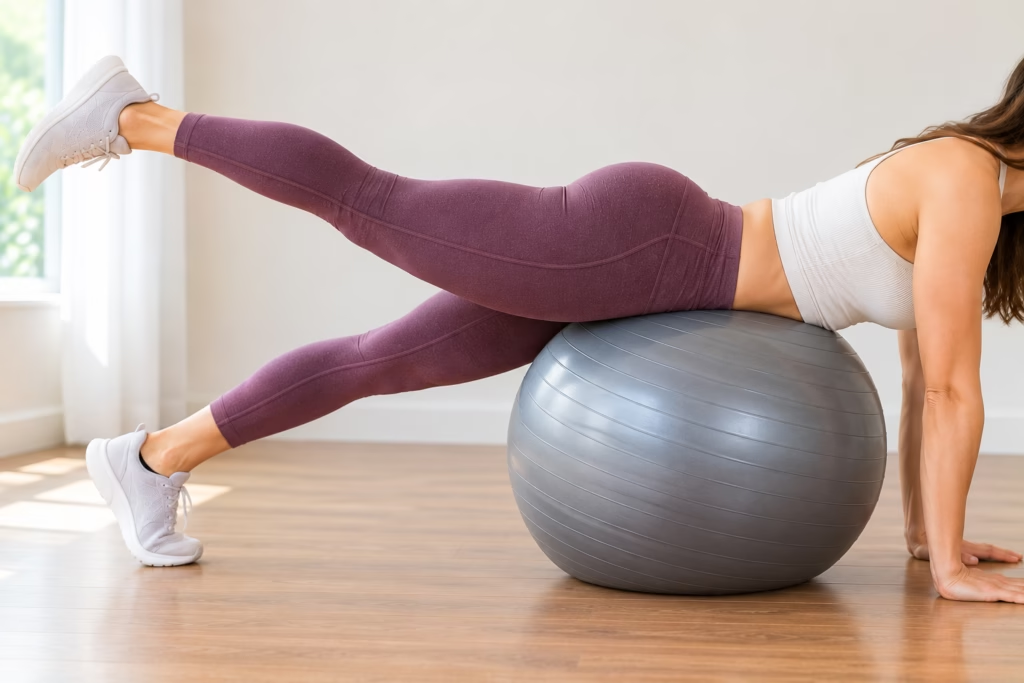
This exercise helps you focus on your glutes without needing heavy weights. It also challenges your core as you maintain balance on the ball.
How to do it:
- Position your hips and lower abdomen over a stability ball.
- Place your hands firmly on the floor for support.
- Extend your legs behind you with your toes touching the floor.
- Slowly lift one leg a short distance while keeping your hips level.
- Pause briefly, then lower it with control.
- Alternate legs.
Reps: 10–12 per leg
Beginner tip: Perform the same movement on your hands and knees without a stability ball.
Make it count: Avoid arching your lower back to lift your leg higher. Small, controlled movements are more useful than forcing extra height.
Your 20-Minute Leg and Glute Workout at Home
Ready to put these exercises together? Follow this simple routine two to three times per week, allowing at least one recovery day between workouts.
| Exercise | Repetitions |
|---|---|
| Dumbbell Deadlifts | 10–12 reps |
| Step-Ups | 10 reps per leg |
| Kettlebell Swings | 12–15 reps |
| Single-Leg Jumps | 6–8 reps per leg |
| Stability Ball Leg Lifts | 10–12 reps per leg |
Workout tips:
- Rounds: Start with 2 rounds and gradually work up to 3.
- Rest: Take 30–60 seconds between exercises and 60–90 seconds between rounds.
- Warm-up: Spend 3–5 minutes marching in place, doing hip circles, or performing gentle bodyweight squats.
- Beginner modifications: Replace single-leg jumps with supported step-ups and kettlebell swings with glute bridges.
- Cool-down: Finish with gentle stretches for your glutes, thighs, and hamstrings.
Focus on controlled movements and proper form rather than rushing through the workout.
5 Small Habits That Make Glute Workouts More Effective
You don’t need to make every workout harder to see progress. Often, it’s the small details that make the biggest difference.
- Slow down your repetitions. Give your muscles time to work instead of rushing through each movement.
- Choose weights you can control. The final few repetitions should feel challenging without sacrificing your form.
- Increase the challenge gradually. Add a repetition, use slightly heavier dumbbells, or complete another round as you become stronger.
- Eat enough protein. Protein-rich foods help support muscle repair and growth alongside regular strength training.
- Stay consistent. Two or three quality workouts each week can be more useful than occasional exhausting sessions.
Remember that building stronger glutes takes time. You may notice improvements in strength and balance before seeing visible changes in muscle definition.
Can You Build Stronger Glutes After 40?
Absolutely. Strength training remains valuable throughout adulthood, and your 40s, 50s, and beyond are excellent times to prioritize lower-body strength.
As we age, maintaining muscle becomes increasingly important for mobility, balance, and everyday independence.
You don’t need to jump, lift heavy weights, or push through discomfort. Controlled deadlifts, step-ups, glute bridges, and other low-impact movements can provide an effective challenge when performed consistently.
Start at a level that feels manageable and progress as your strength improves.
Final Thoughts
A stronger lower body starts with simple movements done consistently.
These five leg and glute exercises help you train your glutes, thighs, and hamstrings while building the stability and strength you use every day.
Start with two rounds, focus on good form, and gradually challenge yourself as the exercises become easier.
You don’t need a perfect workout. You need one you can keep coming back to.