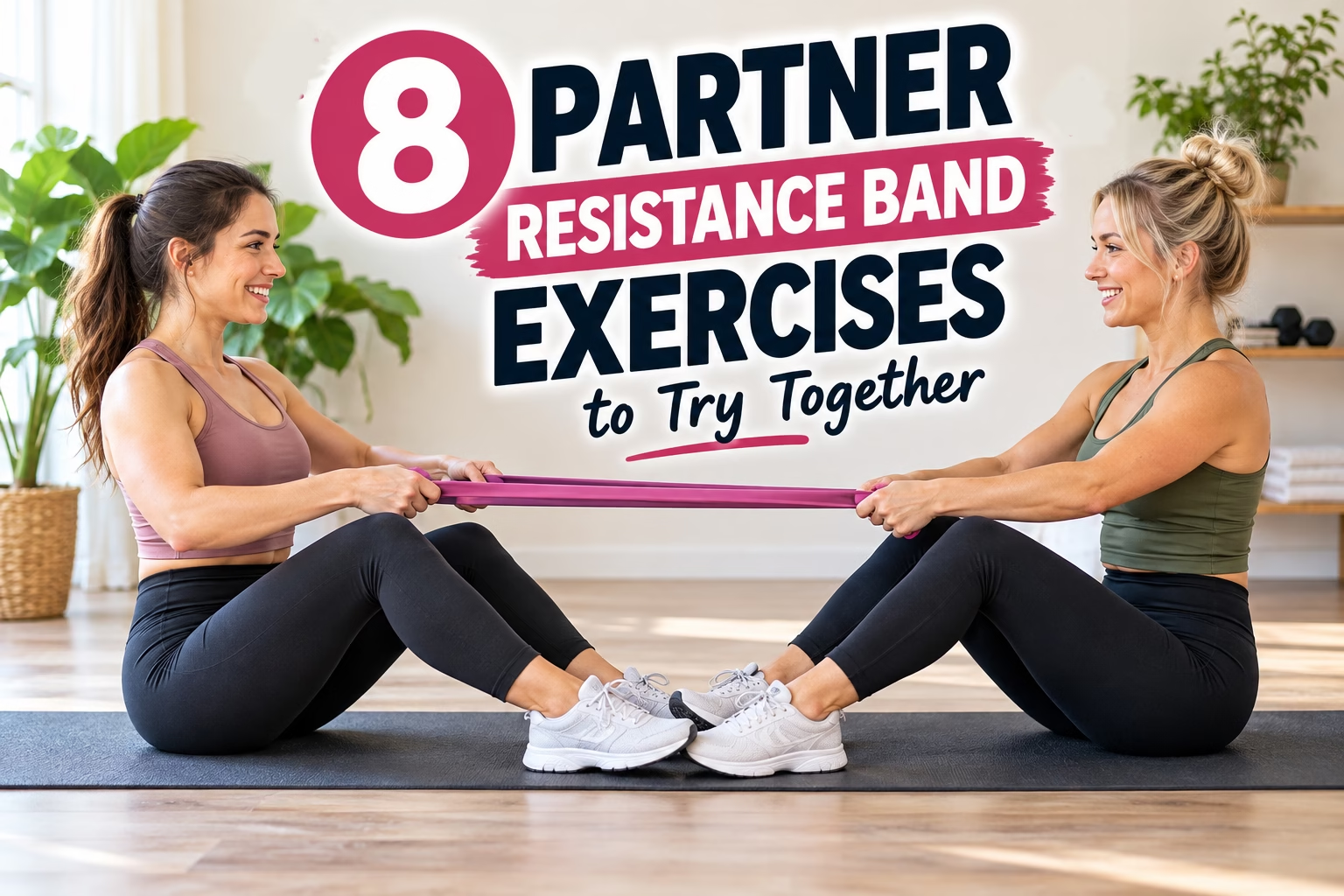
8 Fun Partner Resistance Band Exercises to Try
Working out with a partner can make exercise more enjoyable, motivating, and surprisingly challenging. Instead of doing the same routine alone, you can encourage each other, share a few laughs, and build strength together.
Partner resistance band exercises are a fun way to train your arms, legs, core, and upper body while spending quality time with a friend, spouse, or workout buddy. They can also help you stay accountable, especially on days when motivation is running low.
The best part? You don’t need an expensive gym membership or complicated equipment. With a resistance band, a little space, and someone willing to exercise with you, you can enjoy an effective workout at home.
Whether you’re looking for a couples workout at home, a fun fitness activity with a friend, or a different way to use resistance bands, these eight exercises are worth trying.
Why Try Partner Resistance Band Exercises?
Exercising with someone else offers more than just company. It can make your fitness routine feel less like a chore and more like something you look forward to.
Here are a few reasons to give partner workouts a try:
- More motivation: Having someone beside you can encourage you to finish those last few repetitions.
- Better consistency: Scheduling workouts together makes it easier to build a regular exercise habit.
- Full-body strength: Resistance bands challenge your muscles through a variety of pushing, pulling, and controlled movements.
- Quality time: Partner workouts give you an opportunity to connect without distractions.
- Adjustable difficulty: You can choose lighter or stronger bands depending on your fitness levels.
You don’t need to be equally strong or experienced. Each person can work at a comfortable pace while supporting the other.
8 Partner Resistance Band Exercises for a Fun Full-Body Workout
Before getting started, choose a resistance band that’s comfortable for both partners. Check it for damage, make sure each person has a secure grip, and avoid stretching it beyond the manufacturer’s recommendations.
Start with 3–5 minutes of gentle marching, arm circles, shoulder rolls, and bodyweight squats.
1. Partner Resistance Band Chest Press
The chest press is a great exercise for strengthening your chest, shoulders, and triceps. It also challenges your core as you maintain balance.
How to do it:
- Partner A stands facing forward, holding one end of the resistance band in each hand.
- Partner B stands behind Partner A and securely holds the middle of the band, keeping it at chest height.
- Partner A steps one foot slightly forward and bends both elbows to approximately 90 degrees.
- Keeping the core engaged, Partner A slowly presses both hands forward until the arms are nearly straight.
- Return to the starting position with control.
- Complete 8–12 repetitions before switching roles.
Beginner tip: Start with light resistance and avoid locking your elbows. The partner holding the band should remain stable rather than pulling backward.
2. Partner Resistance Band Heel Taps
Heel taps are a gentle-looking exercise that can challenge your abdominal muscles, particularly your ability to stabilize your lower back.
How to do it:
- Partner A lies on their back with knees bent at 90 degrees and shins parallel to the floor.
- Partner B stands near Partner A’s feet, securely holding a light resistance band.
- Partner A holds the band ends with arms extended toward the knees, creating gentle tension while Partner B provides a steady anchor.
- Keeping the abdominal muscles engaged, Partner A slowly lowers one heel toward the floor.
- Tap the heel lightly, then bring the leg back to the tabletop position.
- Alternate legs for 10–12 taps per side, then switch roles.
Beginner tip: Keep the movement small and avoid arching your lower back. The band should provide only gentle resistance, not pull you out of position.
3. Partner Resistance Band Triceps Kickbacks
Want to strengthen the backs of your arms? Partner triceps kickbacks are a simple way to work those muscles without dumbbells.
How to do it:
- Stand facing your partner, each holding one end of a light resistance band in the right hand.
- Step far enough apart to create gentle tension.
- Bend your knees slightly and hinge forward from the hips while keeping your back neutral.
- Bring your working elbow close to your ribs and bend it to approximately 90 degrees.
- Slowly straighten your arm backward, keeping your upper arm still.
- Bend the elbow to return to the starting position.
- Complete 10–12 repetitions, then repeat with the left arm.
Beginner tip: Keep your shoulders relaxed and avoid swinging your arms. Use a light band so both partners can control the movement.
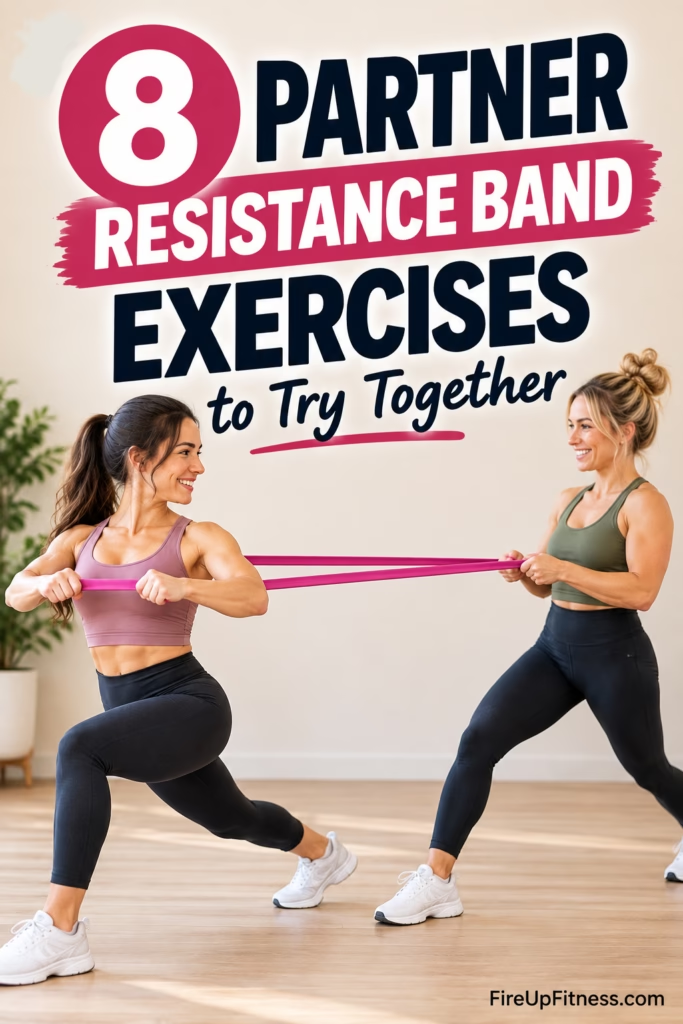
4. Partner Resistance Band Lunge and Rotation
This exercise combines lower-body strength with controlled core rotation. It works your legs, glutes, and abdominal muscles.
How to do it:
- Stand side by side, facing the same direction, with a comfortable distance between you.
- Each person holds one end of the resistance band with both hands in front of the chest.
- Step the outside leg backward into a comfortable reverse lunge.
- Keeping your hips facing forward, gently rotate your upper body away from your partner.
- Return your torso to the center.
- Push through your front foot to return to standing.
- Repeat 8–10 times before changing sides.
Beginner tip: Use a shallow lunge and small rotation. Avoid twisting your knees or pulling suddenly against your partner.
5. Partner Resistance Band Rows
Rows help strengthen the upper back and support better posture, making them particularly useful for anyone who spends long hours sitting.
How to do it:
- Sit on the floor facing your partner with knees slightly bent.
- Each person holds one end of a long resistance band securely with both hands.
- Sit tall and move far enough apart to create gentle tension.
- Slowly pull your hands toward your ribs, bringing your elbows backward.
- Squeeze your shoulder blades together without shrugging.
- Extend your arms slowly to return to the starting position.
- Repeat for 10–12 repetitions.
Beginner tip: Keep the movement smooth and coordinated. Avoid leaning backward to create extra resistance.
6. Partner Resistance Band Squats
Squats strengthen the thighs, glutes, and hips. Adding a partner can make this familiar exercise more engaging.
How to do it:
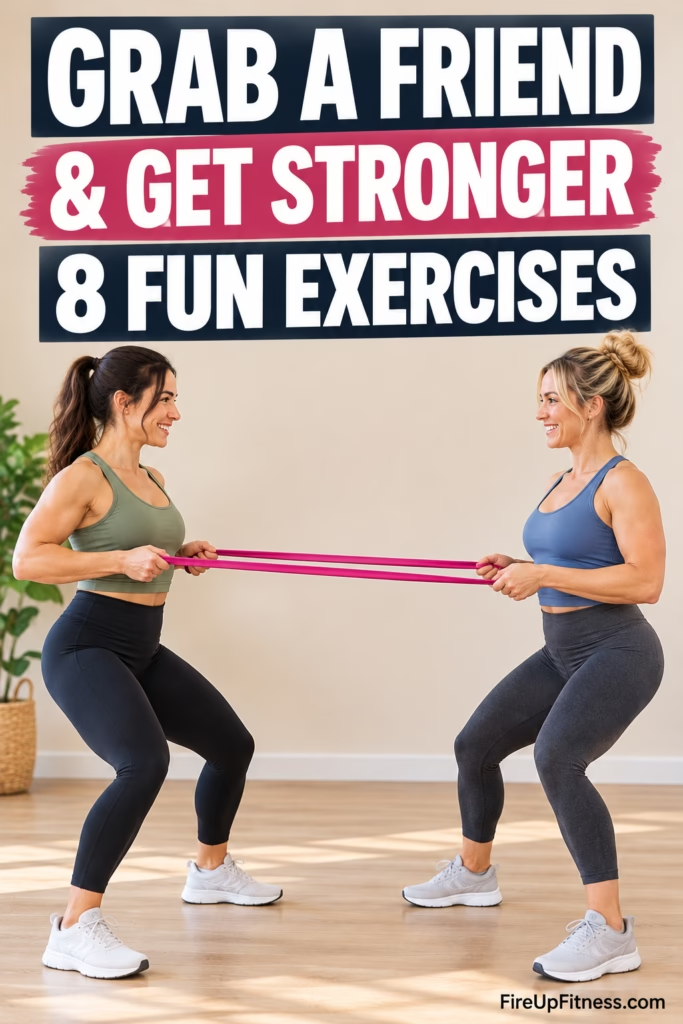
- Stand facing your partner, holding opposite ends of a long resistance band with both hands.
- Step back until the band has gentle tension.
- Place your feet approximately shoulder-width apart.
- Bend your knees and push your hips backward as though sitting into a chair.
- Keep your chest lifted and your heels grounded.
- Slowly stand back up while maintaining steady band tension.
- Complete 10–15 repetitions together.
Beginner tip: Start with shallow squats. The band should help maintain a shared rhythm, not act as a support for your body weight.
7. Partner Resistance Band Biceps Curls
This exercise focuses on strengthening your biceps while encouraging both partners to move slowly and with control.
How to do it:
- Stand facing each other, holding opposite ends of a long resistance band.
- Each person keeps their elbows tucked close to their sides.
- Create light tension by stepping backward slightly.
- Slowly bend your elbows and bring your hands toward your shoulders.
- Pause briefly at the top.
- Lower your hands slowly while keeping tension in the band.
- Repeat for 10–12 repetitions.
Beginner tip: Avoid swinging your arms or leaning backward. Adjust the distance between partners to find a comfortable resistance.
8. Partner Resistance Band Side Steps
Finish your workout with a fun lower-body movement that targets the outer hips, glutes, and thighs.
How to do it:
- Stand side by side, facing the same direction.
- Each partner holds one end of a long resistance band at waist height, keeping gentle tension between you.
- Bend your knees slightly into a shallow squat.
- Partner A takes a controlled step outward while Partner B maintains their position and steady resistance.
- Partner A steps back toward the starting position.
- Switch roles, allowing Partner B to step outward.
- Continue alternating for 10 steps per partner.
Beginner tip: Keep your movements small and controlled. Don’t allow the band to pull either person off balance.
Easy 20-Minute Partner Resistance Band Workout
You don’t have to perform all eight exercises every time. For a beginner-friendly routine, choose five movements that train different muscle groups.
| Exercise | Repetitions |
|---|---|
| Partner chest press | 10 reps each |
| Partner squats | 12 reps |
| Partner rows | 12 reps |
| Partner heel taps | 10 per side each |
| Partner side steps | 10 per side |
Complete two rounds, resting 30–60 seconds between exercises as needed. Allow extra time when switching roles. With a short warm-up and cool-down, this makes a convenient workout of approximately 20 minutes.
As your strength improves, you can gradually increase repetitions or resistance rather than rushing through the exercises.
Tips to Make Partner Workouts Safer and More Effective
Partner exercises work best when both people communicate and respect each other’s fitness levels.
Choose the right resistance. Start lighter than you think you need. Both partners should be able to complete each movement with good form.
Communicate throughout the workout. Let your partner know before changing position, increasing tension, or releasing the band.
Check your equipment. Never use a damaged band. Keep bands away from your face, and make sure both partners maintain a secure grip.
Focus on control, not speed. Slow movements help you maintain proper technique and reduce the risk of sudden band recoil.
Make adjustments when needed. One partner might prefer fewer repetitions or a smaller range of motion. That’s completely fine.
Stop any exercise that causes sharp pain, dizziness, or joint discomfort.
How Often Should You Do Partner Resistance Band Workouts?
For beginners, two or three sessions per week on nonconsecutive days can be a good starting point.
You can alternate partner workouts with walking, stretching, or other activities you enjoy. Allow your muscles time to recover, especially when starting a new strength-training routine.
Consistency matters more than doing every exercise perfectly from day one.
Final Thoughts
Working out doesn’t always have to be a solo activity. Sometimes, having someone beside you is exactly what makes exercise more enjoyable and easier to stick with.
These eight partner resistance band exercises offer a simple way to strengthen your entire body while spending time together. Whether you’re exercising with your spouse, best friend, or family member, the goal is to move safely, support each other, and have fun.
Start with a few exercises, choose comfortable resistance, and build from there.
Your next workout might be more fun with a partner!