20-Minute Full Body Dumbbell Workout at Home for Women
A good strength workout doesn’t need to be complicated. Sometimes, one pair of dumbbells, a comfortable exercise mat, and 20 minutes are all you need to challenge your entire body.
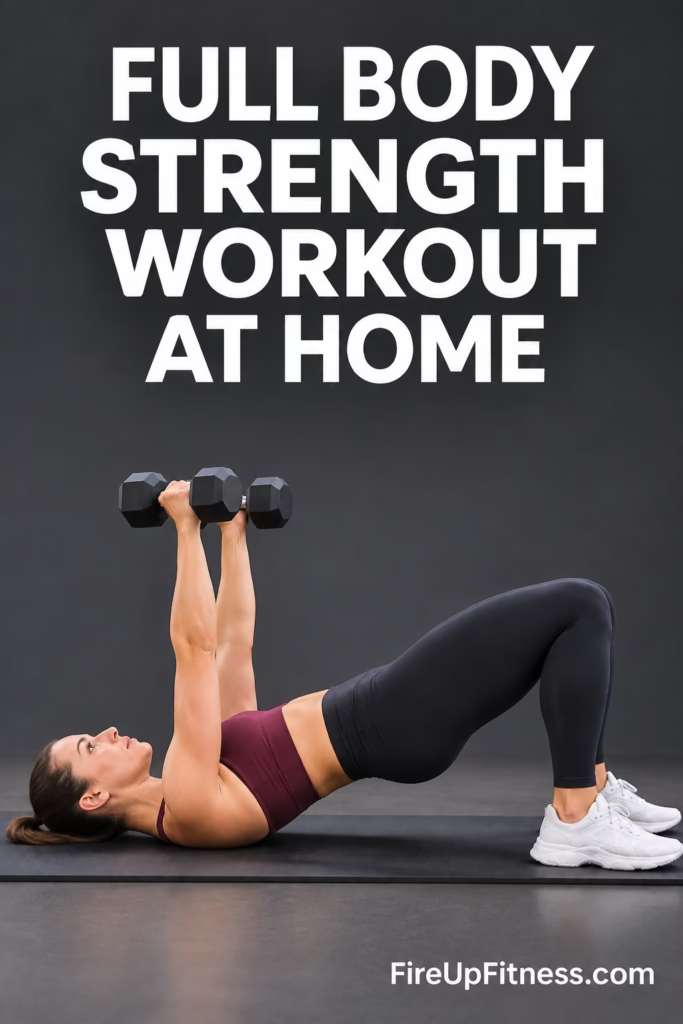
This 20-minute full body dumbbell workout combines lower-body exercises, upper-body strength training, and core movements into one practical at-home routine. You’ll work your legs, glutes, back, shoulders, arms, and abdominal muscles without switching between several pieces of equipment.
What makes this workout particularly effective is its superset structure. You’ll perform two exercises back-to-back, take a short break, and repeat them before moving to the next pair.
The routine includes standing strength exercises followed by floor-based movements, giving you a balanced workout that challenges multiple muscle groups while helping you develop better coordination and control.
Whether you’re building a regular strength-training habit or looking for a quick workout on a busy day, this routine is easy to fit into your schedule.
What You’ll Need for This Full Body Dumbbell Workout
You only need a few things to get started:
- One pair of dumbbells: The instructor uses 10-pound dumbbells in each hand, but you can choose lighter or heavier weights depending on your strength.
- An exercise mat: You’ll need a comfortable surface for the floor exercises.
- A little space: Make sure you have enough room to squat, lunge, and stretch your legs.
- 20 minutes: Set aside enough time to complete the routine without rushing.
Choose weights that allow you to maintain good form throughout each movement. Some exercises, particularly shoulder raises and overhead triceps extensions, may feel more challenging than squats or deadlifts. It’s perfectly fine to use lighter weights for those movements.
How the 20-Minute Full Body Workout Works
This workout uses supersets, meaning two exercises are paired together and repeated before you move to the next combination.
Each superset challenges different muscle groups while keeping the routine moving.
The workout follows five sections:
- Squat to overhead press and bent-over row with triceps extension
- Sumo squat with biceps curl and two-way shoulder raise
- Dumbbell deadlift and static lunge with overhead triceps extension
- Glute bridge and glute bridge chest press
- Tabletop leg and knee lifts followed by dumbbell jackknives
Each pair is performed twice, with short recovery periods between rounds. The instructor includes a 15-second rest after the first pair and guides you through the remaining transitions in the video.
Follow the video for the exact exercise timing and rest periods.
Follow Along With the 20-Minute Full Body Dumbbell Workout
The video below demonstrates each exercise, including the correct positioning, movement transitions, and helpful form reminders.
Keep your screen visible so you can follow the instructor as you move through the routine.
Superset 1: Squat to Overhead Press and Row With Triceps Extension
The first superset combines lower-body strength with upper-body pushing and pulling movements.
Exercise 1: Dumbbell Squat to Overhead Press
This compound exercise works your quadriceps, glutes, shoulders, and arms while challenging your core stability.
How to do it:
- Stand with your feet approximately shoulder-width apart, holding a dumbbell in each hand.
- Keep your toes pointing forward and your chest lifted.
- Bend your knees and lower into a squat, allowing the dumbbells to travel beside your legs.
- Push through your feet to return to standing.
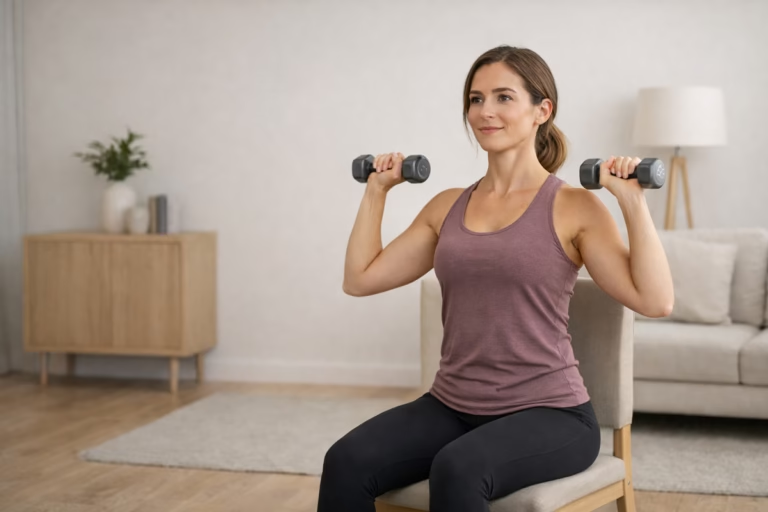
- Bring the dumbbells toward your shoulders using a hammer curl.
- Press both weights overhead while keeping your torso steady.
- Lower the dumbbells with control and repeat.
Form tip: Avoid leaning backward when pressing the weights overhead. Keep your ribs aligned over your pelvis and your abdominal muscles engaged.
You should feel your legs working during the squat and your shoulders and arms taking over as you lift the dumbbells.
Exercise 2: Bent-Over Row With Triceps Extension
This movement targets your upper back and triceps while requiring you to maintain a stable hip-hinge position.
How to do it:
- Stand with one foot slightly forward and the other behind you in a kickstand position.
- Bend both knees slightly and hinge forward at your hips.
- Keep your back straight and allow the dumbbells to hang beneath your shoulders.
- Pull your elbows backward to perform a row.
- Hold your upper arms in position and straighten your elbows to extend the dumbbells behind you.
- Bend your elbows again and lower the weights to the starting position.
Keep your upper body still rather than swinging the weights.
After completing both exercises, take the guided rest and repeat the superset.
During the second round, switch which foot is forward for the bent-over row so you practice the kickstand position on both sides.
Superset 2: Sumo Squat With Biceps Curl and Two-Way Shoulder Raise
The second superset introduces a wider squat stance and controlled shoulder movements.
Exercise 3: Sumo Squat With Biceps Curl
The sumo squat emphasizes the glutes, quadriceps, and inner-thigh muscles. Adding a biceps curl makes it a useful combination exercise for both your upper and lower body.
How to do it:
- Stand with your feet wider than shoulder-width apart.
- Turn your toes slightly outward.
- Hold a dumbbell in each hand with your palms facing forward.
- Lower into a sumo squat while keeping your chest lifted.
- Push through your feet to stand.
- Keep your elbows close to your sides and curl the dumbbells toward your shoulders.
- Lower the weights completely before beginning the next squat.
Avoid using momentum to lift the dumbbells.
Think about pushing the floor away as you rise from the squat. This can help you maintain control through your legs and glutes.
Exercise 4: Two-Way Dumbbell Shoulder Raise
This exercise combines front raises and lateral raises to challenge different areas of your shoulders.
How to do it:
- Stand in a comfortable staggered stance with your knees slightly bent.
- Hold a dumbbell in each hand.
- With your palms facing forward, raise both arms in front of you to shoulder height.
- Lower the weights slowly.
- Rotate your hands into position for a lateral raise.
- Lift your arms outward to the sides, keeping a slight bend in your elbows.
- Lower the dumbbells and continue alternating between the two raises.
Keep your shoulders relaxed and avoid lifting the weights higher than shoulder level.
Form tip: Choose weights light enough to perform both movements without swinging your torso. Shoulder raises often require less weight than other exercises in this workout.
Repeat both exercises for the second round before moving on.
Superset 3: Dumbbell Deadlift and Static Lunge With Triceps Extension
This section focuses on your posterior chain, including the glutes and hamstrings, while adding unilateral leg work and overhead arm training.
Exercise 5: Dumbbell Deadlift
Dumbbell deadlifts help strengthen the muscles along the back of your body, particularly your hamstrings and glutes.
How to do it:
- Stand with your feet approximately shoulder-width apart.
- Hold a dumbbell in each hand in front of your thighs.
- Keep a slight bend in your knees.
- Push your hips backward while lowering the dumbbells close to your legs.
- Maintain a neutral spine and keep your chin gently tucked.
- Lower until you feel a comfortable stretch through your hamstrings.
- Press your feet into the floor and extend your hips to stand upright.
You don’t need to lower the dumbbells all the way to the floor.
The goal is to hinge at your hips while maintaining control through your back and legs.
Form tip: Keep your weight distributed across your feet instead of shifting entirely onto your heels. Your toes should remain in contact with the floor throughout the movement.
Exercise 6: Static Lunge With Overhead Triceps Extension
This exercise combines leg strengthening with an overhead triceps movement.
How to do it:
- Stand in a split stance with one foot forward and the other behind you.
- Hold one dumbbell securely with both hands overhead, or use two lighter dumbbells if comfortable.
- Bend both knees to lower into a static lunge.
- Push through your front foot to rise.
- Keeping your upper arms steady, bend your elbows to lower the weight behind your head.
- Straighten your elbows to lift the weight overhead again.
- Continue alternating the lunge and triceps extension.
Your feet should remain planted throughout the exercise.
Keep your abdominal muscles engaged and avoid flaring your ribs or arching your lower back when the dumbbell is overhead.
After completing the first round, repeat the deadlifts and switch your forward leg for the static lunges.
Superset 4: Glute Bridge and Glute Bridge Chest Press
Now it’s time to move onto your exercise mat.
This superset combines glute strengthening with upper-body pressing exercises.
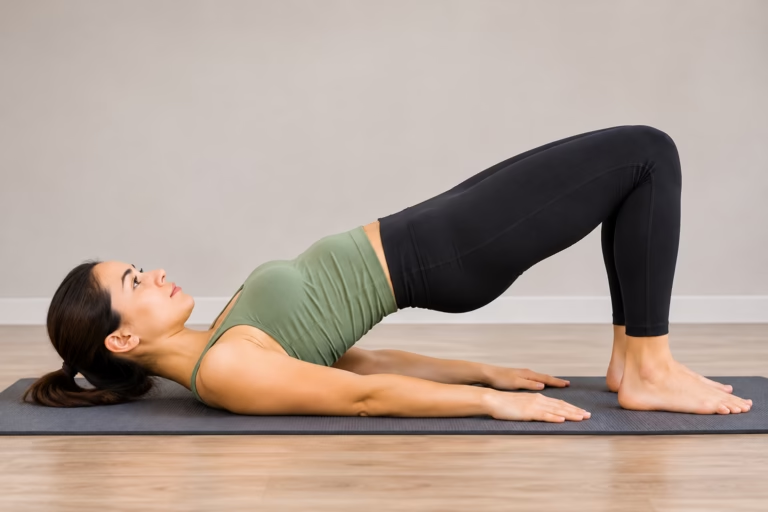
Exercise 7: Dumbbell Glute Bridge
The glute bridge strengthens your glutes while also engaging your hamstrings and core.
How to do it:
- Lie on your back with your knees bent and feet flat on the mat.
- Hold a dumbbell in each hand with your arms extended above your shoulders and palms facing each other.
- Keep your feet firmly planted.
- Press through your feet and lift your hips toward the ceiling.
- Squeeze your glutes briefly at the top.
- Lower your hips slowly and repeat.
Avoid arching your lower back to lift your hips higher.
Focus on creating the movement through your glutes rather than your spine.
Exercise 8: Glute Bridge With Dumbbell Chest Press
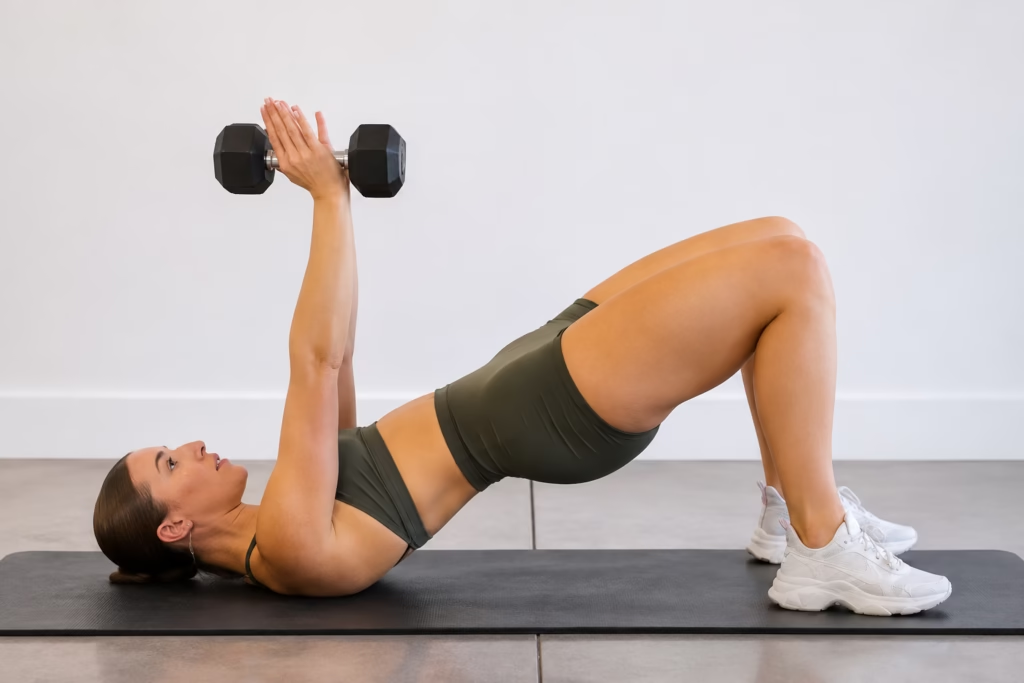
This combination challenges your chest, triceps, and shoulders while your glutes work to maintain the bridge.
How to do it:
- Lie on your back with your knees bent and feet planted.
- Hold a dumbbell in each hand with your palms facing toward your feet.
- Lift your hips into a glute bridge.
- Keep your hips elevated as you press both dumbbells toward the ceiling.
- Slowly bend your elbows to lower the weights.
- Stop just before your elbows touch the mat.
- Press the dumbbells upward again while maintaining the bridge.
Keep your shoulder blades comfortably positioned against the mat and your chest open.
You may begin to feel your glutes working harder as you hold the bridge through multiple chest presses.
After a short break, repeat the regular glute bridges followed by the glute bridge chest press.
Modification: If holding the bridge becomes too difficult, lower your hips and perform the chest press while lying flat on the mat.
Superset 5: Tabletop Core Exercise and Dumbbell Jackknives
The final section challenges your abdominal muscles, coordination, and stability.
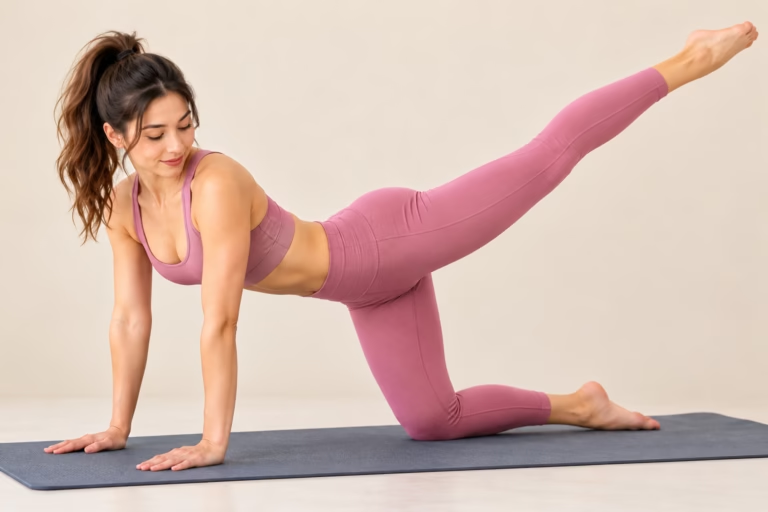
Exercise 9: Tabletop Leg Lift With Knee Drive
This exercise requires you to stabilize your torso while moving one leg at a time.
How to do it:
- Begin in a tabletop position with your hands and knees on the mat.
- Hold one dumbbell securely in your right hand, keeping it supported on the floor.
- Extend your left leg straight behind you.
- Lift your extended left leg slightly, then lower it.
- Lift your right knee toward your chest without rounding your back.
- Return your knee to the mat and repeat the sequence.
Keep your shoulders and hips facing the floor throughout the movement.
Avoid twisting your torso or lifting your leg so high that your lower back begins to arch.
Second round: Switch the dumbbell to your left hand, extend your right leg, and lift your left knee toward your chest.
Use a lighter dumbbell or place both hands directly on the mat if holding a weight makes the position uncomfortable.
Exercise 10: Dumbbell Jackknives
The final exercise focuses on your abdominal muscles while incorporating a controlled reaching movement.
How to do it:
- Lie on your back with your legs extended or slightly bent.
- Hold one dumbbell securely with both hands above your chest.
- Extend your arms and legs into a comfortable starting position.
- Engage your abdominal muscles.
- Bring your arms and legs toward the center of your body.
- Lower them slowly without losing control through your torso.
- Repeat for the guided interval.
The farther you extend your legs, the more challenging the movement becomes.
For an easier version, keep your knees bent and tap your heels on the floor between repetitions.
Form tip: Watch for excessive arching through your lower back or visible doming along the center of your abdomen. Reduce the range of motion and bring your knees closer to your body if you notice either.
Repeat the tabletop exercise on the opposite side, followed by one final round of dumbbell jackknives.
That’s the end of your 20-minute full body dumbbell workout.
Benefits of This Full Body Dumbbell Workout
A routine that combines several muscle groups can be a practical way to develop strength without spending a long time exercising.
Builds Strength Across Multiple Muscle Groups
Squats, lunges, deadlifts, rows, and presses involve major muscles throughout your body.
Training these movements regularly can help improve your ability to perform everyday activities such as lifting, carrying, bending, and climbing stairs.
Improves Muscular Endurance
Moving through repeated sets with manageable dumbbell weights challenges your muscles to maintain effort over time.
As your endurance improves, you may find that completing the workout becomes more comfortable.
Challenges Core Stability
Your core does more than work during the final abdominal exercises.
It also helps stabilize your torso during overhead presses, bent-over rows, deadlifts, and lunges.
Learning to maintain control during these movements can support better overall movement quality.
Supports Balance and Coordination
The kickstand rows, static lunges, and tabletop exercises require you to maintain alignment while different parts of your body move.
These exercises provide opportunities to practice balance, body awareness, and coordination.
Makes Strength Training Convenient
Because the routine uses only one pair of dumbbells and a mat, you can complete it at home without a complicated setup.
It also provides a straightforward way to train your upper body, lower body, and core in a single session.
Tips to Get the Most Out of Your Dumbbell Workout
A few simple adjustments can make your training more comfortable and productive.
Start with a brief warm-up. Before pressing play, spend a few minutes marching in place, rolling your shoulders, and practicing gentle bodyweight squats and hip hinges.
Prioritize controlled movements. You don’t need to lift quickly to make the exercises challenging. Focus on moving smoothly and maintaining proper alignment.
Adjust your dumbbell weight. The instructor uses 10-pound dumbbells, but that doesn’t mean you need to use the same weight. Choose a resistance that feels challenging without compromising your technique.
Breathe throughout each exercise. Exhale during the more demanding portion of a movement, such as standing from a squat or pressing a dumbbell upward.
Take additional breaks when needed. Although the video follows a timed structure, you can pause whenever your muscles need more recovery.
Finish with a short cooldown. Gentle stretches for your shoulders, chest, quadriceps, hamstrings, and glutes can help you transition out of the workout comfortably.
Stop or modify an exercise if you experience sharp pain, dizziness, or unusual discomfort.
How Often Should You Do This 20-Minute Full Body Workout?
For many adults, full-body strength training two or three times per week is a practical starting point.
You could complete this routine on Monday and Thursday, for example, leaving time between sessions for recovery.
Beginners may want to start with two weekly sessions using lighter dumbbells. As the exercises become more familiar, you can gradually increase the resistance or add another training day.
You can also alternate strength-training days with walking, gentle yoga, or mobility exercises.
The important thing is to choose a schedule that allows you to train consistently while giving your muscles adequate recovery time.
Final Thoughts
This 20-minute full body dumbbell workout brings together many of the movements that make strength training useful: squatting, hinging, lunging, pushing, pulling, and stabilizing your core.
The combination of standing and floor exercises helps you work through a variety of movement patterns without needing multiple sets of equipment.
Some days, you may feel comfortable using heavier dumbbells. Other days, lighter weights and slower movements may be the better choice. Both can be valuable when you’re training with intention.
Start with the weights you can control, follow the instructor’s demonstrations, and give yourself room to improve.
A consistent 20-minute workout can be a meaningful part of building a stronger, more capable body.