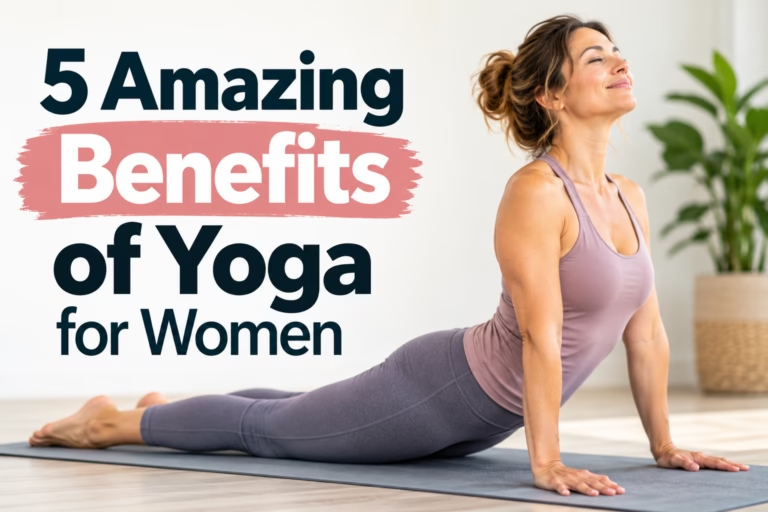
4 Easy Yoga Poses for Back Pain Relief at Home

A sore lower back can make everyday activities uncomfortable, whether you’re sitting at your desk, bending to pick something up, or trying to relax after a long day. Hours of sitting, limited movement, and muscle tension can contribute to back discomfort, leaving your body feeling stiff and restricted.
The good news is that gentle movement may help. Practicing easy yoga for beginners can improve flexibility, release muscle tension, and encourage better mobility without requiring complicated exercises or special equipment.
These four yoga poses for back pain focus on gentle spinal movement, hip flexibility, and relaxation. You can practice them at home in just 10–15 minutes, adjusting each position to suit your comfort level.
Why Yoga May Help a Sore Lower Back
Your lower back works alongside your hips, abdominal muscles, and surrounding muscles to support everyday movement. When these areas become stiff or weak, certain activities may feel more uncomfortable.
Gentle yoga can help by:
- Improving mobility in the spine and hips.
- Reducing muscle stiffness after prolonged sitting.
- Encouraging controlled movement and body awareness.
- Supporting flexibility and comfortable posture.
- Promoting relaxation through slow, steady breathing.
Some yoga poses also engage the abdominal muscles that support your spine. While abs workout routines focus more directly on strengthening these muscles, gentle yoga can complement core training by improving mobility and movement control.
Yoga isn’t a cure for every type of back pain, but appropriately modified movements may help some people manage ongoing discomfort.
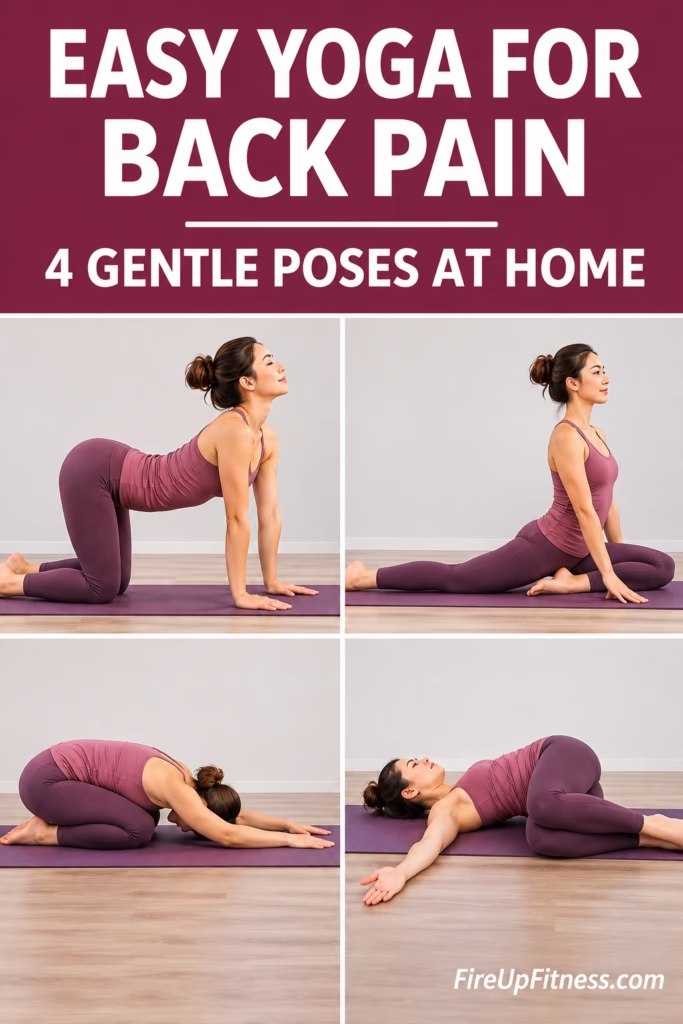
1. Cat-Cow Pose for Gentle Spinal Mobility
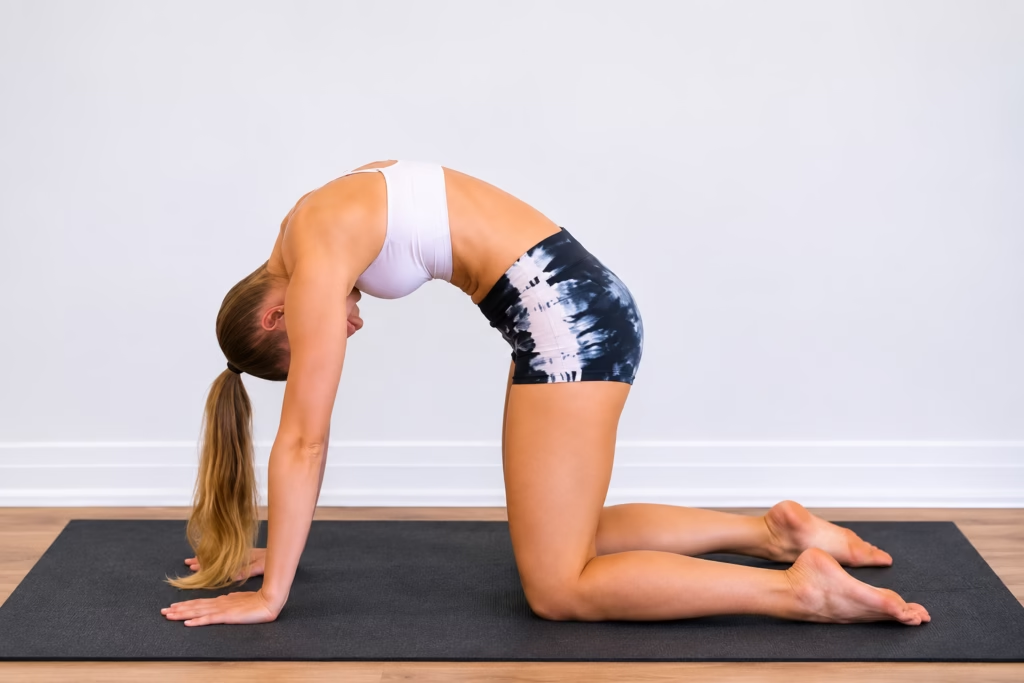
Cat-Cow is one of the most accessible easy yoga poses for beginners. This flowing movement gently takes your spine through flexion and extension, helping you explore a comfortable range of motion.
It’s especially useful as a warm-up before other stretches.
How to do Cat-Cow Pose
- Begin on your hands and knees, positioning your wrists beneath your shoulders and knees beneath your hips.
- Inhale slowly as you lift your chest and tailbone, allowing your abdomen to move gently toward the floor.
- Keep your neck relaxed and look slightly forward without forcing your head upward.
- Exhale as you round your back toward the ceiling, gently tucking your chin and pelvis.
- Continue alternating between the two positions, matching each movement to your breathing.
- Repeat for 8–10 slow rounds.
Beginner tip: Move only as far as feels comfortable. You don’t need to create a deep arch or exaggerated curve to benefit from this exercise.
Why it may help
Cat-Cow encourages controlled spinal movement and may reduce feelings of stiffness after sitting for long periods. It also helps you become more aware of how your back moves.
2. Pigeon Pose for Tight Hips and Lower Back Comfort
Tight hips can affect how comfortably you move, especially during activities such as walking, sitting, and bending.
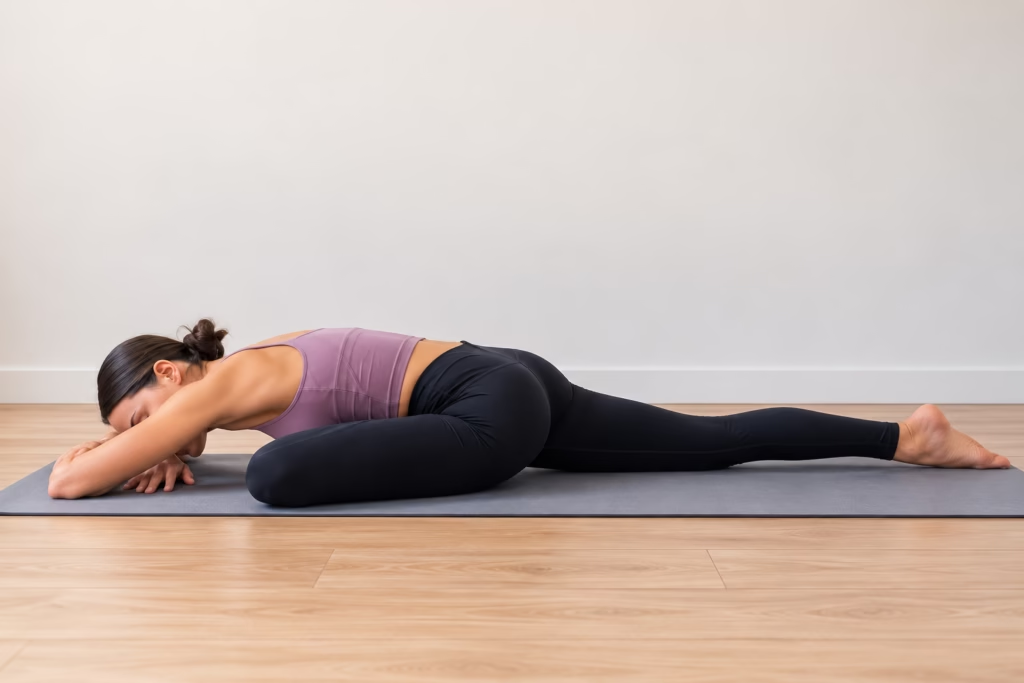
Pigeon Pose is a hip-opening yoga stretch that primarily targets the glutes and muscles around the outer hip. Improving hip flexibility may help reduce some of the movement restrictions associated with a sore lower back.
How to do Pigeon Pose
- Start on your hands and knees.
- Bring your right knee forward toward your right wrist.
- Position your right shin diagonally across the mat, keeping your right foot at a comfortable distance from your left hip.
- Extend your left leg behind you, with the top of your foot resting on the floor.
- Keep your hips as level as possible without forcing them downward.
- Support your upper body with your hands or forearms, depending on your flexibility.
- Hold for 15–30 seconds while breathing naturally.
- Carefully return to your starting position and repeat on the opposite side.
Beginner tip: Place a folded blanket or cushion beneath your front hip for support. A reclining figure-four stretch is a gentler alternative when Pigeon Pose feels too intense.
Why it may help
Pigeon Pose stretches muscles around the hips and buttocks that can become tight after prolonged sitting. Improving mobility in these areas may make everyday movement feel easier.
Avoid pushing into knee discomfort or forcing your hips toward the floor.
3. Child’s Pose for Relaxation and Back Stiffness
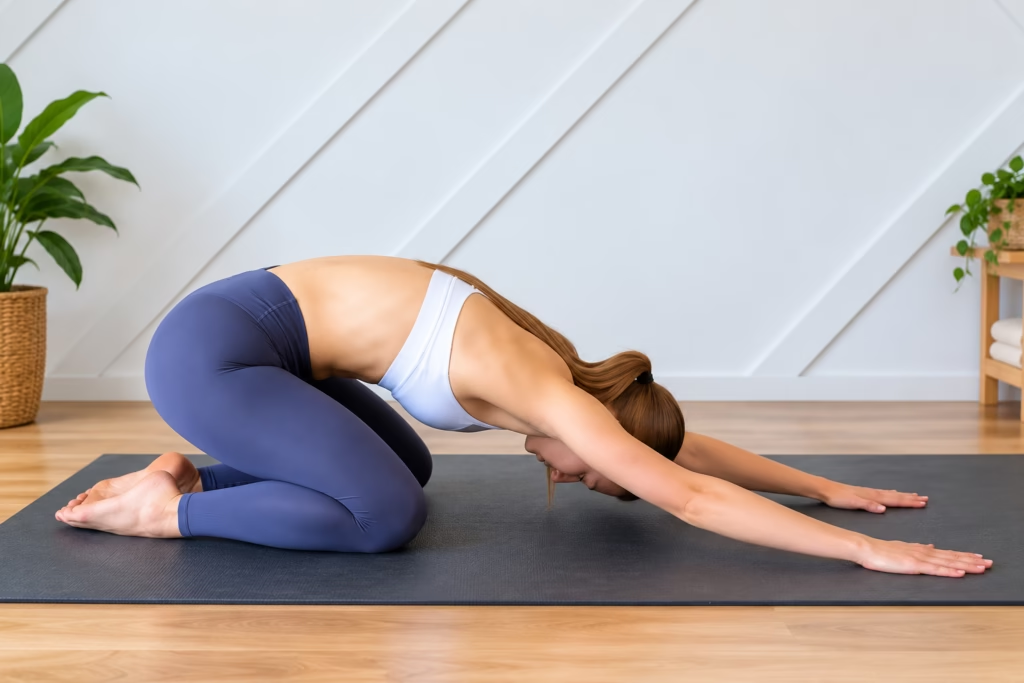
Child’s Pose is one of the most familiar beautiful yoga poses, combining a comfortable resting position with a gentle stretch through the back.
It’s a useful addition to a beginner routine because you can adjust the position to match your flexibility and comfort.
How to do Child’s Pose
- Kneel on your yoga mat with your knees together or slightly apart.
- Slowly move your hips backward toward your heels.
- Extend your arms forward along the mat.
- Lower your chest toward your thighs and rest your forehead on the floor or a cushion.
- Relax your shoulders and breathe slowly.
- Hold for 20–30 seconds before gradually returning to an upright position.
Repeat two or three times as needed.
Beginner tip: Place a cushion between your hips and heels or beneath your chest for additional support. Avoid forcing the position when it causes knee or back discomfort.
Why it may help
Child’s Pose provides a gentle stretch through the back and can encourage relaxation. Its supported position may feel soothing after a long day, although some people with back conditions may find bending forward uncomfortable.
4. Supine Twist Yoga Pose for Gentle Back Mobility
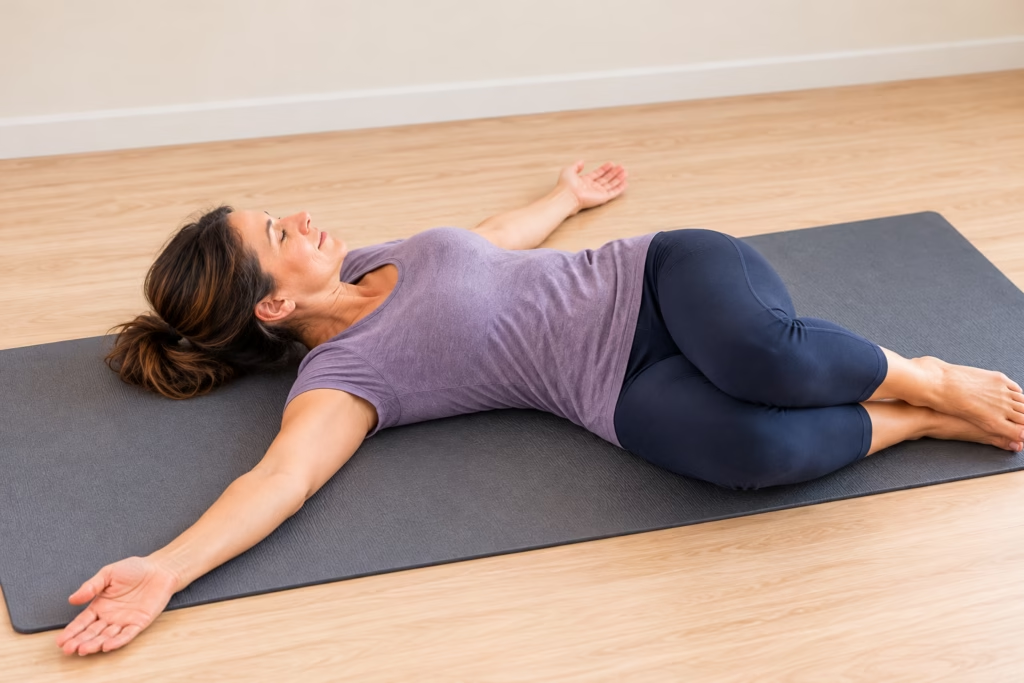
A Supine Twist is a relaxing twist yoga movement performed while lying on your back.
Unlike deeper seated twists, this variation allows you to use the floor for support while gently rotating your spine within a comfortable range.
How to do Supine Twist
- Lie on your back with your knees bent and feet resting on the floor.
- Bring your knees together and extend your arms outward into a T-shape.
- Slowly lower both knees toward your right side without forcing them to touch the floor.
- Keep your shoulders relaxed and avoid pulling your knees downward.
- Turn your head only if doing so feels comfortable for your neck.
- Hold for 3–5 slow breaths.
- Bring your knees back to the center and repeat on the left side.
Beginner tip: Place a pillow beneath your knees for support. Keep the twist gentle, particularly when your back feels sensitive.
Why it may help
This yoga pose encourages gentle rotational movement through the spine and may help ease feelings of stiffness around the back and hips.
Avoid deep twisting if it increases pain or causes tingling, numbness, or discomfort traveling into your legs.
Follow Along With Yoga With Adriene
Practicing yoga with guided instruction can make it easier to follow the movements and maintain a relaxed pace.
Yoga With Adriene offers approachable yoga routines that emphasize mindful movement, breathing, and body awareness.
The video below provides a guided yoga practice for back discomfort. You can follow along at home and modify the movements according to your needs.
Watch: Yoga for Back Pain – Yoga With Adriene
Take your time throughout the session. You can pause, skip, or modify any pose that doesn’t feel comfortable.
Easy 10-Minute Yoga Routine for Beginners
You don’t need a long session to introduce gentle movement into your daily schedule. Try this simple routine using the four poses above.
| Yoga pose | Suggested duration |
|---|---|
| Cat-Cow Pose | 2 minutes |
| Pigeon Pose | 1 minute per side |
| Child’s Pose | 2 minutes |
| Supine Twist | 1 minute per side |
| Relaxed breathing | 2 minutes |
Move slowly between positions and take additional breaks whenever needed.
Practicing consistently may be more helpful than trying to stretch deeply in a single session.
Tips for Practicing Yoga Safely With Back Pain
Not every yoga position is appropriate for every type of back discomfort. Keep these guidelines in mind before starting:
- Start gently. Choose a comfortable range of motion rather than stretching as deeply as possible.
- Avoid sharp pain. Stop any movement that increases symptoms or causes pain to travel down your leg.
- Use support. Pillows, folded blankets, and yoga blocks can make poses more accessible.
- Breathe naturally. Slow breathing can help you relax without forcing a stretch.
- Balance stretching with strengthening. Gentle core exercises, walking, and appropriate strengthening activities can complement your yoga practice.
For persistent or recurring back pain, a healthcare professional or physical therapist can help identify suitable exercises.
Seek urgent medical care for back pain accompanied by new bladder or bowel problems, numbness around the groin, or significant or worsening leg weakness. Pain following a serious injury also requires prompt assessment.
Frequently Asked Questions About Yoga for Back Pain
Is yoga good for lower back pain?
Gentle yoga may help some people with chronic, nonspecific lower back pain by improving movement, flexibility, and physical function. Results vary depending on the cause of discomfort, and yoga should not replace appropriate medical evaluation.
Which yoga pose is best for a sore lower back?
There isn’t one pose that works for everyone. Cat-Cow and supported Child’s Pose are often accessible starting points, while hip stretches and gentle twists may suit others. Choose movements that feel comfortable and don’t worsen symptoms.
Can beginners practice yoga for back pain every day?
Many beginners can practice gentle yoga regularly, provided the movements don’t aggravate their symptoms. Short sessions with comfortable stretches are a reasonable place to start.
Can yoga strengthen your core?
Some yoga poses engage the abdominal and back muscles that support the spine. However, a balanced routine that includes appropriate core-strengthening exercises may provide additional benefits for stability and everyday movement.
Final Thoughts
A few minutes of gentle yoga can be a practical way to add more movement to your day, especially after spending hours sitting or working at a desk.
Cat-Cow, Pigeon Pose, Child’s Pose, and Supine Twist each offer a different approach to improving mobility and easing feelings of stiffness. The key is to move comfortably, respect your body’s limits, and avoid forcing any position.
You don’t need perfect flexibility or complicated poses to begin. Small, consistent movements can help you build a more comfortable relationship with your body over time.
Save this easy yoga for beginners routine on Pinterest so you can return to these gentle stretches whenever your back needs a little extra attention.