Tai Chi for Balance and Strength After 40
There’s often a quiet shift that happens sometime after forty. It’s not dramatic, and it doesn’t always come with a clear moment of realization. You just start noticing how movement feels. Standing on one foot while pulling on a shoe takes a bit more focus. Turning quickly requires intention. Getting up from the floor is still possible, but no longer automatic.
If you searched for tai chi for balance and strength after 40, it’s likely not because you’re chasing something intense. It’s more likely because you’re paying attention. To steadiness. To confidence in motion. To finding ways to stay active without feeling rushed, strained, or pushed past your limits.
Tai chi often enters the picture at this stage—not as a trend, but as a quieter alternative. One that looks slower on the surface, yet feels deeply connected to how the body actually moves through everyday life.
What I’ve Learned Over Time
People who gravitate toward tai chi tend to talk less about outcomes and more about sensations.
They mention feeling steadier on their feet. More aware of where their weight is. Less rushed in their movements. Not exhausted afterward, but not untouched either. There’s a subtle sense of engagement that lingers without demanding recovery.
What stands out most is that tai chi doesn’t separate the body into parts. Movement flows from the ground up—feet, legs, core, arms—all working together. Over time, this kind of coordination seems to influence how people move outside of practice as well.
Walking feels more deliberate. Standing feels more grounded. Small transitions feel smoother.
These aren’t dramatic changes, but they’re meaningful ones.
Where Balance and Strength Actually Matter
Balance isn’t just something tested in a workout. It shows up constantly—when stepping off a curb, turning to reach behind you, carrying groceries, or shifting your weight while standing in line.
Strength, too, isn’t always about lifting something heavy. It’s present in posture, in joint support, and in the ability to move without bracing or hesitation.
Tai chi lives in this everyday space. The movements are slow enough to notice alignment, yet continuous enough to build stability. There’s no sense of rushing through repetitions. Instead, there’s an emphasis on how each transition feels.
This makes tai chi particularly relevant after forty, when the goal often shifts from pushing limits to moving well.
Seeing Tai Chi in Practice (Without Pressure)
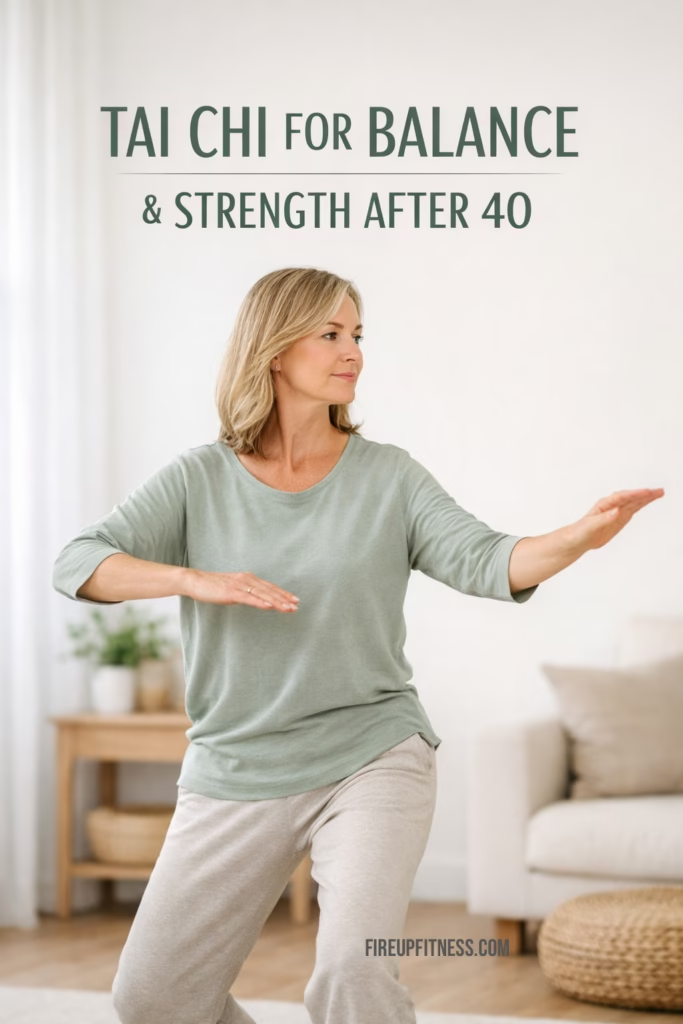
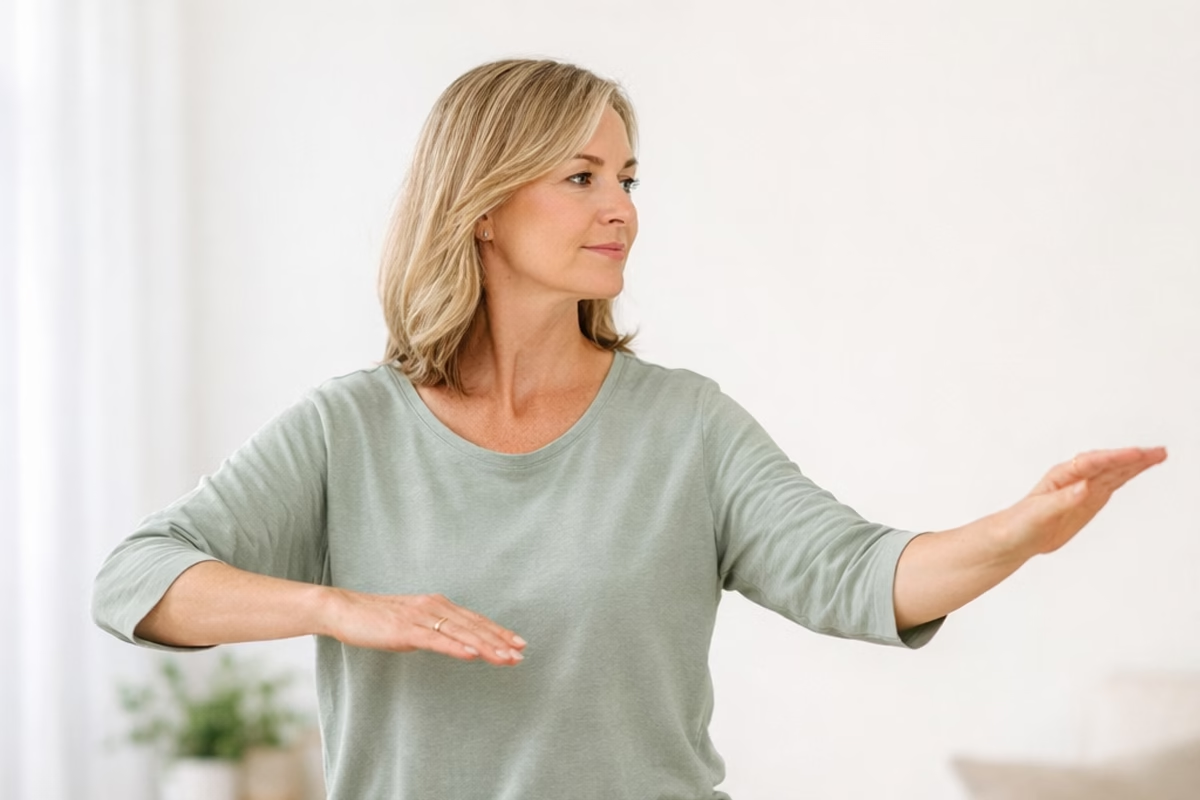
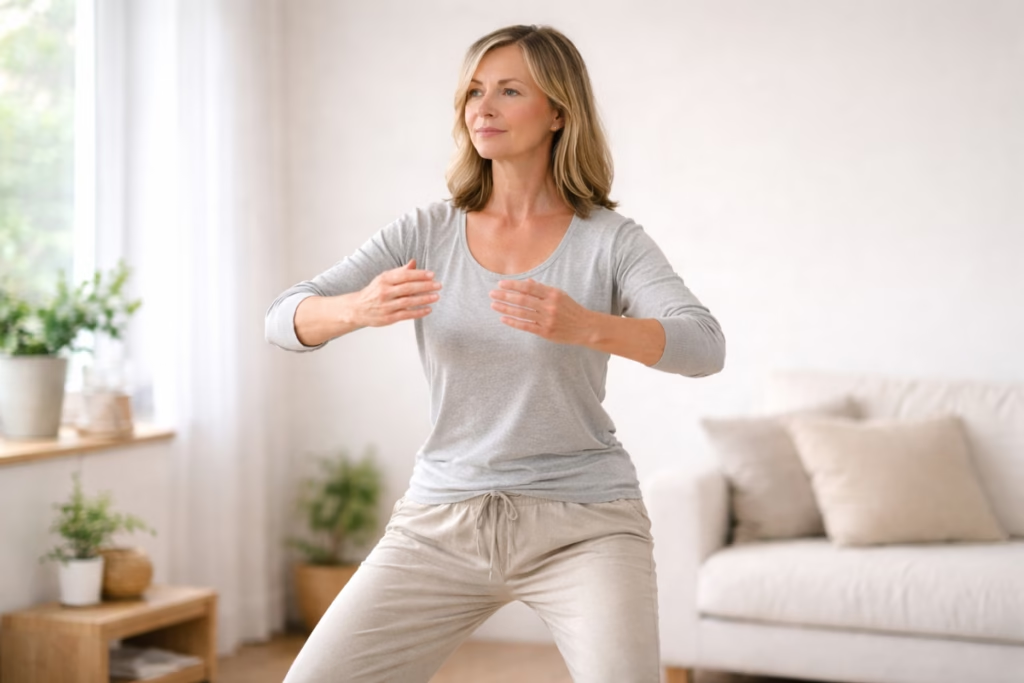
For many women, Tai Chi remains abstract until they actually see it done in a calm, approachable way. Not as a performance, and not as a rigid routine—but as gentle movement that feels realistic.
This is where visual examples can be helpful, especially when they reflect the same slow, grounded pace people are often looking for.
Some sessions blend tai chi–style movement with light walking, creating a steady rhythm that feels supportive rather than demanding.
Others focus on simple, flowing tai chi movements that emphasize posture, balance, and smooth transitions—often resonating with beginners who want to move gently without feeling lost.
For those who prefer a longer, unhurried pace, there are sessions created specifically with beginners and older adults in mind, where movement stays upright and joint-friendly throughout.
There are also shorter videos that many people return to regularly—brief moments of movement that fit easily into a day without feeling like a commitment.
Watching or moving along with sessions like these often helps tai chi feel less abstract and more relatable—less about learning something new, and more about reconnecting with how the body moves.
Expectations Versus Reality
One common assumption is that tai chi won’t be “enough” to make a difference. Another is that it might be too complex or rooted in unfamiliar traditions.
In reality, tai chi doesn’t ask for mastery. It asks for presence.
The strength it develops isn’t loud. It comes from alignment, control, and awareness. Progress tends to be noticed in daily life rather than measured during practice—standing feels steadier, transitions feel smoother, posture feels more supported.
That subtlety can feel unfamiliar in a fitness culture built around visible effort. But for many women after forty, it’s precisely this gentler approach that makes tai chi sustainable.
Why Tai Chi Resonates After 40
By midlife, most women have a history with movement. Periods of consistency followed by pauses. Old aches that influence how the body responds. A growing awareness that pushing harder doesn’t always lead to feeling better.
Tai chi doesn’t override those experiences. It works with them.
The pace allows joints to move without impact. Upright movements encourage balance in a way that feels immediately relevant. There’s no sense of competing with your body or forcing it to perform.
This makes tai chi feel less like a workout to complete and more like a practice to return to—especially when paired with gentle video sessions that emphasize flow over formality.
Strength Without Strain
In tai chi, strength comes from how the body organizes itself rather than how hard it works.
Slow shifts in weight engage stabilizing muscles. Controlled arm movements encourage coordination with the core. Standing positions build leg strength quietly, without strain.
Over time, this kind of strength supports confidence in movement. Not just during practice, but while walking, standing, and moving through everyday tasks.
It’s a form of strength that doesn’t demand attention—but offers support when you need it.
Who This Tends to Work Well For
This approach to movement often resonates with women who want to stay active but feel disconnected from traditional fitness culture.
It can be especially appealing to beginners, those returning to movement after a break, or anyone looking for balance and stability without intensity. Tai chi doesn’t require a certain level of fitness to begin appreciating its benefits.
It simply meets you where you are.
A Quieter Kind of Confidence
Over time, tai chi seems to foster a different relationship with movement. One built on familiarity rather than effort.
There’s confidence in knowing how your body responds when you slow down. In trusting that balance can be revisited again and again. In recognizing that strength doesn’t need to announce itself to be real.
That confidence often carries beyond practice—into posture, presence, and the way you move through your day.
Closing Reflection
Tai chi doesn’t promise transformation. It doesn’t frame the body as something to fix. It offers a way to move that values steadiness, attention, and continuity.
For many women after forty, that feels less like a fitness choice and more like a conversation with the body—one that unfolds gradually, without pressure, and without needing to arrive anywhere in particular.
And sometimes, that’s exactly where balance and strength begin – gentle Tai Chi moves for beginners.