5 Beginner Dumbbell Exercises for Women at Home
Starting a strength training routine can feel intimidating, especially when you are unsure which exercises to do or how much weight to lift. The good news is that you don’t need a gym membership, complicated equipment, or heavy weights to begin building strength.
A simple pair of dumbbells can help you strengthen your arms, shoulders, back, legs, and core from the comfort of your home.
These five beginner dumbbell exercises for women focus on basic movements that are easy to learn and practical for everyday life. Whether your goal is to feel stronger, improve muscle endurance, or become more comfortable lifting weights, this routine offers a manageable place to start.
The best part? You can complete the entire workout in about 15–20 minutes.
Why Dumbbell Training Is Great for Beginners
Dumbbells are one of the most versatile tools for strength training. Unlike large gym machines, they allow you to move naturally while working several muscle groups.
Regular dumbbell workouts can help you:
- Build muscle strength: Strengthen muscles used for lifting, carrying, and other daily activities.
- Support bone health: Resistance training helps maintain bone strength as you age.
- Improve balance and stability: Controlled movements challenge the muscles that keep your body steady.
- Develop better coordination: Learning to move weights with proper form improves body awareness.
- Increase everyday confidence: Activities such as carrying groceries or lifting household items may gradually feel easier.
You don’t need to lift heavy weights to experience these benefits. Consistent practice, good technique, and gradual progression are what matter most.
5 Beginner Dumbbell Exercises for Women
These exercises work different areas of your body, making them suitable for a simple full-body strength routine.
1. Dumbbell Bicep Curls
Dumbbell bicep curls are a great starting exercise because the movement is straightforward and easy to control. They strengthen the muscles at the front of your upper arms, which help with lifting and carrying objects.
How to do it:
- Stand with your feet hip-width apart, holding a dumbbell in each hand.
- Keep your arms by your sides with your palms facing forward.
- Bend your elbows and slowly curl the dumbbells toward your shoulders.
- Keep your upper arms close to your body without swinging.
- Lower the weights with control until your arms are straight again.
Repetitions: 10–12
Beginner tip: Start with light dumbbells and focus on keeping your elbows still. Avoid using momentum to lift the weights.
2. Dumbbell Shoulder Press
The dumbbell shoulder press strengthens your shoulders and triceps while challenging your upper-body stability.
This exercise can make everyday overhead movements, such as placing items on a shelf, feel more manageable over time.
How to do it:
- Stand with your feet shoulder-width apart or sit upright in a sturdy chair.
- Hold a dumbbell in each hand at shoulder height, with your palms facing forward or slightly inward.
- Gently tighten your abdominal muscles to keep your torso steady.
- Press the dumbbells upward without excessively arching your lower back.
- Slowly lower the weights to shoulder level.
Repetitions: 8–10
Beginner tip: Try the seated version if standing feels challenging. Choose weights you can press comfortably without leaning backward. Keep the movement within a pain-free range.
3. Dumbbell Bent-Over Rows
Bent-over rows target your upper and middle back muscles, including the muscles that help stabilize your shoulder blades. They also work your biceps.
Strengthening these muscles supports pulling movements and can contribute to better upper-body control.
How to do it:
- Stand with your feet hip-width apart and hold a dumbbell in each hand.
- Bend your knees slightly and hinge forward from your hips.
- Keep your back neutral and allow the dumbbells to hang beneath your shoulders.
- Pull your elbows backward, bringing the weights toward your hips.
- Pause briefly, then lower the dumbbells slowly.
Repetitions: 10–12
Beginner tip: Avoid rounding your back or lifting your chest with every repetition. If maintaining the bent-over position is difficult, perform a one-arm row with your free hand supported on a sturdy bench.
4. Dumbbell Romanian Deadlifts
Romanian deadlifts strengthen your glutes, hamstrings, and the muscles that support your spine.
This exercise teaches an important movement pattern called the hip hinge, which is useful when picking things up from the floor.
How to do it:
- Stand tall with your feet hip-width apart and hold a dumbbell in each hand in front of your thighs.
- Keep your knees slightly bent and your shoulders relaxed.
- Push your hips backward while lowering the dumbbells close to your legs.
- Stop when you feel a comfortable stretch in the back of your thighs, without rounding your spine.
- Press through your feet and bring your hips forward to return to standing.
Repetitions: 10–12
Beginner tip: Practice the hip hinge without weights first. The movement should come mainly from your hips rather than from bending your knees deeply. You do not need to lower the dumbbells all the way to the floor.
5. Dumbbell Floor Chest Press
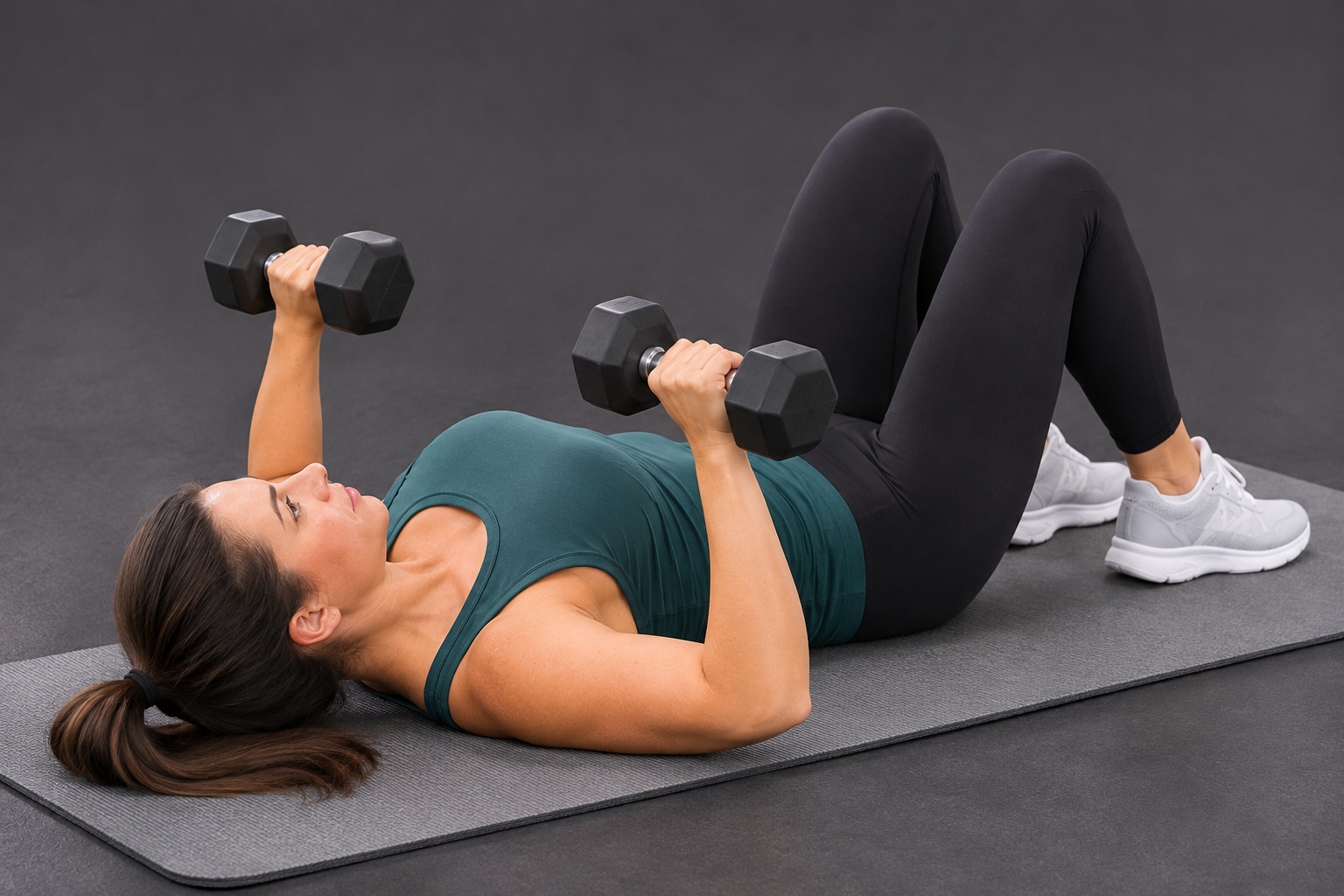
The dumbbell floor chest press strengthens your chest, shoulders, and triceps.
Performing this exercise on the floor provides a stable surface and limits how far your elbows can travel behind your body, making it a useful alternative to a bench press for beginners.
How to do it:
- Lie on your back on an exercise mat with your knees bent and feet flat on the floor.
- Hold a dumbbell in each hand near your chest, with your elbows resting lightly on the floor.
- Keep your palms facing forward or slightly toward each other.
- Press the dumbbells upward until your arms are extended above your chest, without forcefully locking your elbows.
- Slowly lower the weights until your upper arms gently touch the floor.
Repetitions: 10–12
Beginner tip: Keep your wrists straight and your movements controlled. Start with weights you can safely position and lower without assistance.
Beginner Dumbbell Workout Plan
Once you feel comfortable with the five exercises, combine them into a simple full-body routine.
| Exercise | Repetitions |
|---|---|
| Dumbbell bicep curls | 10–12 |
| Dumbbell shoulder press | 8–10 |
| Dumbbell bent-over rows | 10–12 |
| Dumbbell Romanian deadlifts | 10–12 |
| Dumbbell floor chest press | 10–12 |
Workout instructions:
- Start with 3–5 minutes of gentle marching, arm circles, and shoulder movements to warm up.
- Complete one set of each exercise.
- Rest for 30–60 seconds between exercises, or longer if needed.
- Begin with one round and gradually work toward two rounds as your strength improves.
- Finish with a few minutes of gentle movement to cool down.
For most beginners, performing this workout two or three times per week on nonconsecutive days is a reasonable starting point. Allow your muscles time to recover between sessions.
How to Choose the Right Dumbbell Weight
One of the most common beginner questions is how heavy the dumbbells should be.
Some women find that 2–5 lb dumbbells are suitable for certain upper-body exercises, while others may comfortably begin with heavier weights. Lower-body movements often allow more resistance than exercises targeting smaller muscles.
However, there is no single starting weight that works for everyone.
A practical way to choose your dumbbells is to pay attention to how the final few repetitions feel.
The weight should be challenging enough that you notice your muscles working, but light enough that you can complete every repetition with proper technique.
If you have to swing your arms, hold your breath, or change your posture to finish the set, the weight may be too heavy.
On the other hand, if all repetitions feel very easy and your technique remains consistent, you may be ready for a slightly heavier pair.
Common Beginner Dumbbell Mistakes to Avoid
Learning proper technique early can make strength training safer and more enjoyable.
Lifting Too Heavy Too Soon
It can be tempting to increase your weights quickly, but heavier dumbbells aren’t automatically better. Start with manageable resistance and build strength gradually.
Rushing Through Repetitions
Fast movements often make it harder to control the weights. Use a steady pace and pay attention to both the lifting and lowering portions of each exercise.
Holding Your Breath
Try to exhale during the more challenging part of a movement and inhale as you return to the starting position. Avoid prolonged breath-holding, especially if you have blood pressure concerns.
Ignoring Recovery
Muscles need time to recover after resistance training. Training the same muscle groups intensely every day may leave you unnecessarily fatigued.
Exercising Through Pain
Muscle effort is normal, but sharp pain, dizziness, or unusual discomfort is a reason to stop. Adjust the movement or seek guidance from a qualified professional if symptoms persist.
How to Make Progress With Your Dumbbell Workouts
You don’t need to change your exercises every week to keep improving.
In fact, repeating the same basic movements gives you an opportunity to develop better technique and notice your progress.
During your first few weeks, concentrate on learning each exercise and completing your repetitions comfortably.
As the routine becomes easier, you can gradually increase your repetitions, add another set, or use slightly heavier dumbbells.
For example, you might begin with one set of 10 bicep curls using 3 lb dumbbells. After several sessions, you may find that completing 12 repetitions feels comfortable. When you can consistently perform all your planned sets with good form, consider trying the next available weight.
Progress doesn’t have to happen quickly. Small improvements in strength, stability, and movement control are meaningful signs that your training is working.
Frequently Asked Questions
Can beginners do dumbbell workouts every day?
Beginners generally benefit from leaving at least one recovery day between full-body strength sessions. You can stay active on other days with walking, gentle stretching, or other comfortable activities.
Are 5 lb dumbbells enough for beginners?
Five-pound dumbbells can be useful for beginners, particularly for exercises such as bicep curls and shoulder presses. The appropriate weight depends on your current strength and the exercise you are performing.
How long should a beginner dumbbell workout last?
A beginner routine can take around 15–20 minutes, including short rest periods. You can start with a shorter session while learning the movements.
Can women build strength with dumbbells at home?
Yes. Dumbbells provide resistance that can help improve muscle strength when exercises are performed consistently and gradually become more challenging.
How long does it take to notice results?
Some beginners notice improvements in exercise technique and strength within a few weeks. More noticeable physical changes often take longer and depend on training consistency, recovery, nutrition, and individual factors.
Final Thoughts
Starting strength training doesn’t have to mean committing to long workouts or investing in expensive equipment.
These five beginner dumbbell exercises for women offer a practical way to strengthen your upper and lower body while building confidence with resistance training.
Begin with weights you can control, focus on proper form, and give yourself time to improve. Even a couple of short sessions each week can help you establish a routine that supports your long-term strength and well-being.
Which of these five dumbbell exercises would you like to try first? Share your favorite in the comments, and explore more beginner-friendly home workouts on FireUpFitness.com to keep building your strength at your own pace.