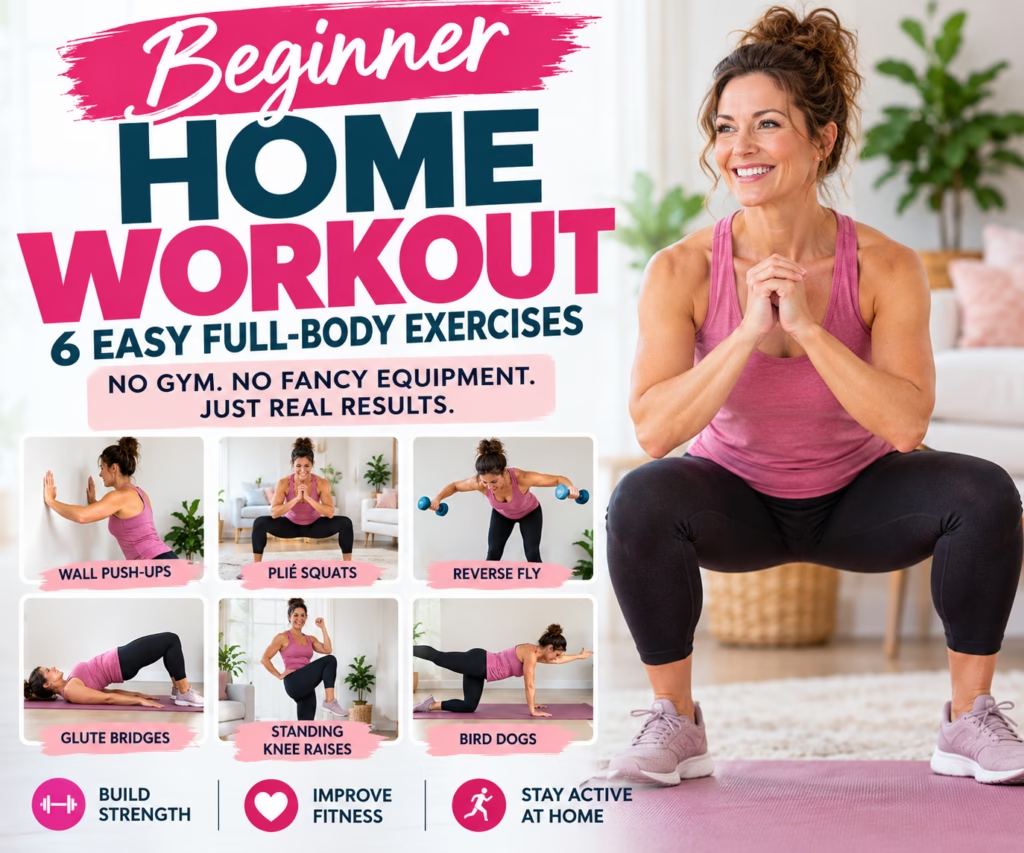
Beginner Home Workout: 6 Easy Full-Body Exercises
You don’t need a gym membership, expensive equipment, or an hour of free time to get a worthwhile workout.
Sometimes the biggest obstacle to exercising isn’t motivation—it’s making exercise fit into real life. Driving to the gym, changing clothes, waiting for equipment, and finding a large block of uninterrupted time can make a workout feel like another task on an already full schedule.
That’s why a home workout can be such a practical option.
With a little open space and a few simple movements, you can strengthen your legs, arms, shoulders, back, and core without leaving home. And when the workout is easy to start, it can be much easier to stay consistent.
This beginner-friendly routine uses simple exercises that require little or no equipment. It’s especially useful for women who are getting back into exercise, prefer low-impact workouts, or simply want a quick way to move more during the day.
Why Home Workouts Are Worth Doing
A workout doesn’t become effective simply because it happens inside a gym.
Your muscles respond to resistance and movement whether that resistance comes from a dumbbell, your body weight, a resistance band, or even a couple of water bottles.
Regular strength-focused exercise can help you:
- Build and maintain muscle
- Improve everyday strength
- Support healthy bones
- Improve balance and stability
- Maintain mobility as you get older
- Make everyday activities feel easier
- Support body composition and fat-loss goals
- Create a more consistent exercise routine
For women over 40, strength training becomes particularly valuable because maintaining muscle and bone strength becomes increasingly important with age.
And you don’t have to begin with complicated exercises.
Start with movements you can perform confidently, learn good form, and gradually make them more challenging as you become stronger.
Beginner Home Workout at a Glance
This routine includes six simple exercises:
- Wall Push-Ups
- Plié Squats
- Reverse Fly
- Glute Bridges
- Standing Knee Raises
- Bird Dogs
Perform each exercise for 10–15 repetitions, or about 30–45 seconds when repetitions aren’t practical.
Rest for approximately 20–40 seconds between exercises.
Complete 2–3 rounds, depending on your fitness level.
Beginners can start with one round. There’s no need to exhaust yourself during your first few workouts. Your goal is to build a routine you can repeat consistently.
Before starting, spend three to five minutes warming up with gentle marching, shoulder rolls, arm circles, side steps, and easy bodyweight movements.
Now let’s get moving.
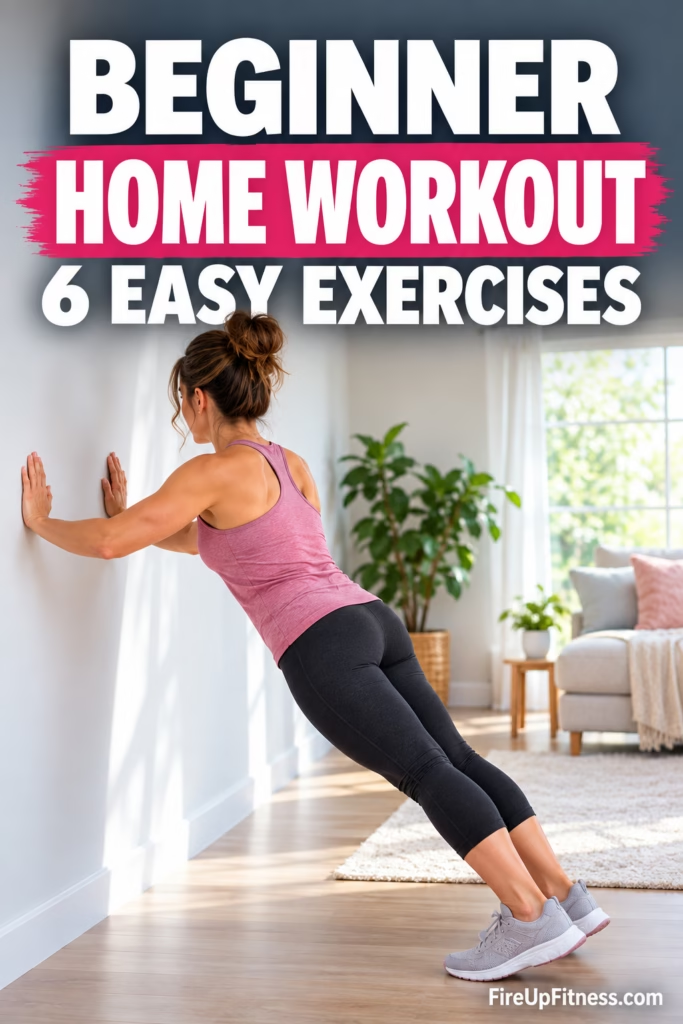
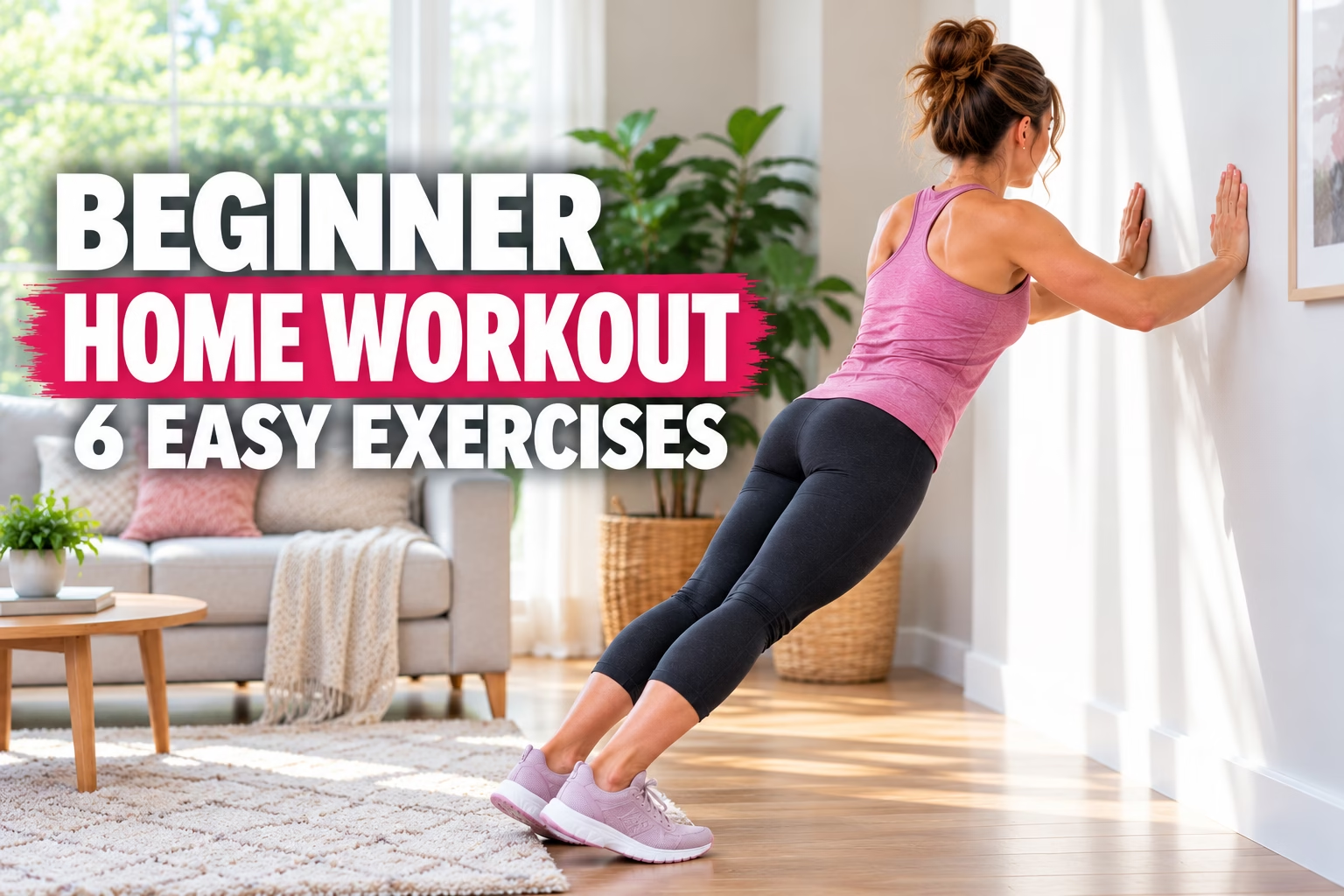
1. Wall Push-Ups
Wall push-ups are one of the easiest ways to begin building upper-body strength without immediately dropping to the floor for traditional push-ups.
They work your chest, shoulders, and triceps while also asking your core to stabilize your body.
How to Do a Wall Push-Up
Stand facing a sturdy wall and place both palms against it slightly wider than shoulder-width apart.
Walk your feet backward until your body forms a straight line from your head through your hips to your heels.
Keep your abdominal muscles gently engaged.
Slowly bend your elbows and bring your chest toward the wall. Avoid letting your hips sag or your lower back arch.
Pause briefly near the wall.
Press through your palms and straighten your arms to return to the starting position.
That’s one repetition.
Beginner Tip
Stand closer to the wall to make the exercise easier.
As you become stronger, move your feet farther away. Eventually, you can progress to push-ups against a kitchen counter, sturdy bench, or other elevated surface.
Try: 10–15 repetitions.
2. Plié Squats
Plié squats—sometimes called wide-stance or sumo-style squats—are an excellent lower-body exercise.
The wider stance places plenty of work on your glutes and thighs while helping you practice hip and knee control.
How to Do a Plié Squat
Stand with your feet wider than shoulder-width apart.
Turn your toes slightly outward in a comfortable position rather than forcing them into an extreme angle.
Keep your chest lifted and gently brace your core.
Bend your knees and lower your hips toward the floor.
Your knees should travel in the same general direction as your toes.
Lower only as far as you can comfortably while maintaining good posture.
Press through your feet and squeeze your glutes as you return to standing.
Don’t Make This Mistake
Avoid forcing yourself to squat until your thighs are parallel to the floor.
Your ideal depth depends on your mobility, strength, and comfort. A shallower squat performed with control is better than a deep squat with poor form.
Try: 10–15 repetitions.
3. Reverse Fly
Many everyday activities encourage us to spend hours with our shoulders rounded forward—working at a computer, driving, scrolling on a phone, or sitting on the couch.
The reverse fly strengthens muscles across the upper back and rear shoulders.
You can perform this exercise using light dumbbells, small water bottles, or two similarly weighted household objects.
How to Do a Reverse Fly
Stand with your feet about hip-width apart while holding a light weight in each hand.
Soften your knees.
Push your hips slightly backward and hinge forward while keeping your back long and neutral.
Allow your arms to hang beneath your shoulders with your palms facing each other.
Keep a small bend in your elbows.
Slowly raise your arms outward until you feel your upper-back muscles working.
Gently squeeze your shoulder blades together.
Lower your arms with control.
Form Tip
This exercise doesn’t require heavy weights.
In fact, using too much resistance often causes people to swing their arms rather than using their back muscles.
Start light and focus on slow, controlled movement.
Try: 10–15 repetitions.
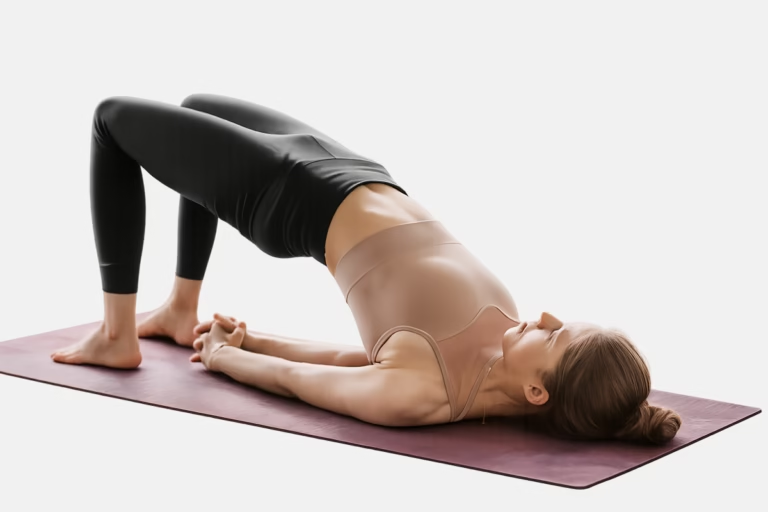
4. Glute Bridges
Glute bridges are simple, but don’t underestimate them.
They strengthen the glutes and work muscles around your hips and core. They can be especially useful when you spend a large portion of the day sitting.
How to Do a Glute Bridge
Lie on your back with your knees bent and your feet flat on the floor.
Place your feet roughly hip-width apart.
Let your arms rest comfortably beside you.
Gently brace your abdominal muscles.
Press through your feet and squeeze your glutes as you lift your hips.
Your body should form a relatively straight line from your shoulders toward your knees at the top.
Pause briefly.
Slowly lower your hips back to the floor.
Make It More Effective
Don’t worry about lifting your hips as high as possible.
Concentrate instead on squeezing your glutes while keeping the movement controlled.
Try: 12–15 repetitions.
5. Standing Knee Raises
Not every core exercise has to involve lying on the floor.
Standing knee raises are a beginner-friendly way to work your core while also challenging your balance.
How to Do Standing Knee Raises
Stand tall with your feet about hip-width apart.
Place your hands on your hips or hold a wall or sturdy chair for balance.
Brace your core.
Slowly lift your right knee toward your torso.
Lower it with control.
Repeat with your left leg.
Continue alternating sides.
Try not to lean dramatically backward as you lift your knee.
Want More of a Challenge?
Bring the opposite hand toward the raised knee, creating a gentle cross-body movement.
Try: 10–12 repetitions per side.
6. Bird Dogs
The bird dog may look easy, but doing it slowly requires plenty of control.
This exercise works your core while challenging your glutes, shoulders, and balance.
How to Do a Bird Dog
Begin on your hands and knees.
Position your hands underneath your shoulders and your knees underneath your hips.
Gently brace your core.
Extend your right arm forward while extending your left leg behind you.
Keep your hips facing the floor.
Pause briefly.
Return your hand and knee to the starting position.
Switch sides.
Beginner Modification
You don’t have to move your arm and leg simultaneously.
Practice extending one arm at a time. Then practice extending one leg.
Once you feel stable, combine the movements.
Try: 8–12 repetitions per side.
How to Turn These Exercises Into a 15-Minute Home Workout
One of the easiest ways to make exercise a habit is to keep your routine simple.
Try this circuit:
Warm-up — 3 minutes
March in place, perform gentle side steps, roll your shoulders, circle your arms, and practice a few shallow squats.
Workout
- 12 Wall Push-Ups
- 12 Plié Squats
- 12 Reverse Fly Repetitions
- 15 Glute Bridges
- 10 Standing Knee Raises per side
- 8–10 Bird Dogs per side
Rest for 30–60 seconds.
Repeat the circuit two or three times.
Finish with a few minutes of gentle walking and stretching.
That’s it.
You’ve trained your upper body, lower body, back, glutes, and core without needing a complicated workout setup.
How Often Should You Do This Home Workout?
For a beginner, two or three strength workouts per week can be a realistic place to start.
You don’t necessarily need to do the exact same workout every day.
Your muscles need time to recover, particularly as the exercises become more challenging.
On the days between strength workouts, you can stay active with activities such as:
- Walking
- Gentle yoga
- Mobility exercises
- Stretching
- Cycling
- Easy cardio
- Everyday activities around the house
The bigger goal is regular movement rather than trying to make every workout intense.
How to Make Home Workouts More Effective
One problem with home exercise is that it can eventually become too easy.
Doing the same 10 repetitions with the same resistance month after month gives your body less reason to adapt.
As you become stronger, gradually increase the challenge.
You might:
Add repetitions.
Progress from 10 repetitions to 12, then 15.
Add another round.
Move from one circuit to two and eventually three.
Slow the movement down.
Taking three seconds to lower into a squat can make a familiar exercise surprisingly challenging.
Use more resistance.
Progress from water bottles to dumbbells or resistance bands.
Try a harder variation.
Wall push-ups can eventually become counter push-ups. Regular glute bridges can progress to marching bridges.
Progress doesn’t need to happen quickly. Small increases over time are enough.
Can Home Workouts Help With Fat Loss?
Home workouts can absolutely be part of a fat-loss plan, but no individual exercise can force your body to burn fat from one particular area.
Doing squats won’t specifically burn thigh fat, just as doing abdominal exercises won’t selectively remove belly fat.
Where your body stores and loses fat is influenced by factors including genetics, hormones, age, activity level, and overall energy balance.
What strength training can do is help preserve and build muscle while improving fitness.
Combine your home workouts with regular walking or other enjoyable activity, nutritious meals, sufficient protein, good sleep, and sustainable eating habits.
That combination is much more useful than chasing exercises that promise to “melt” fat from a particular body part.
Home Workout Tips for Women Over 40
There’s no age when you suddenly become “too old” to start getting stronger.
But your approach to exercise may need to become smarter.
Instead of trying to make every workout exhausting, focus on quality.
Use controlled movements. Give yourself recovery time. Gradually increase resistance. Pay attention to joint comfort.
And don’t underestimate basic exercises.
A well-performed squat, push-up variation, bridge, and pulling movement can build an excellent foundation.
Consistency matters far more than creating the most complicated workout possible.
Common Home Workout Mistakes to Avoid
Doing Repetitions Too Quickly
Faster isn’t automatically better.
Slow down enough to control both the lifting and lowering portions of each exercise.
Holding Your Breath
Try to maintain normal breathing throughout your workout. Exhaling during the harder part of an exercise often feels natural.
Using Poor Form Just to Do More Repetitions
Ten controlled repetitions are more useful than 20 rushed ones.
Stop the set when your technique begins falling apart.
Never Making the Exercises Harder
Your body adapts.
Once an exercise becomes very easy, increase the repetitions, resistance, range of motion, or difficulty.
Expecting Immediate Changes
Strength and fitness develop through repetition over weeks and months.
You don’t need a perfect workout. You need one you’ll continue doing.
No Equipment? No Problem
One of the biggest advantages of exercising at home is that you can begin with what you already have.
A wall can become your push-up station.
Your body provides resistance for squats and bridges.
Water bottles can serve as very light weights for upper-body movements.
A towel or exercise mat can make floor exercises more comfortable.
As your strength improves, a pair of dumbbells or resistance bands can give you many more options, but they aren’t required to begin.
A Simple Weekly Home Workout Schedule
Not sure how to fit everything together?
Try something like this:
Monday: 15-minute full-body strength workout
Tuesday: 20–30 minute walk
Wednesday: Rest, stretching, or mobility
Thursday: 15-minute full-body strength workout
Friday: Walk or light cardio
Saturday: Optional strength workout or longer walk
Sunday: Rest or gentle movement
Adjust the schedule around your life.
There’s nothing magical about exercising on particular days. The best schedule is one you can follow consistently.
The Bottom Line
Getting stronger at home doesn’t have to be complicated.
Start with a few foundational movements such as wall push-ups, plié squats, reverse flies, glute bridges, standing knee raises, and bird dogs. Learn the movements, perform them with control, and gradually increase the challenge as your strength improves.
Most importantly, don’t wait for the “perfect” workout.
Ten or fifteen minutes of purposeful movement counts.
The workout you can actually fit into your day is often more valuable than the elaborate routine you keep postponing.
Clear a little space, put on something comfortable, and start with one round.
Your living room might be all the gym you need.