Pilates at Home Benefits: Feel Stronger, Calmer Fast
Some workouts leave you exhausted… but not necessarily better.
Pilates is different.
It’s one of those rare exercise styles that makes you feel stronger and more relaxed at the same time. It’s not loud. It’s not chaotic. And it doesn’t require expensive equipment. Yet somehow, it reshapes your body, improves your posture, and leaves you feeling more in control of your movement (and your mood) than most workouts ever do.
That’s why Pilates at Home has exploded in popularity.
Women everywhere are choosing Pilates not just for the toned look it creates, but for the way it changes the way your body feels day-to-day: less stiffness, fewer aches, better balance, more confidence, and yes — that calm, grounded energy that’s hard to explain until you experience it.
If you’ve been searching for real Pilates motivation, this post will give you plenty of reasons to stick with it. Let’s walk through the most powerful Pilates benefits, and why this gentle-but-effective at home workout could be one of the best things you ever do for yourself.

Why Pilates at Home works so well
One of the biggest reasons Pilates works is because it focuses on how your body moves — not just how hard you push.
Instead of chasing burn and sweat, Pilates trains:
- deep muscle engagement
- proper alignment
- balance and control
- breathing and nervous system regulation
In other words, Pilates helps you build a body that moves better, feels better, and looks better… without needing to punish yourself to get there.
That’s why Pilates at home is so beginner-friendly. You can start small and still get results.
1. Pilates can boost brain power and mental clarity
One of the most surprising Pilates benefits is what it does for your brain.
Pilates is not “mindless movement.” Every rep requires focus:
- you’re controlling the pace
- stabilizing the body
- coordinating limbs
- engaging the right muscles
- breathing intentionally
That combination is like strength training for your nervous system.
Over time, Pilates can support:
- sharper focus
- improved memory
- better coordination
- stronger mind-muscle connection
If you ever feel like your body is on autopilot — or like your brain is constantly overstimulated — Pilates at home gives you a rare chance to slow down and reconnect.
2. Pilates increases flexibility without forcing painful stretching
Many people think they’re “not flexible enough” for Pilates.
But Pilates is one of the best ways to become flexible.
Unlike random stretching that doesn’t stick, Pilates builds flexibility through controlled motion. Your muscles lengthen while they strengthen — which is the sweet spot for improving mobility safely.
With consistent Pilates practice, you may notice:
- hips opening up
- hamstrings feeling looser
- shoulders less tight
- easier movement getting out of bed or standing up
This is one reason Pilates at home is especially helpful if you sit often, work at a desk, or feel stiff after workouts.
3. Pilates improves posture (even if you’ve been slouching for years)
If you’ve ever caught yourself in the mirror and thought:
“Why do I look tired even when I’m not?”
Posture may be part of it.
Poor posture isn’t a character flaw. It’s usually the result of:
- weak core muscles
- tight hip flexors
- rounded shoulders
- forward head posture from phone use
Pilates trains the exact muscles that hold you upright.
As you strengthen your posture muscles, your body naturally begins to sit, stand, and walk taller — without constant reminders to “pull your shoulders back.”
The posture benefits often show up fast, and they’re not just about looks. Better posture can also mean:
- fewer tension headaches
- less neck and shoulder tightness
- reduced upper-back soreness
- improved breathing
4. Pilates strengthens your core in a smarter way
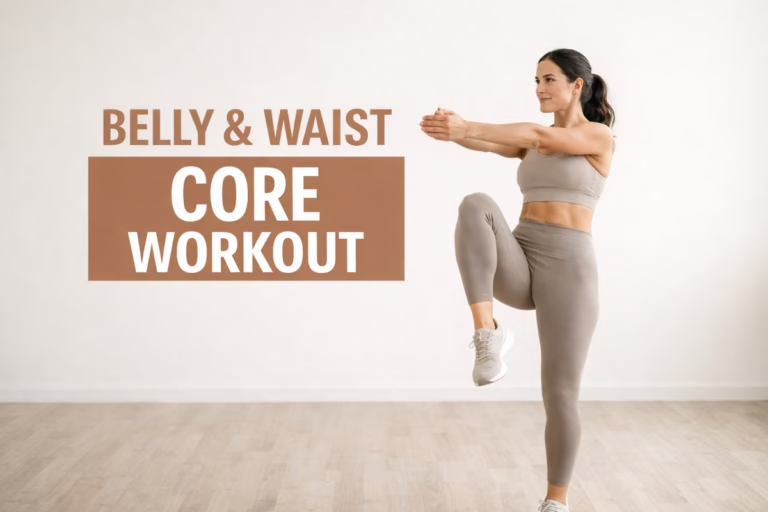
If your goal is a stronger waist, flatter stomach, or firmer midsection, Pilates is a game-changer.
But Pilates doesn’t just hit your abs like crunches do.
It strengthens the entire “core system,” including:
- deep abdominal muscles
- pelvic floor
- obliques
- lower back stabilizers
This type of core training supports real-life strength — the kind that protects your back and improves movement.
A strong core helps with:
- lifting
- walking and running
- balance
- posture
- stability in other workouts
This is why Pilates at home fits beautifully into almost every fitness goal.
5. Pilates supports lean muscle tone without heavy equipment
One reason women love Pilates is that it tones the body without the intimidation of the gym.
Even though Pilates looks gentle, it creates serious results because it relies on:
- time under tension
- controlled movement
- small pulses
- muscle endurance
Pilates targets the muscles many women want to sculpt most:
- lower belly
- glutes
- thighs
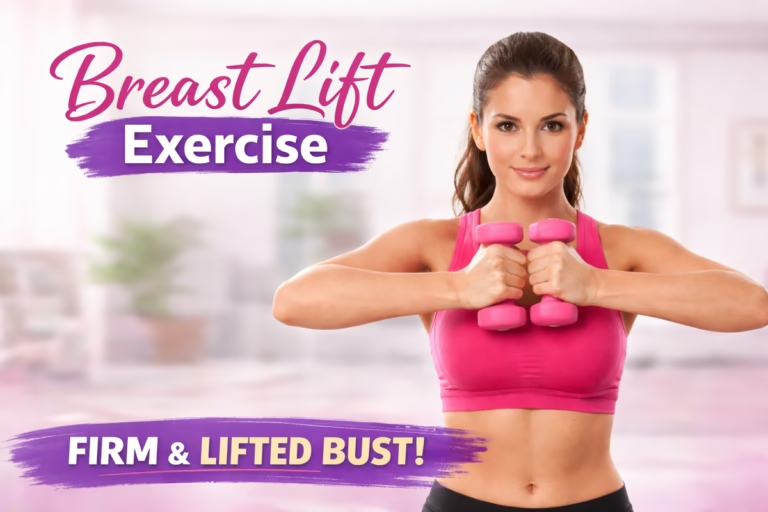
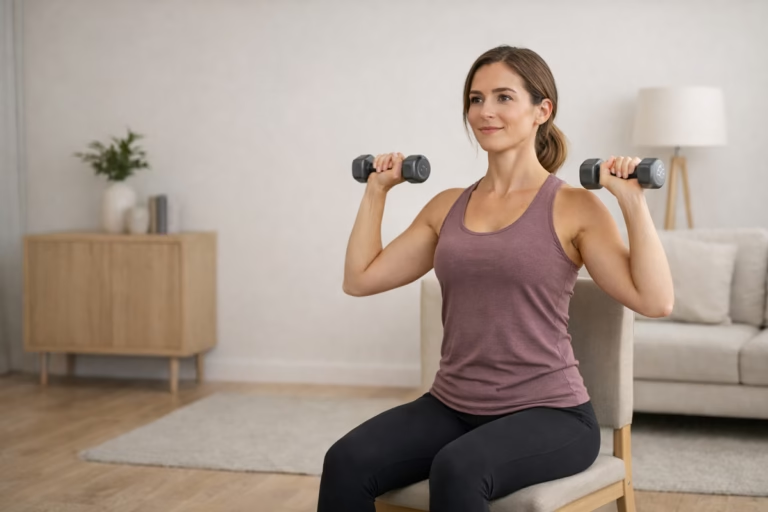
- arms
- back
And it does it in a way that feels empowering, not exhausting.
If you’ve struggled with motivation because workouts feel “too much,” Pilates at home can be the kind of routine that helps you stay consistent.
6. Pilates can improve your mood and reduce stress
There’s a reason Pilates often feels like therapy.
During Pilates, you’re doing more than moving — you’re regulating your nervous system through breathing and control.
Stress doesn’t only live in your mind. It lives in your body:
- clenched jaw
- tight shoulders
- stiff hips
- shallow breathing
Pilates releases tension through movement, and calms the body through breath.
Over time, Pilates can support:
- better mood
- less irritability
- less anxious tension
- improved sleep
This is a major part of Pilates motivation for women who want to feel stronger emotionally as well as physically.
7. Pilates may ease back pain and prevent future aches
Back pain is extremely common — and it’s not always because something is “wrong” with your back.
Often, back pain happens because the back is overworking to compensate for weak muscles elsewhere.
Pilates helps by strengthening the body’s support system:
- core muscles stabilize the spine
- glutes reduce pressure on the lower back
- posture alignment improves joint positioning
Many women notice back relief simply because they stop moving in ways that strain the spine.
Important note: If you have an injury, sciatica, or chronic pain, speak with a healthcare professional first — but for general stiffness and weakness-related discomfort, Pilates is often a safe supportive routine.
8. Pilates helps you breathe better (and feel calmer)
This Pilates benefit doesn’t get talked about enough, but it’s one of the most powerful.
Pilates teaches breathing patterns that improve:
- oxygen flow
- core engagement
- emotional control
Breathing and emotions are connected.
When you’re anxious → breathing is fast and shallow.
When you’re calm → breathing slows down.
Pilates trains you to breathe with control, and that control often carries into everyday life.
You may notice:
- less tension during stress
- better focus
- calmer mood
- improved body awareness
How often should you do Pilates at home for results?
If you’re starting Pilates at home, here’s a realistic plan:
Beginner schedule (best for consistency)
- 3 days per week
- 15–25 minutes per session
Intermediate schedule (visible tone + strength)
- 4–5 days per week
- 25–40 minutes per session
Best weekly mix (recommended)
- Pilates 3–4 days
- walking or light cardio 2–3 days
- rest or gentle stretch 1 day
Pilates results come from repetition over time. This isn’t a “do it once and regret it” workout.
It’s a “build a body you love living in” workout.
Tips to stay consistent (real Pilates motivation)
Let’s be honest: you don’t need more workouts — you need a routine you’ll actually stick to.
Here are simple ways to stay motivated with Pilates at home:
Keep the setup effortless
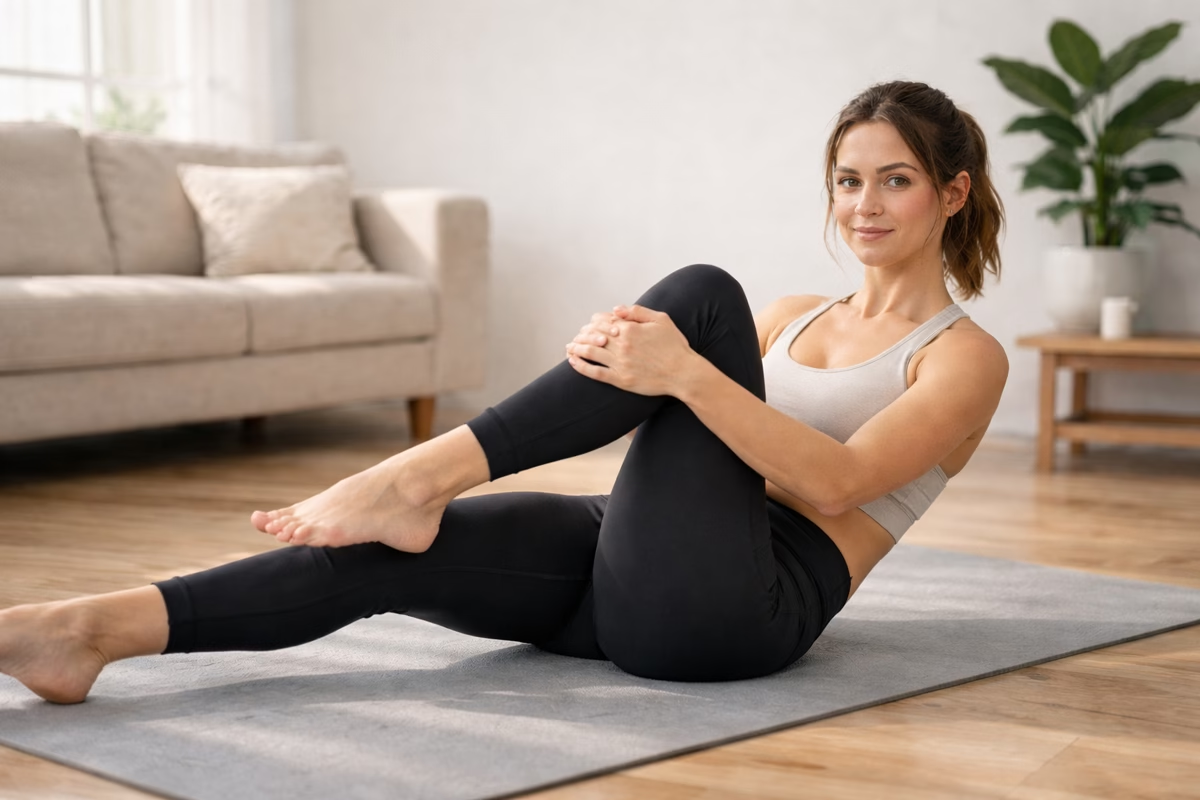
Leave your mat where you can see it. If the mat is visible, the workout feels easier to start.
Set a “minimum goal”
Even 10 minutes counts. A small workout done consistently beats a perfect plan you never follow.
Focus on feeling, not perfection
Pilates is about control, not intensity. You don’t need to “keep up.” You need to breathe and move well.
Track progress the right way
Measure success with:
- better posture
- less stiffness
- improved balance
- stronger core control
- increased energy
These results come before physical changes — and they matter.

Final Thoughts: Pilates at Home is one of the smartest workouts you can choose
If you’ve been looking for a routine that tones your body, strengthens your core, improves posture, reduces stress, and supports real confidence, Pilates at Home is one of the best options out there.
You don’t need fancy equipment.
You don’t need a gym membership.
And you don’t need to punish yourself to feel proud.
The only thing you need is consistency.
Because once Pilates becomes part of your week, your body starts changing in quiet but powerful ways — and it’s hard not to fall in love with that feeling.
Ready to feel stronger, calmer, and more confident from home?
Try Pilates at Home today and start with a simple 10–15 minute session. Save this post so you can come back to it anytime you need fresh Pilates motivation — and share it with a friend who needs a gentle, effective at home workout.
FAQs: Pilates at Home
Is Pilates at Home good for beginners?
Yes. Pilates is one of the most beginner-friendly workouts because you can adjust the intensity easily. Start slow, focus on breathing, and build consistency first.
How long does it take to see Pilates results?
Many women notice posture improvement and core engagement in as little as 2–3 weeks. Visible toning often appears after 4–8 weeks with consistent practice.
Can Pilates help lose belly fat?
Pilates strengthens and tones the core, improves posture, and supports lean muscle — all of which can make your midsection look tighter. For fat loss, combine Pilates with a healthy calorie-controlled diet and daily movement like walking.
Is Pilates better than yoga?
They are different. Yoga focuses more on flexibility, stretching, and mindfulness. Pilates focuses more on core strength, alignment, and controlled muscle engagement. Many women do both.
Do I need equipment for Pilates at Home?
Not at all. A mat is enough to start. Later, you can add light resistance bands or small dumbbells, but it’s optional.
Is Pilates a good at home workout for toning?
Yes. Pilates is excellent for toning because it uses controlled resistance, time under tension, and muscle endurance — especially for thighs, glutes, arms, and core.